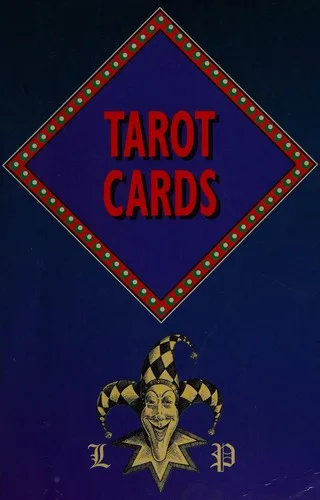
Basic Principles and Meaning of Tarot Cards
 61
61

Basic Principles and Meaning of Tarot Cards



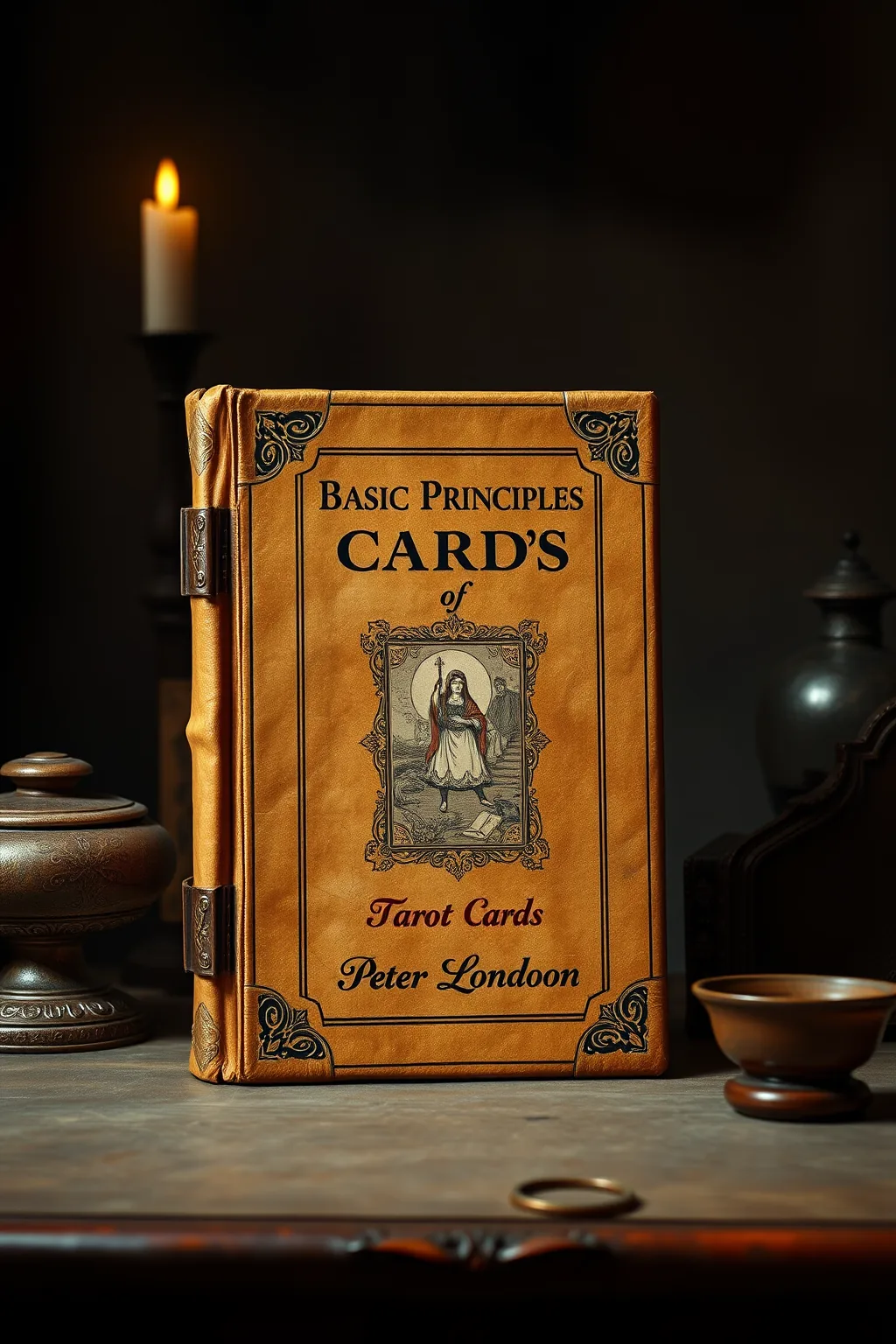
Peter Londoon's "Basic Principles and Meaning of Tarot Cards" is a beacon of clarity in the often-murky waters of cartomancy. Londoon masterfully distills complex esoteric concepts into accessible yet profound insights, making this volume indispensable for both neophytes and seasoned practitioners. He eschews superficial interpretations, delving into the archetypal significance and numerological underpinnings that give the Tarot its enduring power. The author's authoritative yet approachable tone invites readers to forge a personal connection with the cards, fostering intuitive understanding. This work stands as a testament to the Tarot's role as a mirror to the soul and a conduit for divine guidance.
📝 Description
61
Peter Londoon's 1987 book details the core meanings and applications of the Tarot.
Peter Londoon's "Basic Principles and Meaning of Tarot Cards," published in 1987, offers a straightforward introduction to understanding the Tarot deck. Londoon breaks down the symbolism and traditional interpretations of both the Major and Minor Arcana. He approaches the cards not as predictive tools alone, but as a system for self reflection and insight into psychological patterns. The book aims to equip readers with a solid grasp of individual card meanings and how they interact within a reading.
Londoon's work provides a structured approach to learning the Tarot, focusing on the foundational knowledge needed to begin interpretation. He discusses the historical context of the cards and their development as a divinatory art. The text encourages a thoughtful engagement with the imagery and archetypes present in the deck, fostering a deeper connection with the material.
This book fits within the Western esoteric tradition that gained prominence in the late 19th and early 20th centuries, particularly concerning cartomancy and occult studies. It follows in a lineage that views Tarot as more than mere playing cards, but as a symbolic language reflecting universal principles and psychological structures. Authors like A.E. Waite and Paul Foster Case also explored the esoteric significance of the Tarot, though Londoon's approach appears more directly focused on basic principles for practical application and personal insight rather than elaborate ceremonial systems.
💡 Why Read This Book?
Unveil the profound symbolism of the Tarot and unlock its ancient wisdom. "Basic Principles and Meaning of Tarot Cards" is your gateway to understanding the archetypal energies that influence life's path. Ideal for seekers of self-knowledge, students of esotericism, and anyone eager to develop their intuitive faculties through this timeless divinatory art.
⭐ Reader Reviews
Honest opinions from readers who have explored this book.
❓ Frequently Asked Questions
What is the primary purpose of learning Tarot?
The primary purpose is to gain insight into oneself and one's circumstances, fostering self-awareness, guidance, and personal growth through symbolic interpretation and intuitive connection with archetypal energies.
Are the Tarot cards predictive or reflective?
Tarot cards are best understood as reflective tools. They illuminate potential paths and current energies, offering insights to guide decisions rather than dictating a fixed future. The power lies in understanding and acting upon the wisdom revealed.
How many cards are in a standard Tarot deck?
A standard Tarot deck consists of 78 cards, divided into the Major Arcana (22 cards representing significant life lessons and archetypes) and the Minor Arcana (56 cards divided into four suits, reflecting daily experiences).
Can anyone learn to read Tarot?
Absolutely. While some possess innate intuitive gifts, the principles and meanings of Tarot can be learned by anyone dedicated to study, practice, and an open mind. This book provides the foundational knowledge to begin.
What is the Esoteric Library's stance on Tarot interpretation?
At Esoteric Library, we champion Tarot as a profound system of symbolic language and psychological insight, rooted in ancient wisdom traditions. We encourage personal exploration and intuitive development alongside scholarly understanding.
🔮 Key Themes & Symbolism
The Arcane Language of Symbolism
Examine the rich, symbolic lexicon of the Tarot, where each image, number, and suit is imbued with profound meaning. This book illuminates how these visual metaphors act as keys to unlocking the subconscious, revealing hidden truths and archetypal patterns that govern human experience. Understand the interplay between the Major Arcana's grand life lessons and the Minor Arcana's daily currents, transforming mere observation into deep, intuitive comprehension.
Archetypes and the Human Psyche
Explore the Tarot as a mirror to the human psyche, mapping the archetypal journeys that echo through myth and legend. Londoon reveals how the cards represent universal human experiences, from the Fool's innocent leap to the World's completion. This perspective offers a powerful framework for understanding personal challenges, triumphs, and the underlying psychological forces at play in our lives, fostering self-discovery and emotional intelligence.
Divination as a Path to Wisdom
Understand divination not as fortune-telling, but as a sacred practice of seeking higher wisdom and guidance. This book explains the art of Tarot reading, emphasizing its role in introspection, problem-solving, and spiritual development. Learn how to approach the cards with respect and intention, harnessing their power to navigate life's complexities and align with one's true path, fostering a sense of agency and inner knowing.
💬 Memorable Quotes
Direct passages from the work, attributed to the author.
“Each card whispers a truth waiting to be heard.”
— This highlights the intuitive and receptive nature of Tarot reading, suggesting that the cards possess inherent wisdom that can be accessed through mindful attention and an open heart.
“The Fool's leap is the beginning of all wisdom.”
— This points to the importance of courage, faith, and embracing the unknown as fundamental steps in the process of learning and spiritual growth, mirroring the archetypal journey.
“Understanding symbolism is unlocking the universe's secrets.”
— This emphasizes the profound power of symbolic language, suggesting that by deciphering the body of Tarot imagery, one can gain access to deeper universal truths and hidden knowledge.
“The cards do not dictate fate, but illuminate possibilities.”
— This clarifies the function of Tarot as a guide rather than a determinant, empowering the reader to make conscious choices based on insights provided, fostering agency and responsibility.
💡 Key Ideas
Editorial paraphrase of the work's core concepts — not direct quotes.
The Tarot is a map of the soul's journey.
This quote expresses the essence of the Tarot as a tool for introspection and self-discovery, charting the internal field of human consciousness and spiritual evolution.
🌙 Esoteric Significance
Tradition
This work is deeply rooted in the Western Esoteric Tradition, drawing heavily from Hermeticism, Kabbalah, and Jungian archetypal psychology. It views the Tarot not merely as a tool for prediction, but as a symbolic language reflecting the structure of the cosmos and the human psyche, offering a pathway to spiritual enlightenment and self-knowledge.
Symbolism
The book meticulously explores the profound symbolism embedded within each Tarot card. From the numerological significance of the Pip cards to the archetypal figures of the Major Arcana, Londoon unveils the layered meanings derived from ancient mythologies, astrological correspondences, and alchemical processes, presenting a cohesive system of esoteric interpretation.
Modern Relevance
In an age often characterized by disconnection and existential questioning, the Tarot, as presented by Londoon, offers a timeless anchor. Its archetypal narratives provide a framework for understanding the human condition, fostering emotional intelligence, and navigating personal challenges. The book empowers individuals to access their intuition and engage with a symbolic language that promotes self-reflection and spiritual growth.
👥 Who Should Read This Book
This foundational text is essential for the nascent Tarot enthusiast seeking a clear and profound introduction. Scholars of comparative mythology and esoteric traditions will find Londoon's interpretations informative. Spiritual seekers looking to deepen their self-awareness and connect with archetypal wisdom will discover a valuable companion. Furthermore, practicing diviners and psychotherapists interested in symbolic systems will benefit from its insightful exploration of the Tarot's psychological and spiritual dimensions.
📜 Historical Context
Peter Londoon's "Basic Principles and Meaning of Tarot Cards" emerges from a rich lineage of esoteric thought, particularly flourishing during the late 19th and early 20th centuries. This era witnessed a resurgence of interest in mysticism, occultism, and ancient wisdom traditions, fueled by figures like Eliphas Lévi and the Hermetic Order of the Golden Dawn. The Tarot, long used for games, was re-examined and imbued with complex Kabbalistic, astrological, and alchemical symbolism. Works like this sought to explain these intricate connections for a wider audience, bridging the gap between academic study and personal practice. Londoon's contribution stands as a vital link, distilling these profound influences into an accessible guide that continues to resonate with modern seekers drawn to the contemplative and divinatory power of the Tarot.
📔 Journal Prompts
Reflect on the journey of The Fool. What 'leap of faith' are you currently contemplating in your life?
Choose one card from the Minor Arcana that appeals to your current daily experiences. Journal about its message and how it applies.
Meditate on The High Priestess. What hidden knowledge or intuition is she calling you to acknowledge within yourself?
Consider The Magician. What resources or inner powers can you consciously wield to manifest your intentions?
Write about a time a Tarot reading provided unexpected clarity or guidance. How did the symbols speak to you?
🗂️ Glossary
Arcana
Referring to the divisions within a Tarot deck: the Major Arcana (22 cards representing significant life lessons and archetypes) and the Minor Arcana (56 cards divided into four suits, reflecting daily experiences).
Archetype
A universal, archaic pattern of behavior or image that is part of the collective unconscious, such as the Hero, the Mother, or The Fool, often represented in Tarot imagery.
Divination
The practice of seeking knowledge of the future or the unknown by supernatural means, often through symbolic systems like the Tarot, intended to provide insight and guidance.
Esoteric
Intended for or likely to be understood by only a small number of people with specialized knowledge or interest; relating to mystical or occult truths.
Kabbalah
A system of Jewish mysticism that deals with the divine nature of God and the creation and structure of the universe, often influencing esoteric symbolism, including Tarot.
This book appears in 3 collections
🔮 Readers Also Liked
Browse all →
From the “Tarot” Collection
View all →
More Free Divination & Tarot Books
View all →