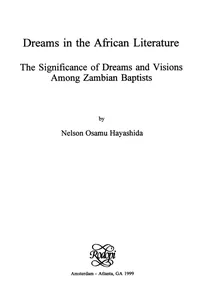
Tao of Heaven, Tao of Earth, Tao of Man
 80
80

Tao of Heaven, Tao of Earth, Tao of Man
Sifu Keven-San’s "Tao of Heaven, Tao of Earth, Tao of Man" attempts a grand synthesis, a welcome ambition in a field often siloed. The book’s primary strength lies in its persistent effort to connect disparate elements of Chinese thought—from its physics to its spiritual practices—under the unifying umbrella of the Heaven-Earth-Man triad. This holistic perspective is particularly illuminating when discussing ancient Chinese medicine, where the interconnectedness of the body, environment, and cosmic forces is paramount. The text compellingly argues that Western scholars have often missed the forest for the trees by studying Chinese intellectual traditions in isolation. However, the work sometimes struggles under the weight of its own ambition. While the connections are theoretically sound, the exposition can become dense, occasionally obscuring the very clarity it seeks to provide. A passage discussing the cyclical nature of Qi, for instance, while conceptually rich, could benefit from more direct, less abstract illustration. Despite these occasional density issues, the book offers a valuable interpretive lens for anyone seeking a unified understanding of Chinese cosmology.
📝 Description
80
First published in 2001, 'Tao of Heaven, Tao of Earth, Tao of Man' unifies traditional Chinese thought.
This book offers a unified perspective on traditional Chinese thought, arguing that Western understanding of Chinese civilization is incomplete without grasping the distinct Chinese conceptualization of the cosmos. It seeks to bridge this gap by integrating ancient Chinese physics, medicine, philosophy, and spiritual practices into a single, coherent framework. The work is intended for serious students of Eastern philosophies, comparative religion scholars, and practitioners interested in a holistic view of Chinese metaphysical systems. It appeals to those dissatisfied with fragmented Western interpretations of Chinese culture and those interested in the connections between the celestial order, human health, and societal structures.
Published during a period of increasing globalization and cultural exchange, the book emerged as an effort to synthesize Chinese thought. It arrived as Western interest in Eastern spirituality and philosophy grew, often presented through separate traditions like Buddhism, Taoism, or Confucianism. The book's approach of unifying these diverse streams under a single cosmological model aimed to provide a more comprehensive interpretive key.
Within the realm of esoteric philosophy, 'Tao of Heaven, Tao of Earth, Tao of Man' engages with the perennial quest to understand the underlying principles of existence. It draws from the rich traditions of Chinese cosmology, particularly the Taoist emphasis on the natural order and the interconnectedness of all things. The book positions itself as a guide to the metaphysical architecture that shaped ancient Chinese civilization, offering a framework for comprehending the relationship between the macrocosm (Heaven and Earth) and the microcosm (Man).
💡 Why Read This Book?
• Understand the fundamental Chinese cosmological model of Heaven, Earth, and Man, a concept central to its philosophy and science, offering a perspective distinct from Western dualisms. • Gain insight into how ancient Chinese physics and medicine are conceptually linked through this unified framework, moving beyond separate analyses of these disciplines. • Appreciate the author's 2001 effort to synthesize diverse Chinese intellectual traditions, providing a holistic key to understanding its history, culture, and art.
⭐ Reader Reviews
Honest opinions from readers who have explored this book.
❓ Frequently Asked Questions
What is the primary distinction between Western and Chinese frameworks of existence discussed in "Tao of Heaven, Tao of Earth, Tao of Man"?
The book highlights the Western focus on Heaven and Hell dualism versus the Chinese emphasis on the interconnected triad of Heaven (Tian), Earth (Di), and Man (Ren). This Chinese model is presented as integral to understanding their physics, medicine, and philosophy.
When was "Tao of Heaven, Tao of Earth, Tao of Man" first published?
The book was first published in August 2001, offering a synthesized view of Chinese thought during a period of increasing global cultural exchange.
Does the book explain the concept of Qi?
Yes, the work explores the concept of Qi as a fundamental force within the Chinese cosmological framework, examining its role in physics, medicine, and spiritual practices.
What disciplines does Sifu Keven-San integrate in "Tao of Heaven, Tao of Earth, Tao of Man"?
Sifu Keven-San integrates ancient Chinese physics, medicine, philosophy, and spiritual practices, presenting them as interconnected elements within a unified worldview.
How does this book differ from other works on Chinese thought?
Unlike books focusing on single elements of Chinese thought, "Tao of Heaven, Tao of Earth, Tao of Man" aims for a holistic synthesis, connecting physics, medicine, philosophy, and spirituality under the Heaven-Earth-Man paradigm.
Who is the author of "Tao of Heaven, Tao of Earth, Tao of Man"?
The author is Sifu Keven-San, who first published this work in 2001, aiming to provide a unified understanding of Chinese civilization for a Western audience.
🔮 Key Themes & Symbolism
The Heaven-Earth-Man Triad
This central organizing principle posits a cosmic order where Heaven (Tian), Earth (Di), and Humanity (Ren) are in constant, dynamic interaction. The work uses this triad as a lens to re-examine Chinese physics, medicine, and philosophy, arguing it's essential for understanding the holistic nature of Chinese thought. It contrasts this integrated view with Western Heaven/Hell dualisms, suggesting a deeper, more interconnected reality is perceived in the East.
Integration of Chinese Disciplines
A core aim is to break down the artificial separation of Chinese intellectual and scientific traditions often imposed by Western scholarship. The book argues that ancient Chinese physics, medical theories (like the flow of Qi), and philosophical ethics are not disparate subjects but interwoven threads of a single cosmological understanding. This integration is presented as the key to unlocking the perceived enigma of Chinese civilization.
Critique of Western Interpretations
The text implicitly critiques the Western tendency to analyze complex systems by dissecting them into smaller, isolated parts. By highlighting the limitations of studying single elements of Chinese thought, it advocates for a more comprehensive, systems-based approach. The author suggests that Western conceptual frameworks, particularly the Heaven/Hell dichotomy, hinder a full appreciation of the Chinese worldview.
Cosmology and Daily Life
The work emphasizes how the cosmological understanding of Heaven, Earth, and Man directly informs practical aspects of Chinese life, from health and healing to governance and personal cultivation. It explores how the perceived flow of cosmic energies and the relationships between these three realms influence everything from acupuncture points to social harmony, demonstrating the pervasive influence of this worldview.
💬 Memorable Quotes
Direct passages from the work, attributed to the author.
“The Western framework of Heaven and Hell remains an enigma to Chinese thought until we grasp their Heaven, Earth, and Man.”
— This interpretation highlights the book's central argument: a fundamental difference in cosmological structuring prevents full Western comprehension of Chinese civilization. It suggests the Western dualistic model is insufficient for understanding the Chinese integrated perspective.
“Understanding the difference between our framework of Heaven and Hell and the Chinese framework of Heaven, Earth, and Man is key.”
— This statement underscores the critical nature of the Heaven-Earth-Man model. It posits that grasping this specific conceptual difference is the prerequisite for unlocking the complexities of Chinese thought and culture for Western readers.
“Vast numbers of books exist on single elements of Chinese thought, but that is their limitation.”
— This observation critiques the fragmented approach common in Western scholarship. It argues that focusing on individual components of Chinese civilization, rather than their integrated whole, leads to an incomplete and potentially misleading understanding.
“The "Tao of Heaven" is the only book that ties together Ancient Chinese Physics, Medicine, Philosophy, and Spiritual Fa.”
— This is a strong claim from the original blurb, positioning the work as uniquely comprehensive. It suggests that previous literature failed to achieve this level of synthesis across these diverse yet interconnected domains of Chinese knowledge.
💡 Key Ideas
Editorial paraphrase of the work's core concepts — not direct quotes.
Ancient Chinese Physics, Medicine, Philosophy, and Spiritual Fa are not separate but facets of a unified whole.
This paraphrased concept emphasizes the book's core thesis of interconnectedness. It asserts that these distinct fields are best understood not in isolation but as expressions of a singular, overarching Chinese worldview.
🌙 Esoteric Significance
Tradition
While not strictly adhering to a single lineage like Hermeticism or Gnosticism, the work draws heavily from Taoist cosmology and principles of energetic flow (Qi). It aligns with broader esoteric traditions that seek unified field theories of existence, emphasizing interconnectedness and correspondence between macrocosm and microcosm. Its departure lies in its explicit attempt to integrate this with Chinese physics and medicine, creating a distinct synthesis.
Symbolism
The core symbolism revolves around the triad of Heaven (Tian), Earth (Di), and Man (Ren). Heaven represents the celestial, the source of cosmic order and energy; Earth signifies the material realm, the foundation of existence; and Man is the bridge, embodying the potential for conscious interaction and integration between the two. This tripartite symbolism underpins the book's exploration of energetic flow (Qi) and balance.
Modern Relevance
Contemporary practitioners of Traditional Chinese Medicine (TCM), qigong instructors, and scholars of comparative philosophy continue to find value in its holistic framework. Thinkers exploring integral theory or seeking to bridge Eastern and Western scientific paradigms may also draw inspiration from its attempt to unify disparate fields of knowledge under a single cosmological structure.
👥 Who Should Read This Book
• Students of comparative philosophy and religion seeking to understand the unique cosmological underpinnings of Chinese civilization. • Practitioners of Traditional Chinese Medicine (TCM) and Qigong who desire a deeper conceptual grasp of the energetic and philosophical basis of their arts. • General readers interested in Eastern thought who feel overwhelmed by fragmented information and seek a unified, systemic perspective on Chinese history, culture, and science.
📜 Historical Context
Published in 2001, "Tao of Heaven, Tao of Earth, Tao of Man" emerged during a period of heightened global interest in Eastern philosophies, fueled by increased digital communication and travel. This era saw a surge in Western engagement with traditions like Buddhism and Taoism, often through the lens of New Age spirituality or comparative religion studies. Sifu Keven-San’s work stood apart by attempting a grand synthesis, arguing against the atomistic Western approach that studied Chinese physics, medicine, or philosophy in isolation. While authors like Joseph Needham were meticulously documenting Chinese science and technology, Keven-San aimed for a more philosophical and cosmological integration. The book sought to provide a unified interpretive key, contrasting the Chinese Heaven-Earth-Man paradigm with Western Heaven-Hell dualism, a concept explored in various forms throughout Western intellectual history.
📔 Journal Prompts
The Heaven-Earth-Man triad as a personal organizing principle.
How does the Chinese concept of Qi differ from Western notions of energy?
Reflect on a historical or cultural aspect of China illuminated by the Heaven-Earth-Man model.
The integration of physics, medicine, and philosophy in ancient Chinese thought.
Contrast the Western Heaven/Hell framework with the Chinese Heaven/Earth/Man framework in your own understanding.
🗂️ Glossary
Tian
The Chinese concept for Heaven, often understood as the celestial realm, the cosmos, or the ultimate source of natural law and order.
Di
The Chinese concept for Earth, representing the material world, the ground of existence, and the feminine principle in some contexts.
Ren
The Chinese concept for Man or Humanity, often viewed as the intermediary between Heaven and Earth, possessing consciousness and the capacity for moral action.
Qi (Chi)
A fundamental concept in Chinese philosophy and medicine, referring to vital life force, energy, or breath that flows through all things.
Tao (Dao)
The fundamental principle of the universe in Taoism, often translated as 'the Way,' representing the natural order and the ineffable source of all existence.
Spiritual Fa
Likely refers to Chinese spiritual practices or methods, encompassing a range of disciplines aimed at cultivating the self and aligning with cosmic principles.
Cosmology
The study of the origin, evolution, and eventual fate of the universe; in this context, specifically the Chinese understanding of the structure and order of the cosmos.
This book appears in 1 collection
🔮 Readers Also Liked
Browse all →









From the “Tai Chi” Collection
View all →





More Free Occult Philosophy Books
View all →