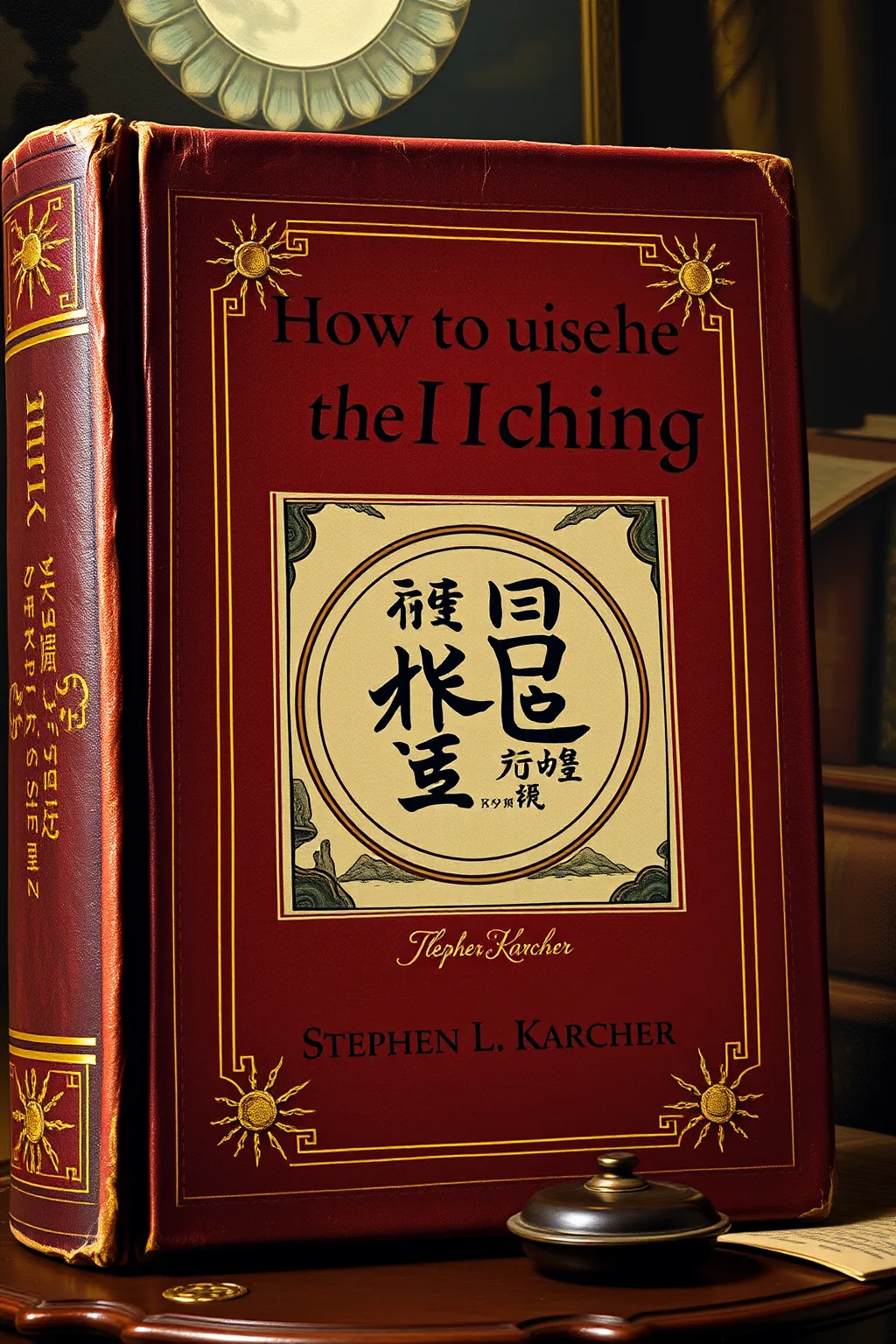
How to use the I ching
 82
82

How to use the I ching
Stephen L. Karcher’s "How to Use the I Ching" offers a refreshingly pragmatic framework for a practice often shrouded in mystique. Unlike many guides that lean heavily on esoteric jargon, Karcher grounds the process in clear instructions for question formulation and coin casting. His emphasis on the I Ching as a dialogue partner for self-discovery, rather than a passive fortune-telling device, is a significant strength. The section detailing the interpretation of changing lines, particularly how they signify movement and transformation, provides a tangible method for deeper engagement. A minor limitation is the dense nature of some explanations, which might require careful rereading for newcomers. However, the overall clarity and systematic approach make it an invaluable resource for anyone wanting to move beyond superficial readings of this ancient text. Karcher’s work provides a solid scaffolding for building a personal practice with the Book of Changes.
📝 Description
82
Stephen Karcher published 'How to Use the I Ching' in 1997, detailing a practical method for consulting the oracle.
Stephen Karcher's 'How to Use the I Ching' offers a structured method for engaging with the ancient Chinese divination text. It moves beyond simple hexagram readings to guide users through question formulation, coin casting, and understanding the resulting lines. The book frames the I Ching as a tool for self-reflection and gaining insight into situations, rather than a predictor of fate.
This guide suits those new to the I Ching, whether they have prior divination experience or not. It focuses on practical application for personal growth and developing a relationship with symbolic systems. Students of comparative religion, mythology, and psychology may also find its systematic approach to archetypal patterns useful. Karcher's work makes this complex system accessible, building on its historical significance.
The book emphasizes the importance of asking precise questions. It then explains how to interpret the sixty-four hexagrams and their changing lines. Key concepts covered include the Ba Gua (Trigrams) and the interplay of Yin and Yang, with a focus on how changing lines signify transformation and guide decision-making.
The I Ching, or 'Book of Changes,' originates from the Zhou Dynasty, around the 11th century BCE. It developed from early divination practices, later enriched by commentaries from Confucian scholars and Taoist mystics. This system significantly influenced Chinese philosophy, governance, and art for thousands of years. Karcher's 1997 publication arrived during a period of increased Western interest in Eastern wisdom traditions, providing a modern gateway to this ancient practice.
💡 Why Read This Book?
• Gain a structured method for posing questions to the I Ching, ensuring clarity and actionable insight, a technique distinct from generalized divination approaches outlined in the book's approach to question formulation. • Learn to interpret the subtle shifts indicated by changing lines within hexagrams, moving beyond static meanings to understand the dynamic flow of situations, as detailed in the hexagram interpretation sections. • Develop a practical framework for using the I Ching as a tool for self-reflection and decision-making, fostering a personal dialogue with the text, a core principle emphasized throughout the 1997 publication.
⭐ Reader Reviews
Honest opinions from readers who have explored this book.
❓ Frequently Asked Questions
What is the primary purpose of Stephen L. Karcher's book on the I Ching?
The book aims to provide a practical, step-by-step methodology for using the ancient Chinese divination text, the I Ching, as a tool for self-reflection, guidance, and decision-making, moving beyond mere symbolic interpretation.
Is prior knowledge of Chinese philosophy necessary to use this I Ching guide?
No, Stephen L. Karcher's "How to Use the I Ching" is designed for both beginners and those with some familiarity, offering clear instructions on casting and interpretation.
How does Karcher's method differ from other I Ching interpretations?
Karcher emphasizes a structured approach to question formulation and a systematic interpretation of changing lines, focusing on the dynamic aspect of the hexagrams for practical guidance, as presented in his 1997 work.
When was 'How to Use the I Ching' first published?
The book was first published in 1997, making it a contemporary guide to a much older tradition.
What are the fundamental components of the I Ching discussed in the book?
The book covers the foundational elements such as the Yin and Yang principles, the eight Trigrams (Ba Gua), and the sixty-four Hexagrams, detailing their structure and significance.
Can this book be used for everyday decision-making?
Yes, the book is specifically designed to facilitate practical application, guiding users to formulate questions and interpret hexagrams for guidance on daily matters and significant life choices.
🔮 Key Themes & Symbolism
Structured Divination Practice
This work moves the I Ching from a purely symbolic text to a structured system of inquiry. Karcher provides clear protocols for casting the oracle, emphasizing the importance of precise question framing. The focus is on generating actionable insights rather than abstract pronouncements, making the ancient wisdom accessible for contemporary problem-solving. The methodical approach ensures that the user engages actively with the text, fostering a deeper understanding of the forces at play in their lives.
Dynamic Interpretation of Change
Central to Karcher's methodology is the emphasis on the changing lines within the hexagrams. These lines are not static elements but represent points of flux and transformation. The book guides the reader to understand how these shifts indicate potential developments and influences, offering a nuanced perspective on evolving situations. This focus on dynamism encourages a more fluid and adaptive approach to life's challenges, aligning with the I Ching's core principle of constant change.
The I Ching as a Mirror for Self
Karcher positions the I Ching as a profound tool for self-examination and personal growth. By engaging with the hexagrams and their associated meanings, users are encouraged to reflect on their inner states, motivations, and the underlying patterns of their experiences. The text serves as a mirror, reflecting aspects of the self that might otherwise remain unacknowledged, thereby facilitating greater self-awareness and psychological integration.
Bridging Ancient Wisdom and Modern Application
Published in 1997, this book represents an effort to translate the useful insights of the I Ching into a format readily applicable to modern life. It bridges the gap between the ancient Chinese philosophical and divinatory tradition and the contemporary seeker's need for practical guidance. The work clarifies the process, making the I Ching's wisdom accessible without diluting its depth or esoteric significance.
💬 Memorable Quotes
Direct passages from the work, attributed to the author.
“The I Ching is not a book of answers, but a book of questions.”
— This interpretation highlights the interactive nature of the I Ching. It suggests that the true value lies not in receiving direct commands, but in the process of inquiry and reflection that the text stimulates within the user.
“Formulate your question with precision; the answer reflects the clarity of your inquiry.”
— This emphasizes the critical role of question design in divination. The quality and specificity of the question directly influence the relevance and usefulness of the hexagram received, turning the process into a dialogue.
“Changing lines reveal the movement and transformation inherent in any situation.”
— This points to the dynamic aspect of the I Ching. The changing lines are seen as indicators of flux, suggesting that situations are not static and offering insights into potential future developments or necessary adjustments.
“The hexagrams map the archetypal patterns of human experience.”
— This frames the I Ching's sixty-four hexagrams as symbolic representations of fundamental psychological and situational archetypes, connecting the ancient text to universal themes found across cultures and time.
“Use the I Ching as a mirror to understand your own motivations and inner landscape.”
— This interpretation positions the I Ching as a tool for introspection. It suggests that by consulting the oracle, one can gain a clearer perspective on their internal state and the often-unseen drivers of their actions.
🌙 Esoteric Significance
Tradition
The I Ching belongs to a lineage of Chinese wisdom traditions, primarily Taoism and Confucianism, but its divinatory aspect has long been integrated into broader esoteric practices globally. While not strictly Hermetic or Kabbalistic, its system of binary symbolism (Yin/Yang) and archetypal patterns aligns with universal principles found in many mystical systems. Karcher's work serves as a bridge, presenting these principles in a manner accessible to those exploring diverse paths of spiritual inquiry.
Symbolism
Key symbols include Yin (receptive, dark, feminine) and Yang (active, light, masculine), the foundational dualities that generate the eight Trigrams (Ba Gua). These Trigrams, in turn, combine to form the sixty-four Hexagrams, each representing a fundamental situation or archetype. The changing lines within a hexagram are particularly significant, symbolizing the transitional phases and the dynamic forces of transformation that are central to understanding the flow of events.
Modern Relevance
In contemporary esoteric thought, the I Ching continues to be a vital tool for practitioners of Jungian psychology, comparative mythology, and various forms of modern divination. Thinkers and practitioners interested in archetypal psychology, systems thinking, and intuitive development often reference the I Ching. Karcher's methodical approach makes it a relevant guide for individuals seeking structured yet profound engagement with ancient symbolic systems in the digital age.
👥 Who Should Read This Book
['• Novice practitioners of divination seeking a clear, systematic method for engaging with the I Ching, moving beyond rote memorization of hexagram meanings.', '• Students of comparative religion and philosophy interested in understanding the practical application and cultural impact of ancient Chinese wisdom texts.', '• Individuals undergoing personal transformation or facing complex decisions who seek a reflective tool to gain clarity and insight into their situations.']
📜 Historical Context
Stephen L. Karcher's "How to Use the I Ching" emerged in 1997, a period marked by a resurgence of interest in Eastern philosophies and divination practices within Western esoteric circles. The I Ching, with its origins tracing back to the Zhou Dynasty (c. 1046–256 BCE), had already seen numerous translations and interpretations, notably by figures like Richard Wilhelm, whose German translation was famously introduced by Carl Jung. Karcher's work entered this landscape by offering a more structured and practical methodological approach, distinct from purely philosophical or historical treatises. While scholars debated the I Ching's philosophical depth and its role in Confucianism, popular interest often gravitated towards its divinatory applications. Karcher's guide aimed to satisfy this practical curiosity while maintaining respect for the text's complexity, positioning itself as a modern manual for a time-honored tradition.
📔 Journal Prompts
The significance of the Third Changing Line in Hexagram 12 (Standstill) for your current situation.
How the concept of the 'Great Accomplishment' (Da Cheng) from Hexagram 26 manifests in your daily life.
Reflect on the advice offered by Hexagram 43 (Breakthrough) regarding a challenge you are currently facing.
The interplay of Yin and Yang as presented in Hexagram 1 (The Creative) and its relation to your personal energy.
Interpreting the 'changing lines' from your most recent I Ching consultation: what shifts do they indicate?
🗂️ Glossary
Hexagram
A figure composed of six horizontal lines, each line being either solid (Yang) or broken (Yin). There are 64 unique hexagrams, each representing a fundamental situation or archetype.
Trigram (Ba Gua)
A figure composed of three lines, each either solid (Yang) or broken (Yin). There are eight Trigrams, which are the building blocks of the Hexagrams and represent fundamental natural forces or concepts.
Yang Line
A solid line (—) representing active, masculine, light, and assertive principles in the I Ching system.
Yin Line
A broken line (-- --) representing receptive, feminine, dark, and yielding principles in the I Ching system.
Changing Line
A line within a hexagram that indicates movement, transformation, or a transition point within the situation being consulted.
Coin Casting
A common method for consulting the I Ching, involving tossing three coins multiple times to determine the lines (Yin or Yang) and identify any changing lines.
Oracle
In the context of the I Ching, the oracle refers to the system itself and the guidance it provides through the interpretation of hexagrams and lines.
🔮 Readers Also Liked
Browse all →









More by Stephen L. Karcher, Stephen Karcher
All books →
More Free Occult Philosophy Books
View all →