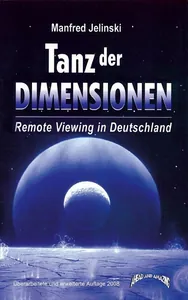
Tanz der Dimensionen

 84
84

Tanz der Dimensionen
Manfred Jelinski's 'Tanz der Dimensionen' offers a compellingly intricate map of subjective reality, published at a time when the digital age was beginning to blur the lines of perception further. The strength of Jelinski's work lies in its systematic approach to concepts often relegated to the mystical fringe. His exploration of 'Perceptual Anchoring' provides a tangible framework for understanding how our beliefs construct our experienced world, moving beyond vague notions of the law of attraction. However, the text's dense philosophical language can sometimes create a barrier to entry, particularly in sections detailing 'Dimensional Resonance.' A passage discussing how collective belief systems can create 'consensus realities' is particularly striking, illustrating the book's potential for radical re-evaluation of social dynamics. While not a light read, its intellectual rigor makes it a valuable contribution for those willing to engage deeply with its ideas.
📝 Description
84
Manfred Jelinski's 'Tanz der Dimensionen,' published in 2000, posits that subjective experience actively shapes physical reality.
Published in 2000, 'Tanz der Dimensionen' by Manfred Jelinski examines how consciousness and the material world intertwine. The book does not present easy answers. Instead, it offers a structure for understanding the fluid divide between our inner lives of thought and feeling, and the outer world of matter and energy. Jelinski encourages readers to view reality not as static, but as a dynamic interaction of forces and perceptions. This work is suited for those dissatisfied with simple explanations of existence and willing to engage with complex philosophical ideas. It is particularly relevant for individuals interested in the nature of perception, the mind-body connection, and how conscious intent might influence events.
Emerging around the year 2000, 'Tanz der Dimensionen' appeared during a time of growing interest in consciousness studies and the philosophical questions raised by quantum physics. While distinct from the more accessible New Age trends, it shared a critical stance against purely materialistic views. Jelinski's work can be compared to Fritjof Capra's 'The Tao of Physics' from 1975, which also connected scientific concepts with Eastern philosophies. However, Jelinski's approach is more focused on direct phenomenological investigation than on broad synthesis.
💡 Why Read This Book?
• Gain a structured understanding of 'Dimensional Resonance' as explained by Jelinski, moving beyond abstract spiritual concepts to a more defined, albeit speculative, framework for consciousness. • Learn about 'Perceptual Anchoring' and how to identify and potentially modify the cognitive patterns that solidify your experienced reality, offering practical self-awareness tools. • Explore the implications of 'Conscious Entanglement' as presented in the book, providing a unique lens through which to consider the relationship between intention and external events.
⭐ Reader Reviews
Honest opinions from readers who have explored this book.
❓ Frequently Asked Questions
What is the core idea behind Manfred Jelinski's 'Tanz der Dimensionen'?
The book's central thesis revolves around the idea that reality is not fixed but is a dynamic interplay of consciousness and perception, explored through concepts like 'Dimensional Resonance' and 'Perceptual Anchoring'.
When was 'Tanz der Dimensionen' first published?
'Tanz der Dimensionen' was first published in the year 2000.
Does the book offer practical exercises for readers?
While primarily theoretical, the book implicitly encourages self-reflection on one's perceptual habits and the nature of belief through its exploration of concepts like 'Perceptual Anchoring'.
Who is Manfred Jelinski?
Manfred Jelinski is the author of 'Tanz der Dimensionen,' a work focused on esoteric philosophy and the nature of consciousness.
Is 'Tanz der Dimensionen' related to quantum physics?
The work engages with philosophical implications that echo certain interpretations of quantum physics, particularly regarding observer effects and interconnectedness, though it is primarily a philosophical and esoteric text.
What is 'Dimensional Resonance' as discussed in the book?
'Dimensional Resonance' refers to Jelinski's concept that different states of consciousness vibrate at distinct dimensional frequencies, influencing one's experience of reality.
🔮 Key Themes & Symbolism
Perceptual Anchoring
This theme examines how consistent patterns of thought, belief, and expectation act as anchors, solidifying an individual's subjective experience of reality. Jelinski posits that our internal frameworks create a predictable external world. The book details how ingrained mental habits, often unconscious, maintain specific 'dimensional frequencies' that shape our interactions and perceptions. Understanding Perceptual Anchoring is presented as a pathway to recognizing the constructed nature of one's reality and the potential for conscious alteration.
Dimensional Resonance
The concept of Dimensional Resonance is central to Jelinski's thesis. It proposes that consciousness operates on varying vibrational frequencies, akin to tuning into different dimensions of existence. The book explores how emotional states, beliefs, and focused attention align with specific resonances, thereby influencing the quality and nature of perceived reality. This framework suggests that shifting one's inner state can lead to a tangible shift in experienced circumstances, moving beyond mere metaphor.
Conscious Entanglement
Jelinski introduces Conscious Entanglement as a speculative but significant aspect of reality's fabric. This theme explores the idea that focused consciousness, when directed with intent, can create subtle connections or influences that extend beyond conventional understandings of causality. It suggests a form of interconnectedness where the act of observation or focused intention can participate in the unfolding of events, particularly within the 'dance' of dimensions described in the title.
Shadow Echoes
The concept of Shadow Echoes addresses the lingering effects of unresolved psychological or energetic imprints. Jelinski suggests that these 'echoes' from past experiences, traumas, or suppressed aspects of the self can continue to influence present perceptions and behaviors, creating repetitive patterns. Recognizing and integrating these Shadow Echoes is presented as crucial for achieving a more coherent and liberated state of consciousness, free from the distortions of past energetic residues.
💬 Memorable Quotes
Direct passages from the work, attributed to the author.
“The boundaries of the self are porous, allowing the outer world to shape us as we shape it.”
— This speaks to the interconnectedness explored in the book, particularly the idea that the distinction between the internal subjective world and the external objective world is not absolute but fluid and interactive.
💡 Key Ideas
Editorial paraphrase of the work's core concepts — not direct quotes.
Reality is not a stage upon which consciousness acts, but the very substance of the act itself.
This quote emphasizes Jelinski's view that consciousness is not a passive observer but an active participant in the creation of reality. It suggests that our subjective experience is fundamental to the existence of the world we perceive.
Each belief is a frequency, and the universe rearranges itself to match the song you sing.
This paraphrased concept highlights the theme of 'Dimensional Resonance.' It suggests that our deeply held beliefs act as vibrational signatures that attract corresponding experiences and circumstances from the broader field of potential reality.
To anchor perception is to build the walls of your world; to loosen the anchor is to open the gates.
This paraphrased concept directly relates to 'Perceptual Anchoring.' It illustrates the dual nature of fixed beliefs: they provide stability but also limit experience, while flexibility allows for new possibilities and altered realities.
The dance of dimensions is the silent conversation between what is perceived and what is possible.
This quote expresses the essence of the book's title and core philosophy, suggesting that reality is a dynamic process where perceived existence constantly interacts with the vast potentiality of what could be.
🌙 Esoteric Significance
Tradition
This work can be placed within the broader currents of Western Esotericism, particularly its Hermetic and Neoplatonic influences that emphasize the power of consciousness and the interconnectedness of all things. It departs from strict Kabbalistic or Gnostic frameworks by focusing more on phenomenological exploration of subjective experience as the primary driver of reality construction, rather than solely relying on established symbolic systems or divine emanations.
Symbolism
Key symbols include the 'dance' itself, representing the dynamic, fluid interplay of consciousness and reality. The concept of 'resonance' functions symbolically, akin to tuning forks vibrating in sympathy, illustrating how states of being attract similar experiences. 'Anchoring' serves as a metaphor for the solidification of perception, like a ship's anchor preventing drift but also limiting movement across the sea of possibility.
Modern Relevance
Contemporary thinkers in consciousness studies and transpersonal psychology often draw upon the ideas presented in 'Tanz der Dimensionen.' Practices focusing on mindfulness, intention setting, and reality creation echo Jelinski's concepts of Perceptual Anchoring and Conscious Entanglement. It remains relevant for those exploring the intersection of quantum physics' philosophical interpretations and subjective experience.
👥 Who Should Read This Book
• Students of Hermetic philosophy and esoteric psychology seeking to understand the mechanics of subjective reality construction. • Philosophers and researchers interested in the mind-body problem and alternative models of consciousness beyond materialism. • Individuals engaged in self-inquiry and personal development who wish to explore the relationship between their inner beliefs and external circumstances.
📜 Historical Context
Published in 2000, Manfred Jelinski's 'Tanz der Dimensionen' emerged during a period of heightened interest in consciousness studies and the philosophical ramifications of quantum mechanics, following seminal works like Fritjof Capra's 'The Tao of Physics' (1975). While not directly part of the Theosophical Society's lineage, it contributed to a broader wave of esoteric literature that sought to integrate spiritual concepts with a more modern, scientifically-informed worldview. The early 21st century saw a continued exploration of mind-body connections and subjective reality, moving beyond the more purely mystical approaches of earlier decades. Jelinski's work can be seen as engaging with the intellectual currents that questioned purely materialistic explanations of existence, offering a more nuanced perspective on the relationship between observer and observed.
📔 Journal Prompts
Reflect on a 'Shadow Echo' that may be influencing your current perceptions.
Analyze a current belief using the framework of 'Perceptual Anchoring'.
Consider how 'Dimensional Resonance' might apply to a recent significant life event.
Explore the potential implications of 'Conscious Entanglement' in your daily interactions.
Map the 'dance of dimensions' in a specific recurring dream or recurring situation.
🗂️ Glossary
Dimensional Resonance
Jelinski's concept that consciousness vibrates at specific frequencies, akin to tuning into different dimensions, which influences the nature of perceived reality.
Perceptual Anchoring
The process by which consistent patterns of thought, belief, and expectation solidify an individual's subjective experience of reality, creating a stable but potentially limiting framework.
Conscious Entanglement
A speculative concept suggesting that focused consciousness and intent can create subtle connections influencing events beyond classical causality.
Shadow Echoes
Lingering psychological or energetic imprints from past experiences or suppressed aspects of self that continue to affect present perceptions and behaviors.
Consensus Reality
The shared agreement, often unconscious, among a group or society about what constitutes reality, shaped by collective beliefs and perceptions.
Subjective Experience
The individual's internal, personal awareness and interpretation of reality, distinct from objective, external phenomena.
Objective Phenomena
External events, objects, or conditions that are perceived to exist independently of individual consciousness or perception.
🔮 Readers Also Liked
Browse all →









More by Manfred Jelinski
All books →




More Free Occult Philosophy Books
View all →