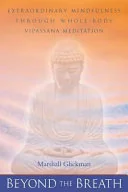
Beyond the Breath
 71
71

Beyond the Breath
Marshall Glickman’s "Beyond the Breath" offers a potent articulation of Sensation-Based Vipassana, a form of meditation purportedly mirroring the Buddha's original method. The strength of this work lies in its clear exposition of accessing the mind through somatic experience, particularly its emphasis on observing emotions as physical sensations. This approach avoids the intellectualization that often encumbers spiritual practice. However, the book’s assertion that "meditation alone is not sufficient" feels somewhat underdeveloped; it hints at further requirements without fully detailing them, leaving the reader with an incomplete prescription. A particularly striking concept is the idea of experiencing emotions non-verbally, directly through bodily awareness, a principle Glickman elucidates with careful instruction. Ultimately, "Beyond the Breath" serves as a valuable, albeit occasionally incomplete, guide to a direct, body-centered path of insight.
📝 Description
71
Marshall Glickman's 2002 book champions Sensation-Based Vipassana as the original Buddhist meditation.
Beyond the Breath argues that direct, non-verbal experience of emotions is possible by using the body as a gateway to the mind. Marshall Glickman outlines a specific method for this practice, known as Sensation-Based Vipassana. He proposes that this technique is the original form of Buddhist meditation. The book also suggests that meditation alone is not enough for complete spiritual development, indicating a need to integrate it with other practices or understandings.
This work is for practitioners who want a more direct engagement with their inner states, especially those curious about meditation's historical origins. It will appeal to individuals who find talk-based methods restrictive and prefer experiential learning. Those interested in the physical aspects of consciousness and the philosophical basis of early Buddhism will find it valuable. Glickman's approach provides a connection between ancient Indian contemplative methods and modern Western psychological and spiritual thought.
This book engages with the lineage of Buddhist meditation, specifically Vipassana, understood here as a practice rooted in direct sensory observation. It positions Sensation-Based Vipassana as a primary technique, distinct from later developments. The text connects this practice to early Indian contemplative traditions, suggesting a path to understanding consciousness through physical experience rather than solely conceptual analysis. It highlights the importance of somatic awareness in spiritual inquiry.
💡 Why Read This Book?
• Gain a direct method for experiencing emotions non-verbally, as detailed in the book's exploration of Sensation-Based Vipassana, allowing for a deeper understanding of emotional states through bodily sensation. • Understand the historical lineage of this practice, tracing its roots to the original methods used by the Buddha 2,500 years ago, as presented in the work's historical context. • Discover the principle that direct physical experience is a potent gateway to the mind, moving beyond purely intellectual comprehension as advocated by Marshall Glickman.
⭐ Reader Reviews
Honest opinions from readers who have explored this book.
❓ Frequently Asked Questions
What is Sensation-Based Vipassana as described in 'Beyond the Breath'?
Sensation-Based Vipassana, as presented in Marshall Glickman's book, is a meditation technique focusing on direct, non-verbal observation of bodily sensations to understand emotions and the mind, believed to be the original method taught by the Buddha.
Who was S.N. Goenka and what is his connection to this book?
S.N. Goenka was a prominent teacher who brought Vipassana meditation, including the sensation-based approach, to the West. 'Beyond the Breath' credits him with introducing this specific form of meditation to a Western audience.
What does the book mean by 'meditation alone is not sufficient'?
The book suggests that while Vipassana is crucial, a complete path to spiritual development may require additional elements or understanding beyond the practice itself, hinting at a more holistic approach to inner work.
How does 'Beyond the Breath' suggest accessing the mind through the body?
It proposes observing physical sensations that correspond to emotional states. By directly perceiving these bodily manifestations without conceptualizing them, one can gain insight into the mind's workings.
When was 'Beyond the Breath' first published?
Marshall Glickman's 'Beyond the Breath' was first published on November 15, 2002, making it a significant contribution to the literature on meditation techniques from the early 21st century.
What distinguishes this book from other meditation guides?
Its focus on Sensation-Based Vipassana as the original Buddhist method, and its emphasis on experiencing emotions directly through the body rather than solely through intellectual understanding or concentration.
🔮 Key Themes & Symbolism
Sensation as Direct Experience
The core of the book lies in its advocacy for experiencing reality through raw physical sensation. This approach bypasses the intellect, which is seen as a filter that can distort perception. By focusing on the impermanent nature of bodily feelings, practitioners are guided to observe emotions and mental events without judgment, thereby gaining direct insight into their arising and passing. This method offers an alternative to conceptual understanding, emphasizing embodied cognition and lived experience as primary sources of wisdom.
Historical Authenticity in Practice
Glickman positions Sensation-Based Vipassana as the authentic, original method of meditation taught by the Buddha approximately 2,500 years ago. This claim situates the book within a lineage that seeks to return to the foundational teachings, distinguishing it from later developments or adaptations of Buddhist contemplative practices. The emphasis is on restoring a direct experiential connection to the earliest forms of Buddhist insight meditation.
Holistic Spiritual Development
A significant, though less elaborated, theme is the assertion that meditation alone is insufficient for complete spiritual realization. This implies a need for integration with other aspects of life or practice. The book suggests that while Vipassana offers clear insights, a broader framework is necessary for full transformation. This concept points towards a more comprehensive understanding of the spiritual path, requiring more than just isolated techniques.
Emotions as Bodily Phenomena
The work posits that emotions are not abstract mental states but are fundamentally rooted in physical sensations. By observing these sensations directly, practitioners can engage with their emotional landscape in a non-verbal, experiential manner. This perspective offers a powerful tool for emotional regulation and understanding, allowing individuals to confront difficult feelings by recognizing their tangible, physical manifestation.
💬 Memorable Quotes
Direct passages from the work, attributed to the author.
“accessing the mind through the body”
— This phrase expresses the book's central thesis: that direct physical experience is a primary and potent pathway to understanding consciousness and mental states, moving beyond purely intellectual or discursive methods.
“Sensation based vipassana meditation, the form of mediation thought of as the original method of meditation as used by the Buddha 2,500 years ago.”
— This highlights the book's focus on a specific, historically grounded meditation technique, positioning it as a return to the earliest, most authentic form of Buddhist contemplative practice taught by its founder.
“provides a means to experience emotions directly and nonverbally”
— This describes the practical outcome of the Sensation-Based Vipassana method, suggesting that it allows practitioners to engage with their feelings on a visceral level, bypassing the need for language or conceptualization.
“meditation alone is not sufficient”
— This statement introduces a critical nuance, suggesting that the practice of Vipassana, while powerful, is part of a larger whole and may require complementary elements for complete spiritual growth or realization.
“the original method of meditation”
— This phrase underscores the book's claim to present a foundational, historically pure form of meditation, setting it apart from later interpretations or modifications of Buddhist contemplative techniques.
🌙 Esoteric Significance
Tradition
While rooted in Buddhist Vipassana, the book's emphasis on direct, sensation-based experience and accessing the mind through the body aligns with certain Hermetic principles of 'As Above, So Below' and the macrocosm/microcosm relationship. It departs from strict Buddhist dogma by framing the practice as a somatic pathway to insight, which can be interpreted through a broader esoteric lens of embodied consciousness, rather than solely through a monastic or purely philosophical framework.
Symbolism
The primary 'symbol' explored is the body itself, understood not merely as a physical vessel but as a direct interface with consciousness and emotion. Sensations within the body—tingling, heat, pressure—function as the immediate language of experience, bypassing conceptual filters. The concept of 'breath' itself, often a focal point in meditation, serves as an anchor to the present moment and the flow of physical life, symbolizing impermanence and the constant arising and passing of phenomena.
Modern Relevance
Contemporary somatic therapies, mindfulness-based stress reduction (MBSR) programs, and trauma-informed care practices echo the book's core ideas by valuing bodily awareness and sensation. Thinkers and practitioners in fields like embodied cognition, somatics, and even certain branches of transpersonal psychology find resonance in Glickman's approach to understanding the mind through direct, physical experience, continuing the exploration of mind-body integration.
👥 Who Should Read This Book
• Meditators seeking to deepen their practice beyond intellectual understanding, particularly those interested in the historical roots of Buddhist contemplation and direct experiential insight. • Individuals exploring somatic psychology and embodied approaches to emotional well-being, who wish to understand how physical sensations relate to mental states. • Students of comparative religion and esoteric traditions interested in the practical application of ancient contemplative techniques and their potential for modern integration.
📜 Historical Context
Published in 2002, Marshall Glickman's "Beyond the Breath" arrived at a time when interest in Buddhist meditation in the West was robust, largely influenced by figures like Thich Nhat Hanh and the widespread adoption of mindfulness practices. This period saw a growing demand for accessible, experiential spiritual paths. Glickman's work distinguished itself by focusing specifically on Sensation-Based Vipassana, a method he posits as the original technique taught by the Buddha approximately 2,500 years ago and popularized in the West by teachers such as S.N. Goenka. While Vipassana itself was not new, the emphasis on sensation as the primary, non-verbal gateway to understanding emotions and the mind offered a particular angle. This approach contrasted with more cognitively oriented or concentration-focused Buddhist practices gaining traction. The book emerged within a broader range of comparative religious studies and psychology exploring consciousness, offering a direct phenomenological account rooted in ancient Indian contemplative traditions.
📔 Journal Prompts
The observation of sensations as a direct pathway to the mind: how has this principle manifested in your own experience?
Reflect on the assertion that 'meditation alone is not sufficient.' What other elements might complement Sensation-Based Vipassana?
Consider the non-verbal language of emotions as physical sensations. What specific sensations do you associate with common emotions like joy or frustration?
How does the concept of experiencing emotions directly, as outlined in the book, differ from your usual ways of processing feelings?
Explore the idea of Sensation-Based Vipassana as the 'original method.' What does this historical framing suggest about the practice's essence?
🗂️ Glossary
Sensation-Based Vipassana
A form of insight meditation that emphasizes direct, non-verbal observation of bodily sensations as the primary means to understand the mind, emotions, and reality.
Vipassana
An ancient Buddhist meditation technique, often translated as 'insight' meditation, aimed at developing clear awareness of the true nature of reality.
Nonverbal experience
Direct perception or understanding that occurs without the use of words or conceptual thought, often through sensory input or intuition.
Emotions as physical phenomena
The concept that emotional states manifest as distinct physical sensations within the body, observable through direct awareness.
Original method of meditation
Refers to the belief that Sensation-Based Vipassana represents the earliest form of meditation taught by the Buddha, prior to later interpretations or developments.
Accessing the mind through the body
A principle suggesting that by paying close attention to bodily sensations and experiences, one can gain direct insight into mental processes and consciousness.
Holistic development
The idea that spiritual or personal growth requires attention to multiple facets of existence, implying that a single practice like meditation may not be sufficient on its own.
This book appears in 1 collection
🔮 Readers Also Liked
Browse all →









From the “Vipassana” Collection
View all →







More Free Occult Philosophy Books
View all →