Remote Viewing
 81
81

Remote Viewing
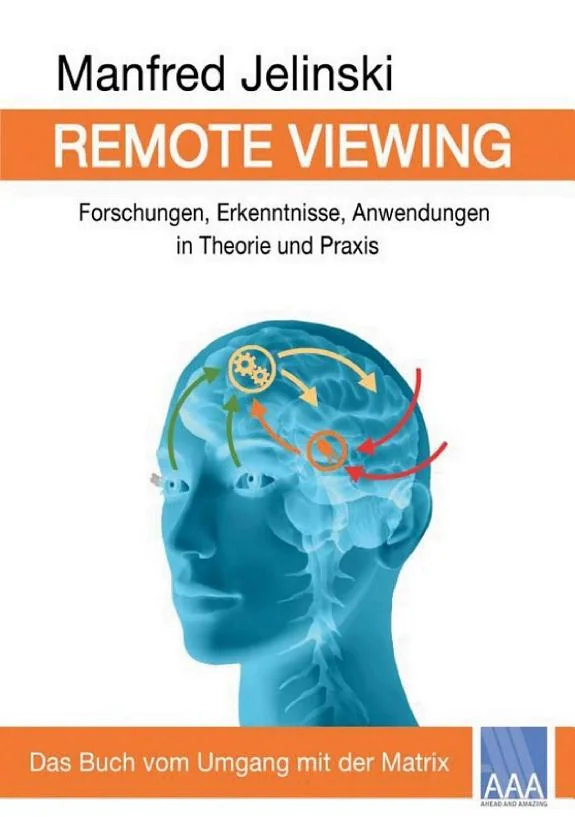
Manfred Jelinski's "Remote Viewing" offers a grounded perspective on a subject often shrouded in esotericism. Instead of sensationalism, Jelinski provides a measured account of nearly two decades of Remote Viewing practice and research in Germany, a welcome approach for critical readers. The strength of the book lies in its detailed exposition of experimental methodologies and the author's extensive personal experience in training and research. For instance, the discussion on differentiating subjective impressions from genuine target information, a crucial hurdle in RV, is handled with notable clarity. However, the book's focus on the German context, while informative, might leave readers unfamiliar with the broader international landscape of RV research wanting more comparative analysis. A particularly compelling passage describes the iterative process of refining protocols to minimize contamination and enhance data reliability. While not a revolutionary manifesto, "Remote Viewing" serves as a solid, experience-based introduction to the discipline's practical and theoretical foundations in a specific geographical and temporal setting.
📝 Description
81
Manfred Jelinski's 2015 book details the progression of Remote Viewing in Germany over two decades.
Manfred Jelinski's work, published in December 2015, examines Remote Viewing (RV) as a trainable skill rather than an innate gift. It details the development of RV in Germany over approximately twenty years preceding the book's release. The text focuses on the methodologies and accumulated knowledge from extensive research and experimentation aimed at accessing information beyond normal senses. Jelinski presents RV as a structured approach to acquiring hidden information, distinguishing it from simpler psychic phenomena. The book highlights the scientific rigor applied to understanding non-conscious mental states and brain functions related to this practice.
This book is for individuals serious about expanding their perceptual abilities and understanding the human mind's potential. It offers a comprehensive overview grounded in practical experience for those familiar with the concept of Remote Viewing. Readers interested in parapsychology, consciousness studies, and the connection between the mind and information acquisition will find value here. The text also considers the broader implications of integrating RV practitioners into society and the psychological aspects of developing these skills, appealing to both newcomers and those with prior knowledge seeking deeper context.
Jelinski's book situates Remote Viewing within a lineage of consciousness exploration that moves beyond purely materialistic explanations of reality. While emphasizing scientific rigor, it engages with phenomena traditionally explored in esoteric traditions concerning extrasensory perception and the mind's ability to interact with information beyond physical limitations. The work addresses the potential for disciplined mental training to access subtle information, a concept echoed in various contemplative and mystical practices that seek to expand awareness and perception beyond the ordinary sensory apparatus.
💡 Why Read This Book?
• Learn specific experimental protocols used in Remote Viewing research since the early 2000s in Germany, providing a practical framework for understanding data acquisition that goes beyond anecdotal claims. • Understand the evolution of Remote Viewing in Germany over two decades, offering concrete historical context and insights into how the discipline matured and was integrated into local research efforts. • Gain insight into the author's extensive experience training individuals in RV techniques, revealing practical challenges and advancements in understanding non-conscious brain functions and perception.
⭐ Reader Reviews
Honest opinions from readers who have explored this book.
❓ Frequently Asked Questions
What is the primary focus of Manfred Jelinski's "Remote Viewing"?
The book primarily focuses on the practical application, research, and development of Remote Viewing (RV) in Germany over approximately 20 years leading up to its 2015 publication, detailing experiments and training experiences.
When was "Remote Viewing" by Manfred Jelinski first published?
Manfred Jelinski's "Remote Viewing" was first published on December 2, 2015.
Does the book present Remote Viewing as an innate ability or a trainable skill?
Jelinski presents Remote Viewing as a trainable skill, emphasizing the methodologies and training that have led to increased knowledge about non-conscious states and brain functions.
What kind of research does the book discuss regarding Remote Viewing?
The book discusses research projects and experiments conducted to understand and validate Remote Viewing, contributing to the knowledge base surrounding non-conscious perception and cognitive processes.
Who would benefit from reading "Remote Viewing"?
Individuals interested in parapsychology, consciousness studies, the practical application of psychic abilities, and those seeking a grounded, experience-based overview of Remote Viewing, particularly within the German context, would benefit.
What is the author's background concerning Remote Viewing?
Manfred Jelinski has nearly 20 years of experience in Remote Viewing, including conducting experiments, leading research projects, and training numerous individuals in the technique.
🔮 Key Themes & Symbolism
Methodology and Experimentation
Jelinski's work meticulously details the experimental protocols developed and employed over two decades of Remote Viewing research in Germany. The emphasis is placed on structured approaches, including blind and double-blind conditions, to ensure the validity of perceived information. This theme explores how rigorous experimentation aims to move RV from anecdotal accounts to a more empirically verifiable discipline, detailing the process of data collection and analysis to understand non-conscious perception.
Training and Skill Development
A significant aspect of the book focuses on the training of individuals in Remote Viewing techniques. Jelinski shares his extensive experience in educating numerous people, highlighting the progression from novice to proficient viewer. This theme explores the pedagogical aspects of RV, exploring how specific exercises and feedback mechanisms contribute to developing the viewer's ability to access and interpret subtle information beyond sensory input.
Non-Conscious States
The book examines Remote Viewing as a window into non-conscious aspects of the human mind and brain functions. It posits that RV accesses information through channels not typically engaged by our everyday conscious awareness. This theme investigates the theoretical underpinnings and practical observations related to how the mind operates beyond its ordinary cognitive framework, contributing to a deeper understanding of consciousness itself.
Societal Integration
Jelinski addresses the relationship between Remote Viewers and the broader society. This theme considers the challenges and implications of practicing and acknowledging abilities that lie outside conventional paradigms. It explores how RV practitioners navigate their role within society and how their work, often rooted in esoteric or parapsychological research, is perceived and integrated into the wider social fabric.
💬 Memorable Quotes
Direct passages from the work, attributed to the author.
“Fast 20 Jahre ist Remote Viewing nun in Deutschland.”
— This opening statement immediately grounds the book in a specific timeframe and geographical context, signaling a comprehensive review of the discipline's development in Germany over two decades.
“unzählige Personen in dieser Technik ausgebildet”
— This highlights the practical, educational dimension of Remote Viewing as presented by the author, emphasizing the significant number of individuals trained, suggesting a mature and widespread practice.
“Anhebung unserer Kenntnisse über nichtbewusste Zustände und Gehirnfunktionen”
— This phrase points to the book's ambition to contribute to scientific understanding, framing Remote Viewing not just as a phenomenon but as a tool for exploring the deeper workings of the mind.
“Beziehung von Remote Viewern zum Rest der Gesellschaft beleuchtet”
— This indicates a critical examination of the social dynamics surrounding Remote Viewing, suggesting the book goes beyond technical instruction to explore broader societal implications and acceptance.
“Erfahrungen zu allen”
— This incomplete sentence, likely concluding the original blurb, suggests a comprehensive scope, promising coverage of various facets and experiences within the field of Remote Viewing.
🌙 Esoteric Significance
Tradition
While Remote Viewing itself is a modern discipline rooted in 20th-century parapsychological research, its practice touches upon ancient esoteric concepts of scrying, clairvoyance, and non-local perception found in Hermetic, Gnostic, and various mystical traditions. Jelinski's work fits within a contemporary esoteric landscape that seeks to empirically investigate and operationalize phenomena previously relegated to subjective or spiritual experience. It bridges the gap between ancient intuitive practices and modern scientific inquiry, offering a structured methodology for accessing what might be termed the akashic records or universal consciousness.
Symbolism
Key symbols in Remote Viewing often relate to the process of information retrieval itself. The 'target' can be seen as a symbolic representation of the unknown, the hidden divine, or the collective unconscious. The 'viewer' acts as a mediator, translating abstract impressions into concrete data, akin to an alchemist transforming base elements. The 'protocols' themselves function as symbolic structures, guiding the viewer through a ritualistic process designed to bypass ordinary consciousness and access deeper realities, much like mandalas or sigils are used in other esoteric traditions.
Modern Relevance
Contemporary thinkers and practitioners in fields ranging from consciousness studies to transpersonal psychology often draw upon the foundational work in Remote Viewing. Schools focusing on intuitive development, psychic training, and even certain forms of applied metaphysics utilize methodologies that echo RV principles. Modern remote viewers continue to explore its applications in areas such as environmental sensing, historical research, and personal insight, building upon the research frameworks established in the late 20th and early 21st centuries, as documented by authors like Jelinski.
👥 Who Should Read This Book
• Aspiring Remote Viewers seeking a comprehensive overview of the discipline's development and practical training methodologies, particularly within a European context. • Researchers in parapsychology and consciousness studies looking for detailed accounts of experimental protocols and accumulated findings from nearly two decades of work in Germany. • Skeptics and the intellectually curious interested in understanding the systematic approaches used to investigate phenomena beyond conventional sensory perception, presented through lived experience and research.
📜 Historical Context
Manfred Jelinski's "Remote Viewing," published in December 2015, emerges from a period where parapsychology, and specifically the US-originated concept of Remote Viewing (RV), had been developing in Germany for approximately two decades. This era followed intense government-funded research in the United States, notably at Stanford Research Institute (SRI) and later at various private entities, which had brought RV into greater public and academic consciousness globally. In Germany, institutions and private groups had been training individuals and conducting experiments, building a body of practical knowledge. Jelinski's work reflects this maturing phase, moving beyond initial explorations to detailed accounts of accumulated experience and research projects. Contemporary figures and movements in Western esotericism and consciousness studies, while not always directly engaging with RV, were exploring related themes of expanded awareness and non-local consciousness, creating an intellectual climate where such work could find an audience. The book implicitly engages with the history of psychical research, a field often met with skepticism, positioning RV as a subject of systematic inquiry.
📔 Journal Prompts
Initial impressions of the 'training' concept in Remote Viewing.
Reflections on the distinction between conscious and 'nichtbewusste Zustände' (non-conscious states) as applied to RV.
The role of 'Experimente' in validating Remote Viewing data.
How the 'Beziehung von Remote Viewern zum Rest der Gesellschaft' impacts practice.
Personal interpretation of the 'Anhebung unserer Kenntnisse' in the context of RV research.
🗂️ Glossary
Remote Viewing (RV)
A mental capability allowing a trained individual to perceive information about a distant or unseen target using psychic means, rather than conventional senses. It involves accessing information beyond normal spatio-temporal limitations.
Non-conscious states
Mental states or processes that occur outside of conscious awareness. In the context of RV, these are believed to be the primary channels through which target information is accessed.
Experimente
Structured procedures designed to test hypotheses or gather data regarding Remote Viewing capabilities. These often involve blind or double-blind conditions to ensure objectivity.
Training
The process of teaching and developing the skills required for effective Remote Viewing, involving specific techniques, exercises, and feedback mechanisms.
Brain functions
The physiological and psychological activities performed by the brain. RV research aims to understand how these functions might be involved in perceiving information outside conventional sensory input.
Gesellschaft
Society. Refers to the broader social context in which Remote Viewers operate, including public perception, acceptance, and integration of their abilities and research.
Parapsychology
The study of alleged psychic phenomena and other paranormal claims, including telepathy, precognition, and psychokinesis. Remote Viewing falls under this field of study.
This book appears in 1 collection
🔮 Readers Also Liked
Browse all →









From the “Remote Viewing” Collection
View all →







More Free Occult Philosophy Books
View all →