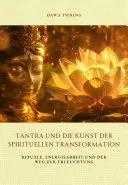
Tantra und die Kunst der spirituellen Transformation
 77
77

Tantra und die Kunst der spirituellen Transformation
Dawa Tsering’s "Tantra und die Kunst der spirituellen Transformation" offers a structured entry into the complex world of Indo-Tibetan Buddhist Tantra. The author’s strength lies in demystifying practices that can often appear opaque to the uninitiated, particularly in the initial sections detailing the purpose of rituals and mantras. However, the book occasionally suffers from a certain academic dryness, which, while ensuring accuracy, may detract from the experiential quality that Tantra often aims to evoke. A particularly effective passage discusses the precise visualization techniques for deity yoga, grounding the abstract in concrete mental exercises. While comprehensive, it sometimes feels like a scholarly overview rather than an embodied guide. Ultimately, this work serves as a valuable, if somewhat reserved, introduction to a profound spiritual path.
📝 Description
77
Dawa Tsering's 2010 book posits Tantra as a method for inner change, not just history.
This book examines Tantra not as a relic of the past but as a practical system for significant personal transformation. It offers a guide to Indo-Tibetan Buddhist traditions, explaining how rituals, mantra recitation, and energy manipulation techniques help integrate mind and body. The text is for individuals who seek a deeper grasp of esoteric practices and how to use them for personal growth. It will appeal to those interested in contemplative traditions, particularly Vajrayana Buddhism, and who want to understand its core philosophies and exercises. Readers desiring structured spiritual development, combining study with embodied practice, will find this book valuable.
The book places its teachings within Indo-Tibetan Buddhism, a tradition that developed over centuries in the Himalayan regions. It touches upon the history and transmission of tantric practices, which have a long and complex past. The author engages with broader Buddhist philosophy and practice that grew alongside, and sometimes interacted with, other Indian spiritual systems.
Central concepts include the generation and completion stages in Vajrayana Tantra, key to shifting ordinary perception toward enlightened awareness. The book also details the role of the guru, the importance of initiation, and the understanding of subtle energy channels (nadis) and vital energies (prana). It stresses that Tantra requires disciplined effort and accurate understanding to realize its transformative potential.
The book is situated within the Indo-Tibetan Buddhist lineage, a rich spiritual tradition that developed across the Himalayan regions for many centuries. It focuses on Vajrayana Tantra, a path within Buddhism known for its sophisticated methods of transforming consciousness. These practices involve detailed visualizations, the use of sacred sounds (mantras), and the manipulation of subtle energies within the body. The transmission of these teachings traditionally relies on direct guidance from a qualified teacher (guru) and formal initiation, ensuring the correct understanding and application of these potent techniques.
💡 Why Read This Book?
• Gain practical methods for mental and energetic alignment, directly referencing the book's explanation of mantra recitation and visualization techniques. • Understand the historical roots of Vajrayana Tantra by exploring its development within Indo-Tibetan Buddhism, as detailed in the text. • Learn about specific energy work concepts, such as the function of nadis and prana, as presented in Dawa Tsering's structured exposition.
⭐ Reader Reviews
Honest opinions from readers who have explored this book.
❓ Frequently Asked Questions
What is the primary focus of "Tantra und die Kunst der spirituellen Transformation"?
The book's primary focus is on presenting Tantra, specifically from the Indo-Tibetan Buddhist tradition, as a practical path for spiritual transformation, utilizing rituals, mantras, and energy work to harmonize mind and body.
Who is Dawa Tsering, the author?
Dawa Tsering is an author focusing on esoteric and spiritual topics, with this work published in 2025 exploring the teachings of Indo-Tibetan Buddhism.
Does the book require prior knowledge of Buddhism?
While prior knowledge can be helpful, the book aims to guide readers through the core concepts of tantric Buddhism, making it accessible to those new to the subject but eager to learn.
What kind of practices are discussed in the book?
The book discusses various practices including the use of sacred mantras, visualization techniques, energy work (like understanding nadis and prana), and rituals as pathways to spiritual transformation.
When was "Tantra und die Kunst der spirituellen Transformation" first published?
The book was first published on February 24, 2025, making it a contemporary exploration of ancient tantric teachings.
Is this book about the common Western interpretations of Tantra?
No, this book specifically focuses on the Indo-Tibetan Buddhist lineage of Tantra, distinguishing it from other, often more secular or sensually focused, interpretations.
🔮 Key Themes & Symbolism
Harmonizing Mind and Body
The book posits that Tantra offers a unique methodology for achieving profound inner change by integrating the physical and mental aspects of existence. It details how specific practices, such as the precise application of mantras and focused visualization, work synergistically to align the practitioner's internal states. This approach contrasts with paths that might emphasize one aspect over the other, advocating instead for a holistic method rooted in the Indo-Tibetan Buddhist tradition.
The Power of Sacred Sound
A significant portion of the book is dedicated to the esoteric function of mantras within the tantric framework. It moves beyond simple recitation, explaining how these sonic vibrations are understood to possess transformative power, capable of influencing consciousness and energy fields. The text elaborates on the correct pronunciation, intention, and context for using mantras as tools for spiritual evolution within the Vajrayana context.
Energy Work and Subtle Anatomy
Dawa Tsering explores the tantric understanding of subtle energy systems, including nadis (channels) and prana (life force). The book explains how Tantra utilizes specific techniques, often involving visualization and breath control, to manipulate and purify these energies. This internal alchemy is presented as a crucial element for awakening higher consciousness and facilitating spiritual transformation, drawing directly from established Indo-Tibetan yogic traditions.
Ritual as Transformation
The book examines the role of ritual in tantric practice, not as mere ceremony, but as a dynamic process designed to effect psychological and spiritual shifts. It discusses how rituals, when performed with correct understanding and intention, can create sacred space and facilitate a connection to enlightened energies or archetypes. The text clarifies the purpose behind these complex practices within the Indo-Tibetan Buddhist lineage.
💬 Memorable Quotes
Direct passages from the work, attributed to the author.
“Tantra is a powerful path of inner transformation.”
— This statement frames Tantra not as an obscure historical subject but as an active, potent methodology for personal evolution, emphasizing its practical application for change.
“Mantras are sacred sounds with transformative potential.”
— This highlights the belief within tantric traditions that specific vocalizations are not just words but energetic tools capable of altering consciousness and facilitating spiritual progress.
“Visualisation is key to engaging tantric energies.”
— This emphasizes the mental faculty of imagination as a crucial component in tantric practice, enabling practitioners to interact with subtle energies and archetypal forms.
“Indo-Tibetan Buddhism offers deep teachings on spiritual change.”
— This points to the specific lineage and tradition from which the book draws its content, positioning it as a source of profound wisdom concerning personal and spiritual development.
💡 Key Ideas
Editorial paraphrase of the work's core concepts — not direct quotes.
Rituals and energy work bring mind and body into harmony.
This paraphrased concept explains the core function of tantric practices as described in the book: to create balance and integration between one's physical and mental dimensions.
🌙 Esoteric Significance
Tradition
This work is firmly rooted in the Vajrayana tradition of Indo-Tibetan Buddhism, a major branch of Mahayana Buddhism. Esoterically, Vajrayana is distinct for its use of advanced techniques, including complex visualizations, mantra recitation, and guru yoga, aimed at accelerating the path to enlightenment. It views the practitioner's body and mind as inherently pure and capable of Buddhahood, using tantric methods to actualize this potential, distinguishing it from more gradualist paths.
Symbolism
Key symbols explored include mandalas, representing the enlightened cosmos and the practitioner's purified mind, and deities (yidams), which are visualized forms embodying specific enlightened qualities. The Dorje (vajra) symbolizes indestructible wisdom and skillful means, often paired with the bell (ghanta), representing wisdom itself. These symbols are not merely decorative but are active tools used in meditation and ritual to transform consciousness.
Modern Relevance
Contemporary practitioners of mindfulness, somatic experiencing, and various forms of contemplative spirituality can find resonance in the book's emphasis on embodied awareness and focused attention. Modern Vajrayana practitioners, both within and outside Tibetan communities, continue to rely on such texts for doctrinal clarity and guidance on practice. Furthermore, scholars of religion and psychology are increasingly interested in the sophisticated psychological techniques embedded within tantric traditions.
👥 Who Should Read This Book
• Students of comparative religion interested in the specific doctrines and practices of Indo-Tibetan Buddhist Tantra, seeking an overview of its historical and philosophical context. • Aspiring practitioners of meditation and esoteric disciplines who wish to understand the foundational principles and techniques, such as mantra use and visualization, before engaging in advanced study. • Researchers in consciousness studies or psychology interested in the historical applications of mind-body integration techniques within a distinct spiritual framework.
📜 Historical Context
Published in 2025, Dawa Tsering's work enters a contemporary discourse on Eastern spiritualities. Its focus on Indo-Tibetan Buddhist Tantra places it within a lineage that saw significant development from the 8th century CE onwards, particularly in regions like Tibet. This tradition evolved alongside, and sometimes diverged from, other major Buddhist schools such as Mahayana and philosophical systems like Madhyamaka. While the book itself is new, the teachings it discusses have a long history, facing periods of both flourishing transmission and suppression. Contemporary reception of tantric Buddhism in the West has often been varied, sometimes encountering misinterpretations or sensationalism, making a clear exposition like this potentially valuable for serious students. The work implicitly engages with scholars and practitioners who have studied or translated tantric texts, contributing to ongoing efforts to understand this complex spiritual path.
📔 Journal Prompts
The concept of spiritual transformation through tantric methods.
The role of sacred mantras in aligning mind and body.
Understanding the historical development of Indo-Tibetan Buddhist Tantra.
Reflecting on the practice of visualization as presented.
The significance of integrating rituals into spiritual practice.
🗂️ Glossary
Tantra
A complex system of spiritual traditions originating in India, particularly prominent within Indo-Tibetan Buddhism, that employs rituals, mantras, and energy work for spiritual transformation.
Indo-Tibetan Buddhism
The form of Buddhism that developed in Tibet and surrounding Himalayan regions, synthesizing Indian Mahayana and Vajrayana traditions with local elements.
Mantra
Sacred sounds, syllables, words, or phrases used in meditation and ritual, believed to possess spiritual power and aid in concentration and transformation.
Visualization
A meditative technique involving the mental creation of images, often of deities or sacred symbols, used to cultivate specific states of mind or connect with enlightened qualities.
Nadis
In tantric physiology, these are subtle energy channels within the body through which vital energy (prana) flows.
Prana
The vital life force or energy that animates all beings, often associated with breath in yogic and tantric traditions.
Vajrayana
A branch of Mahayana Buddhism, often referred to as Tantric Buddhism, known for its rapid path to enlightenment through advanced techniques.