Les Yoruba du nouveau monde
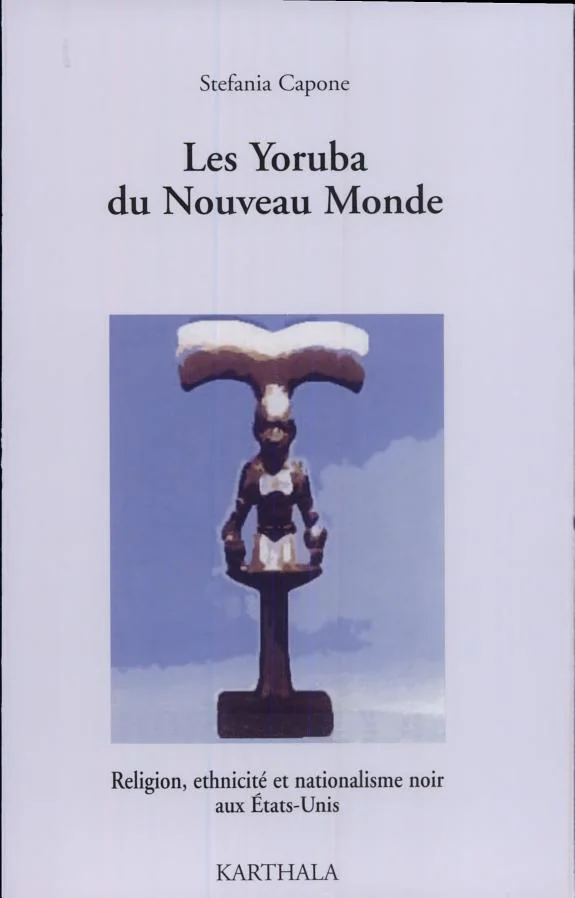
 83
83

Les Yoruba du nouveau monde
Stefania Capone's "Les Yoruba du nouveau monde" offers a rigorous, scholarly account of how Yoruba religious traditions transplanted themselves onto American soil. The work's strength lies in its meticulous tracing of the post-1960s migration patterns, particularly the influence of Cuban exiles, and their impact on the burgeoning interest in African diasporic religions among African Americans. Capone avoids sensationalism, presenting a grounded analysis of the Regla de Ocha's establishment. A notable point is the detailed exploration of how the Civil Rights Movement and Black Nationalism created a receptive environment for these spiritual traditions. However, the academic tone, while laudable for its precision, might prove dense for casual readers. The book's examination of the initiation process, while informative, occasionally feels like an ethnographic report rather than an exploration of lived spiritual experience. Nevertheless, Capone provides essential documentation for understanding this significant religious phenomenon. It stands as a vital scholarly contribution to the study of Afro-Caribbean religions in the United States.
📝 Description
83
Stefania Capone's 1999 study traces the post-1960s migration of Yoruba religious traditions to the United States.
Stefania Capone's "Les Yoruba du nouveau monde" examines the movement and adaptation of West African religious practices, particularly the Regla de Ocha, also known as Santería, into the United States. The work focuses on the increase of these traditions following the 1960s, largely spurred by Cuban exiles who left their country after the Castrist revolution. Capone details how these belief systems found a receptive environment within the U.S., a context shaped by the Civil Rights Movement and the rise of Black Nationalism.
The narrative is set against a backdrop of substantial social and political changes in America from the 1960s onward. The book highlights the appeal of African spiritual practices to African Americans looking to reconnect with their heritage during a time of significant cultural reassessment and growing Black consciousness. This historical setting is vital for understanding how these traditions were received and spread.
Capone discusses concepts like religious syncretism, cultural resilience, and the adaptation of African spiritual legacies in new settings. The book investigates how initiates experience their spiritual lives, combining Yoruba cosmology with their daily realities in the diaspora. It provides a close look at the Regla de Ocha, analyzing its rituals, deities, and community structure.
This book sits within the study of Afro-diasporic religions, focusing on how traditions originating in West Africa, like those of the Yoruba people, were transported and transformed across the Atlantic. It specifically addresses the development of the Regla de Ocha (Santería) in the United States, a practice that blends Yoruba cosmology with elements of Catholicism and local influences. Capone's work contributes to understanding the evolution of these spiritual systems as they encountered new social, political, and cultural environments, demonstrating their capacity for resilience and reinterpretation.
💡 Why Read This Book?
• Understand the specific post-1960s surge of African-originated religions in the US, driven by Cuban exiles, as detailed in the book's historical context. • Gain insight into how the Regla de Ocha, or Santería, adapted and flourished within the socio-political climate of the Civil Rights Movement and Black Nationalism. • Explore the complex interplay of migration, religious syncretism, and the search for ancestral roots through Capone's scholarly analysis of Yoruba cosmology in the diaspora.
⭐ Reader Reviews
Honest opinions from readers who have explored this book.
❓ Frequently Asked Questions
What is the primary religious tradition discussed in Stefania Capone's "Les Yoruba du nouveau monde"?
The primary tradition examined is the Regla de Ocha, commonly known as Santería, a syncretic religion with roots in Yoruba cosmology that migrated to the Americas.
When did the surge of African-originated religious practices in the US, as described in the book, begin?
The significant surge of these practices in the United States began in the 1960s, largely influenced by Cuban émigrés.
What role did the Civil Rights Movement play in the spread of these religions?
The Civil Rights Movement, alongside Black Nationalism, created a climate receptive to African-rooted spiritual traditions, as many African Americans sought to reconnect with their ancestral heritage.
Who were the main groups responsible for bringing these religions to the US?
The primary groups were Cuban exiles who fled the Castrist revolution, carrying their religious practices with them to the United States.
What academic disciplines would find "Les Yoruba du nouveau monde" most relevant?
Scholars and students of religious studies, anthropology, sociology, and African diaspora studies would find this work highly relevant.
Does the book focus on practitioners in Cuba or the United States?
The book specifically focuses on the establishment and practice of these Yoruba-derived religions within the United States, particularly after their migration.
🔮 Key Themes & Symbolism
Diaspora and Adaptation
The work meticulously charts the journey of Yoruba religious practices from Africa, through the Caribbean (specifically Cuba), and into the American landscape. It highlights how these traditions, embodied in the Regla de Ocha, did not simply replicate their original forms but underwent significant adaptation. This process involved syncretism with existing Catholic iconography and a reinterpretation of rituals and beliefs to resonate with the experiences of migrants and the socio-political environment of the United States, particularly in the wake of the 1960s.
Religious Syncretism
Capone examines the rich syncretism inherent in Afro-Caribbean religions, focusing on how Yoruba deities (Orishas) were often identified with Catholic saints. This blending of traditions was a survival mechanism and a way to maintain cultural identity while navigating a predominantly Christian society. The book illustrates how this syncretism allowed the Regla de Ocha to find a receptive audience among African Americans seeking spiritual connections and a sense of historical continuity.
Cultural Reclamation
A central theme is the desire among African Americans, particularly during the Civil Rights era and the rise of Black Nationalism, to reconnect with their African heritage. "Les Yoruba du nouveau monde" demonstrates how the adoption and practice of Yoruba-based religions served as a powerful vehicle for this cultural reclamation. It allowed individuals to forge a distinct identity rooted in ancestral traditions, offering a counter-narrative to imposed colonial histories and fostering a sense of pride and belonging.
Migration and Community Formation
The book underscores the role of migration, especially the influx of Cuban refugees post-1959 revolution, in disseminating these religious practices. Capone analyzes how these new communities formed around shared spiritual beliefs and practices, creating social networks that supported religious transmission and communal identity in the United States. The establishment of new temples and initiation lineages illustrates the vitality and resilience of these traditions.
💬 Memorable Quotes
Direct passages from the work, attributed to the author.
“The migration of Afro-Cuban religions to the US following the 1959 revolution.”
— This highlights a key historical moment where political upheaval directly led to the significant diffusion of Yoruba-based spiritual practices into the American religious landscape, setting the stage for their subsequent development.
“The appeal of African-rooted religions to African Americans during the Civil Rights era.”
— This points to a crucial socio-cultural dynamic: the search for identity and heritage among African Americans found a powerful outlet in these traditions, connecting them to ancestral Africa.
“The Regla de Ocha as a fertile ground for spiritual exploration in the US.”
— This suggests that the existing cultural and religious milieu in the United States, particularly during the 1960s and beyond, was uniquely open to the syncretic and ancestral focus of Afro-Caribbean faiths.
“Initiation into traditions seeking renewed connection with African origins.”
— This describes the personal and communal drive behind the adoption of these religions, emphasizing the active seeking of spiritual and historical links to Africa by new adherents.
“The role of Cuban refugees in transplanting religious practices.”
— This pinpoints a specific demographic and historical event as instrumental in the geographical spread and establishment of these complex religious systems in a new continent.
🌙 Esoteric Significance
Tradition
While not strictly an esoteric text in the Western Hermetic sense, Capone's work engages with traditions deeply rooted in indigenous African cosmologies that possess their own complex spiritual systems. The Regla de Ocha, or Santería, is part of the broader Yoruba religious complex, which shares commonalities with other diasporic traditions that have influenced esoteric thought globally. It represents a living, evolving spiritual lineage that, while distinct from Western occultism, offers parallel explorations of divine forces, spiritual intermediaries, and the human connection to the sacred.
Symbolism
Key symbols within the Yoruba traditions discussed include the Orishas, divine personifications of natural forces and human archetypes (e.g., Oshun, the Orisha of love and rivers; Ogun, the Orisha of iron and war). The concept of *ashe* (a life force or spiritual power) is also central, representing the animating energy of the universe. Ritual objects, sacred dances, and divination practices (like Ifá) are imbued with symbolic meaning, serving as conduits for spiritual communication and empowerment.
Modern Relevance
Capone's work remains highly relevant for contemporary practitioners and scholars of Afro-Caribbean religions. It provides crucial historical and sociological context for the ongoing vitality of Santería and similar traditions in the US. Thinkers and practitioners exploring religious syncretism, the impact of globalization on spirituality, and the resurgence of African-based faiths continue to draw upon its detailed analysis. Its insights are valuable for understanding modern spiritual movements that emphasize ancestral connection and cultural identity.
👥 Who Should Read This Book
• Scholars of Religious Studies and Anthropology: Gain a detailed, historically grounded understanding of the migration and adaptation of Yoruba religious practices in the US. • Practitioners of Afro-Caribbean Religions: Deepen your knowledge of the Regla de Ocha's historical trajectory and its socio-cultural context in its new American setting. • Students of African Diaspora History: Understand the critical role of religious traditions in shaping cultural identity and community formation among African descendants in North America.
📜 Historical Context
Stefania Capone's "Les Yoruba du nouveau monde" emerged within an academic environment increasingly interested in the African diaspora and non-Western religions. Published in 2005, it builds upon scholarship concerning the impact of post-1959 Cuban emigration, a demographic shift that significantly altered the religious range of American cities. The work situates itself amidst the intellectual currents of the late 20th century, which saw a growing recognition of the resilience and adaptability of African-based spiritual systems. This period also witnessed a resurgence of interest in African heritage among African Americans, fueled by the ongoing legacy of the Civil Rights Movement and the cultural affirmations of Black Nationalism. Capone's research contrasts with earlier, often more localized, studies by scholars like Lydia Cabrera, who focused primarily on Cuban religious practices within Cuba itself. The reception of Capone's work has been largely within academic circles, contributing to ongoing debates on religious pluralism and cultural transmission in the Americas.
📔 Journal Prompts
The post-1960s surge of African-originated religions in the US, as detailed by Capone.
The specific challenges and adaptations faced by the Regla de Ocha in its American milieu.
The concept of cultural reclamation through spiritual practice in the context of Black Nationalism.
How migration patterns, particularly those of Cuban exiles, shaped religious transmission.
The syncretic blending of Yoruba cosmology with existing American religious landscapes.
🗂️ Glossary
Regla de Ocha
A major Afro-Cuban religion, also known as Santería, which synthesizes Yoruba beliefs and practices with Catholicism. It centers on the worship of Orishas.
Santería
A widely recognized name for the Regla de Ocha, stemming from the Spanish word 'santero' (saint-maker). It reflects the syncretic nature of the religion.
Orishas
Deities or spirits in the Yoruba religion and its diasporic forms. Each Orisha embodies natural forces and human archetypes, possessing unique attributes and stories.
Yoruba
An ethnic group primarily from Southwestern Nigeria and Benin, whose religious and cultural traditions form the basis for many Afro-Caribbean and Afro-American religions.
Syncretism
The merging or attempted merging of different religions, cultures, or schools of thought. In this context, it refers to the blending of Yoruba beliefs with Catholicism.
Black Nationalism
An ideology advocating for the political, economic, and cultural unity and strength of Black people. It often emphasizes self-determination and a connection to African heritage.
Cuban Revolution
The armed revolt led by Fidel Castro that ousted the U.S.-backed dictator Fulgencio Batista in 1959, leading to significant emigration from Cuba.
This book appears in 1 collection
🔮 Readers Also Liked
Browse all →









From the “Santeria” Collection
View all →








More Free Occult Philosophy Books
View all →