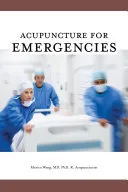
Acupuncture for Emergencies
 84
84

Acupuncture for Emergencies
Martin Wang’s Acupuncture for Emergencies challenges the conventional boundaries of medical intervention by extending the utility of acupuncture into critical care. The book’s strength lies in its bold assertion that ancient needling techniques can address conditions as severe as stroke and coma, areas typically reserved for high-tech Western medicine. Wang’s detailed exploration of specific acupoints, such as those used to manage shock or heavy bleeding, provides a practical framework for practitioners. However, the work’s primary limitation is its limited engagement with the rigorous diagnostic protocols and immediate life-support mechanisms integral to Western emergency medicine. A particularly striking section details the application of acupuncture in cases of CO poisoning, a scenario where rapid oxygenation is paramount, raising questions about how TCM might integrate with or augment such immediate interventions. The text offers a unique perspective on TCM's potential, though it requires careful consideration of its place alongside established emergency procedures.
📝 Description
84
Martin Wang's 2018 book argues for using acupuncture in acute medical emergencies.
Acupuncture for Emergencies, published in 2018 by Martin Wang, proposes the use of acupuncture in critical medical situations, moving beyond its typical association with chronic conditions. The book details how this ancient practice can address severe issues like shock, coma, hemorrhage, stroke, carbon monoxide poisoning, and drowning, scenarios usually handled by conventional emergency medicine. Wang aims this text at practitioners and students of Traditional Chinese Medicine (TCM) who want to integrate emergency care into their practice or understand how TCM can augment Western interventions. It also speaks to those interested in alternative approaches to crisis management. The book emphasizes specific acupuncture points and meridian pathways that are thought to quickly influence vital functions, including the concept of 'distal needling' to affect the whole system.
This work situates acupuncture within the broader esoteric tradition of Traditional Chinese Medicine, which views the body as a system of vital energy, or Qi, that must be kept in balance. While commonly applied to manage long-term health and pain, TCM's principles of restoring energetic equilibrium are presented here as applicable to immediate, life-threatening events. The book connects the practice to a historical lineage that predates Western emergency protocols, suggesting a complementary perspective on critical care rooted in millennia of observation and energetic theory.
💡 Why Read This Book?
• Learn about the specific acupuncture points and meridian pathways Wang identifies for treating acute conditions like shock and coma, offering a tangible skill beyond chronic pain management, as detailed in the sections on emergency applications. • Understand how the concept of 'distal needling' can be applied to rapidly influence systemic vital functions, providing a unique perspective on energetic stabilization applicable to critical care scenarios, as discussed in the key concepts section. • Gain insight into the historical and theoretical underpinnings of using acupuncture for life-threatening emergencies, challenging conventional medical divides and offering a broader view of healing practices, as explored in the historical context.
⭐ Reader Reviews
Honest opinions from readers who have explored this book.
❓ Frequently Asked Questions
Can acupuncture really be used for severe emergencies like stroke or coma?
Acupuncture for Emergencies by Martin Wang argues that specific points and meridian pathways can influence vital functions rapidly, potentially aiding in conditions like stroke and coma. The book was first published in 2018 and details how TCM can be applied to acute scenarios.
What is 'distal needling' in the context of emergency acupuncture?
Distal needling, as explored in Wang's work, involves stimulating acupuncture points located far from the area of concern to achieve a systemic therapeutic effect. This technique is presented as a method for quickly impacting critical physiological responses during emergencies.
Is this book only for acupuncturists?
While primarily aimed at acupuncture practitioners, the book offers valuable insights for anyone interested in alternative medicine's role in critical care. It bridges the gap between Traditional Chinese Medicine and emergency situations, making it relevant for students and curious individuals.
How does acupuncture for emergencies differ from treating chronic conditions?
Treating emergencies with acupuncture focuses on rapidly stabilizing vital signs and counteracting acute pathology, unlike the gradual approach often used for chronic ailments. Wang's book highlights specific points and techniques for immediate life-threatening conditions.
What are some specific emergency conditions acupuncture is suggested for in this book?
Martin Wang's Acupuncture for Emergencies suggests applications for severe conditions including shock, coma, heavy bleeding, stroke, drowning, and carbon monoxide poisoning, expanding the perceived scope of Traditional Chinese Medicine.
When was Acupuncture for Emergencies first published?
The book 'Acupuncture for Emergencies' by Martin Wang was first published on August 10, 2018. This publication date situates it within contemporary discussions on integrating Traditional Chinese Medicine with modern medical practices.
🔮 Key Themes & Symbolism
TCM in Acute Care
This theme examines the often-overlooked capacity of Traditional Chinese Medicine (TCM), specifically acupuncture, to address life-threatening emergencies. Moving beyond its common association with chronic conditions like arthritis or migraines, Martin Wang's work highlights how specific acu-points and meridian manipulations can be employed to stabilize patients in critical states. The book details applications for shock, severe bleeding, coma, and even poisoning, challenging the traditional Western medical paradigm that often sidelines alternative therapies in crisis situations. It posits that TCM offers a powerful, complementary approach to immediate life-saving interventions.
Energetic Stabilization
A core concept explored is the use of acupuncture to achieve rapid energetic stabilization within the body. Wang elucidates how manipulating Qi (vital energy) through precise needling can counteract physiological collapse. This involves understanding how specific points can directly influence autonomic functions, circulation, and consciousness. The book provides practical guidance on applying these principles to conditions where immediate systemic support is crucial, such as in cases of drowning or carbon monoxide poisoning, where restoring balance is paramount for survival.
Meridian Pathways and Critical Points
The book explores the intricate knowledge of meridian pathways and specific critical acupoints that are considered particularly potent in emergency scenarios. Wang identifies points that, when stimulated, can elicit rapid and profound systemic responses. This section focuses on the anatomical and energetic locations that practitioners can utilize to influence vital organs and functions swiftly. Understanding these specific points, such as those believed to revive consciousness or staunch bleeding, is central to applying acupuncture effectively in critical medical situations.
Bridging Medical Paradigms
This theme addresses the integration or juxtaposition of Traditional Chinese Medicine with conventional Western emergency medicine. Wang's work implicitly argues for a more inclusive approach to healthcare, demonstrating that acupuncture is not merely for chronic discomfort but possesses capabilities relevant to acute, life-or-death situations. The book encourages a re-evaluation of TCM's potential within emergency departments and by first responders, suggesting that a combined approach could enhance patient outcomes in critical care settings.
💬 Memorable Quotes
Direct passages from the work, attributed to the author.
“Acupuncture can actually also be used for the treatment of many severe and emergent conditions.”
— This statement directly challenges the common perception of acupuncture as solely a treatment for chronic ailments. It asserts the practice's utility in high-stakes medical emergencies, suggesting a broader and more potent application than typically acknowledged in Western contexts.
“such as shock, coma, heavy bleeding, stroke, drowning, CO toxic, etc.”
— This list provides concrete examples of severe conditions where acupuncture is proposed as a therapeutic option. It highlights the book's focus on critical care, moving beyond common ailments to address life-threatening situations where rapid intervention is essential.
“Though the conventional medicine is good at saving life in emerge”
— This phrase acknowledges the established strengths of conventional medicine in emergency scenarios. It sets the stage for presenting acupuncture not as a replacement, but potentially as a complementary or alternative modality that can also contribute to life-saving interventions.
“Acupuncture is one of the therapies in Chinese medicine.”
— This foundational statement situates acupuncture within its broader cultural and medical context. It serves to remind readers that acupuncture is part of a comprehensive system of healing, emphasizing its ancient origins and integrated nature.
💡 Key Ideas
Editorial paraphrase of the work's core concepts — not direct quotes.
it can actually also be used for the treatment of many severe and emergent conditions
This paraphrased concept emphasizes the active and versatile role of acupuncture. It suggests that beyond its well-known applications, the practice holds significant potential for addressing acute crises, offering a valuable perspective for emergency medical practitioners.
🌙 Esoteric Significance
Tradition
While not strictly adhering to a singular Western esoteric lineage like Hermeticism or Kabbalah, Acupuncture for Emergencies taps into the ancient Taoist philosophical underpinnings of Traditional Chinese Medicine. Taoism, with its emphasis on the balance of Yin and Yang, the flow of Qi, and harmonious interaction with the natural order, forms the spiritual and energetic bedrock of TCM. Wang's work implicitly aligns with esoteric traditions that view the body as an energetic system, accessible and modifiable through focused intent and specific energetic interventions, thus offering a practical application of these metaphysical principles.
Symbolism
The primary symbolism lies in the concept of Qi, the vital life force, and its circulation through meridians. Meridians are viewed as energetic pathways, akin to subtle channels that connect and nourish the body's organs and functions. Specific acupuncture points act as gates or regulators along these pathways. In an esoteric context, these points and channels represent a map of the body's energetic terrain, where imbalances (disease) can be rectified by influencing the flow and quality of Qi, thereby restoring harmony and health, particularly in acute energetic disruptions.
Modern Relevance
In contemporary practice, Wang's work appeals to the growing field of integrative medicine, where practitioners seek to combine the strengths of various healing modalities. Thinkers and practitioners in fields like neuro-acupuncture, which explores acupuncture's effects on the brain and nervous system for conditions like stroke, draw upon the principles discussed. Furthermore, the book's emphasis on the body's inherent capacity for self-regulation aligns with modern somatic therapies and mind-body approaches that are gaining traction in both conventional and alternative wellness circles.
👥 Who Should Read This Book
• Acupuncturists and TCM practitioners seeking to expand their clinical skills into emergency applications, learning specific points and techniques for acute conditions like shock or severe bleeding. • Integrative medicine physicians and nurses interested in understanding how Traditional Chinese Medicine can complement conventional emergency interventions and offer alternative strategies for patient stabilization. • Students of esoteric healing arts and comparative medicine who wish to explore the practical application of energetic medicine in life-threatening scenarios and bridge ancient wisdom with modern critical care.
📜 Historical Context
Published in 2018, Martin Wang's Acupuncture for Emergencies arrives at a time of increasing global interest in integrating Traditional Chinese Medicine (TCM) with Western healthcare models. The work emerged decades after figures like Dr. Paul Nogier in Europe explored auriculotherapy (ear acupuncture) and its diagnostic capabilities, and following the broader introduction of acupuncture to the West in the 1970s, partly spurred by James Reston's experience in China. While conventional emergency medicine, heavily influenced by figures like Norman McSwain Jr. and the development of trauma protocols, focuses on immediate physiological resuscitation, Wang's book posits TCM's efficacy in critical states. The reception of such works often involves skepticism from mainstream medical institutions wary of evidence frameworks differing from randomized controlled trials, yet they contribute to ongoing dialogues about holistic approaches to acute care.
📔 Journal Prompts
The specific acupuncture points for shock and coma, as detailed in Wang's work.
Energetic stabilization via distal needling for acute conditions.
The role of Qi in counteracting physiological collapse during emergencies.
Bridging TCM and Western medicine for critical care scenarios.
The historical precedents for using acupuncture in severe medical crises.
🗂️ Glossary
Qi (Chi)
The fundamental concept in Traditional Chinese Medicine representing vital life force or energy that flows through the body. Its balanced and unimpeded flow is considered essential for health, while blockages or deficiencies can lead to illness.
Meridians
Specific pathways or channels within the body through which Qi is believed to flow. These channels connect different organs and tissues, forming an intricate network that influences physiological functions and maintains health.
Acu-points
Specific locations on the body, typically found along meridian pathways, that are targeted for therapeutic intervention using acupuncture needles, acupressure, or other methods. Each point is believed to have a particular effect on Qi and bodily functions.
Distal Needling
An acupuncture technique where needles are inserted into points that are located at a distance from the affected area or symptom. The principle is that stimulating these points can still influence the body's energetic system to achieve a therapeutic outcome.
Yin and Yang
The fundamental Taoist concept of complementary, interconnected, and interdependent forces. In TCM, health is seen as a dynamic balance between Yin (e.g., passive, cool, dark) and Yang (e.g., active, warm, light) energies within the body.
Shock
A critical condition where the body experiences a sudden drop in blood flow, leading to inadequate oxygen supply to tissues. In TCM terms, it can be viewed as a severe disruption or deficiency of Qi and blood.
Coma
A state of prolonged unconsciousness. From a TCM perspective, this can relate to profound disruptions in the flow of Qi and spirit (Shen) within the body.