Runic States
 83
83

Runic States
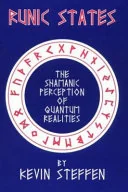
Kevin Steffen’s *Runic States* attempts to map the psycho-spiritual landscape of the Elder Futhark, proposing each rune represents a distinct state of being or consciousness. The book’s strength lies in its ambition to move beyond superficial divination, seeking to connect runic symbolism with internal states. Steffen’s interpretation of the rune *Fehu* as representing the foundational energetic principle of acquisition and expansion, for instance, offers a compelling starting point for internal exploration. However, the work occasionally suffers from a lack of concrete examples; while the conceptual framework is present, practical exercises or detailed case studies illustrating how to *achieve* these states are sparse. The reliance on abstract terminology can sometimes obscure the path for readers unfamiliar with advanced esoteric concepts. Despite these limitations, *Runic States* offers a valuable, if sometimes challenging, perspective on the runes for dedicated students of esoteric lore.
📝 Description
83
Kevin Steffen's Runic States, published in 1995, views runes as keys to psychological states and energetic configurations.
Runic States, by Kevin Steffen, was first published in 1995. The book examines the symbolic language of runes and their practical use within a metaphysical context. Steffen moves past simple divination to consider the deeper energetic and psychological conditions these ancient Germanic characters represent. Rune lore, he suggests, can be integrated into personal practice for self-discovery and spiritual growth.
This work is for practitioners of esoteric studies, especially those interested in Norse traditions, runic magic, and comparative mythology. It appeals to individuals who see runes not just as predictive instruments but as means to access altered consciousness and explore archetypal energies. Students of occultism and comparative religion will find its systematic method valuable.
Steffen conceptualizes runes as distinct energetic and psychological configurations, or "states," accessible through focused thought and ritual. Each rune's inherent qualities are discussed, tied to specific archetypes, planetary influences, and human experiences. The book argues that grasping these runic states allows for a deeper connection with the forces they embody, enabling practitioners to actively engage with these energies for personal transformation.
Emerging in the mid-1990s, a period marked by renewed interest in Germanic paganism and runic studies, Runic States contributed to a scholarly and practical re-evaluation of ancient European spiritual systems. This era saw movements like the New Age and neo-paganism foster a connection with pre-Christian European roots. Steffen's book joined a growing body of work on Germanic mythology and folklore, offering an alternative to earlier occultist interpretations by focusing on the deeper symbolic and psychological dimensions of the runes.
💡 Why Read This Book?
• Gain a novel perspective on runic practice by learning how each rune can be understood as a distinct psycho-spiritual "state," moving beyond simple divination, as exemplified by the book's detailed exploration of runes like *Ansuz*. • Discover practical methods for accessing and working with these runic states, offering techniques that can enhance self-awareness and spiritual development in ways not found in basic runic primers. • Understand the runes within their historical and esoteric context, recognizing how Kevin Steffen's 1995 publication contributed to a deeper, more integrated approach to Germanic symbolism.
⭐ Reader Reviews
Honest opinions from readers who have explored this book.
❓ Frequently Asked Questions
What is the primary focus of Kevin Steffen's Runic States?
Runic States focuses on understanding runes not just as divination tools, but as symbolic representations of distinct energetic and psychological "states" of consciousness that can be intentionally accessed and worked with by practitioners.
When was Runic States first published, and what was the context?
The book was first published in 1995, during a period of renewed interest in Germanic paganism and esoteric studies, offering a more in-depth metaphysical interpretation of runic lore.
Does Runic States offer practical exercises for working with runes?
While it provides a conceptual framework for understanding runic states, the book's emphasis is more on the theory and internal experience. Practical application is implied but not always explicitly detailed with step-by-step exercises.
Who would benefit most from reading Runic States?
Individuals interested in advanced runic studies, comparative mythology, Western esotericism, and those seeking to integrate ancient symbolism into their personal spiritual development would find this book particularly valuable.
Are there specific runes discussed in detail in the book?
Yes, the book systematically explores the Elder Futhark, assigning specific energetic and psychological states to each rune, such as the communicative power associated with Ansuz or the elemental force of Uruz.
How does Runic States differ from other books on runes?
It distinguishes itself by proposing a "states" model, viewing runes as keys to consciousness rather than solely predictive symbols, offering a more psychological and experiential approach to runic study.
🔮 Key Themes & Symbolism
Runes as States of Being
Steffen's central thesis posits that each rune of the Elder Futhark is not merely a symbol or a letter, but a distinct energetic and psychological 'state.' This perspective encourages practitioners to move beyond external divination towards an internal experience of runic forces. For example, understanding *Thurisaz* not just as a disruptive force, but as a state of potent, focused will or defensive energy, allows for conscious integration and application in one's personal practice. This approach emphasizes the runes as keys to altered consciousness and archetypal exploration.
The Energetic Range of the Futhark
The work maps the symbolic language of the runes onto an energetic framework, detailing the inherent qualities and associations of each character. Steffen explores how these runic energies interact and manifest, both internally within the practitioner and externally in the world. Concepts like the 'seed energy' of *Fehu* or the 'primordial force' of *Uruz* are examined, providing a lexicon for understanding the fundamental building blocks of magical and spiritual experience within the Norse tradition. This detailed mapping offers a unique lens for esoteric study.
Integration for Self-Transformation
Runic States advocates for the practical integration of runic knowledge into one's life for the purpose of self-transformation. By understanding and working with the specific states embodied by each rune, individuals can purportedly achieve greater self-awareness, emotional balance, and spiritual growth. The book suggests that deliberate contemplation and ritualistic engagement with these states can unlock latent potentials and facilitate a deeper connection with the archetypal forces that shape human experience and consciousness.
Beyond Divination
A significant departure from many popular runic texts, Steffen's work actively de-emphasizes rote divination in favor of experiential and psychological exploration. While acknowledging the divinatory aspect, the core focus remains on how the runes function as potent symbols that can induce specific states of mind and being. This reframing invites practitioners to engage with the runes as a form of active, internal magic, where the runes become tools for consciousness alteration and personal empowerment.
💬 Memorable Quotes
Direct passages from the work, attributed to the author.
“Each rune is a doorway to a specific energetic frequency, a distinct state of consciousness.”
— This statement captures the book's core thesis: that runes are not static symbols but dynamic keys capable of unlocking particular inner experiences and energetic alignments within the practitioner.
“Fehu is the primordial spark of acquisition, the energy that initiates becoming.”
— This highlights the book's approach to *Fehu*, viewing it not just as wealth, but as the fundamental drive and energy that propels creation and personal expansion into existence.
“Uruz represents the untamed, wild power from which all form emerges.”
— This interpretation of *Uruz* emphasizes its connection to raw, primal force and the fundamental life energy that predates and underlies all structured existence.
“The runes offer a map of the soul's landscape and its potential journeys.”
— This suggests the runes serve as a guide, clear the inner terrain of the human psyche and outlining the paths for spiritual growth and self-discovery.
“To truly know a rune is to embody its state.”
— This emphasizes the book's call for experiential understanding, advocating that genuine knowledge of a rune comes from actively living its associated energetic and psychological condition.
🌙 Esoteric Significance
Tradition
Runic States aligns with the broader Western Esoteric tradition, particularly drawing from Hermetic principles of correspondence and the psychological archetypes explored in Jungian analysis. While rooted in Germanic lore, its method of mapping symbols to internal states carries the symbolic language found in Kabbalah and Tarot. It departs from purely historical or folkloric approaches by framing runic study as a direct path to consciousness alteration and self-understanding, fitting within contemporary esoteric frameworks that prioritize experiential gnosis.
Symbolism
Central to the book's symbolism is the concept of the rune itself as a multi-layered sigil representing specific states of consciousness. For instance, the rune *Algiz* is explored not just as protection, but as a state of heightened awareness and connection to higher guidance. Similarly, *Hagalaz* transcends simple disruption, representing the archetypal force of transformation and the dissolution necessary for renewal. These symbols are presented as energetic keys, meant to be internalized and activated by the practitioner.
Modern Relevance
Steffen's work continues to be relevant for modern practitioners and scholars interested in the psychological and consciousness-altering aspects of runic magic. Contemporary esotericists, particularly those in the neo-pagan and Germanic reconstructionist communities, often reference or build upon the 'states' model for deeper personal work. Thinkers exploring embodied cognition and archetypal psychology within esoteric contexts also find value in its systematic approach to mapping symbolic systems onto internal experience.
👥 Who Should Read This Book
• Dedicated students of runic lore seeking to move beyond basic divination and explore the runes as keys to consciousness states, similar to approaches found in advanced Kabbalistic or Tarot studies. • Practitioners of Western Esotericism interested in comparative symbolic systems and how ancient Germanic magic can be integrated into modern psychological and spiritual frameworks. • Comparative mythology enthusiasts and scholars of ancient European spiritual traditions looking for a metaphysical interpretation that connects runic symbolism to archetypal psychology and consciousness studies.
📜 Historical Context
Published in 1995, Kevin Steffen's *Runic States* emerged within a burgeoning range of neo-pagan and esoteric revivalism. The mid-1990s witnessed a significant scholarly and popular re-engagement with Germanic mythology and runic systems, moving beyond earlier, often romanticized, occult interpretations prevalent in the early 20th century. Steffen’s work contributed to this trend by proposing a sophisticated metaphysical framework for understanding the runes. This period saw contemporaries like Edred Thorsson actively publishing on Asatru and runic magic, creating a discourse that Steffen engaged with, albeit from a more distinct psychological and consciousness-focused angle. The intellectual currents favored a return to perceived pre-Christian European spiritualities, and works like *Runic States* offered a structured, theoretical approach to these ancient symbols, contrasting with more purely historical or ritualistic texts.
📔 Journal Prompts
The state of *Fehu* as the initiation of becoming.
Embodying the protective awareness of *Algiz*.
The transformative dissolution represented by *Hagalaz*.
Mapping your own inner landscape using the runic states.
Contemplating the primal force of *Uruz*.
🗂️ Glossary
Runic States
Kevin Steffen's conceptual framework positing that each rune represents a distinct energetic and psychological state of consciousness accessible to the practitioner.
Elder Futhark
The oldest known runic alphabet, comprising 24 runes, which forms the basis for most runic studies and magical systems within Germanic traditions.
Archetype
In esoteric and psychological contexts, a universal, archaic pattern of thought or image derived from the collective unconscious, influencing behavior and perception.
Energetic Frequency
The concept that symbols, states, or beings possess a specific vibratory quality or energy signature that can be identified, accessed, and interacted with.
Sigil
A symbol, often magically charged, used in esoteric traditions to represent a concept, intention, or force, intended to influence the subconscious or external reality.
Gnosis
Direct, intuitive knowledge or spiritual insight, often considered a key element in esoteric and mystical traditions, achieved through personal experience rather than dogma.
Metaphysical
Relating to the fundamental nature of reality, including the relationship between mind and matter, or the study of being and the universe beyond empirical observation.
This book appears in 1 collection
🔮 Readers Also Liked
Browse all →









From the “Rune Reading” Collection
View all →






More Free Occult Philosophy Books
View all →