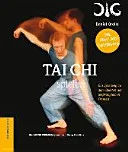
Tai Chi spielen.
 76
76

Tai Chi spielen.
Daniel Grolle’s Tai Chi spielen. offers a refreshing departure from superficial Tai Chi manuals. Grolle’s strength lies in his consistent focus on the energetic dimension, presenting the art as a sophisticated system for cultivating internal awareness and vitality. He avoids common pitfalls of oversimplification, instead providing a nuanced perspective that connects physical form to subtle energetic currents. A particularly strong section details the concept of "emptiness" (Xu) not as a void, but as a state of receptivity and potential, crucial for advanced practice. However, the book occasionally leans heavily on esoteric terminology without always providing sufficient foundational explanation for those less familiar with such concepts, which could be a minor hurdle for absolute beginners. Despite this, Grolle’s rigorous approach makes Tai Chi spielen. a valuable addition for serious students. It's a text that rewards careful study and repeated engagement.
📝 Description
76
Daniel Grolle's Tai Chi spielen., published in 2015, examines the physical and energetic principles of Tai Chi.
Tai Chi spielen. goes beyond basic movement instruction to detail the internal mechanics and theoretical foundations of Tai Chi. Daniel Grolle's 2015 work looks at the physical and energetic aspects of the practice. It functions both as a guide to postures and transitions and as a philosophical text, linking the martial art to wider esoteric ideas. The book aims to help Tai Chi practitioners gain a deeper understanding of their art, moving beyond simple memorization of forms. It is particularly relevant for those interested in the flow of Qi and the philosophical dimensions inherent in traditional Chinese martial and healing arts.
Students of esoteric traditions focused on mind-body connections and martial arts philosophy will find useful information. The book is best suited for intermediate to advanced practitioners who want to improve their comprehension and practice. Its publication in 2015 occurred during a period of increased integration of Eastern practices into Western wellness culture. While Tai Chi has ancient origins, Grolle's book engages with contemporary interpretations and studies of these methods. It offers a distinct perspective compared to purely academic or performance-focused writings.
Published in 2015, Tai Chi spielen. engages with the contemporary integration of traditional Eastern practices into Western spiritual paradigms. It connects the physical practice of Tai Chi to broader esoteric concepts, including the "three treasures" (Jing, Qi, Shen) and the subtle interplay of yin and yang energies. The book addresses the philosophical dimensions often associated with Chinese martial and healing arts, appealing to those interested in mind-body connections within esoteric traditions. It presents a specific lens for viewing disciplines like Qigong and internal martial arts, distinct from purely academic or performance-oriented approaches.
💡 Why Read This Book?
• Understand the subtle energy flow (Qi) as described in the "three treasures" (Jing, Qi, Shen), moving beyond superficial physical mechanics. • Grasp the principle of "emptiness" (Xu) as a core concept for advanced practice, enabling greater receptivity and potential in movement. • Connect the physical postures of Tai Chi to broader esoteric principles, as detailed in the book's exploration of yin and yang dynamics in motion, a perspective often overlooked in standard guides.
⭐ Reader Reviews
Honest opinions from readers who have explored this book.
❓ Frequently Asked Questions
What is the original publication year of "Tai Chi spielen."?
The book "Tai Chi spielen." was first published in November 2015.
Who is the author of "Tai Chi spielen."?
The author of "Tai Chi spielen." is Daniel Grolle.
What is the primary focus of "Tai Chi spielen."?
The book focuses on the energetic and philosophical underpinnings of Tai Chi, rather than just movement instruction.
What esoteric concepts are explored in relation to Tai Chi?
The book explores concepts such as Jing, Qi, Shen, "rooting", and "emptiness" (Xu) within the context of Tai Chi practice.
Is "Tai Chi spielen." suitable for complete beginners?
While it offers practical instruction, the book's depth and use of esoteric terminology might be more readily appreciated by intermediate to advanced practitioners seeking deeper understanding.
What is the Esoteric Library's role in relation to this book?
Esoteric Library is a curated collection of mystical, occult, and metaphysical literature, featuring works like "Tai Chi spielen." that align with these themes.
🔮 Key Themes & Symbolism
Energetic Cultivation
This work studies the cultivation of vital energy, or Qi, as a central tenet of Tai Chi practice. It details how specific postures and movements, as outlined by Grolle, are designed to facilitate the circulation of this energy throughout the body. The concept of the "three treasures" – Jing (essence), Qi (vital energy), and Shen (spirit) – is presented as the foundational triad for understanding internal development. The book emphasizes that true mastery lies not just in physical execution, but in the conscious manipulation and enhancement of these subtle energies, leading to greater vitality and well-being.
The Principle of Emptiness (Xu)
A significant theme is the esoteric concept of 'emptiness' (Xu), presented not as a void but as a state of profound potential and receptivity. Grolle interprets Xu within Tai Chi as a crucial element for advanced practitioners, allowing for fluidity, responsiveness, and the integration of external forces. This state is achieved through a release of mental and physical tension, enabling the practitioner to become like a conduit for energy rather than an obstruction. Understanding Xu is presented as key to unlocking the martial and healing applications of Tai Chi beyond superficial forms.
Mind-Body Integration
Tai Chi spielen. highlights the inseparable connection between the mind and body in achieving optimal practice. The book explores how conscious intention and focused awareness direct the flow of Qi and influence physical expression. Principles like "rooting" oneself to the earth are not merely physical anchors but also mental states of groundedness and stability. This integration is crucial for developing both internal power and external harmony, as Grolle illustrates through the detailed analysis of movement sequences and their corresponding energetic and mental states.
Yin and Yang Dynamics
The interplay of yin and yang is a pervasive theme, illustrating the complementary opposites that govern all phenomena, including the movements within Tai Chi. Grolle examines how these forces manifest in the practice, such as in the alternation of yielding (yin) and asserting (yang), stillness and motion, contraction and expansion. The book explains that balanced Tai Chi practice involves harmonizing these forces within the practitioner's body and energy field, leading to a state of dynamic equilibrium. This understanding is vital for comprehending the art's profound depth and its application in both martial combat and holistic health.
💬 Memorable Quotes
Direct passages from the work, attributed to the author.
“The "three treasures" are the foundation of internal cultivation.”
— This highlights the core esoteric principle that Jing (essence), Qi (vital energy), and Shen (spirit) are the fundamental components to be refined and integrated for spiritual and physical development within practices like Tai Chi.
“Emptiness (Xu) is not a void, but a state of receptive potential.”
— This redefines a common misinterpretation of 'emptiness', presenting it as an active, dynamic state of readiness and openness crucial for advanced Tai Chi, allowing for effortless response and flow.
“Rooting connects us to the earth's stability.”
— This emphasizes the practical and energetic significance of grounding in Tai Chi, suggesting it provides not just physical balance but also a connection to a fundamental, stable energetic field.
“Movement harmonizes the yin and yang within.”
— This points to the central role of balancing complementary forces in Tai Chi, illustrating how the practice actively seeks to integrate opposing energies for internal coherence and well-being.
“Conscious intention guides the flow of Qi.”
— This underscores the mind's critical role in energetic practices, suggesting that focused thought and will are instrumental in directing and cultivating the body's vital energy.
🌙 Esoteric Significance
Tradition
This work fits within the modern synthesis of Esoteric traditions, drawing heavily from Taoist philosophy and principles fundamental to internal Chinese martial arts. It engages with concepts that bridge Neidan (internal alchemy) practices with the physical manifestations of Tai Chi. While not strictly adhering to a single historical lineage like Hermeticism or Kabbalah, it taps into universal esoteric themes of energy cultivation (Qi), the balance of opposites (Yin/Yang), and the refinement of subtle bodies (Jing, Qi, Shen), aligning with a broader Western esoteric interest in Eastern wisdom.
Symbolism
Key symbols explored include the concept of 'emptiness' (Xu), representing not a void but a state of profound potential and receptivity, crucial for advanced practice. The "three treasures" (Jing, Qi, Shen) are central symbolic elements, representing the foundational energetic constituents of a practitioner's being that are cultivated and harmonized. The circle, often implicit in the flowing movements, symbolizes unity, completion, and the cyclical nature of energy, reflecting Taoist cosmology and the continuous flow of Qi.
Modern Relevance
Contemporary practitioners of Qigong, internal martial arts, and even somatic therapists find value in Grolle's work for its detailed exploration of energetic principles. Thinkers and schools focused on embodied cognition and the integration of physical practice with consciousness development often draw upon the nuanced explanations of mind-body connection presented. The book's structured approach to cultivating internal awareness and vital energy continues to inform modern approaches to holistic health and personal development within various esoteric and wellness communities.
👥 Who Should Read This Book
• Advanced Tai Chi practitioners seeking to deepen their understanding of energetic principles and esoteric concepts beyond basic form instruction. • Students of Taoist philosophy and internal alchemy interested in practical applications of concepts like 'emptiness' (Xu) and the 'three treasures'. • Researchers and practitioners of comparative esoteric studies looking to understand the intersection of Chinese martial arts philosophy with broader mind-body disciplines.
📜 Historical Context
Daniel Grolle's "Tai Chi spielen." emerged in 2015, a period marked by a global surge in interest in traditional Eastern practices, particularly within wellness and esoteric circles. While Tai Chi itself boasts a lineage stretching back centuries, Grolle's work engaged with contemporary interpretations that sought to bridge the gap between ancient martial arts philosophy and modern understanding of mind-body mechanics. It arrived at a time when comparative studies of martial arts and their philosophical underpinnings were gaining traction, offering an alternative to purely academic or performance-focused texts. The book positioned itself within the broader discourse of internal martial arts and Qigong, contributing to a growing body of literature that explored these disciplines through an energetic and esoteric lens, distinct from the more mainstream fitness-oriented approaches prevalent in Western interpretations of Chinese movement arts.
📔 Journal Prompts
Reflect on the concept of 'emptiness' (Xu) in your own daily activities.
Explore the balance of yin and yang in a recent challenging situation.
Consider how the "three treasures" (Jing, Qi, Shen) might manifest in your current life.
Analyze your personal "rooting" during moments of stress or instability.
How does conscious intention influence the flow of energy in your physical actions?
🗂️ Glossary
Qi (Chi)
The vital life force or energy believed to permeate all living things, central to traditional Chinese medicine and martial arts. Its cultivation and circulation are key to health and vitality.
Jing
Often translated as 'essence,' Jing is considered the fundamental material basis of life, related to physical constitution and generative capacity. It is one of the "three treasures" that can be conserved and cultivated.
Shen
Referred to as 'spirit' or 'mind,' Shen is the most subtle of the "three treasures." It encompasses consciousness, awareness, and mental clarity, and its cultivation leads to spiritual development and inner peace.
Rooting
A fundamental Tai Chi principle referring to the state of being firmly grounded and stable, connected to the earth. It involves a relaxed yet firm posture that allows for balance and efficient energy transfer.
Xu (Emptiness)
A key Taoist and Tai Chi concept representing a state of profound receptivity, potential, and non-resistance, rather than a mere void. It allows for effortless movement and adaptability.
Yin and Yang
The fundamental Taoist principle of complementary, interconnected opposites that govern the natural world. In Tai Chi, their dynamic balance is crucial for harmonious movement and energy flow.
Three Treasures
The fundamental components of human existence in Taoist philosophy: Jing (essence), Qi (vital energy), and Shen (spirit). Cultivating and balancing these is essential for health, longevity, and spiritual development.