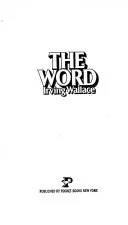
The Word
 80
80

The Word
Wallace’s "The Word" attempts to fuse the thrill of a conspiracy thriller with the weighty implications of discovering a radically different account of early Christianity. The premise, centered on the Ostia Antica papyrus allegedly penned by James, brother of Jesus, is undeniably potent, promising to unravel long-held beliefs. The pacing, characteristic of Wallace's style, keeps the pages turning as the protagonist races against a shadowy organization determined to bury the truth. However, the novel occasionally falters in its theological depth, often prioritizing plot mechanics over a nuanced exploration of the religious questions it raises. A particular strength lies in its vivid portrayal of the archaeological discovery and the immediate peril it engenders. Yet, the characters sometimes feel archetypal rather than fully realized, serving the plot’s demands more than organic development. Despite these limitations, "The Word" offers an entertaining, if speculative, dive into what might have been, presenting a compelling 'what if' scenario for the history of faith.
📝 Description
80
Irving Wallace's 1983 novel, The Word, posits a discovered gospel by Jesus's brother, James.
Published in 1983, Irving Wallace's The Word is a thriller focused on a supposed first-century papyrus fragment found in Ostia Antica. This text is presented as a gospel written by James, Jesus's brother, which could challenge existing Christian accounts. The story follows a protagonist tasked with authenticating this find, a mission complicated by a secret society determined to hide its contents. The novel appeals to those interested in historical conspiracies and alternative religious perspectives. It suits readers who prefer plot-driven stories with elements of mystery, suspense, and theological discussion. Those who enjoy authors examining hidden histories and secret groups within religious settings will find Wallace's approach engaging, especially when factual settings meet speculative fiction.
The narrative taps into enduring public fascination with early Christian texts and the idea of suppressed information about Jesus, a theme amplified by discoveries like the Nag Hammadi library. Wallace sets his story against a period where textual criticism and the historical origins of the Bible were subjects of significant academic and popular discussion. Scholars like Elaine Pagels had already begun examining the diversity of early Christian communities and their beliefs, making the existence of apocryphal texts a recognized area of interest.
The Word engages with the historical and speculative interest surrounding apocryphal texts and alternative early Christian traditions, a subject that gained momentum with discoveries like the Nag Hammadi library. It plays on the idea of hidden knowledge and suppressed religious narratives that deviate from established dogma. The novel's plot, involving secret societies guarding ancient secrets, reflects a common trope within esoteric literature where powerful groups seek to maintain control over historical or spiritual truths.
💡 Why Read This Book?
• Gain a fictionalized perspective on the implications of discovering alternative early Christian texts, specifically the idea of a "new gospel" by James, Jesus's brother, prompting reflection on historical authenticity. • Experience a suspenseful narrative framework, mirroring the real-world discovery of texts like those at Nag Hammadi, and understand the dramatic potential of suppressed historical knowledge. • Explore the thriller genre's engagement with religious history, offering a unique blend of archaeological intrigue and the dangers faced by those who uncover potentially world-altering truths.
⭐ Reader Reviews
Honest opinions from readers who have explored this book.
❓ Frequently Asked Questions
What is the significance of the papyrus discovered in Ostia Antica?
The papyrus fragment in "The Word" is presented as a first-century gospel written by James, Jesus’s brother. Its discovery threatens established Christian doctrine by potentially revealing a different portrayal of Christ and his teachings.
Who is the secret society trying to suppress the truth?
The novel features an unnamed secret society committed to hiding the explosive truth contained within the discovered gospel. Their motives are to maintain the current historical and religious narrative.
What historical events or discoveries influenced Irving Wallace's novel?
The discovery of early Christian texts, such as the Nag Hammadi library in 1945, likely influenced Wallace. These discoveries fueled interest in alternative gospels and suppressed Christian writings.
What is the primary conflict in 'The Word'?
The central conflict is between the protagonist, who must uncover and verify the truth of the new gospel, and the secret society dedicated to its suppression, creating a race against time and danger.
Is the papyrus discovered in the book a real historical artifact?
No, the papyrus and the gospel attributed to James in Irving Wallace's "The Word" are fictional elements created for the novel. While inspired by real historical inquiries, the text itself is a literary device.
What themes does Irving Wallace explore in 'The Word'?
Wallace explores themes of suppressed history, the power of religious texts, the conflict between established dogma and new evidence, and the dangers of uncovering potentially disruptive truths.
🔮 Key Themes & Symbolism
Suppressed Gospels
The novel hinges on the discovery of a purported first-century gospel written by James, brother of Jesus. This concept taps into the historical and theological fascination with "lost" or apocryphal texts that challenge mainstream interpretations of early Christianity. The narrative explores the idea that a different version of Christ's message, perhaps more radical or egalitarian, might have existed but was systematically erased or hidden by early Church authorities or subsequent secret societies seeking to control the religious narrative.
Secret Societies and Historical Control
A central element is the existence of a clandestine organization dedicated to preventing the revelation of the papyrus's contents. This theme posits that powerful, hidden groups have historically manipulated or suppressed knowledge to maintain societal or religious structures. The thriller aspect arises from the protagonist’s confrontation with this force, highlighting the perceived danger associated with exposing truths that could destabilize established power dynamics and belief systems.
Archaeological Discovery and Modern Revelation
The narrative is framed by an archaeological find in Ostia Antica, lending a sense of grounded realism to the speculative content. This mirrors real-world discoveries of ancient artifacts that have reshaped historical understanding. The book plays on the excitement and potential chaos that such a find could unleash in the modern world, questioning how society would react to a fundamental redefinition of its religious origins.
The Nature of Truth in Faith
Fundamentally, , 'The Word' questions the nature of religious truth. By presenting a potentially contradictory gospel, it forces readers to consider whether accepted doctrines are immutable or if they are constructed narratives subject to change with new evidence. The conflict between the protagonist seeking objective truth and the society enforcing a specific version of truth is a key driver of the plot.
💬 Memorable Quotes
Direct passages from the work, attributed to the author.
“In the Beginning, there was . . . The Word.”
— This opening line directly alludes to the Gospel of John ('In the beginning was the Word'), immediately signaling the book's engagement with foundational Christian texts and setting up the central idea of a potentially rival or alternative 'Word'.
“A secret society committed to hiding an explosive truth.”
— This phrase captures the primary antagonistic force in the novel. It emphasizes the clandestine nature of the opposition and the potentially world-altering significance of the information they seek to conceal.
“The man who must uncover that truth--if he can stay alive long enough.”
— This interpretation of the blurb underscores the thriller element. It establishes the protagonist's perilous mission and the high stakes involved in confronting the forces that wish to maintain historical secrecy.
“This discovery will show the world a new Jesus Christ, fill in the missi...”
— This fragmented quote hints at the wide impact the discovery is predicted to have. It suggests a reinterpretation of Jesus's identity and teachings, promising to fill gaps in the existing narrative with controversial new details.
💡 Key Ideas
Editorial paraphrase of the work's core concepts — not direct quotes.
A first century papyrus, its faded text revealing a new gospel written by James, younger brother of Jesus.
This paraphrase captures the core discovery that drives the plot. It highlights the specific artifact and its author, James, suggesting a narrative that could redefine Christian history by presenting an account from a close relative of Jesus.
🌙 Esoteric Significance
Tradition
While not explicitly aligned with a single esoteric lineage, "The Word" draws heavily on themes common in Gnostic and Hermetic traditions. The concept of a suppressed or 'true' gospel echoes Gnostic ideas of hidden knowledge (gnosis) revealed by a divine figure, often in contrast to the exoteric teachings of established religions. The idea of a secret society guarding such knowledge also aligns with traditions that emphasize hidden wisdom passed down through select initiates.
Symbolism
The primary symbol is the "Word" itself, a direct reference to the Logos in Christian theology but here recontextualized as a potentially heretical gospel text. The papyrus fragment symbolizes unearthed, suppressed truth, while the ruins of Ostia Antica represent the decay of time and the potential for buried histories to resurface. The secret society functions as a symbol of institutional control and the forces that seek to maintain a singular, dominant narrative.
Modern Relevance
Contemporary interest in alternative spiritualities and historical revisionism, particularly regarding religious origins, keeps themes from "The Word" relevant. Thinkers and communities exploring Gnosticism, historical Jesus studies, and the sociology of religion often engage with questions about textual authenticity and suppressed narratives. The novel’s premise continues to fuel discussions about how historical power structures may have shaped religious doctrine.
👥 Who Should Read This Book
• Readers interested in speculative historical fiction that explores alternative religious narratives, particularly concerning early Christianity and the potential existence of suppressed gospels. • Fans of conspiracy thrillers who appreciate plots involving secret societies, ancient artifacts, and races against time to uncover hidden truths. • Individuals curious about the historical context of biblical studies and textual criticism, seeking a fictional entry point into discussions about the formation of religious canons and apocryphal texts.
📜 Historical Context
Irving Wallace's "The Word" emerged in 1983, a period marked by significant scholarly and popular interest in early Christianity and its potential textual variations. The discovery of the Nag Hammadi library in 1945 had already introduced a wealth of Gnostic texts, challenging traditional biblical interpretations and sparking debate about the diversity of early Christian thought. Wallace's novel tapped into this existing discourse, tying a thriller narrative around the hypothetical discovery of a gospel written by James, Jesus's brother. This was a time when critical biblical scholarship, exemplified by figures like Bart Ehrman in later years, was increasingly examining the historical Jesus and the formation of the New Testament canon. While Wallace's work is fiction, it speaks to the real-world academic and public fascination with apocryphal texts and the possibility of suppressed Christian traditions. Reception of such speculative religious fiction often polarized, appealing to those seeking alternative narratives while being dismissed by some as sensationalist interpretations of sacred history.
📔 Journal Prompts
The discovery of the James gospel: how might this alter perceptions of Jesus's divinity or humanity?
Reflect on the motivations of the secret society and their perceived role in controlling historical narratives.
Consider the symbolic weight of the papyrus fragment as a representation of suppressed knowledge.
Analyze the tension between archaeological evidence and established religious doctrine presented in the novel.
The protagonist's pursuit of truth: what personal risks are justified in uncovering potentially disruptive historical facts?
🗂️ Glossary
Ostia Antica
The ancient Roman seaport located near modern-day Rome. In the novel, it serves as the site of the significant archaeological discovery of the purported first-century papyrus.
James, brother of Jesus
A historical figure mentioned in the New Testament. The novel speculates on the existence of a gospel written by him, presenting a potentially different perspective on Jesus's life and teachings.
Papyrus
A material prepared in ancient Egypt and other parts of the ancient world for writing or painting on. It is made from the pith of the papyrus plant. Ancient documents, including biblical fragments, are often found on papyrus.
Gospel
In Christianity, a gospel is an account of the life and teachings of Jesus. The New Testament contains four canonical gospels (Matthew, Mark, Luke, John), but many other 'apocryphal' or non-canonical gospels also exist.
Secret Society
A group or organization whose activities are kept secret. In the novel, such a society actively works to suppress the discovery of the new gospel to maintain the established historical narrative.
Apocryphal Texts
Texts, typically religious writings, that are of unknown or dubious authenticity, although they may be cited or alluded to in canonical works. Their exclusion from the official canon often sparks debate about their content and potential influence.
Logos
A Greek term meaning 'word,' 'reason,' or 'plan.' In Christian theology, it is famously used in the Gospel of John to refer to Jesus Christ as the divine Word of God. The novel plays on this term's significance.
This book appears in 1 collection
🔮 Readers Also Liked
Browse all →








From the “Secret Societies” Collection
View all →


More Free Occult Philosophy Books
View all →