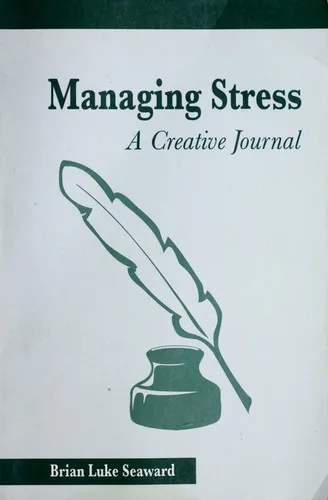
Managing Stress - A Creative Journal
 75
75

Managing Stress - A Creative Journal
Brian Luke Seaward’s Managing Stress - A Creative Journal, while perhaps appearing straightforward, offers a surprisingly robust framework for introspection. Its strength lies in the directness of its prompts, eschewing elaborate theory for actionable exercises. The 1994 publication date positions it within a burgeoning self-care movement, yet its utility feels contemporary. A particularly effective section involves exercises that link physical sensations of stress to emotional states, a concept Seaward articulates clearly through its prompts. However, the journal’s primary limitation is its inherent generality; while it provides structure, the depth of insight ultimately depends entirely on the user's willingness to engage honestly. It doesn't offer novel psychological theories but rather a disciplined space for applying existing ones. For those seeking a structured, no-nonsense tool to confront daily pressures, this journal serves its purpose effectively.
📝 Description
75
Published in 1994, Managing Stress - A Creative Journal guides readers through stress relief with interactive prompts.
This journal, written by Brian Luke Seaward, functions as a practical tool for personal well-being, moving beyond passive reading to encourage active engagement. It contains exercises and writing prompts designed to help individuals process and lessen stress. The journal's aim is to foster practical application, guiding users to examine their inner thoughts and build methods for managing pressure.
It suits individuals who want a hands-on approach to stress management and prefer self-directed personal growth. Those who find writing and creative activities helpful for their mental state will find value here. Anyone feeling the strain of daily life and seeking simple methods to find inner peace can benefit from its pages. It offers structure without being overly prescriptive.
Emerging in 1994, this journal reflects a growing interest in mental health and stress's effects, aligning with the self-help movement and the rise of contemplative practices. Influenced by thinkers like Jon Kabat-Zinn and the increasing prominence of Mindfulness-Based Stress Reduction (MBSR), Seaward's work fits into a cultural movement favoring internal exploration and proactive well-being. It connects to traditions that emphasize self-awareness and the mind's role in managing subjective experience.
💡 Why Read This Book?
• Gain practical, repeatable techniques for stress reduction grounded in the specific exercises and prompts Seaward provides, moving beyond abstract advice. • Develop a personalized understanding of your stress triggers by engaging with the journal's focus on linking physical sensations to emotional states, a core concept in the work. • Cultivate a consistent self-reflection practice, a key takeaway encouraged by the journal's structure, which Brian Luke Seaward originally designed in 1994 to address rising societal stress.
⭐ Reader Reviews
Honest opinions from readers who have explored this book.
❓ Frequently Asked Questions
What is the primary purpose of Managing Stress - A Creative Journal?
The journal's primary purpose is to provide users with a structured, interactive tool for managing stress. It uses writing prompts and exercises to encourage self-reflection, emotional processing, and the development of personal coping mechanisms.
Who would benefit most from using this journal?
Individuals experiencing stress who prefer a self-guided, hands-on approach to well-being would benefit most. It's ideal for those who find value in journaling and creative expression as therapeutic tools.
When was Managing Stress - A Creative Journal first published?
Managing Stress - A Creative Journal was first published in 1994.
Does the book offer specific psychological theories for stress?
While it doesn't delve deeply into theoretical psychology, the journal's exercises are based on principles of self-awareness, the mind-body connection, and the therapeutic benefits of articulating emotions, concepts prominent in 1990s wellness literature.
How does this journal encourage active engagement?
Active engagement is fostered through direct writing prompts and creative exercises that require the user to actively process their thoughts and feelings, rather than passively reading information.
What is the format of the journal?
It is structured as a creative journal, featuring sections for writing and guided activities designed to help users explore and manage their stress responses.
🔮 Key Themes & Symbolism
Self-Awareness Through Writing
The journal emphasizes that understanding one's stressors is the first step toward managing them. Through structured prompts, users are guided to articulate their feelings, identify triggers, and explore the nuances of their emotional responses. This process transforms abstract anxieties into concrete subjects for reflection, making them more approachable and manageable. The act of writing itself becomes a tool for externalizing internal turmoil, creating a necessary distance for objective assessment and fostering a deeper connection with one's inner state.
The Mind-Body Connection
A central theme is the intrinsic link between mental and physical states. The journal encourages users to pay attention to the physiological manifestations of stress—tension, fatigue, or discomfort—and to explore how these correlate with their emotional and mental experiences. By prompting users to describe these bodily sensations, Seaward facilitates an understanding that stress is not purely psychological but also somatic. This awareness allows for more holistic stress management, addressing both the mental pressures and the physical symptoms they produce.
Creative Expression as Release
Managing Stress leverages creative expression as a therapeutic outlet. Beyond straightforward journaling, the prompts may encourage more imaginative responses, such as visualization or metaphorical description. This approach acknowledges that linear, logical thought processes may not always capture the full complexity of stress. By engaging creative faculties, individuals can access different modes of understanding and release pent-up emotional energy. This aligns with a broader esoteric understanding of art and creativity as pathways to healing and self-discovery.
Developing Resilience
Ultimately, the journal aims to cultivate personal resilience. It moves beyond merely coping with stress to building an inner capacity to withstand and recover from adversity. Through consistent engagement with its exercises, users are intended to develop a more robust psychological toolkit. This involves learning to reframe challenging situations, practicing self-compassion, and integrating stress-management techniques into daily life, thereby fostering a more balanced and enduring state of well-being.
💬 Memorable Quotes
Direct passages from the work, attributed to the author.
“Observe the physical sensations accompanying your stress.”
— This prompt encourages users to connect their mental state with bodily responses, highlighting the psychosomatic nature of stress and promoting a holistic approach to self-care.
“Articulate the core emotion driving your current stress.”
— This focuses the user on identifying the root feeling—be it anxiety, anger, or sadness—behind the stress, facilitating deeper emotional processing rather than surface-level symptom management.
“Describe a past moment of calm and the elements that contributed to it.”
— This exercise prompts users to recall positive experiences, reinforcing the understanding that calm is achievable and identifying personal resources that can be cultivated.
“Visualize yourself successfully navigating a stressful situation.”
— This utilizes guided imagery, a common technique in stress reduction, to build confidence and mentally rehearse coping strategies, preparing the user for real-world challenges.
“What creative act could help you process these feelings?”
— This prompt directly links the act of creation—whether drawing, writing poetry, or another form—to emotional release and understanding, framing creativity as a vital tool for well-being.
🌙 Esoteric Significance
Tradition
While not explicitly adhering to a single esoteric lineage like Hermeticism or Kabbalah, Managing Stress draws upon principles common across many contemplative traditions, particularly those emphasizing the mind-body connection and the power of focused attention. Its emphasis on introspection and self-discovery aligns with the core tenets of self-knowledge found in Western esotericism and Eastern contemplative practices. The work can be seen as a secularized application of meditative techniques, making them accessible for personal stress management outside of formal religious or philosophical frameworks.
Symbolism
The journal itself functions as a symbolic space for transformation. The act of filling its pages represents the user’s active engagement in shaping their inner world. Abstract concepts like 'stress' are given concrete form through writing, becoming objects that can be examined and understood. The blank pages symbolize potential and the user's agency in creating a more balanced internal landscape. The process encourages users to find personal meaning in their experiences, a hallmark of esoteric self-development.
Modern Relevance
The principles explored in Managing Stress remain highly relevant today, resonating with contemporary approaches to mental wellness, mindfulness, and digital detox. Thinkers and practitioners in fields like positive psychology, cognitive behavioral therapy (CBT), and even modern mindfulness apps often incorporate similar journaling and self-reflection techniques. The journal’s focus on practical, self-administered tools speaks to the ongoing demand for accessible methods to manage the pervasive stress of contemporary life, making its 1994 publication date a point of origin rather than obsolescence.
👥 Who Should Read This Book
• Individuals seeking practical, self-guided methods for stress reduction who appreciate structured exercises over theoretical texts. • People interested in exploring the connection between their thoughts, emotions, and physical sensations as a path to greater well-being. • Those beginning their journey into mindfulness or contemplative practices who need accessible tools to foster self-awareness and emotional regulation.
📜 Historical Context
Published in 1994, Brian Luke Seaward’s Managing Stress - A Creative Journal emerged during a period of significant expansion in the self-help and wellness industries. The late 20th century saw a growing cultural interest in alternative approaches to health, influenced by Eastern philosophies and contemplative practices gaining traction in the West. Jon Kabat-Zinn’s work on Mindfulness-Based Stress Reduction (MBSR), which began in the late 1970s and gained widespread recognition throughout the 1980s and 90s, provided a secular framework for mindfulness that heavily influenced the wellness landscape. Seaward’s journal aligns with this trend, offering a practical, accessible tool for individuals seeking personal agency over their mental and emotional states. It appeared alongside numerous other guides on stress management, relaxation techniques, and positive psychology, reflecting a societal shift towards proactive self-care and the therapeutic potential of introspection.
📔 Journal Prompts
Reflect on the physical manifestations of stress you noted.
Identify the primary emotional driver behind your current stress.
Describe a past experience of deep calm and its components.
Visualize navigating a challenging situation with newfound calm.
Consider what creative act might help you process these feelings.
🗂️ Glossary
Stress Response
The physiological and psychological reactions the body and mind exhibit when faced with perceived threats or challenges, often involving the 'fight-or-flight' mechanism.
Self-Awareness
The conscious knowledge of one's own character, feelings, motives, and desires; a key element in understanding and managing stress.
Mind-Body Connection
The principle that the mind and body are interconnected and influence each other's functioning, particularly relevant in how thoughts and emotions impact physical health.
Emotional Processing
The act of understanding, accepting, and working through one's emotions in a healthy and constructive manner.
Resilience
The capacity to recover quickly from difficulties; toughness and the ability to bounce back from adversity.
Introspection
The examination or observation of one's own mental and emotional processes; a core activity facilitated by the journal.
Creative Expression
The process of using artistic or imaginative means to convey thoughts, feelings, or ideas; employed here as a therapeutic tool.
🔮 Readers Also Liked
Browse all →









More by Brian Luke Seaward, Brian L. Seaward
All books →
More Free Occult Philosophy Books
View all →


![Dead sea scrolls and the Qumran community [사해사본과 쿰란 공동체]](/img/thumb/dead-sea-scrolls-and-the-qumran-community-사해사본과-쿰란-공동체-samuel-cheon-106897.webp)