Sleep paralysis

 83
83

Sleep paralysis
Sharpless and Doghramji's "Sleep Paralysis" endeavors to bring empirical rigor to a subject long steeped in spectral lore. Its strength lies in its systematic dissection of the phenomenon, moving from REM atonia to the nuances of hypnagogic and hypnopompic hallucinations with clinical precision. The work commendably reframes these terrifying experiences not as visitations, but as misfires in the brain's sleep-wake transition mechanisms. However, the text occasionally feels overly clinical, perhaps leaving those seeking a more spiritual or existential interpretation of such profound subjective states wanting. A particularly striking section details the 'intruder' hallucination, offering a scientific rationale for what many perceive as a supernatural encounter. Ultimately, this book offers an essential, if sometimes dry, scientific primer on a deeply unsettling human experience.
📝 Description
83
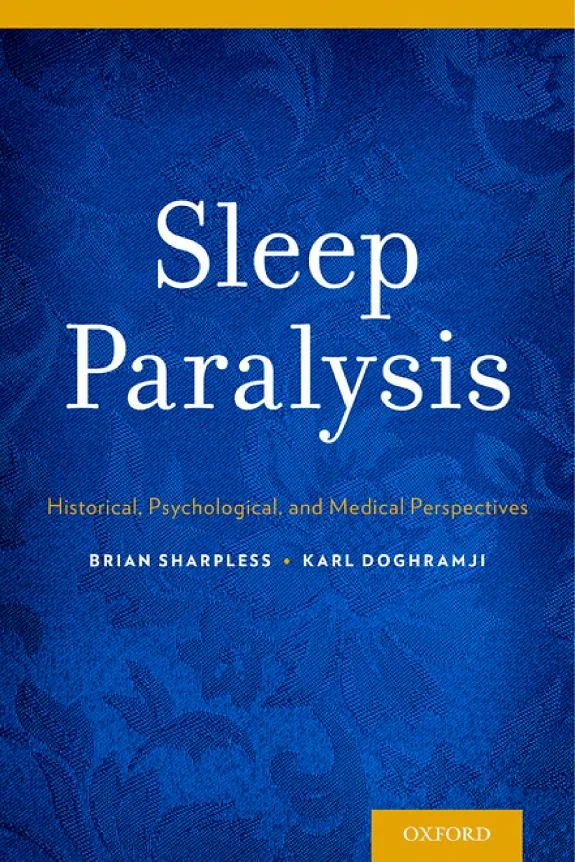
Published in 2015, "Sleep Paralysis" examines the phenomenon from scientific and psychological viewpoints.
This 2015 book by Brian A. Sharpless and Karl Doghramji moves past folklore to analyze sleep paralysis through a scientific and psychological lens. It details the physiological and neurological causes behind these experiences, classifying them as a parasomnia rather than a supernatural event. The authors aim to clarify the condition for anyone who experiences it.
The book serves as a resource for individuals who have personally encountered sleep paralysis, providing a way to understand these episodes. Healthcare professionals like psychologists, sleep specialists, and neurologists will find it a useful summary of current research. Students of psychology, neuroscience, and even comparative religion or folklore studies can benefit from its interdisciplinary approach, connecting subjective experiences with objective scientific findings.
While this book grounds its analysis in science, it addresses a topic long steeped in esoteric and supernatural lore. Throughout history, cultures have explained sleep paralysis through beliefs in spirits, demons, and entities like the incubus and succubus. The very term 'nightmare' originates from a medieval demon. This work engages with that historical context by presenting a scientific counterpoint, shifting the discourse from ancient attributions to modern physiological understanding.
💡 Why Read This Book?
• Gain a scientific understanding of REM atonia, the biological mechanism that causes temporary paralysis during sleep, helping demystify the physical sensations of sleep paralysis. • Learn to differentiate between hypnagogic and hypnopompic hallucinations, understanding their visual, auditory, and tactile forms as described by Sharpless and Doghramji. • Explore the psychological impact of sleep paralysis, including fear and anxiety, and discover potential coping strategies based on the research presented in the 2015 publication.
⭐ Reader Reviews
Honest opinions from readers who have explored this book.
❓ Frequently Asked Questions
What is the primary scientific explanation for sleep paralysis offered in the book?
The book explains sleep paralysis as a temporary inability to move or speak that occurs when a person is transitioning between wakefulness and sleep. It is characterized by a breakdown in REM atonia, where the brain is in REM sleep but the body remains conscious.
What are hypnagogic and hypnopompic hallucinations?
These are hallucinations that occur during the transition into sleep (hypnagogic) or upon waking (hypnopompic). The book details how these can manifest as vivid visual, auditory, or tactile experiences, often contributing to the fear associated with sleep paralysis.
Can stress or sleep deprivation cause sleep paralysis?
Yes, the book indicates that factors like significant stress, irregular sleep schedules, and sleep deprivation are common triggers or exacerbating factors for sleep paralysis episodes.
Is sleep paralysis a sign of mental illness?
Not necessarily. While sleep paralysis can be distressing and may co-occur with certain mental health conditions, the book presents it primarily as a parasomnia, a disorder of sleep, rather than a direct symptom of psychosis or severe mental illness.
Who are the authors of 'Sleep Paralysis'?
The book was authored by Brian A. Sharpless and Karl Doghramji, with its first publication occurring in 2015.
How does this book differ from supernatural explanations of sleep paralysis?
Unlike folkloric accounts, this work grounds its explanations in neuroscience and psychology, describing sleep paralysis as a physiological event related to the sleep cycle and brain function, rather than supernatural encounters.
🔮 Key Themes & Symbolism
REM Atonia Misalignment
The core of the book's scientific explanation lies in the concept of REM atonia, the natural muscle paralysis during REM sleep. Sharpless and Doghramji detail how sleep paralysis occurs when this atonia inappropriately overlaps with wakefulness. This misalignment allows the conscious mind to perceive its own paralysis and the associated hallucinations, leading to the profound sense of being trapped or attacked by unseen forces.
Hypnagogic and Hypnopompic Hallucinations
Beyond the paralysis, the book meticulously categorizes the vivid hallucinations experienced during sleep paralysis. These range from terrifying visual apparitions and disembodied voices to the sensation of pressure or a malevolent presence. Understanding these as neurological events, rather than supernatural manifestations, is central to the text's demystification of the phenomenon.
Psychological and Societal Impact
The work acknowledges the significant psychological distress sleep paralysis can inflict, including intense fear, anxiety, and the potential for developing sleep-related phobias. It touches upon how cultural narratives and historical beliefs have shaped societal understanding and personal interpretations of these episodes, contrasting them with the modern scientific perspective.
Diagnostic and Therapeutic Approaches
Sharpless and Doghramji outline the diagnostic criteria for sleep paralysis and discuss its prevalence. While not a self-help manual, the book implicitly guides readers toward understanding that effective management often involves addressing underlying sleep hygiene, stress levels, and potentially seeking professional medical or psychological support.
💬 Memorable Quotes
Direct passages from the work, attributed to the author.
“The experience of sleep paralysis is a transient neurophysiological event.”
— This statement captures the book's fundamental argument: that what feels like a supernatural encounter is, in fact, a temporary glitch in the brain's sleep-wake regulation systems.
“Hallucinations during sleep paralysis can be visual, auditory, or tactile.”
— This highlights the multi-sensory nature of the phenomena, emphasizing that the perceived threats are not limited to what one might see, but can also involve sounds or physical sensations.
“Cultural narratives have historically attributed sleep paralysis to supernatural agents.”
— This points to the long history of interpreting these episodes through folklore and mythology, setting the stage for the book's scientific re-evaluation.
“Understanding the underlying mechanisms can reduce fear associated with the episodes.”
— This suggests a therapeutic benefit to the book's scientific exposition, implying that knowledge can empower individuals to cope with and lessen the terror of sleep paralysis.
💡 Key Ideas
Editorial paraphrase of the work's core concepts — not direct quotes.
REM atonia is a crucial protective mechanism that prevents acting out dreams.
This quote explains the normal function of muscle paralysis during REM sleep, providing context for how its disruption leads to the aberrant experience of sleep paralysis.
🌙 Esoteric Significance
Tradition
While not explicitly rooted in a single esoteric tradition like Hermeticism or Kabbalah, this work engages with phenomena historically interpreted through those lenses. Ancient and medieval demonology, often interwoven with early Christian and folk magical beliefs, frequently described encounters with entities akin to sleep paralysis demons. This book provides a scientific counterpoint to those traditions, offering a materialist explanation for experiences that were once solely within the domain of the occult or spiritual warfare.
Symbolism
The primary 'symbol' explored is the paralysis itself, representing a state of being consciously aware yet utterly powerless. The 'intruder' or 'presence' often perceived during sleep paralysis can be interpreted as a manifestation of primal fears, a projection of internal anxieties onto an external 'other' when the mind is in a liminal state between sleep and wakefulness. The book explains these perceived entities, reducing them to neurological artifacts rather than spiritual agents.
Modern Relevance
Contemporary occultism and spiritual exploration often grapple with subjective experiences that blur the lines between inner and outer reality. Thinkers within modern shamanism, lucid dreaming communities, and even certain branches of consciousness studies might find this book useful. It offers a scientific framework for understanding altered states that can inform, or be contrasted with, more esoteric interpretations of disembodied experiences or encounters with non-physical entities.
👥 Who Should Read This Book
• Individuals experiencing sleep paralysis: To gain a scientific understanding of their episodes, potentially reducing fear and anxiety by clarifying the phenomenon. • Mental health professionals: To supplement their clinical knowledge with the latest research on parasomnias and the neurological basis of sleep-related disturbances. • Students of psychology and neuroscience: To explore a fascinating intersection of sleep science, perception, and the subjective experience of consciousness.
📜 Historical Context
Published in 2015, "Sleep Paralysis" by Sharpless and Doghramji enters a discourse on the phenomenon that stretches back millennia. While ancient Greek physicians like Hippocrates documented similar episodes, they were often attributed to demonic influence or divine punishment throughout the Middle Ages and into the early modern period. The term 'nightmare' itself originates from the Old English 'mare,' a spirit believed to torment sleepers. Scientific inquiry began to challenge these supernatural explanations more rigorously in the 19th century, with figures like Samuel Wesley (John Wesley's father) documenting personal experiences and seeking physiological causes. By the late 20th century, sleep research had firmly established sleep paralysis as a distinct parasomnia, a category of sleep disorders. This 2015 work builds upon decades of neurological and psychological research, offering a contemporary synthesis that contrasts sharply with earlier folkloric or psychiatric interpretations prevalent before the mid-20th century.
📔 Journal Prompts
The experience of REM atonia during sleep paralysis.
Personal interpretations of hypnagogic hallucinations.
The role of stress in sleep paralysis episodes.
Comparing cultural narratives of sleep paralysis with scientific explanations.
Strategies for managing fear during a sleep paralysis event.
🗂️ Glossary
Sleep Paralysis
A temporary inability to move or speak that occurs when a person is transitioning between wakefulness and sleep, often accompanied by hallucinations.
REM Atonia
The temporary paralysis of voluntary muscles that occurs during REM (Rapid Eye Movement) sleep, preventing individuals from acting out their dreams.
Hypnagogic Hallucinations
Vivid sensory experiences (visual, auditory, tactile) that occur as a person is falling asleep.
Hypnopompic Hallucinations
Vivid sensory experiences that occur as a person is waking up from sleep.
Parasomnia
A category of sleep disorders characterized by abnormal behaviors, experiences, or physiological events that occur during sleep, sleep transitions, or arousal from sleep.
Intruder Hallucination
A common type of hallucination during sleep paralysis where the individual perceives the presence of a malevolent entity or intruder in the room.
Incubus/Succubus
Historical terms for supernatural entities believed to lie on top of sleepers, causing feelings of suffocation and dread, often associated with sleep paralysis.
🔮 Readers Also Liked
Browse all →









More by Brian A. Sharpless, Karl Doghramji
All books →

More Free Occult Philosophy Books
View all →