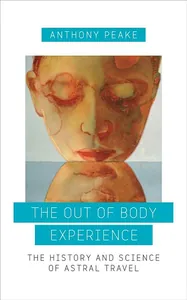
The out-of-body experience
 75
75

The out-of-body experience
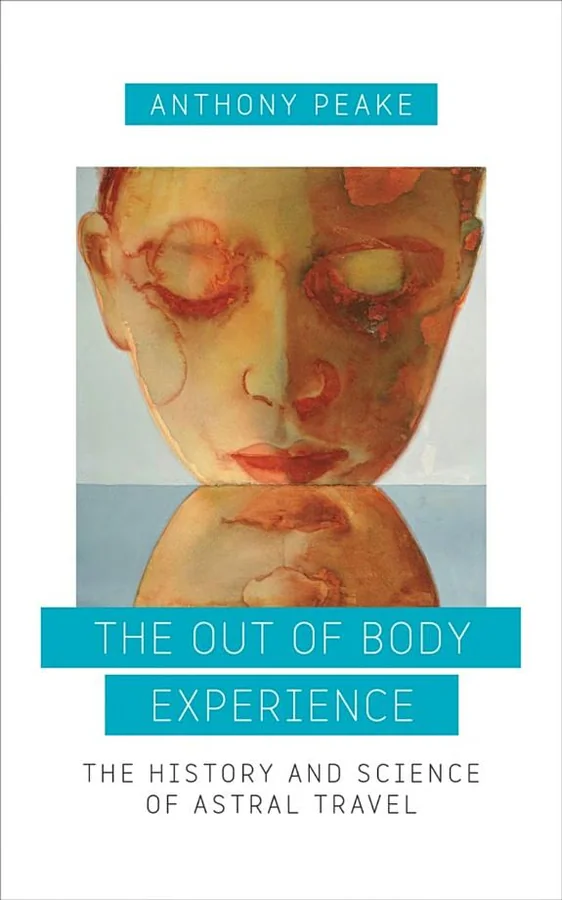
Anthony Peake’s "The Out-of-Body Experience" is an ambitious attempt to catalogue and contextualize a phenomenon that has long eluded definitive scientific explanation. The author commendably avoids sensationalism, instead presenting a measured exploration that draws from esoteric traditions, personal accounts, and theoretical physics. A particular strength lies in his attempt to synthesize disparate ideas, such as the noosphere and threshold experiences, into a coherent, albeit speculative, model. However, the work occasionally suffers from a density that can make it challenging for the uninitiated to follow. Peake’s discussion of the "threshold state" is particularly compelling, illustrating how ordinary reality can fracture, allowing for OBEs. While the book offers a rich overview, its reliance on complex theoretical frameworks might limit its accessibility. Nevertheless, it provides a valuable resource for those seriously investigating the nature of consciousness beyond the physical.
📝 Description
75
Anthony Peake's 2016 book analyzes subjective experiences that transcend the physical body.
The "Out-of-Body Experience" examines the various forms these subjective phenomena can manifest, including lucid dreaming, astral projection, and consciousness states reported during near-death experiences or deep meditation. Anthony Peake attempts to explain these occurrences by framing them within a structure that accounts for both psychological factors and potentially non-local aspects of consciousness. The book is suited for those interested in the limits of human awareness, such as students of esoteric philosophy, parapsychology, and comparative religion. It will also engage readers who have experienced bodily separation and seek a structured understanding, or those approaching such topics with intellectual curiosity. People interested in the connection between altered states of consciousness, neuroscience, and metaphysical questions will find significant content here.
Peake's work discusses the "threshold experience," a critical point where consciousness appears to shift from the physical body. This concept is central to understanding how individuals report disengaging from their physical form. The book also considers the role of specific neurological states and external stimuli in triggering or facilitating these experiences. It aims to provide a coherent model that integrates personal testimony with scientific and philosophical inquiry.
The study of out-of-body experiences has roots in ancient texts and global spiritual traditions. Figures like Sylvan Muldoon and Oliver Fox advanced this interest in the 20th century. Peake's 2016 work builds on this history, integrating modern neuroscience and quantum physics with older esoteric frameworks. It contributes to a contemporary resurgence in consciousness studies, differentiating itself from earlier, more purely spiritual or anecdotal accounts by incorporating current research.
💡 Why Read This Book?
• Gain an understanding of the "threshold experience," a concept Peake uses to delineate the transition point into altered states of consciousness, offering a unique framework not found in general psychology texts. • Explore the "astral body" concept, examining its historical esoteric interpretations and Peake's modern synthesis, providing specific esoteric terminology for subjective phenomena. • Understand the "noosphere" as it relates to OBEs, connecting subjective consciousness with a broader conceptual layer of reality, a specific theoretical integration unique to this work.
⭐ Reader Reviews
Honest opinions from readers who have explored this book.
❓ Frequently Asked Questions
What is the primary focus of Anthony Peake's "The Out-of-Body Experience"?
The book primarily focuses on the phenomenology and theoretical underpinnings of out-of-body experiences (OBEs), exploring their various forms and potential explanations.
When was "The Out-of-Body Experience" by Anthony Peake first published?
The book was first published in 2016, positioning it within contemporary discussions on consciousness studies.
Does the book offer scientific explanations for OBEs?
Peake attempts to bridge esoteric thought with contemporary scientific concepts, including neuroscience and theoretical physics, offering a multi-faceted perspective rather than purely scientific validation.
Who is the intended audience for this book?
It is intended for readers interested in esoteric philosophy, parapsychology, altered states of consciousness, and the nature of subjective experience beyond the physical body.
What is the 'noosphere' concept as discussed by Peake?
Peake discusses the noosphere, a term originating from Teilhard de Chardin and Vladimir Vernadsky, as a potential mental or spiritual layer of the Earth accessible during certain consciousness states, including OBEs.
Are personal accounts of OBEs included in the book?
Yes, the book draws upon a range of personal accounts and case studies to illustrate the diverse manifestations of out-of-body experiences.
🔮 Key Themes & Symbolism
Threshold Consciousness
Peake introduces the 'threshold experience' as a critical concept, defining the liminal state where the boundaries of ordinary reality blur, facilitating the transition into an out-of-body state. This concept serves as a psychological and phenomenological bridge, suggesting that specific mental conditions or triggers can lower the barriers between the physical and non-physical perceptions. The work explores how these thresholds are not merely accidental but can potentially be understood and even approached through specific practices or states of mind, offering a framework for analyzing subjective shifts in awareness.
Subtle Bodies and Astral Projection
The book examines the notion of the 'astral body' or 'subtle body' as the vehicle for consciousness during an out-of-body experience. It traces the historical lineage of this concept through various esoteric traditions, from ancient spiritual texts to modern occultism. Peake analyzes the perceived properties of this non-physical form, discussing its independence from the physical body and its capacity for independent movement and perception. This theme examines the mechanics and subjective reality of astral projection, treating it as a verifiable aspect of consciousness.
The Noosphere and Collective Consciousness
Connecting individual experiences to a broader psychic environment, Peake engages with the concept of the 'noosphere.' This term, originally proposed by Pierre Teilhard de Chardin and Vladimir Vernadsky, refers to a sphere of human thought and collective consciousness enveloping the Earth. The book explores how out-of-body experiences might allow individuals to access or interact with this noosphere, suggesting that useful insights or encounters during OBEs could stem from this collective mental realm, thereby linking personal psychic phenomena to a universal consciousness field.
Phenomenology of OBEs
A central focus is the detailed description and analysis of the subjective qualities, or 'qualia,' of out-of-body experiences. Peake meticulously breaks down the sensory perceptions, emotional states, and cognitive shifts reported by individuals during OBEs. This includes exploring visual, auditory, and kinesthetic phenomena, as well as the profound sense of presence or detachment. By focusing on the lived experience, the book aims to provide a rich, phenomenological account that respects the subjective reality of these states.
💬 Memorable Quotes
Direct passages from the work, attributed to the author.
“The threshold experience marks the point where the normal architecture of reality begins to dissolve.”
— This highlights Peake's central concept of a 'threshold' state, suggesting that OBEs are not random events but occur when consciousness crosses a specific boundary, disrupting ordinary perception.
“Consciousness may employ a 'subtle body' capable of navigating dimensions beyond the physical.”
— This points to the book's exploration of the astral body or subtle form, positing it as the vehicle for consciousness during out-of-body phenomena, a recurring theme in esoteric literature.
“Access to the noosphere offers a glimpse into a collective mental landscape.”
— This refers to the integration of the noosphere concept, suggesting that OBEs might provide a pathway to a shared field of consciousness and thought.
“The qualitative nature of an OBE—its 'what it's like'—is paramount to its study.”
— This emphasizes the importance of phenomenology, the study of subjective experience, in understanding the lived reality of out-of-body states.
“Distinguishing between lucid dreams and genuine OBEs requires careful phenomenological analysis.”
— This points to the book's detailed examination of different altered states, emphasizing the need for precise description to differentiate phenomena like lucid dreaming from OBEs.
🌙 Esoteric Significance
Tradition
Peake’s work situates itself within the broader lineage of Western Esotericism, drawing particularly from the traditions of Theosophy, Astral Projection literature, and Gnostic ideas concerning non-physical realms. It departs from purely religious interpretations by attempting to integrate these concepts with modern psychological and theoretical physics frameworks. The book reflects the Theosophical concept of subtle bodies and planes of existence, while also engaging with earlier Hermetic notions of correspondence between macrocosm and microcosm, applying them to the subjective experience of consciousness.
Symbolism
A key symbol is the "threshold," representing the liminal space between physical and non-physical reality, often depicted as a door, veil, or boundary that consciousness must cross. The "astral body" functions symbolically as the charioteer of consciousness, a vessel that allows independent exploration. The "noosphere" symbolizes a pervasive, collective mental field, akin to a psychic atmosphere, that can be accessed and perceived during altered states.
Modern Relevance
This work finds relevance among contemporary researchers and practitioners exploring consciousness hacking, lucid dreaming communities, and neo-shamanic practices. Thinkers interested in non-local consciousness and integrated models of reality, such as those found in certain New Age and contemporary metaphysical circles, often reference Peake's synthesis. His framework provides a vocabulary and conceptual map for individuals seeking to understand and articulate their subjective experiences of consciousness beyond the conventional materialist paradigm.
👥 Who Should Read This Book
• Students of consciousness studies and parapsychology seeking a comprehensive overview that bridges esoteric traditions with modern theoretical concepts. • Individuals who have experienced altered states or OBEs and are looking for a structured framework to understand their phenomena, moving beyond anecdotal accounts. • Researchers in comparative religion and philosophy of mind interested in non-materialist perspectives on consciousness and subjective reality.
📜 Historical Context
Published in 2016, Anthony Peake’s "The Out-of-Body Experience" arrives at a time of renewed interest in consciousness studies, often termed the "new sciences of consciousness." This period saw a proliferation of research bridging neuroscience, psychology, and philosophy, notably through figures like Daniel Dennett and Christof Koch, though their approaches were largely materialistic. Peake’s work stands apart by engaging with a rich vein of esoteric and parapsychological literature that predates this modern scientific wave. Contemporaries like Graham Hancock were also exploring controversial historical and consciousness-related topics, albeit from different angles. The intellectual currents influencing Peake include not only 20th-century parapsychology pioneers like Sylvan Muldoon but also earlier metaphysical thinkers. Unlike purely empirical scientific investigations, Peake's book seeks to synthesize these diverse traditions, offering a more holistic, albeit speculative, framework for understanding experiences that challenge conventional paradigms.
📔 Journal Prompts
The threshold experience: Describe a moment when your perception of reality shifted significantly.
Reflections on the astral body: What sensations or intuitions suggest a form separate from your physical body?
The noosphere's influence: How might collective thought or consciousness impact your personal experiences?
Qualia of OBEs: Articulate the unique subjective 'feel' of a profound altered state you've experienced.
Threshold triggers: Identify potential catalysts for entering states akin to the threshold experience.
🗂️ Glossary
Out-of-Body Experience (OBE)
A subjective sensation of leaving one's physical body, often accompanied by the perception of floating, flying, or observing oneself from a distance.
Threshold Experience
A state of consciousness where the boundaries of normal reality appear to blur or dissolve, often preceding or facilitating altered states like OBEs.
Astral Body
A subtle, non-physical body or vehicle proposed in esoteric traditions to carry consciousness during OBEs or other non-physical explorations.
Noosphere
A concept referring to the sphere of human thought, collective consciousness, and intelligence surrounding the Earth, as proposed by Teilhard de Chardin and Vernadsky.
Qualia
The subjective, qualitative properties of conscious experience; the 'what it's like' aspect of feeling, perception, or sensation.
Astral Projection
The practice or phenomenon of intentionally directing one's consciousness, often via the astral body, to a location or plane separate from the physical body.
Subtle Body
A non-physical or energetic body, often conceptualized as existing in parallel with or being separable from the physical body, integral to many esoteric systems.
🔮 Readers Also Liked
Browse all →







More by Anthony Peake
All books →


More Free Occult Philosophy Books
View all →