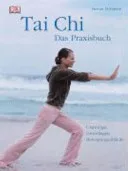
Tai Chi - das Praxisbuch
 82
82

Tai Chi - das Praxisbuch
The 2006 German publication, Tai Chi - das Praxisbuch, offers a grounded approach to a practice often shrouded in mystique. Its strength lies in its directness; it avoids overly esoteric language, focusing instead on actionable steps for the practitioner. The diagrams illustrating the "Eight Energies" are particularly lucid, providing a clear visual anchor for understanding the subtle qualities of each movement. However, the book’s primary limitation is its anonymity. The absence of an attributed author, especially given the depth of Tai Chi's philosophical currents, leaves a void for those seeking historical lineage or interpretive commentary. A passage detailing the "Cloud Hands" form is handled with commendable clarity, explaining the coordinated hip and shoulder rotation essential for its fluid execution. Ultimately, it serves as a functional, if somewhat impersonal, manual for learning the form.
📝 Description
82
Published in 2006, Tai Chi - das Praxisbuch offers a practical approach to the art of Tai Chi.
This 2006 book, Tai Chi - das Praxisbuch, serves as a hands-on guide to Tai Chi. It focuses on the practical application of the movements and their core principles, making it useful for newcomers and experienced practitioners alike. The text provides clear instructions for performing the forms and explains the philosophy behind them.
It is written for anyone interested in Tai Chi's physical and philosophical dimensions. Whether you are starting out and need a clear path, or have practiced for years and want to refine your skills, this book has material for you. Readers interested in internal martial arts, mind-body connection, and Eastern thought will find its content relevant.
The book addresses key Tai Chi concepts like "Qi" or vital energy, the balance of "Yin and Yang," and the "Eight Energies" that characterize movement. It stresses the role of posture, intent, and breath in developing internal power and a calm strength. The text also discusses Tai Chi's martial roots and philosophical depth, extending beyond its function as physical exercise.
Tai Chi Chuan traces its lineage back centuries, often linked to Taoist traditions at Wudang Mountain. Its evolution through the late Qing Dynasty and later popularization brought it to a worldwide audience. This 2006 German publication appeared at a time when Western engagement with Eastern practices was common, providing a German-language resource for a discipline already widely known.
💡 Why Read This Book?
• Learn the foundational movements and principles of Tai Chi Chuan, with specific attention paid to the "Eight Energies" and their distinct qualities, offering a practical entry point to this ancient art. • Understand the concept of "Qi" cultivation as presented in the book, exploring how controlled breathing and mindful posture are intended to harmonize internal energy flow. • Gain insight into the balance of "Yin and Yang" as applied to movement dynamics, as illustrated through specific exercises designed to embody opposing yet complementary forces.
⭐ Reader Reviews
Honest opinions from readers who have explored this book.
❓ Frequently Asked Questions
What are the "Eight Energies" in Tai Chi as described in this book?
The "Eight Energies" are fundamental movement qualities in Tai Chi, often represented by specific hand techniques. This book likely details them as concepts like 'Ward Off', 'Roll Back', 'Press', 'Push', 'Pull', 'Elbow', 'Shoulder', and 'Annihilate'.
Is Tai Chi - das Praxisbuch suitable for complete beginners?
Yes, the book is structured as a practical guide, suggesting it provides clear instructions and likely visual aids suitable for individuals with no prior experience in Tai Chi.
Does the book explain the philosophical underpinnings of Tai Chi?
While primarily a practical guide, the book explores underlying principles such as 'Qi' (vital energy) and the balance of 'Yin and Yang', connecting the physical practice to broader Taoist concepts.
What is the significance of "Qi" in the context of this Tai Chi book?
The work likely explains "Qi" as the vital life force or energy. Cultivating and directing this energy through precise movements, breath, and intention is central to the practice as presented.
When was Tai Chi - das Praxisbuch first published?
The book was first published in 2006, placing it within a period of growing global interest in Eastern wellness and martial arts practices.
Does the book offer information on the martial applications of Tai Chi?
While focusing on the practical exercise, the book may touch upon the martial origins and applications of Tai Chi, linking the forms to defensive principles and internal strength development.
🔮 Key Themes & Symbolism
Qi Cultivation and Flow
The central theme is the understanding and cultivation of "Qi", or vital energy. This work likely details how the precise, flowing movements of Tai Chi are designed to unblock and enhance the circulation of Qi throughout the body. It emphasizes the connection between breath control, mental focus, and the generation of internal power, positioning Tai Chi not merely as exercise but as a method for energetic well-being and vitality.
The Principles of Yin and Yang
Tai Chi - das Praxisbuch explores the Taoist concept of "Yin and Yang" as fundamental to its practice. This involves understanding the interplay of opposites – softness and hardness, yielding and asserting, stillness and motion. The book likely illustrates how these principles are embodied in the forms, promoting balance, harmony, and adaptability in both movement and mental state.
Embodiment of the Eight Energies
A significant focus is placed on the "Eight Energies" (Ba Men) or "Eight Treasures" which characterize the fundamental qualities of Tai Chi movements. These are likely presented as specific techniques or intentions, such as 'Peng' (ward off/listen), 'Lu' (roll back), 'Ji' (press), and 'An' (push), among others. Understanding and embodying these energies is crucial for developing the nuanced power and sensitivity central to Tai Chi practice.
Mind-Body Integration
The book underscores the inseparability of mind and body in Tai Chi. It highlights how conscious intention, focused awareness, and relaxed posture are integral to executing the forms correctly and reaping their full benefits. This integration aims to achieve a state of calm alertness, promoting mental clarity and reducing stress while simultaneously enhancing physical coordination and health.
💬 Memorable Quotes
Direct passages from the work, attributed to the author.
“Movement begins from the intention, not the muscle.”
— This highlights the internal focus required in Tai Chi. It suggests that the initiation of any movement stems from mental direction and energetic impulse, rather than brute physical force, emphasizing the mind's role in guiding the body.
“Qi follows intention; intention follows the spirit.”
— This expresses the hierarchical flow of energy and consciousness in Tai Chi. It posits that the vital energy (Qi) is directed by the mind's intent, which itself is guided by a deeper, more subtle spiritual awareness or Shen.
“The posture must be rooted, yet flexible.”
— This emphasizes the dual nature of Tai Chi stance. It requires a grounded stability, connecting to the earth, while simultaneously maintaining a supple, adaptable quality to allow for smooth transitions and responsiveness.
“Each form is a dialogue between Yin and Yang.”
— This interpretation suggests that every movement within Tai Chi embodies the interplay of opposing forces. It’s not just about executing a shape, but about expressing the dynamic balance and transition between complementary energies.
“The practitioner learns to 'listen' with the entire body.”
— This points to a heightened sensory awareness developed through Tai Chi. It implies sensing external forces, internal energy shifts, and the subtle connections within one's own body, akin to an intuitive understanding rather than just visual observation.
🌙 Esoteric Significance
Tradition
This work engages with the Taoist tradition, a core part of Chinese esotericism. While presented as a practical manual, its emphasis on "Qi" cultivation, "Yin and Yang" balance, and mindful movement aligns it with Taoist internal alchemy (Neidan) principles aimed at harmonizing the body, mind, and spirit. It functions as an accessible entry point to these profound concepts, bridging the gap between esoteric philosophy and tangible physical practice.
Symbolism
Key symbols likely explored include the "Taijitu" (Yin-Yang symbol), representing cosmic balance and the dynamic interplay of opposites. The "Eight Energies" themselves function symbolically, each representing a distinct quality of force and intention (e.g., yielding, adhering, neutralizing). The "Dan Tian," the energetic center in the lower abdomen, is also a crucial symbolic locus for Qi storage and circulation.
Modern Relevance
Contemporary practitioners of mind-body disciplines, somatic therapists, and even some martial artists draw upon the principles articulated in works like this. The focus on "Qi" and energetic flow appeals to modern wellness movements, while the emphasis on mindful movement and stress reduction finds echoes in practices like Qigong and various forms of contemplative movement, demonstrating the enduring appeal of these ancient Taoist concepts.
👥 Who Should Read This Book
['• Beginners interested in learning Tai Chi Chuan through a structured, step-by-step guide, focusing on the physical execution of forms and foundational concepts like "Qi".', '• Existing Tai Chi practitioners seeking a clear, practical reference to refine their understanding of specific movements, particularly the "Eight Energies", and deepen their mind-body connection.', '• Individuals exploring Eastern philosophies and internal martial arts who want a hands-on introduction to Taoist principles of balance, energy cultivation, and mindful awareness.']
📜 Historical Context
Published in 2006, Tai Chi - das Praxisbuch enters a landscape where Tai Chi Chuan had long since transcended its origins, likely in 14th-century Taoist circles or later attributed to Zhang Sanfeng. By the late 20th century, figures like the Yang family had disseminated the art globally. This German-language guide appears during a period of robust Western engagement with Eastern philosophies and physical disciplines, a trend significantly boosted by scholars and practitioners who introduced concepts like Qi and Taoism to wider audiences. It follows in the wake of numerous Western interpretations and adaptations, existing alongside traditions that might trace lineage back to masters who fled China during periods of upheaval, such as the Republican era. While not explicitly engaging with contemporaries like Mantak Chia, whose works on Taoist internal arts gained significant traction in the West by the 1980s and 90s, this book contributes to the ongoing popularization and practical teaching of Tai Chi in Europe.
📔 Journal Prompts
The concept of "Qi" as described in the book: how does it relate to your current energy levels?
Reflect on the "Yin and Yang" balance in a recent physical or mental challenge.
Analyze the "Eight Energies" in relation to a specific Tai Chi movement illustrated in the text.
Consider the importance of intention over force when performing a complex action.
How can the principle of being "rooted, yet flexible" be applied to daily life?
🗂️ Glossary
Qi (Chi)
The fundamental vital life force or energy in Taoist philosophy and traditional Chinese medicine. In Tai Chi, its cultivation and circulation are central to practice and health.
Yin and Yang
The Taoist concept of dualistic, complementary, and interdependent forces that shape the natural world. In Tai Chi, it represents the balance of opposites like soft/hard, passive/active.
Eight Energies (Ba Men)
The eight fundamental qualities or techniques of movement in Tai Chi, often categorized as Peng, Lu, Ji, An, Cai, Lie, Zhou, and Kao, representing different ways of applying force and intention.
Dan Tian
Literally 'elixir field,' this is an energetic center located in the lower abdomen, considered a reservoir and focal point for Qi in Taoist practices like Tai Chi.
Form (Tàijíquán)
The choreographed sequence of movements in Tai Chi. Each "form" is a standardized set of postures and transitions practiced for health, martial skill, and spiritual development.
Intention (Yi)
The mental focus or will that directs movement and energy in Tai Chi. It is considered more primary than physical strength in guiding the practice.
Rooting
The principle of establishing a stable connection to the ground, providing a strong base for movement and energy flow, essential for balance and power in Tai Chi.