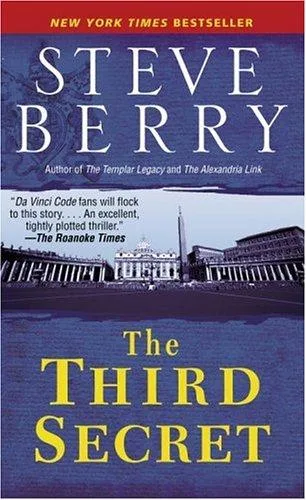
The Third Secret
 73
73

The Third Secret
Steve Berry's "The Third Secret" attempts to tap into the enduring mystique of Fatima, but the execution feels less like a revelation and more like a retread of familiar thriller tropes. The novel's strength lies in its premise: the genuinely intriguing historical enigma of the unrevealed Third Secret. Berry effectively sets up a high-stakes chase across Europe, involving Vatican operatives and shadowy figures desperate to control or expose the prophecy. However, the narrative propulsion often comes at the expense of character depth. The protagonist, while functional, rarely transcends the role of a plot device. A specific weakness is the somewhat predictable plot twists, particularly concerning the motivations of certain Vatican officials. Despite these limitations, the book succeeds in presenting a compelling fictional exploration of a real-world mystery, making it an engaging, if not entirely original, read for those fascinated by religious conspiracies.
📝 Description
73
Steve Berry's 2005 novel, The Third Secret, centers on a young man who finds a document claiming to be the Third Secret of Fatima.
Steve Berry's 2005 thriller, The Third Secret, follows a young man who stumbles upon a hidden text purported to be the "Third Secret of Fatima." This alleged prophecy, with potential global consequences, propels the story into a race against time. The narrative blends historical intrigue with present-day danger, examining themes of faith, deception, and the influence of concealed knowledge.
Readers interested in fast-paced thrillers featuring historical and religious elements will find this novel engaging. It specifically appeals to those curious about the mysteries of the Fatima apparitions, Vatican operations, and conspiracies that touch upon real historical events. The book shares common ground with works like Dan Brown's The Da Vinci Code, featuring code-breaking and hidden histories.
The Third Secret of Fatima is a touchstone for modern Catholic esotericism, representing a prophecy that remained hidden for decades, fueling speculation about its world-altering contents. This novel taps into that tradition of concealed divine messages and the potential impact of their revelation, linking it to historical events and institutional secrecy. It plays on the public's fascination with prophecies, particularly those tied to Marian apparitions and the perceived hidden agendas of powerful religious organizations.
💡 Why Read This Book?
• Gain an understanding of the historical intrigue surrounding the "Third Secret of Fatima," a prophecy that captivated global attention for decades, learning how the Vatican's handling of it fueled speculation. • Experience a fast-paced thriller plot that incorporates elements of Vatican espionage and historical code-breaking, similar to the narrative style found in works like Dan Brown's "The Da Vinci Code." • Explore fictionalized scenarios of how a suppressed religious prophecy could impact contemporary global politics and religious institutions, engaging with the tension between truth and control.
⭐ Reader Reviews
Honest opinions from readers who have explored this book.
❓ Frequently Asked Questions
What is the "Third Secret of Fatima" mentioned in Steve Berry's novel?
The "Third Secret of Fatima" refers to a purported prophecy revealed by the Virgin Mary to three shepherd children in Fatima, Portugal, in 1917. Its contents were kept secret by the Vatican for decades, leading to widespread speculation about its true meaning and implications.
Is "The Third Secret" based on a true story?
The novel is a work of fiction, but it is heavily inspired by the real-world events and mysteries surrounding the Fatima apparitions of 1917 and the unrevealed "Third Secret." The book weaves a fictional narrative around historical speculation.
Who are the main characters in Steve Berry's "The Third Secret"?
The central protagonist is a young man who uncovers fragments of the secret. He is pursued by various Vatican factions and other groups with vested interests in controlling or revealing the prophecy. Specific character names are integral to the plot's unfolding.
When was "The Third Secret" by Steve Berry first published?
Steve Berry's novel "The Third Secret" was first published in 2005. This places it within a period of heightened public interest in religious mysteries and Vatican-related thrillers.
What historical events does "The Third Secret" reference?
The book references the 1917 Marian apparitions in Fatima, Portugal, where three children claimed to witness visions of the Virgin Mary. It specifically focuses on the speculated contents of the "third secret" shared during these apparitions.
What kind of themes does "The Third Secret" explore?
The novel explores themes of faith, doubt, the power of hidden knowledge, Vatican politics, conspiracy, and the tension between religious dogma and truth. It questions how secrets of immense consequence are managed by powerful institutions.
🔮 Key Themes & Symbolism
The Fatima Prophecy
The central enigma of the book revolves around the "Third Secret of Fatima," a purported prophecy from the 1917 Marian apparitions in Portugal. For decades, the Vatican maintained silence on its contents, fueling global speculation. Berry's novel imagines the potential catastrophic implications of this secret being revealed, exploring how its suppression might serve institutional interests and how its eventual disclosure could reshape religious and political landscapes. The narrative questions the ethics of withholding knowledge that could profoundly affect humanity.
Vatican Intrigue and Power
The novel explores the labyrinthine politics and clandestine operations within the Vatican. It portrays a powerful institution grappling with internal factions, secret societies, and the immense responsibility of safeguarding—or controlling—world-altering information. The narrative suggests that the preservation of faith and institutional stability can sometimes lead to the suppression of truth, creating a conflict between spiritual duty and worldly power dynamics. This theme examines how historical secrets are managed at the highest levels of religious authority.
The Nature of Truth and Faith
Berry's work probes the complex relationship between verifiable truth and deeply held faith. The "Third Secret" itself represents a potential truth that challenges established doctrines or prophecies. The characters are forced to confront their beliefs when faced with hidden knowledge, questioning whether some truths are too dangerous to be known or if faith requires blind acceptance. The novel highlights the personal and societal consequences that arise when the perceived immutability of faith is tested by revelation.
Historical Conspiracy
The book capitalizes on real-world historical mysteries, particularly the prolonged secrecy surrounding the "Third Secret of Fatima." It combines a fictional conspiracy theory that connects the prophecy to significant historical events and potential future occurrences. This theme appeals to readers interested in how historical narratives can be shaped by hidden forces and how seemingly disparate events might be linked through clandestine agendas. The novel plays on the human fascination with uncovering hidden patterns and secret histories.
💬 Memorable Quotes
Direct passages from the work, attributed to the author.
“The Vatican guards its secrets as closely as it guards its faith.”
— This statement captures the essence of the novel's premise: the immense secrecy surrounding the "Third Secret of Fatima." It suggests a deliberate strategy by the Vatican to control information, implying that the institution's perceived sanctity is intertwined with its ability to keep potentially disruptive truths concealed.
“The prophecy was not just a prediction; it was a warning.”
— This interpretation highlights the dual nature of prophecies within the narrative. It suggests the "Third Secret" carries not only foreknowledge of events but also a cautionary element, implying a potential for human agency to avert foreseen disasters if the warning is heeded.
“Faith is not the absence of doubt, but the triumph over it.”
— This concept speaks to the internal struggles of characters grappling with the implications of the "Third Secret." It suggests that genuine faith is tested and strengthened by confronting uncertainty and difficult truths, rather than by a passive acceptance of dogma without question.
💡 Key Ideas
Editorial paraphrase of the work's core concepts — not direct quotes.
Some truths are not meant to be known by everyone.
This paraphrased concept reflects the internal conflict and justification often found within institutions that hold powerful secrets. It raises questions about the paternalistic role of authority in deciding what information is safe for the public, and whether such control ultimately serves or harms humanity.
History is written by those who survive to tell the tale.
This quote speaks to the power of narrative control and the selective preservation of information. It implies that official historical accounts may be biased or incomplete, shaped by the victors or those who control the records, suggesting that hidden truths often lie beneath the surface of accepted history.
🌙 Esoteric Significance
Tradition
While not strictly an esoteric text in the vein of Hermeticism or Kabbalah, "The Third Secret" engages with themes common in religious mysticism and devotional traditions. Its focus on prophecy, divine revelation, and the hidden knowledge of a religious institution places it adjacent to Gnostic ideas about secret teachings and salvific knowledge. The narrative explores how such divine pronouncements are interpreted, controlled, and potentially manipulated by earthly powers, mirroring discussions found in various traditions regarding the reception and dissemination of spiritual truths.
Symbolism
The most prominent symbol is the "Third Secret" itself, representing concealed divine knowledge or a warning about future events. The dove, often associated with the Holy Spirit, may appear symbolically, representing peace or divine intervention, or its absence/corruption could signify the perversion of spiritual messages. The Vatican, as a monolithic structure, symbolizes institutional power, tradition, and the human effort to contain or direct divine will, often acting as a barrier to direct revelation.
Modern Relevance
Contemporary thinkers and spiritual seekers often engage with narratives like "The Third Secret" to explore the dynamics of institutional control over information and belief. The book's themes resonate with modern discussions about transparency, the role of religious authorities in society, and the accessibility of spiritual knowledge. It connects to the ongoing public fascination with Marian apparitions and other claimed prophetic events, reflecting a persistent desire to find meaning and guidance in perceived divine communications amidst a complex world.
👥 Who Should Read This Book
• Readers fascinated by the historical mystery of the Fatima apparitions and the "Third Secret," seeking a fictional exploration of its potential meanings and consequences. • Fans of religious thrillers and conspiracy fiction who enjoy fast-paced plots involving Vatican intrigue, hidden codes, and races against time. • Individuals interested in comparative religion and the sociology of religious institutions, exploring how powerful organizations manage and disseminate sacred knowledge.
📜 Historical Context
Published in 2005, Steve Berry's "The Third Secret" arrived during a resurgence of interest in religious mysteries and Vatican-centric thrillers, a trend significantly amplified by works like Dan Brown's "The Da Vinci Code." The novel taps directly into the real-world enigma of the "Third Secret of Fatima," a cryptic message revealed by the Virgin Mary to three children in Portugal in 1917. The Catholic Church's prolonged secrecy surrounding this particular message, which was only partially disclosed in 2000, fueled decades of speculation, conspiracy theories, and intense debate among believers and scholars. Berry's book emerged in this fertile ground, offering a fictional narrative that explored the alleged contents and potential global ramifications of this long-suppressed prophecy, positioning itself within the popular genre of historical conspiracy fiction.
📔 Journal Prompts
The Vatican's methods of safeguarding secrets versus revealing truth.
Personal reflection on how prophecies shape belief and action.
The tension between institutional dogma and individual revelation.
Interpreting warnings: how are dire predictions received and acted upon?
The ethical implications of suppressing potentially world-altering knowledge.
🗂️ Glossary
Third Secret of Fatima
A purported prophetic message from the Virgin Mary, allegedly delivered to three children in Fatima, Portugal, in 1917. Its contents remained secret for decades, sparking numerous theories about its significance and implications.
Marian Apparitions
Claims of supernatural appearances of Mary, the mother of Jesus, to individuals or groups. The 1917 Fatima events are among the most famous and widely discussed Marian apparitions in modern history.
Vatican
The sovereign territory of the Holy See, the spiritual and administrative center of the Roman Catholic Church, headed by the Pope. It is often depicted in fiction as a place of immense power, secrecy, and political maneuvering.
Prophecy
A prediction of future events, often believed to be divinely inspired. In religious contexts, prophecies can serve as warnings, pronouncements of divine will, or indicators of eschatological events.
Conspiracy Theory
An explanation for an event or situation that invokes a conspiracy by sinister and powerful groups, often political in motivation. Such theories frequently arise around historical mysteries or unexplained phenomena.
Sacred Text
A text considered holy or authoritative within a religious or spiritual tradition. The "Third Secret," if revealed, would function as an addition to or interpretation of existing sacred narratives.
Esotericism
Belief systems, practices, and traditions that are secret, hidden, or accessible only to a select group of initiates. The novel plays on the idea of hidden esoteric knowledge within a major religious institution.
🔮 Readers Also Liked
Browse all →









More by Steve Berry
All books →
More Free Occult Philosophy Books
View all →