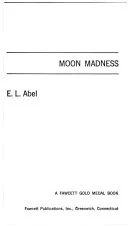
Moon Madness
 84
84

Moon Madness
E. L. Abel’s ‘Moon Madness’ offers a dense, intricate exploration of lunar symbolism that, while occasionally dense, rewards persistent readers. The work’s strength lies in its ambitious synthesis of astrological lore, psychological archetypes, and historical mystical traditions. Abel avoids simplistic interpretations, instead presenting the Moon as a multifaceted force influencing not just external events but the very fabric of the subconscious. A particularly striking passage details the 'Moon of Sorrows' archetype, linking lunar phases to cycles of psychic purification and release. However, the book’s primary limitation is its occasionally arcane language, which can obscure its core arguments for those less initiated in esoteric terminology. The lack of modern scholarly engagement also means its assertions are presented without contemporary critique. Ultimately, 'Moon Madness' is a challenging but insightful contribution to lunar esoteric studies.
📝 Description
84
E. L. Abel's 1976 book 'Moon Madness' examines lunar influences on consciousness and behavior.
Published in 1976, 'Moon Madness' by E. L. Abel is an esoteric study of the Moon's effects on human consciousness and behavior. Abel moves past standard astrological interpretations to discuss the deeper psychological and spiritual connections to the Moon. The book analyzes the Moon's archetypal meaning, its link to the subconscious mind, and its significance in various mystical traditions. Abel presents a distinct view on how celestial patterns, especially lunar cycles, are thought to shape personal fates and communal experiences.
This work is aimed at dedicated students of esotericism, comparative mythology, and depth psychology. Those interested in the historical relationship between observing the stars and spiritual practices will find a good amount of material. It is particularly useful for readers who want to understand the Moon not simply as a celestial object but as a powerful symbol in occult philosophy. Scholars studying the development of esoteric ideas in the mid-20th century might also find it a useful reference.
Published in 1976, 'Moon Madness' appeared during a period of growing interest in occultism and alternative spiritualities, following the counter-cultural shifts of the 1960s. This era saw a rise in esoteric writings, with figures like Dion Fortune continuing to shape discussions on lunar symbolism. Abel's work contributes to this ongoing conversation by offering a specific interpretation of lunar lore within Western esotericism. The book's approach aligns with the mid-20th century intersection of academic interest in mythology and psychology, influenced by thinkers like Carl Jung and his work on archetypes.
💡 Why Read This Book?
• Gain a nuanced understanding of lunar archetypes beyond basic astrology, exploring concepts like the 'Shadow Self' as presented in Chapter 3. • Discover the historical connections between lunar cycles and esoteric traditions, as detailed in the 1976 publication context, offering a unique mid-20th-century perspective. • Learn about the 'Astral Body' and its supposed energetic link to celestial bodies, a key theme explored within the book’s unique framework for understanding psychic influences.
⭐ Reader Reviews
Honest opinions from readers who have explored this book.
❓ Frequently Asked Questions
What is the primary focus of 'Moon Madness' by E. L. Abel?
'Moon Madness' focuses on the esoteric and psychological interpretations of lunar influences, moving beyond standard astrology to examine the Moon's archetypal significance and its impact on the subconscious and spiritual development.
When was 'Moon Madness' first published and what was the context?
The book was first published in 1976, a period of significant interest in occultism and alternative spiritualities, following the counter-culture movements of the 1960s.
What esoteric traditions does 'Moon Madness' draw upon?
The work synthesizes elements from Western esotericism, comparative mythology, and depth psychology, exploring concepts like archetypes, the subconscious, and symbolic lunar lore.
Is 'Moon Madness' suitable for beginners in occult studies?
While offering valuable insights, the book's dense prose and specialized terminology may be more accessible to those with some prior familiarity with esoteric concepts and psychological archetypes.
Does the book discuss specific lunar rituals or practices?
The book tends to focus more on the philosophical and symbolic understanding of lunar influences rather than providing detailed practical ritual instructions. It explores the 'why' behind lunar connections.
What is the 'Lunar Gnosis' as mentioned in the book?
The 'Lunar Gnosis' refers to a presumed hidden or intuitive knowledge associated with lunar cycles, suggesting that the Moon acts as a conduit for deeper spiritual understanding and subconscious revelations.
🔮 Key Themes & Symbolism
Lunar Archetypes and the Psyche
The book posits the Moon as a primary archetype influencing the human psyche, particularly the subconscious and emotional landscape. It explores how lunar phases mirror cycles of inner experience, from illumination to shadow. Abel connects this to the 'Great Mother' archetype, suggesting the Moon governs instinctual and nurturing energies. This theme is central to understanding how celestial bodies, as described in the 1976 publication, were seen to interact with individual psychological states and the emergence of the 'Shadow Self'.
The Astral Body and Lunar Resonance
A core concept in 'Moon Madness' is the 'Astral Body' and its supposed sensitivity to cosmic influences. Abel argues that the astral form acts as a medium through which lunar energies are received and processed, affecting mood, intuition, and psychic perception. The text elaborates on how specific lunar aspects, such as the Full Moon or New Moon, can create distinct energetic fields that directly stimulate or suppress different functions of the astral body, thereby influencing conscious experience.
Esoteric Lunar Lore and Gnosis
The work synthesizes various strands of esoteric lunar lore, suggesting a form of 'Lunar Gnosis' – a hidden knowledge accessible through contemplation of the Moon. It examines ancient mythologies and occult traditions where the Moon holds a central, often dualistic, role. Abel traces the symbolic evolution of the Moon from fertility goddess to a symbol of hidden knowledge and the subconscious, presenting the 1976 publication as a contribution to understanding this ancient wisdom in a modern context.
Cycles of Transformation
Central to Abel's thesis is the idea that lunar cycles represent natural patterns of transformation that can be applied to spiritual growth. The book explores how the waxing and waning of the Moon mirror processes of manifestation, dissolution, and rebirth within the individual and the cosmos. This cyclical understanding is presented as a key to navigating personal challenges and achieving deeper self-awareness, viewing the Moon's phases as a cosmic calendar for inner work.
💬 Memorable Quotes
Direct passages from the work, attributed to the author.
“The Moon mirrors the hidden face of the soul.”
— This statement expresses the book's central thesis: the Moon serves as a symbolic reflection of our subconscious depths, revealing aspects of ourselves that remain concealed in daylight consciousness.
“Lunar phases chart the tides of inner experience.”
— This suggests that the waxing and waning of the Moon are not merely external phenomena but correspond directly to the ebb and flow of our emotions, psychic states, and spiritual energies.
“Through its light, the Moon exposes the veiled psyche.”
— This interpretation highlights the Moon's role in bringing subconscious material to the surface. Its illumination is seen as a catalyst for confronting and integrating hidden aspects of the self.
“The shadow cast by Luna is the threshold to gnosis.”
— This cryptic phrase implies that confronting the darker, less understood aspects associated with the Moon (its 'shadow') is a necessary step on the path to esoteric knowledge or spiritual insight.
“Celestial rhythms inform the human spirit's journey.”
— This broad statement underscores the book's premise that cosmic cycles, particularly those of the Moon, are intrinsically linked to human spiritual development and destiny.
🌙 Esoteric Significance
Tradition
This work primarily draws from Western Esotericism, synthesizing elements from Hermeticism, Neoplatonism, and Jungian depth psychology. It departs from purely astrological interpretations by focusing on the Moon's symbolic and archetypal role in consciousness, aligning with a philosophical approach to lunar studies rather than a purely predictive one. It fits within traditions that view celestial bodies as keys to unlocking inner spiritual potential.
Symbolism
Key symbols include the Moon itself, representing the subconscious, intuition, the feminine principle, and hidden knowledge. The 'Shadow Self' is another crucial motif, explored as the dark aspect of the psyche illuminated by lunar phases, often linked to primal fears or unacknowledged desires. The 'Astral Body' functions as a symbolic conduit, illustrating the energetic connection between the celestial and the personal.
Modern Relevance
Contemporary practitioners of Western Esotericism, particularly those interested in psychological astrology and archetypal studies, continue to find value in Abel's symbolic approach. Modern pagan and witchcraft traditions exploring lunar cycles and the divine feminine often echo themes found in 'Moon Madness.' Thinkers focused on the intersection of mythology, psychology, and spirituality may still reference its unique perspective on lunar influence.
👥 Who Should Read This Book
• Students of esoteric philosophy interested in symbolic interpretations of celestial bodies, particularly the Moon's role in consciousness and mythology. • Depth psychology practitioners and enthusiasts seeking to understand archetypal influences beyond standard Freudian or Jungian frameworks, especially concerning the subconscious. • Comparative religion scholars exploring the cross-cultural significance of lunar symbolism in ancient myths and spiritual traditions.
📜 Historical Context
Published in 1976, 'Moon Madness' emerged within a vibrant, if fragmented, occult revival. The mid-1970s saw a surge of interest in esoteric subjects, building on the counter-cultural explorations of the previous decade. Authors like Aleister Crowley had already established a significant esoteric legacy, and figures like Dion Fortune were influential in occult circles. Abel’s work can be situated within this landscape, contributing to a discourse that sought to integrate psychological insights, particularly Jungian archetypes, with traditional astrological and mystical symbolism. While academic study of Western esotericism was still nascent, the spiritual marketplace was rich with varied interpretations of ancient traditions. The reception of such works often occurred within specialized journals or underground networks rather than mainstream critical discourse, though academic engagement with mythology and symbolism was growing, influenced by scholars like Mircea Eliade.
📔 Journal Prompts
The 'Lunar Gnosis' as a path to self-knowledge.
Reflections on the 'Shadow Self' during specific lunar phases.
The Moon's influence on your personal 'Astral Body'.
Archetypal feminine energies symbolized by the Moon.
Connecting celestial rhythms to your own life cycles.
🗂️ Glossary
Lunar Gnosis
A concept suggesting hidden or intuitive knowledge accessible through the contemplation of the Moon and its cycles, distinct from empirical or intellectual understanding.
Astral Body
In esoteric traditions, a subtle body or energetic vehicle believed to mediate between the physical body and the spirit, often considered the seat of emotions and psychic experiences.
Shadow Self
A term, popularized in depth psychology, referring to the unconscious or repressed aspects of the personality that the conscious ego does not identify with.
Archetype
In Jungian psychology and mythology, a primordial, universal pattern or image that recurs across cultures and time, representing fundamental human experiences or concepts.
Esotericism
Belief systems and spiritual practices characterized by secrecy, initiation, and the pursuit of hidden knowledge or spiritual enlightenment, often distinct from exoteric or public doctrines.
Celestial Rhythms
The perceived regular patterns and cycles of celestial bodies (planets, stars, Moon) and their supposed influence on earthly phenomena and human consciousness.
Great Mother
A universal archetype representing the feminine principle in its nurturing, creative, and sometimes destructive aspects, often associated with the Moon and Earth.
This book appears in 1 collection
🔮 Readers Also Liked
Browse all →









From the “Lycanthropy” Collection
View all →




More Free Occult Philosophy Books
View all →