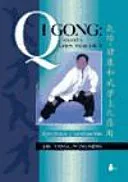
Qigong Salud y Artes Marciales
 83
83

Qigong Salud y Artes Marciales
The 2001 publication, "Qigong Salud y Artes Marciales," presents a pragmatic approach to a discipline often shrouded in mystique. Its strength lies in the clarity of its instruction, making complex Qigong principles accessible to a broad audience. The integration of health benefits alongside martial applications is particularly well-handled, avoiding the common pitfall of prioritizing one over the other. A notable passage describes the "Eight Brocades" (Ba Duan Jin), a foundational set of Qigong exercises, with clear diagrams and explanations of their physiological effects. However, the work occasionally feels somewhat generalized, particularly in its historical sections, which could benefit from deeper scholarly engagement. Despite this, the practical guidance offered for cultivating Qi and enhancing physical vitality makes it a valuable resource for earnest practitioners. It serves as a solid entry point for those seeking tangible results from their Qigong training.
📝 Description
83
"Qigong Salud y Artes Marciales" appeared in October 2001, detailing a system of movement, breath, and meditation.
This manual details Qigong, a practice combining posture, movement, breathing, and meditation for health, spirituality, and martial arts. The book aims to give readers the basic knowledge and exercises needed to build internal energy, called Qi, for better physical health and martial skill. It views Qigong not just as exercises, but as a complete discipline.
The guide is mainly for martial artists who want to understand internal power better. It also suits people interested in health and long life, showing ways to improve physical fitness, handle stress, and find energetic balance. Beginners will find a clear path, while experienced practitioners might find subtle points and advanced methods to improve their current routines. It connects ancient traditions with practical self-improvement.
The practices detailed in "Qigong Salud y Artes Marciales" trace their lineage back centuries within Chinese tradition. Qigong itself has roots stretching back millennia, growing from ancient Taoist and Buddhist contemplative methods, alongside military training. The early 2000s saw increased global interest in traditional Chinese medicine and martial arts, making this book a conduit for sharing these practices beyond their original cultural spheres.
💡 Why Read This Book?
• You will learn specific techniques for cultivating and directing Qi, as detailed in the "Eight Brocades" (Ba Duan Jin) section, allowing for direct application to personal health and martial arts. • You will gain an understanding of the dan tian, a core energy center, and methods for its development as presented in the text, enhancing your internal power and energetic awareness. • You will discover practical breathing exercises designed to improve circulation and vitality, as outlined in the foundational breathing techniques chapters, offering immediate benefits for stress reduction and physical well-being.
⭐ Reader Reviews
Honest opinions from readers who have explored this book.
❓ Frequently Asked Questions
What is the primary focus of "Qigong Salud y Artes Marciales"?
The book is a comprehensive guide to Qigong, detailing exercises for improving health, increasing strength, and developing martial power. It emphasizes the cultivation and circulation of vital energy (Qi) through coordinated movement, breathing, and meditation.
Who is the intended audience for this Qigong guide?
It is designed for both martial arts enthusiasts looking to enhance their internal power and individuals focused on general health and longevity. Beginners will find it accessible, while experienced practitioners can refine their skills.
When was "Qigong Salud y Artes Marciales" first published?
The book was first published in October 2001, reflecting a growing global interest in traditional Chinese practices during the early 21st century.
Does the book explain specific Qigong exercises?
Yes, it details foundational Qigong exercises such as the "Eight Brocades" (Ba Duan Jin), providing instructions and explanations of their benefits for health and martial arts.
What is 'Qi' as explained in the book?
Qi, often translated as vital life force or energy, is the central concept. The book explains how to cultivate, circulate, and utilize Qi through specific postures, movements, and breathwork for enhanced physical and energetic well-being.
Is this book suitable for someone completely new to Qigong?
Absolutely. The book offers a structured approach to Qigong, making its principles and practices understandable for beginners while still providing depth for those with prior experience.
🔮 Key Themes & Symbolism
Qi Cultivation and Circulation
The core of the work revolves around the concept of Qi, or vital energy. It meticulously explains how practitioners can gather, store, and move this energy through the body's meridians. Specific exercises, like those found in the "Eight Brocades," are presented as methods to harmonize Qi flow, which is understood to be fundamental for both robust health and effective martial application. The book treats Qi not as a metaphor, but as a tangible force to be developed and directed.
Integration of Health and Martial Arts
A significant aspect of this text is its unified approach to Qigong for both physical well-being and combat efficacy. It posits that the internal strength and energetic balance cultivated through health-focused Qigong directly enhance martial capabilities, such as power generation, resilience, and speed. Conversely, martial training can refine the practitioner's ability to channel Qi. This integration avoids treating the disciplines as separate entities, offering a holistic path to self-mastery.
The Dan Tian as an Energy Hub
The book places considerable emphasis on the dan tian, particularly the lower dan tian located below the navel, as the primary reservoir and generator of Qi. It details specific breathing techniques and postures designed to strengthen and activate this energy center. Developing the dan tian is presented as crucial for accumulating significant internal power, which then can be circulated throughout the body, impacting both physical vitality and martial force projection.
Mind-Body Coordination
Central to the practice described is the deliberate coordination of mental focus, physical movement, and breath. The work stresses that Qigong is not merely rote physical exercise; it requires intention and awareness. By synchronizing the mind's intent with bodily actions and breath control, practitioners can achieve a deeper level of energetic connection and control. This mind-body synergy is depicted as the mechanism through which Qi is effectively cultivated and directed.
💬 Memorable Quotes
Direct passages from the work, attributed to the author.
“El Dr. Yang Jwing-Ming, reconocido Maestro de Qigong presenta en esta obra una serie de ejercicios que seran de enorme utilidad tanto a los aficionados a las artes marciales como a quienes deseen mantener o incrementar su salud.”
— This statement highlights the book's dual purpose, presenting Qigong exercises useful for martial artists and health seekers alike, attributed to the expertise of Dr. Yang Jwing-Ming.
“Una guia completa de entrenamiento Qigong.”
— This phrase emphasizes the book's function as a thorough and complete resource for learning and practicing Qigong, covering its essential aspects.
“El Qigong integra mente, cuerpo y espíritu para el bienestar.”
— Interpretation: This concept underscores the holistic nature of Qigong, as depicted in the text, where the interconnectedness of mental focus, physical form, and spiritual awareness is key to achieving overall well-being.
“La circulación del Qi es fundamental para la vitalidad.”
— Interpretation: This principle, central to the book's teachings, asserts that the free and harmonious flow of vital energy (Qi) throughout the body is essential for maintaining health and life force.
💡 Key Ideas
Editorial paraphrase of the work's core concepts — not direct quotes.
Aumente su fuerza, mejore su salud y desarrolle su poder marcial con el Qigong.
This concise statement summarizes the core benefits promised by practicing Qigong as presented in the book: increased physical strength, improved health, and the development of martial capabilities.
🌙 Esoteric Significance
Tradition
While the book focuses on practical applications of Qigong for health and martial arts, its underlying principles align with Taoist internal alchemy and Neidan traditions. These traditions seek to cultivate and refine the body's vital energy (Qi) for longevity, spiritual development, and enhanced physical capabilities. The emphasis on cultivating the dan tian and circulating energy through specific meridians are direct traces of these ancient Taoist practices, positioning the work within a lineage of esoteric self-cultivation.
Symbolism
The concept of Qi itself functions as a primary symbol, representing the invisible life force that animates all things. The dan tian, particularly the lower dan tian, symbolizes a core energetic crucible where vital essence is stored and transformed. Meridians represent the energetic pathways, akin to rivers, that nourish the entire organism; their blockage or depletion signifies illness or weakness, while free flow denotes health and vitality.
Modern Relevance
Contemporary practitioners of integrative medicine, somatic therapies, and various internal martial arts styles continue to draw upon the principles outlined in works like this. Thinkers and schools focusing on embodied cognition, bioenergetics, and mind-body integration find resonance with Qigong's systematic approach. Modern Qigong instructors and health coaches often use such texts as foundational resources for teaching practices aimed at stress reduction, pain management, and overall vitality in an increasingly fast-paced world.
👥 Who Should Read This Book
• Martial artists seeking to understand and develop their internal power, moving beyond purely external strength training. • Individuals focused on holistic health and longevity practices who wish to learn systematic methods for energy cultivation and physical well-being. • Students of traditional Chinese medicine and philosophy interested in the practical application of Qi cultivation and its physiological effects.
📜 Historical Context
Published in October 2001, "Qigong Salud y Artes Marciales" emerged during a period of significant global interest in traditional Chinese practices. Qigong, with roots stretching back millennia to Taoist and Buddhist contemplative traditions, had seen a resurgence in popularity worldwide, particularly from the late 20th century onwards. This era witnessed a growing demand for authentic texts that could explain complex internal arts for Western audiences. While figures like Dr. Yang Jwing-Ming were already established authorities, the early 2000s saw a proliferation of books aiming to systematize these practices. The work entered a field populated by various interpretations of Qigong, some focusing purely on health, others on martial applications, and some on more esoteric spiritual dimensions. Its reception likely contributed to the broader discourse on mind-body practices, though specific contemporary critical reviews or reception events for this particular 2001 edition are not widely documented, unlike the more established works of authors like Robert Bruce or Mantak Chia who were also active in popularizing similar practices.
📔 Journal Prompts
Reflect on the described function of the dan tian as an energetic reservoir.
Consider the integration of mind, body, and spirit in Qigong practice.
Analyze the connection between Qi circulation and physical health as presented.
Explore the 'Eight Brocades' (Ba Duan Jin) as a foundational Qigong sequence.
Evaluate how intention influences the effectiveness of Qigong movements.
🗂️ Glossary
Qigong
An ancient Chinese practice involving coordinated movement, breathing, and meditation to cultivate and balance vital energy (Qi) for health, spirituality, and martial arts.
Qi (Chi)
The vital life force or energy believed to permeate and animate all living things. Its cultivation and circulation are central to Qigong practice.
Dan Tian
An energy center in the body, typically located in the lower abdomen, considered the primary reservoir and generator of Qi.
Meridians
Invisible pathways or channels through which Qi is believed to flow throughout the body, connecting organs and limbs.
Eight Brocades (Ba Duan Jin)
A foundational set of eight Qigong exercises known for their effectiveness in improving health, flexibility, and energy circulation.
Neidan
A Taoist system of internal alchemy focused on cultivating and refining Qi, Jing (essence), and Shen (spirit) within the body for health and spiritual development.
Vitality
The state of being strong, active, and energetic; often associated with the abundance and free flow of Qi within the body.