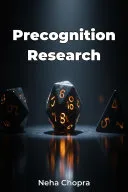
Precognition Research
 84
84

Precognition Research
Neha Chopra’s *Precognition Research* presents a sober, almost clinical, assessment of a subject often mired in anecdote and wishful thinking. The book’s strength lies in its unwavering commitment to methodological rigor, particularly its detailed dissection of experimental design flaws that have plagued past precognition studies. Chopra’s insistence on statistical scrutiny is commendable, offering a much-needed corrective to sensationalized accounts. However, the relentless focus on statistical minutiae can, at times, make the text feel dry, especially when discussing the potential subjective experience of precognition. The section on the impact of "sensory leakage" in laboratory settings, while crucial for scientific validity, might alienate readers hoping for a more experiential exploration of psychic phenomena. Ultimately, Chopra delivers a rigorous, if somewhat uninspiring, scientific audit of precognition research.
📝 Description
84
Neha Chopra's Precognition Research (2025) applies scientific rigor to the study of predicting future events.
First published in 2025, Neha Chopra's "Precognition Research" subjects the controversial field of precognition to scientific examination. The book meticulously investigates the possibility of humans accurately predicting future random events, focusing on empirical evidence and statistical validity. It scrutinizes laboratory setups and methodologies, highlighting their critical influence on observed outcomes. The work emphasizes methodological rigor and statistical scrutiny as paramount in evaluating precognitive claims. It explores how experimental design can inadvertently introduce biases or confounds, potentially skewing results. The distinction between genuine anomalous effects and statistical artifacts is a central theme, underscoring the need for robust controls and replicability in research.
This volume is geared towards researchers, academics, and serious students of parapsychology and the philosophy of science. It appeals to those interested in the intersection of consciousness studies, experimental design, and statistical analysis within the context of anomalous phenomena. Individuals seeking a dispassionate, evidence-based examination of precognitive claims will find it valuable.
The study of precognition has a long history, gaining momentum in the late 19th and early 20th centuries alongside spiritualism and organizations like the Society for Psychical Research. Early researchers like J.B. Rhine at Duke University attempted to apply scientific methods to psychic phenomena. Chopra's work engages with this historical legacy, using modern statistical techniques to re-evaluate claims and address the challenges of proving precognitive abilities within a scientific framework.
💡 Why Read This Book?
• Gain an understanding of the statistical challenges in verifying precognitive claims, as detailed in the examination of laboratory experiments, allowing you to critically assess future research. • Learn how experimental design flaws, such as those discussed in the context of "sensory leakage," can compromise the validity of parapsychological findings, refining your own critical thinking skills. • Understand the historical debate surrounding precognition, placing Neha Chopra's 2025 work within the lineage of scientific inquiry that includes figures like J.B. Rhine and the Society for Psychical Research.
⭐ Reader Reviews
Honest opinions from readers who have explored this book.
❓ Frequently Asked Questions
What is the primary focus of Neha Chopra's "Precognition Research"?
The book rigorously examines the scientific evidence for precognition, focusing on laboratory experiments, methodological soundness, and statistical analysis to determine the validity of predicting future random events.
Does the book present definitive proof of precognition?
No, the book takes a critical, scientific approach, emphasizing the challenges and statistical scrutiny required. It explores the evidence rather than declaring definitive proof, highlighting the complexities of experimental design.
What role does statistical analysis play in the research?
Statistical analysis is central to the book's methodology. It is used to distinguish genuine effects from chance occurrences and to assess the reliability and significance of experimental results in precognition studies.
Who is the intended audience for "Precognition Research"?
The book is intended for researchers, academics, and students of parapsychology, consciousness studies, and the philosophy of science who are interested in a data-driven examination of precognitive phenomena.
When was "Precognition Research" first published?
The book was first published on March 4, 2025, by Neha Chopra, with AI assistance noted in its publication details.
What are some of the key methodological issues discussed?
The book discusses issues like "sensory leakage," experimenter bias, and the importance of proper controls and blinding to ensure the integrity of precognition experiments.
🔮 Key Themes & Symbolism
Methodological Rigor
The core of Chopra's work lies in its relentless focus on the scientific method applied to precognition. It dissects laboratory setups, scrutinizes statistical protocols, and highlights how flawed experimental design can lead to spurious results. The book argues that without stringent controls and robust statistical analysis, claims of precognition remain unsubstantiated, emphasizing that validity hinges on replicability and the elimination of confounding variables. This theme underscores the critical difference between anecdotal experience and empirical evidence in scientific inquiry.
Statistical Scrutiny
This theme is inseparable from methodological rigor. The book details how statistical tools are employed to differentiate genuine precognitive effects from random chance. It examines concepts like p-values and effect sizes in the context of parapsychological research, cautioning against misinterpreting noise as signal. Chopra stresses that even seemingly significant results must withstand rigorous statistical review to be considered credible, making statistical literacy essential for evaluating precognition claims.
Experimental Design Impact
Chopra dedicates significant attention to how the architecture of an experiment directly influences its outcome in precognition research. Factors such as the type of target stimuli (e.g., random number generators vs. emotionally charged images), participant selection, and the potential for "sensory leakage" are explored. The book illustrates how subtle variations in design can either support or undermine claims of predictive ability, advocating for standardized, transparent, and carefully controlled experimental protocols.
The Nature of Randomness
Central to the investigation is the concept of randomness and whether it can truly be predicted. The book grapples with the statistical definition of randomness and the challenges inherent in designing experiments that genuinely test precognition against truly random future events. It explores the philosophical implications of potentially predicting events that, by definition, lack discernible causal chains, pushing the boundaries of our understanding of causality and predictability.
💬 Memorable Quotes
Direct passages from the work, attributed to the author.
“Distinguishing genuine precognitive effects from statistical artifacts demands unwavering methodological rigor.”
— This statement expresses the book's central thesis: the scientific validation of precognition hinges entirely on the quality of research design and analysis. It implies that many past claims may have been illusions born from poor scientific practice rather than genuine psychic ability.
“The architecture of an experiment can profoundly shape its results, demanding constant vigilance against confounds.”
— This highlights the critical role of experimental design. It suggests that researchers must be acutely aware of how their setup might inadvertently influence outcomes, whether through participant cues, experimenter bias, or other subtle factors, underscoring the need for meticulous planning.
“Statistical scrutiny is the ultimate arbiter in evaluating claims of foresight.”
— This emphasizes the book's reliance on quantitative analysis. It positions statistical methods not merely as tools but as the definitive judge in determining the credibility of precognitive phenomena, prioritizing objective data over subjective experience.
“Predicting truly random future events remains a formidable scientific challenge.”
— This acknowledges the inherent difficulty in the field. It suggests that the very nature of randomness presents a significant obstacle to proving precognition, implying that any successful prediction would require overcoming substantial theoretical and practical hurdles.
“Sensory leakage represents a persistent threat to the integrity of precognitive studies.”
— This points to a specific, recurring flaw in experimental design. It warns that unintentional transmission of information through conventional senses can easily be mistaken for psychic perception, necessitating strict controls to prevent such occurrences.
🌙 Esoteric Significance
Tradition
While *Precognition Research* presents itself as a scientific inquiry, its subject matter touches upon themes central to various esoteric traditions, particularly those concerned with divination and foresight. Within Hermeticism and Neoplatonism, concepts of cosmic sympathy and the interconnectedness of time sometimes allowed for the possibility of perceiving future events through altered states of consciousness or esoteric arts. Chopra’s work, however, departs significantly by demanding empirical, quantifiable proof, contrasting with the more intuitive or symbolic methods often employed in traditional esoteric practices.
Symbolism
The book itself, being a scientific treatise, doesn't overtly employ traditional esoteric symbolism. However, the *concept* of precognition can be seen as symbolic of humanity's perennial desire to transcend linear time and gain knowledge of the unknown. The "random future events" investigated can be interpreted as a modern, secularized representation of fate or destiny, subjects traditionally explored through oracles, astrology, and other divinatory systems that sought to interpret divine or cosmic will.
Modern Relevance
Contemporary thinkers in consciousness studies, quantum physics interpretations, and even certain branches of transpersonal psychology continue to explore phenomena that border on precognition. While not directly citing Chopra, researchers investigating topics like retrocausality, the measurement problem in quantum mechanics, and the nature of subjective time consciousness engage with questions that parallel those posed by precognition research. The demand for rigorous methodology championed in the book remains a crucial standard for anyone exploring anomalous psychological phenomena today.
👥 Who Should Read This Book
• Researchers in parapsychology and consciousness studies seeking a critical overview of experimental methodologies and statistical challenges in the field of precognition. • Students of the philosophy of science interested in the demarcation problem between science and pseudoscience, and the application of rigorous testing to controversial claims. • Skeptics and critical thinkers aiming to understand the scientific arguments and counterarguments surrounding precognition, equipping them with tools to evaluate evidence effectively.
📜 Historical Context
The study of precognition has been a persistent, albeit fringe, element within psychical research since the late 19th century. Following the establishment of organizations like the Society for Psychical Research in 1882, early investigators grappled with anecdotal evidence and rudimentary experimental designs. The mid-20th century saw figures like J.B. Rhine at Duke University popularize systematic, laboratory-based approaches, often employing card-guessing tasks and dice-throwing experiments. However, these efforts consistently faced criticism regarding methodological flaws and statistical interpretations, notably from skeptics like James Randi. Mainstream science largely dismissed precognition, viewing it as incompatible with established causal principles. Neha Chopra's *Precognition Research*, published in 2025, emerges in an era with vastly more sophisticated statistical tools and a deeper understanding of cognitive biases, aiming to provide a contemporary, rigorous re-evaluation of the field's evidentiary base.
📔 Journal Prompts
Methodological rigor in precognition experiments.
The statistical distinction between chance and effect.
Defining and controlling for "sensory leakage."
The impact of experimental design on observed outcomes.
The challenge of predicting truly random events.
🗂️ Glossary
Precognition
The alleged psychic ability to foresee future events. In the context of the book, this specifically refers to predicting random future occurrences through means beyond conventional sensory perception or logical inference.
Methodological Rigor
The degree to which research procedures are carefully planned, executed, and controlled to ensure the validity and reliability of findings. Essential for eliminating bias and confounding variables.
Statistical Scrutiny
The critical examination and analysis of numerical data using statistical methods to determine the significance, reliability, and generalizability of research results.
Experimental Design
The overall structure and plan of a scientific experiment, including the choice of variables, controls, participant selection, and data collection methods.
Sensory Leakage
The unintentional transmission of information through normal sensory channels (sight, sound, touch, etc.) in an experiment, which can be mistaken for psychic perception.
Randomness
The quality or state of being random; lacking a discernible pattern or predictable sequence. Crucial in precognition research as a baseline against which predictive ability is tested.
Statistical Artifact
A result that appears significant due to flaws in statistical analysis or experimental design, rather than reflecting a genuine underlying effect.