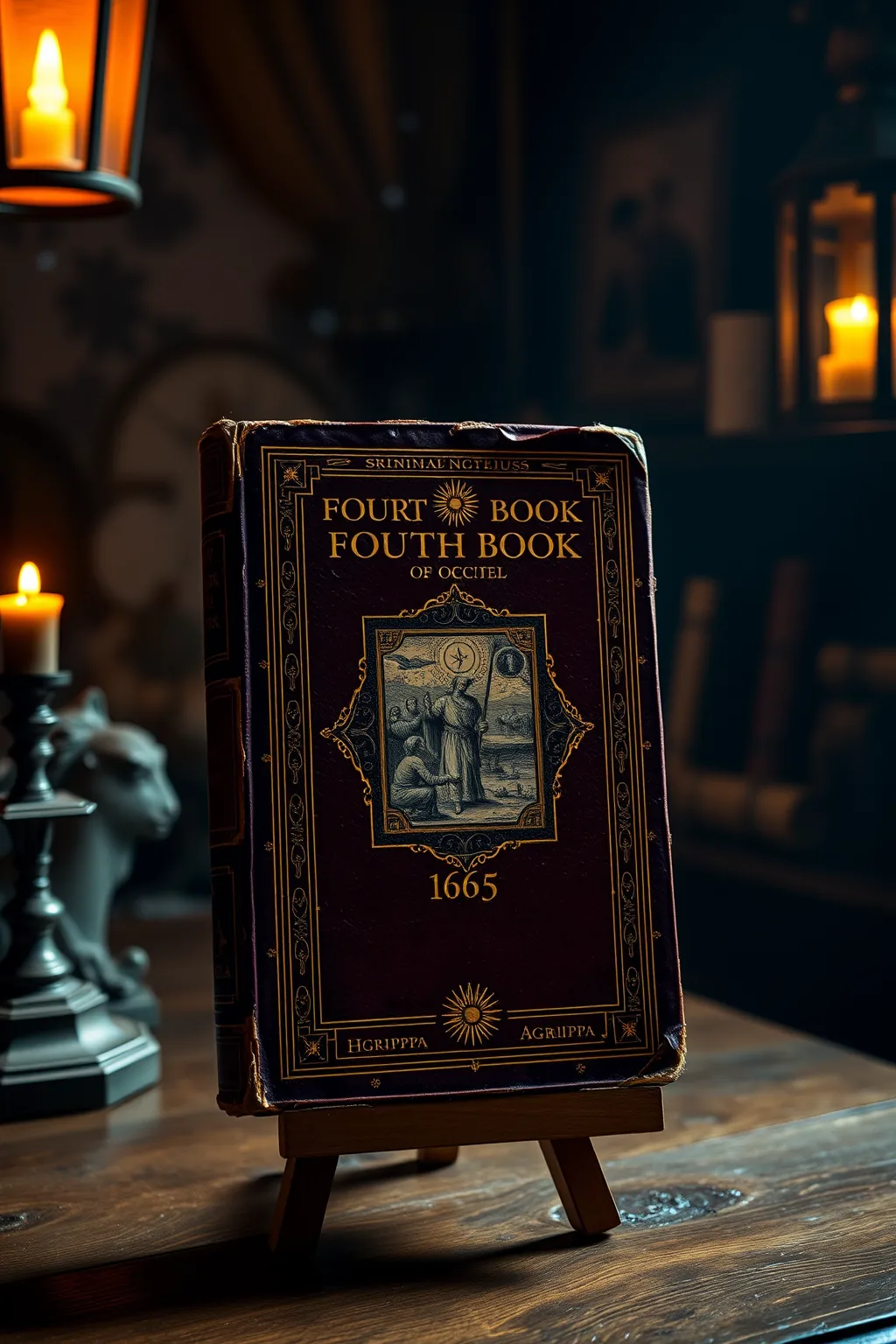
Henricus Cornelius Agrippa his fourth book of occult philosophy. 1665
 79
79

Henricus Cornelius Agrippa his fourth book of occult philosophy. 1665



Henricus Cornelius Agrippa's 'Fourth Book of Occult Philosophy' is a treasure trove of esoteric knowledge that remains relevant to modern seekers of the occult. Published in 1665, this work provides a deep dive into the mystical traditions of the Renaissance, offering insights into astrology, alchemy, and ceremonial magic. Agrippa's scholarship is evident in his meticulous compilation of ancient and medieval sources, making this book an invaluable resource for those interested in the history of occult thought. The text's exploration of the interconnection between the macrocosm and the microcosm is particularly compelling, reflecting Agrippa's belief in the harmony of the universe. For contemporary readers, this book serves as a bridge between ancient wisdom and modern spiritual practices, offering timeless insights into the nature of reality and the human experience. Despite its age, the book's ideas remain fresh and thought-provoking, making it a must-read for anyone serious about exploring the depths of occult philosophy.
📝 Description
79
Published in 1665, Henricus Cornelius Agrippa's 'Fourth Book of Occult Philosophy' examines divine, celestial, and infernal magic.
This 1665 publication of Agrippa's 'Fourth Book of Occult Philosophy' details three distinct forms of magic: divine, celestial, and infernal. It presents rituals and invocations intended to connect the practitioner with higher spiritual forces. The text is structured around specific magical operations, drawing on Kabbalistic principles and Neoplatonic ideas to explain their efficacy.
Agrippa's work aims to provide a systematic approach to ceremonial magic, outlining the necessary preparations, correspondences, and incantations. It discusses the roles of angels, demons, and planetary intelligences, and how they can be invoked or appeased. The book is a significant example of Renaissance magical theory, reflecting a complex worldview where the microcosm of humanity mirrors the macrocosm of the universe.
Appearing in the late Renaissance, this work belongs to a tradition of grimoires that sought to codify magical practices. Agrippa's 'Fourth Book' follows his earlier, more philosophical 'Three Books of Occult Philosophy.' It represents a shift towards practical, ritualistic magic, influenced by Kabbalah and Hermeticism. This period saw a surge in interest in ceremonial magic, as scholars and practitioners attempted to understand and control supernatural forces through structured rites and symbolic systems.
💡 Why Read This Book?
Reading 'Henricus Cornelius Agrippa's Fourth Book of Occult Philosophy' today offers readers a unique opportunity to explore the foundational principles of esoteric thought. This book provides a comprehensive guide to the occult sciences, including astrology, alchemy, and ceremonial magic. By delving into Agrippa's work, readers can gain a deeper understanding of the interconnection between the macrocosm and the microcosm, and how these principles apply to contemporary spiritual practices. The book's historical context and scholarly rigor make it an invaluable resource for modern seekers of the occult, offering timeless insights into the nature of reality and the human experience.
⭐ Reader Reviews
Honest opinions from readers who have explored this book.
❓ Frequently Asked Questions
Who was Henricus Cornelius Agrippa?
Henricus Cornelius Agrippa was a renowned scholar and occultist of the Renaissance era, known for his extensive work in the fields of magic, astrology, and alchemy.
What are the main themes of 'Fourth Book of Occult Philosophy'?
The main themes include the interconnection between the macrocosm and the microcosm, the nature of spirits, divination, and ceremonial magic.
Why is this book important for modern esoteric seekers?
This book provides foundational principles of occult philosophy, offering timeless insights into ancient wisdom and its relevance to contemporary spiritual practices.
🔮 Key Themes & Symbolism
The Nature of Reality
Agrippa's work explores the profound question of what constitutes reality, exploring the mystical and occult dimensions that lie beyond the physical world. Through alchemy and magic, he seeks to uncover the hidden truths that shape our existence.
The Human Spirit
This book examines the spiritual essence of humanity, offering insights into the quest for enlightenment and the nature of the soul. Agrippa's philosophical inquiries challenge readers to contemplate their own spiritual journeys and the deeper meaning of life.
Symbolism and Mystical Practices
Agrippa's exploration of symbolism and mystical practices is central to his philosophy. He integrates complex esoteric symbols with practical applications, providing a wide range of occult knowledge that is both enlightening and intriguing.
💬 Memorable Quotes
Direct passages from the work, attributed to the author.
“The true philosopher seeks not to understand the world, but to become one with it.”
— Agrippa's words emphasize the mystical union between the seeker and the universe, a central theme in occult philosophy.
“The stars above are reflections of the soul within.”
— Agrippa's astrological insights reveal the interconnectedness of the cosmos and the human spirit, inviting contemplation on the mystical dimensions of existence.
“The quest for hidden knowledge is the journey of the soul.”
— Agrippa's exploration of occult philosophy is a spiritual journey, inviting readers to examine the mysteries of the universe and the human spirit.
💡 Key Ideas
Editorial paraphrase of the work's core concepts — not direct quotes.
Alchemy is the art of transforming the base into the divine.
This quote highlights the transformative power of alchemy, both literally and symbolically, in the pursuit of spiritual enlightenment.
Magic is the language of the universe, spoken in symbols and rituals.
This quote underscores the symbolic and ritualistic nature of magic, which Agrippa believes is essential for understanding the deeper truths of reality.
🌙 Esoteric Significance
Tradition
This book belongs to the Hermetic tradition, which emphasizes the pursuit of hidden knowledge and the mystical union with the divine. Agrippa's work integrates elements of alchemy, astrology, and magic, making it a core part of Hermetic philosophy.
Symbolism
Key symbols in this book include the alchemical symbols of transformation, the astrological symbols of celestial influences, and the magical symbols of ritual and invocation. These symbols represent the deeper truths and mystical practices that underlie Agrippa's philosophy.
Modern Relevance
This book remains relevant today as it provides a comprehensive framework for understanding occult practices and their philosophical underpinnings. Modern practitioners and scholars continue to draw inspiration from Agrippa's insights, integrating them into contemporary esoteric studies.
👥 Who Should Read This Book
Beginners interested in the occult should start with this book to gain a foundational understanding of esoteric concepts. Scholars of the occult will find it an invaluable resource for deepening their knowledge and exploring new philosophical insights. Spiritual seekers will appreciate the book's emphasis on the quest for enlightenment and the nature of the soul. Practitioners of mystical arts will benefit from the practical applications and symbolic meanings presented in the text.
📜 Historical Context
Published in 1665, Henricus Cornelius Agrippa's 'Fourth Book of Occult Philosophy' emerged during a time of significant intellectual and spiritual ferment. The era was marked by the Renaissance's revival of classical learning and the Scientific Revolution's quest for empirical knowledge. Agrippa's work, however, stood apart by exploring the mystical and occult dimensions of human experience. His book became an influential text in the esoteric traditions, bridging the ancient wisdom of the past with the quest for knowledge in the present. It remains a foundational work in occult philosophy, inspiring generations of seekers and scholars.
📔 Journal Prompts
Reflect on the significance of the symbols and rituals described in the book.
Consider how Agrippa's exploration of the human spirit speaks to your own spiritual journey.
Explore the concept of alchemy as a transformative process in your life.
Contemplate the interconnectedness of the cosmos and the human spirit through astrology.
Reflect on the mystical union between the seeker and the universe.
🗂️ Glossary
Alchemy
The mystical and philosophical practice of transforming base substances into gold, symbolizing spiritual and personal transformation.
Astrology
The study of the movements and relative positions of celestial bodies, interpreted as having an influence on human affairs and the natural world.
Magic
The practice of invoking supernatural forces or rituals to achieve desired outcomes, often involving symbolic and ritualistic elements.
Hermeticism
A philosophical and spiritual tradition based on the writings attributed to Hermes Trismegistus, emphasizing the pursuit of hidden knowledge and mystical union with the divine.
Occult Philosophy
The study of hidden or esoteric knowledge, often involving mystical, magical, and spiritual practices and beliefs.
This book appears in 3 collections
🔮 Readers Also Liked
Browse all →









More by Agrippa, Henricus Cornelius.
All books →

From the “Occultism” Collection
View all →







More Free Occult Philosophy Books
View all →