Superstition
 73
73

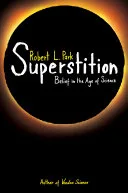
Superstition
Robert Park’s "Superstition" arrives with the expected rigor of a seasoned critic of pseudoscience, dissecting the enduring appeal of irrational beliefs. He masterfully unpacks why, even in the 21st century, people cling to notions science has long since debunked. The book’s strength lies in its clear-eyed examination of psychological mechanisms that fuel these convictions, offering specific examples that are both familiar and unsettling. However, Park’s relentless focus on debunking occasionally leaves little room for exploring the potential emotional or social utility these beliefs might offer to adherents, a nuance that could have added further depth. A particularly striking section details the pervasive nature of anecdotal evidence in validating superstitions, a point he makes with sharp clarity. Ultimately, "Superstition" serves as a potent reminder of the ongoing vigilance required to distinguish evidence-based understanding from comforting myth.
📝 Description
73
Robert L. Park's 2008 book examines why unfounded beliefs persist despite scientific understanding.
Robert L. Park's "Superstition" scrutinizes the enduring grip of irrational beliefs in an age of widespread scientific knowledge. The author, known for "Voodoo Science," questions the psychological and sociological factors that lead individuals to maintain superstitions, ranging from simple daily habits to more complex New Age practices. Park applies a critical lens, analyzing why people adhere to convictions that empirical evidence disproves. The book details the frequency of these beliefs across different groups and cultures, noting the ongoing conflict between superstition and rational thought even as science advances.
This work is for readers interested in the irrational side of human behavior and belief systems. It is particularly suited for those who ponder the connection between science and pseudoscience, and for individuals seeking to grasp the psychological roots of faith and superstitious thinking. Skeptics, critical thinkers, and students of sociology, psychology, and the history of science will find Park's analysis valuable. It also speaks to anyone who has seen superstitions in their own lives or communities and wondered about their origins and persistence.
While not an esoteric text itself, "Superstition" engages with the cultural phenomena often labeled as esoteric. It examines beliefs like New Age practices and alternative healing modalities, placing them within a broader context of irrational adherence to disproven convictions. The book contrasts with earlier philosophical critiques of belief, such as those from the Enlightenment, by addressing modern manifestations of superstition amplified by the internet. Park's work provides a skeptical counterpoint to the uncritical acceptance of claims found within many esoteric traditions.
💡 Why Read This Book?
• Understand the psychological drivers of belief in phenomena like past-life regressions, gaining insight into confirmation bias as detailed in the book's analysis. • Grasp how scientific skepticism challenges traditional and modern superstitions, learning to critically evaluate claims beyond empirical proof. • Recognize the societal impact of unfounded beliefs, as Park illustrates with examples from the 2008 publication era, fostering a more discerning worldview.
⭐ Reader Reviews
Honest opinions from readers who have explored this book.
❓ Frequently Asked Questions
What is Robert L. Park's primary argument in "Superstition"?
Robert L. Park's primary argument is that superstition remains pervasive in contemporary culture despite scientific advancements, and he seeks to understand the psychological and social reasons behind this persistent adherence to unfounded beliefs.
When was Robert L. Park's "Superstition" first published?
Robert L. Park's "Superstition" was first published on September 22, 2008.
What types of superstitions does the book examine?
The book examines a broad range of superstitions, from everyday rituals like praying before a flight to more complex New Age practices such as exploring past lives through hypnosis, as well as broader supernatural beliefs.
What is the connection between "Superstition" and "Voodoo Science"?
"Superstition" builds upon the critical approach established in Robert L. Park's earlier best-selling book, "Voodoo Science," continuing his examination of pseudoscientific and irrational beliefs.
Who is the intended audience for "Superstition"?
The book is intended for readers interested in the conflict between science and superstition, critical thinkers, skeptics, and those seeking to understand the psychological and sociological reasons behind irrational beliefs.
Does "Superstition" offer solutions for overcoming superstition?
While "Superstition" primarily focuses on analyzing and explaining the persistence of superstitious beliefs, its critical examination implicitly encourages readers to apply rational thought and scientific reasoning to their own convictions.
🔮 Key Themes & Symbolism
The Persistence of Irrational Belief
Park meticulously dissects why individuals continue to hold beliefs that have been demonstrably disproven by science. He examines psychological anchors like confirmation bias and the comfort derived from simple explanations for complex phenomena. The book argues that the battle between empirical evidence and deeply ingrained superstitions is far from settled, often manifesting in everyday behaviors and more elaborate spiritual pursuits.
Science vs. Superstition
This theme highlights the fundamental conflict between scientific methodology and superstitious conviction. Park contrasts the reliance on falsifiable evidence and peer review with the often-dogmatic acceptance of anecdotal accounts or tradition. The work probes the societal implications of this ongoing tension, particularly in an age where misinformation can spread rapidly, challenging rational discourse.
Psychology of Belief
Park looks at the cognitive and emotional mechanisms that make superstitions appealing. He explores how these beliefs can provide a sense of control, order, or meaning in uncertain circumstances. The book examines how social reinforcement and personal experiences, even if misinterpreted, can solidify these convictions, making them resistant to logical refutation.
Modern Manifestations
The book scrutinizes contemporary examples of superstition, extending beyond traditional folklore. Park addresses the prevalence of beliefs associated with New Age spirituality, alternative healing, and pseudoscientific claims, demonstrating how ancient patterns of irrational thought adapt to modern contexts. This analysis connects historical superstitions to current cultural phenomena.
💬 Memorable Quotes
Direct passages from the work, attributed to the author.
“Why do people persist in superstitious convictions long after science has shown them to be ill-founded?”
— This central question frames Park's entire inquiry, setting the stage for an exploration into the psychological and societal factors that allow irrational beliefs to endure even in the face of overwhelming evidence.
“Park, the best-selling author of Voodoo Science, argues that it has.”
— This statement positions Park as a credible voice in the critique of pseudoscience, linking "Superstition" to his previous work and signaling his authoritative stance on the pervasiveness of irrational beliefs.
“He takes on supernatural beliefs from religion and the afterlife to New Age.”
— This indicates the comprehensive scope of Park's investigation, demonstrating his intent to address a wide array of belief systems, from established religious doctrines to more contemporary spiritual movements.
“The battle between superstition and science is far from over.”
— This assertion sets a tone of ongoing conflict and vigilance, suggesting that the triumph of reason over irrationality is not a settled matter and requires continuous examination.
💡 Key Ideas
Editorial paraphrase of the work's core concepts — not direct quotes.
From uttering a prayer before boarding a plane, to exploring past lives through hypnosis, has superstition become pervasive in contemporary culture?
This passage illustrates the broad spectrum of superstitious behavior Park intends to cover, from commonplace rituals to more esoteric practices, underscoring the widespread nature of his subject matter.
🌙 Esoteric Significance
Tradition
While not strictly an esoteric text, "Superstition" engages critically with phenomena often found within esoteric traditions, such as divination, spiritualism, and alternative healing. It operates from a rationalist, scientific framework, dissecting these beliefs rather than endorsing them. Its significance lies in its role as a modern counterpoint to the uncritical acceptance of esoteric claims, providing a scientific lens through which esoteric practices and beliefs are examined and often debunked.
Symbolism
The book doesn't focus on traditional esoteric symbolism but rather on the symbolic function of superstitions themselves. For instance, a pre-flight prayer symbolizes a desire for control over unpredictable forces, acting as a psychological talisman. Past-life regression, explored by Park, can be seen as a symbolic attempt to find narrative coherence or karmic explanation for present circumstances, detached from empirical verification.
Modern Relevance
In contemporary discourse, "Superstition" remains relevant for thinkers concerned with critical thinking, media literacy, and the science-vs-pseudoscience debate. It informs discussions around the spread of misinformation online, the enduring appeal of conspiracy theories, and the societal impact of belief systems that operate outside of scientific consensus. It's frequently cited in academic circles discussing critical thinking and the psychology of belief.
👥 Who Should Read This Book
• Skeptics and critical thinkers seeking to understand the psychological and sociological underpinnings of why irrational beliefs persist despite scientific evidence. • Students of psychology, sociology, and the history of science interested in the cultural dynamics of belief and disbelief in the 21st century. • Individuals questioning New Age practices or alternative spiritualities who desire a rational, evidence-based perspective on their appeal and validity.
📜 Historical Context
Published in 2008, Robert L. Park's "Superstition" entered a cultural landscape increasingly shaped by the internet, which simultaneously democratized access to information and amplified the spread of pseudoscience. The book engages with a long intellectual lineage of skepticism, harkening back to Enlightenment critiques of unreason, yet it specifically targets modern manifestations of superstition. Park's work implicitly stands in contrast to the burgeoning New Age movement of the late 20th and early 21st centuries, which often embraced holistic and spiritual approaches that sometimes skirted or contradicted empirical science. While specific reception events like major awards or widespread censorship are not widely documented for this particular work, Park's reputation as author of "Voodoo Science" (2000) lent significant weight to his critiques. His arguments resonated with a segment of the scientific community and the public wary of the growing acceptance of pseudoscientific claims, a discourse also engaged by contemporaries like Carl Sagan in earlier decades.
📔 Journal Prompts
The pervasive nature of superstition in contemporary culture.
Psychological drivers for clinging to unscientific beliefs.
The tension between scientific evidence and personal conviction.
Modern manifestations of ancient superstitious patterns.
The role of anecdotal evidence in validating beliefs.
🗂️ Glossary
Confirmation Bias
The tendency to search for, interpret, favor, and recall information in a way that confirms or supports one's prior beliefs or values, often leading to the reinforcement of superstitions.
Pseudoscience
Claims, beliefs, or practices presented as scientific but lacking adherence to the scientific method, often characterized by vague or untestable claims and resistance to falsification.
New Age
A broad spiritual movement characterized by a blend of Eastern and Western religions, occultism, psychology, and self-help, often emphasizing personal spiritual growth and alternative healing.
Anecdotal Evidence
Evidence based on personal accounts rather than on observable, testable, and repeatable evidence; often used to support superstitious beliefs.
Falsifiability
The principle that a scientific theory or hypothesis must be capable of being proven false through observation or experiment; a key differentiator from pseudoscience.
Empirical Evidence
Information acquired through sensory experience and observation, forming the basis of scientific inquiry and often contradicting superstitious claims.
Rationalism
A philosophical stance emphasizing reason as the primary source of knowledge and justification, often in opposition to or critical of superstitious beliefs.