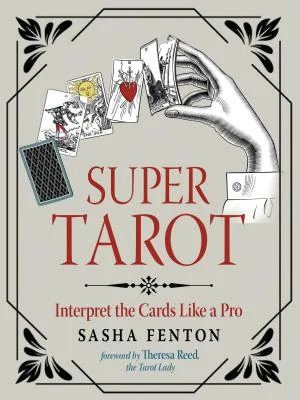
Super Tarot
 84
84

Super Tarot
Sasha Fenton's "Super Tarot" succeeds where many Tarot manuals falter: it moves beyond the simplistic A-to-B divination. The 2021 edition builds on the foundational 2002 publication, presenting a compelling case for viewing Tarot spreads as integrated narratives. Fenton’s strength lies in her methodical approach to card linkage, urging readers to see the dynamic interplay that generates meaning, rather than isolated interpretations. For example, her explanation of how court cards influence the elemental nature of their suit offers a practical, layered analytical tool. However, the book’s dense focus on technique might leave absolute beginners feeling overwhelmed; a brief primer on basic card meanings before diving into spread dynamics would have been beneficial. Despite this, the work provides a robust framework for developing a more sophisticated Tarot practice. It’s a valuable addition for those ready to graduate from introductory texts.
📝 Description
84
Sasha Fenton's 2021 book, Super Tarot, expands on her 2002 work to teach linking cards for future insights.
Super Tarot by Sasha Fenton, updated in 2021, revisits and builds upon her 2002 publication, Super Tarot: How to Link the Cards to Reveal Your Future. Fenton’s method moves beyond simple fortune-telling to teach how the cards in a spread connect and create a narrative. The book focuses on constructing interpretations from the relationships between cards, offering a framework for understanding personal futures with greater depth.
This guide is for readers who want to move past memorizing individual card meanings. It encourages a more intuitive and analytical approach to Tarot readings. Those interested in the psychological and symbolic aspects of the cards, rather than just predictions, will find Fenton's approach useful. It is suitable for intermediate Tarot practitioners aiming to improve their skills and students of esoteric symbolism interested in connecting Tarot to broader divination systems.
First published in 2002, Super Tarot appeared during a resurgence of interest in practical occultism and self-help divination. While many books focused on static card meanings, Fenton's work distinguished itself by emphasizing the dynamic interplay within a spread. The 2021 edition shows the continued value of this interpretive method for those seeking to bridge older esoteric traditions with contemporary approaches to Tarot and divination.
💡 Why Read This Book?
• Develop advanced spread interpretation skills by learning to analyze the synergistic relationships between cards, moving beyond individual meanings. • Gain a deeper understanding of narrative construction within Tarot readings, enabling you to build more complex and nuanced interpretations. • Enhance your intuitive and analytical faculties by applying Fenton's structured techniques for uncovering hidden connections and potentials in card layouts.
⭐ Reader Reviews
Honest opinions from readers who have explored this book.
❓ Frequently Asked Questions
What is the core difference between the 2002 and 2021 editions of Super Tarot?
The 2021 edition is a republication and potential expansion of Sasha Fenton's 2002 work, "Super Tarot: How to Link the Cards to Reveal Your Future." While the core methodology of linking cards remains, the newer edition may feature updated content or a revised presentation reflecting current esoteric discourse.
Does Super Tarot focus on predictive divination or psychological interpretation?
Super Tarot emphasizes the interconnectedness of cards within a spread to reveal the future, but Fenton's approach inherently encourages a deeper, almost psychological, understanding of the narrative that unfolds. It bridges predictive elements with an exploration of the symbolic dynamics.
Is Sasha Fenton a recognized authority in Tarot studies?
Yes, Sasha Fenton is a known author in the esoteric and Tarot field. Her work, including "Super Tarot," first published in 2002, has been influential in how practitioners approach reading card spreads, particularly regarding card linkage.
What specific Tarot spread techniques are discussed in Super Tarot?
The book details methods for linking cards, focusing on how their proximity and relationship within a spread create meaning. It moves beyond standard layouts to explore how elements like court cards and numerical sequences influence the overall interpretation.
What prior Tarot knowledge is assumed for readers of Super Tarot?
While the book provides techniques for linkage, it assumes a foundational understanding of the 78 Tarot cards (Major and Minor Arcana). It is best suited for intermediate practitioners looking to refine their reading abilities rather than absolute beginners.
How does "Super Tarot" differ from other books on Tarot spreads?
Its primary distinction lies in its focus on the 'conversation' between cards. Instead of treating each card in isolation, Fenton's method highlights how their interaction within a spread generates a cohesive, often predictive, narrative.
🔮 Key Themes & Symbolism
Card Synergy
The core of Fenton's approach in "Super Tarot" is the concept that cards within a spread do not operate in isolation. They interact, influence, and combine to create meanings far richer than their individual definitions. This theme explores how the juxtaposition of the Fool with the World card, for instance, signifies a complete cycle of potential and fulfillment, a concept elaborated upon through specific spread examples and interpretive strategies.
Narrative Interpretation
This book champions the idea that a Tarot spread tells a story. Fenton guides readers to identify the narrative arc, character development (via court cards), and plot points within a reading. The work emphasizes constructing a coherent sequence of events or psychological states, moving beyond static pronouncements to dynamic unfolding of possibilities, much like a skilled storyteller.
Esoteric Linkage
Fenton connects Tarot symbolism to broader esoteric principles, suggesting that the cards function as a coherent system of divination. The book implicitly draws from Western esoteric traditions, framing the Tarot not just as a tool for prediction but as a symbolic map of consciousness and fate. Understanding these linkages allows for a more profound engagement with the cards' archetypal significance.
Practical Application
Beyond theory, "Super Tarot" offers practical, actionable techniques. It details specific methods for card placement and interpretation, focusing on how to practically apply the principles of card synergy and narrative construction. The emphasis is on developing a repeatable method for generating insightful readings for oneself and others, grounded in the 2002 original publication's techniques.
💬 Memorable Quotes
Direct passages from the work, attributed to the author.
“The relationship between the cards is the key to interpretation.”
— This central tenet underscores Fenton's methodology, emphasizing that the true power of a Tarot reading lies not in individual card meanings but in how those meanings combine and interact within a spread.
“Consider how the court cards influence the elemental qualities of the suits.”
— This points to a specific analytical technique, suggesting that the personality archetypes (King, Queen, Knight, Page) modify the inherent nature of the Wands, Cups, Swords, and Pentacles, adding layers to the interpretation.
“A spread unfolds like a story, with each card contributing to the plot.”
— This highlights the book's narrative approach, positioning Tarot readings as dynamic sequences rather than static snapshots, encouraging readers to follow a developing theme or event.
“Linking the cards reveals future potential.”
— This captures the predictive aspect of Fenton's method, suggesting that by understanding card relationships, practitioners can gain foresight into forthcoming events or circumstances.
“The numerical sequence of the Minor Arcana offers a progression.”
— This indicates an awareness of the underlying structure of the Minor Arcana, acknowledging that the numbers 1 through 10 represent a developmental journey or a series of escalating influences.
🌙 Esoteric Significance
Tradition
Fenton's work draws implicitly from the Western Esoteric Tradition, particularly its application to Tarot divination. While not explicitly tied to a single school like Hermeticism or Theosophy, her method of linking cards and interpreting spreads reflects a systemic approach common in these traditions. The emphasis on the Tarot as a symbolic language and a tool for understanding fate and consciousness aligns with broader occult philosophies that seek correspondences between the macrocosm and microcosm.
Symbolism
The book centers on the symbolic interplay between cards. Key motifs include the archetypal figures of the court cards (King, Queen, Knight, Page) acting as agents of influence upon the elemental suits (Wands, Cups, Swords, Pentacles). Furthermore, the numerical progression within the Minor Arcana is treated as a symbolic journey, where each number represents a stage of development or a specific energetic manifestation, contributing to the overall narrative of a reading.
Modern Relevance
Contemporary Tarot practitioners interested in moving beyond basic meanings often reference Fenton's approach. Her focus on narrative construction and card synergy speaks to modern psychological and archetypal interpretations of the Tarot, as seen in the work of authors like Rachel Pollack or Mary K. Greer. The book provides a structured yet flexible framework that complements current trends in intuitive and analytical Tarot reading.
👥 Who Should Read This Book
• Intermediate Tarot practitioners seeking to enhance their reading skills by understanding card interactions. • Students of divination systems interested in exploring methodical approaches to interpreting complex spreads. • Esoteric enthusiasts looking for practical techniques to uncover deeper layers of meaning within Tarot symbolism.
📜 Historical Context
Sasha Fenton's "Super Tarot" originally appeared in 2002, a period characterized by a significant resurgence of interest in esoteric practices and divination within popular culture. The early 2000s saw a burgeoning market for Tarot literature, with many authors focusing on beginner-friendly guides and predictive techniques. Fenton’s work, however, distinguished itself by advocating for a more sophisticated understanding of card relationships within spreads, moving beyond simplistic one-card interpretations. This emphasis on synergistic meaning-making positioned her book within a lineage of more analytical Tarot study, potentially influenced by earlier figures like A.E. Waite or Paul Foster Case, who also explored the structural and symbolic connections within the deck. The 2021 republication suggests that the core principles outlined in the initial 2002 edition, concerning the dynamic interplay of Tarot cards, retained relevance for practitioners seeking deeper interpretive frameworks.
📔 Journal Prompts
How do the court cards change the 'flavor' of the suit they fall within?
Describe a narrative arc you've observed in a past Tarot reading.
What does the sequence of numbers in the Minor Arcana suggest about life's journey?
How can understanding card linkage improve predictive accuracy?
In what ways does a Tarot spread mirror the unfolding of consciousness?
🗂️ Glossary
Card Linkage
The practice of interpreting Tarot cards not in isolation, but by analyzing their direct relationships, influences, and interactions with each other within a spread.
Spread Dynamics
The energetic flow and narrative progression created by the arrangement and interplay of cards in a Tarot layout, influencing the overall interpretation.
Court Cards
The King, Queen, Knight, and Page cards within the Minor Arcana, often representing people, personalities, or specific modes of action within a reading.
Minor Arcana
The 56 cards of the Tarot deck divided into four suits (Wands, Cups, Swords, Pentacles), typically representing everyday events, challenges, and circumstances.
Synergy
In Tarot, the combined effect of multiple cards that is greater than the sum of their individual meanings, creating a unique and nuanced interpretation.
Narrative Interpretation
Reading a Tarot spread as a story, focusing on sequence, character, plot, and resolution rather than isolated card meanings.
Esoteric System
A body of knowledge or practice concerned with hidden or secret spiritual truths, often involving symbolism, ritual, and divination, like the Tarot.
This book appears in 1 collection
🔮 Readers Also Liked
Browse all →








From the “Tarot” Collection
View all →









More Free Occult Philosophy Books
View all →