The February Man
 77
77

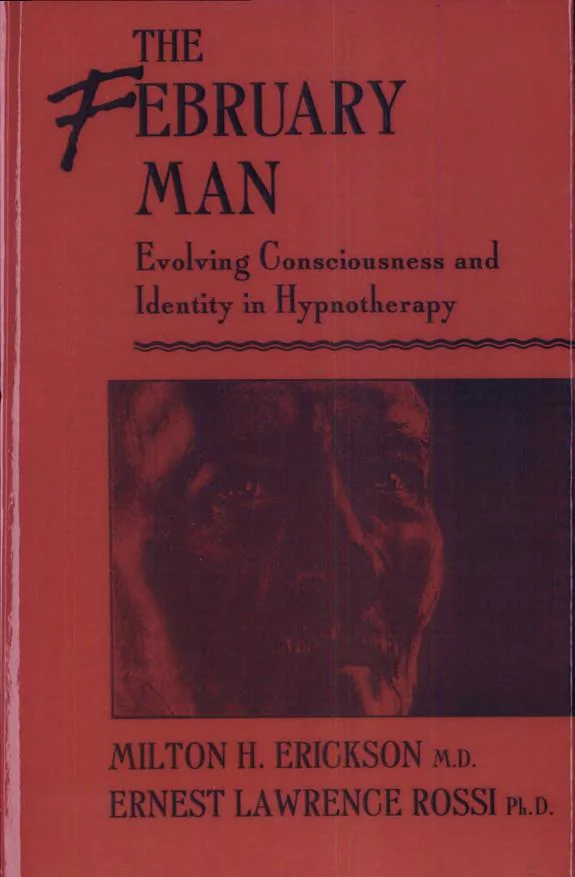
The February Man
Milton H. Erickson and Ernest Lawrence Rossi's 'The February Man' offers a dense, conceptual exploration of psychological archetypes. The strength of the work lies in its attempt to articulate complex unconscious dynamics through a specific, memorable metaphor. The 'February Man' concept itself provides a unique lens through which to view recurring psychological states. However, the text can feel somewhat abstract, occasionally leaving the reader to bridge significant conceptual gaps without explicit guidance. A particularly striking passage details the cyclical nature of these internal states, suggesting their deep roots in early developmental phases. While not a casual read, its analytical depth rewards careful consideration from those invested in advanced psychological theory.
📝 Description
77
Milton H. Erickson and Ernest Lawrence Rossi's 1989 book, The February Man, examines the unconscious mind's influence on behavior.
The February Man, published in 1989, presents a framework for understanding how deeply ingrained psychological patterns, often unrecognized, shape individual reality. Erickson and Rossi detail the emergence of these patterns and their effect on personal narratives and external interactions.
The work is directed at individuals engaged in serious psychological study, particularly those interested in depth psychology and the dynamics of the unconscious. Therapists, researchers, and advanced students of psychopathology will find its theoretical basis useful. The book also appeals to those seeking a deeper comprehension of personal motivations and the origins of recurring behavioral issues.
Published in 1989, The February Man builds upon psychoanalytic traditions while integrating contemporary cognitive and behavioral insights. It emerged during a time when the study of the unconscious moved beyond strict Freudian interpretations. The book engages with ongoing dialogues concerning the mind's hidden structures, acknowledging influences from figures like Carl Jung and his work on archetypes and the collective unconscious.
💡 Why Read This Book?
• Gain a unique conceptual tool for understanding internal psychological patterns, as exemplified by the 'February Man' metaphor, allowing for deeper self-awareness. • Understand the 1989 context of psychological theory, noting its divergence from earlier psychoanalytic models and its engagement with emerging ideas on the unconscious. • Explore the mechanisms by which unacknowledged psychological states influence perception and behavior, offering practical insights for personal analysis.
⭐ Reader Reviews
Honest opinions from readers who have explored this book.
❓ Frequently Asked Questions
What is the core concept of 'The February Man'?
The 'February Man' is a conceptual metaphor used to represent a specific, often unconscious, psychological pattern or state that influences an individual's perception and behavior, particularly during certain cyclical periods.
Who are the authors of 'The February Man'?
The book is authored by Milton H. Erickson and Ernest Lawrence Rossi, first published in 1989.
What psychological traditions does this book draw upon?
The work builds upon depth psychology and psychoanalytic traditions, extending discussions on the unconscious mind and its impact on human experience.
Is 'The February Man' a practical guide to therapy?
While informed by clinical insights, it is more of a theoretical exploration of psychological concepts rather than a step-by-step therapeutic manual.
What is the significance of the 1989 publication date?
Published in 1989, the book reflects the evolving discourse in psychology at the end of the 20th century, moving beyond purely Freudian frameworks.
What is the relationship between Erickson and Rossi in this work?
Ernest Lawrence Rossi often collaborated with Milton H. Erickson, synthesizing and elaborating on Erickson's clinical observations and theoretical contributions.
🔮 Key Themes & Symbolism
The Unconscious Architecture
The work posits that the unconscious mind possesses a complex architecture, not merely a repository of repressed memories but an active force shaping reality. It details how specific archetypal patterns, like the 'February Man,' emerge and govern perception, often leading individuals to repeat certain behaviors or interpret experiences through a fixed, internal lens. This challenges the notion of purely rational decision-making and highlights the pervasive influence of hidden psychological structures.
Cyclical Psychological States
A central theme is the idea that psychological experiences are not always linear but can manifest in cyclical patterns. The 'February Man' serves as a representation of such a recurring state, implying that individuals may enter specific modes of being or perceiving at different junctures. The book explores the triggers and dynamics of these cycles, suggesting that recognizing them is key to understanding personal history and potential for change.
Perception as Construction
The text argues that our perception of reality is heavily constructed by our internal psychological frameworks. What we 'see' or 'experience' is filtered through these ingrained patterns, leading to subjective truths that can feel objective. The 'February Man' concept illustrates how a dominant internal state can warp objective observation, demonstrating the profound gap between external events and our internal interpretation of them.
Integration and Awareness
Ultimately, the book hints at the possibility of integrating these unconscious patterns. By bringing awareness to the 'February Man' or similar archetypal influences, individuals can begin to disengage from their deterministic grip. This process involves acknowledging these internal forces without being overwhelmed by them, paving the way for more conscious choice and psychological liberation.
💬 Memorable Quotes
Direct passages from the work, attributed to the author.
“The 'February Man' represents a recurring internal state that colors perception.”
— This interpretation highlights the central metaphor, suggesting it's not a literal person but a symbolic representation of a psychological tendency that can resurface, influencing how an individual views the world and their place within it.
“Perception is not a passive reception but an active construction.”
— This points to the idea that our understanding of the world is actively built by our minds, influenced by internal biases and psychological frameworks, rather than being a direct mirroring of external reality.
“Recognizing cyclical influences is key to psychological integration.”
— This suggests that understanding recurring psychological patterns, like the 'February Man,' is a vital step toward achieving a more unified and conscious self.
“The 'February Man' emerges in specific psychological seasons.”
— This interpretation frames the central metaphor as tied to temporal or situational triggers, implying that certain internal states are not constant but appear under particular internal or external conditions.
💡 Key Ideas
Editorial paraphrase of the work's core concepts — not direct quotes.
Unconscious patterns dictate much of our behavioral repertoire.
This paraphrased concept emphasizes the core argument that our actions are frequently driven by forces beyond our conscious awareness, suggesting that understanding these hidden drivers is crucial for self-knowledge.
🌙 Esoteric Significance
Tradition
While not strictly aligned with a singular esoteric lineage like Hermeticism or Kabbalah, 'The February Man' draws heavily from the tradition of depth psychology and its engagement with archetypal patterns, which has significant overlap with Gnostic and Hermetic ideas about hidden knowledge and the structure of the psyche. It fits within a broader esoteric interest in understanding the non-rational aspects of human consciousness and their influence on manifest reality.
Symbolism
The primary symbol is 'The February Man' itself, representing a recurring, perhaps melancholic or dormant, psychological state that surfaces during specific 'seasons' of the psyche. This can be seen as a symbolic representation of the cyclical nature of life and consciousness, echoing motifs found in nature-based esoteric traditions. Another implied symbol is the 'psychological season,' suggesting that the inner world, like the outer, has its own cycles of growth, dormancy, and transformation.
Modern Relevance
Contemporary thinkers and practitioners in fields like Jungian analysis, archetypal psychology, and even certain branches of transpersonal psychology continue to explore concepts similar to those presented in 'The February Man.' Its focus on the power of unconscious patterns and archetypal metaphors remains relevant for understanding modern psychological dynamics, personal development, and the search for meaning in a complex world.
👥 Who Should Read This Book
• Students of Jungian and archetypal psychology seeking to understand symbolic representations of unconscious states. • Therapists and counselors interested in conceptual frameworks for exploring clients' recurring psychological patterns and internal narratives. • Individuals on a personal growth path who wish to deepen their self-awareness by examining the influence of unconscious archetypes on their lives.
📜 Historical Context
Published in 1989 by Routledge, 'The February Man' emerged in a range of psychological thought that was moving beyond the strict confines of classical Freudian psychoanalysis and behaviorism. It built upon the legacy of depth psychology, particularly the works of Carl Jung, who had explored archetypes and the collective unconscious. At the time, cognitive psychology was gaining prominence, but there remained a significant interest in the power of the unconscious. This book contributed to the ongoing dialogue about how internal psychological structures, often operating outside conscious awareness, profoundly shape human experience. While not directly engaging with a specific named contemporary critic in its initial publication, its theoretical underpinnings place it in conversation with scholars who continued to investigate the complexities of the human psyche, such as those involved in psychodynamic and Jungian circles.
📔 Journal Prompts
The February Man's cyclical emergence and its impact on perception.
Recognizing the 'psychological seasons' within your own experience.
How do unconscious patterns shape your daily choices?
The active construction of reality through internal frameworks.
Identifying personal archetypal influences beyond the 'February Man'.
🗂️ Glossary
The February Man
A metaphorical construct representing a specific, often recurring, psychological state or archetype that influences an individual's perception and behavior, particularly during certain internal 'seasons'.
Psychological Season
A conceptual period within an individual's inner life characterized by dominant emotional states, thought patterns, and behavioral tendencies, analogous to the seasons of the natural year.
Unconscious Pattern
An ingrained psychological tendency or habit of thought, feeling, or behavior that operates outside of conscious awareness but significantly influences conscious experience and actions.
Archetype
In depth psychology, a universal, archaic pattern and image that derives from the collective unconscious and is part of humanity's inherited psychic structure, often manifesting in myths, symbols, and dreams.
Perception as Construction
The theoretical stance that individual perception of reality is not a direct mirroring of external stimuli but is actively built and filtered through one's own psychological frameworks and biases.
Integration
In a psychological context, the process of bringing different aspects of the self, particularly conscious and unconscious elements, into a more unified and harmonious whole.
Behavioral Repertoire
The full range of behaviors and responses that an individual is capable of exhibiting, often influenced by both conscious learning and unconscious patterns.
This book appears in 1 collection
🔮 Readers Also Liked
Browse all →









From the “Hypnosis” Collection
View all →








More Free Occult Philosophy Books
View all →