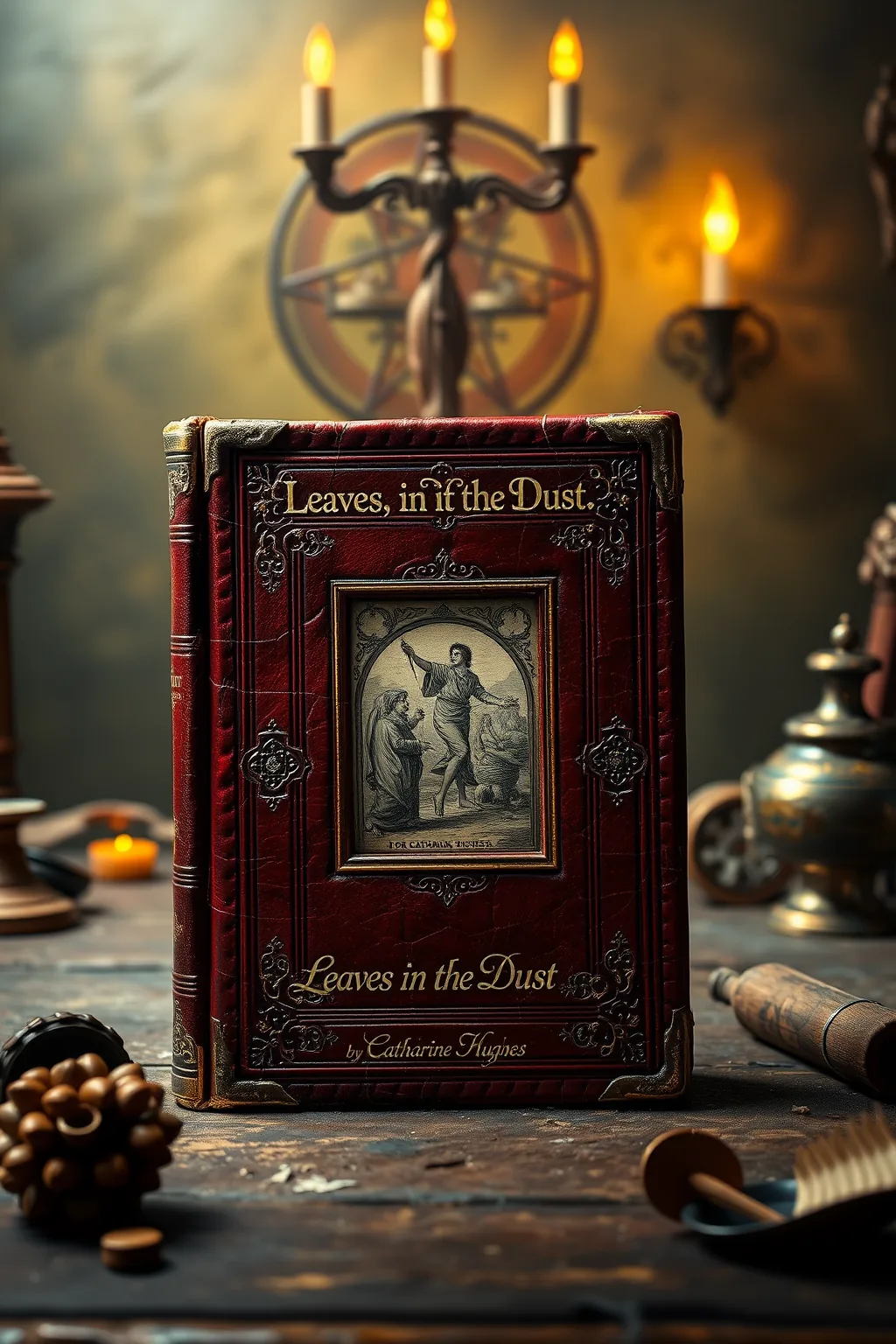
Leaves, in the Dust - Selections from the Jewish Mystics
 61
61

Leaves, in the Dust - Selections from the Jewish Mystics



Review by Cassian Rothmann (Senior Critic, Ancient Wisdom) — Catharine Hughes’ 'Leaves, in the Dust' is a luminous offering for anyone drawn to the profound depths of Kabbalistic thought. Hughes navigates the intricate pathways of Jewish mysticism with rare clarity and sensitivity, presenting selections that resonate with timeless wisdom. Her insightful introductions and careful curation illuminate complex concepts, making them accessible without sacrificing their esoteric power. This collection serves as an indispensable companion for students of the occult and spiritual seekers alike, offering a direct encounter with the transformative ideas that have shaped centuries of mystical inquiry. A truly essential work.
📝 Description
61
Catharine Hughes selected writings from Jewish mystics dating back to the medieval period.
This book gathers selections from Jewish mystics, primarily from the medieval era. Hughes focuses on texts that reveal concepts like the Sefirot, the nature of the soul, and the pursuit of divine union. The collection aims to illuminate the symbolic language and philosophical ideas within these traditions.
It presents these mystical underpinnings of Jewish thought for those interested in spiritual inquiry. The writing seeks to make accessible the symbolic meanings of letters and numbers as found in these esoteric traditions. The goal is to connect the reader with the historical spiritual practices and thought of Jewish mysticism.
This collection situates itself within the lineage of Jewish mysticism, often referred to as Kabbalah. It draws from a tradition that interprets Torah not only literally but also through allegorical and mystical lenses. These texts explore cosmology, divine emanations (Sefirot), the structure of the soul, and methods for achieving closeness with the divine. The mystical practices often involve contemplation of divine names, letters, and numbers as keys to understanding creation and spiritual realities.
💡 Why Read This Book?
For those seeking to uncover the profound spiritual secrets embedded within Jewish tradition, 'Leaves, in the Dust' is an essential read. It offers direct access to the contemplative practices and cosmic visions of ancient mystics. Ideal for scholars of esotericism, practitioners of Kabbalah, and anyone yearning for a deeper understanding of the soul's journey and its connection to the divine.
⭐ Reader Reviews
Honest opinions from readers who have explored this book.
❓ Frequently Asked Questions
What is Kabbalah?
Kabbalah is the esoteric tradition within Judaism that explores the mystical dimensions of G-d, creation, and the human soul. It seeks to understand the hidden meanings of the Torah and the divine nature of reality through symbolic interpretation and contemplative practices.
Who are the Jewish mystics featured in this book?
The book features selections from a range of influential Jewish mystics across different historical periods, including figures associated with early Merkabah mysticism, medieval Hasidism, and the Zohar tradition, offering a broad spectrum of mystical thought.
Is this book suitable for beginners in mysticism?
Yes, while the subject matter is profound, Catharine Hughes' careful curation and insightful introductions make these selections accessible to those new to Jewish mysticism, while still offering depth for experienced practitioners.
What are some of the key concepts explored?
Key concepts include the Sefirot (divine emanations), the nature of the divine name, the soul's ascent, the hidden meanings of the Torah, and the practice of contemplative prayer to achieve spiritual communion.
What is the 'dust' referenced in the title?
The 'dust' symbolizes the remnants of ancient wisdom, the seemingly mundane aspects of existence that, when illuminated by mystical insight, reveal profound spiritual truths and the divine presence within all things.
🔮 Key Themes & Symbolism
The Ascent of the Soul
This theme examines the mystical journeys of the soul as described by Jewish mystics, charting its path from the earthly realm towards divine consciousness. It explores the challenges, illuminations, and transformative experiences encountered in this spiritual pilgrimage, often depicted through allegorical journeys to celestial palaces or divine realms. The ultimate goal is often described as achieving union or profound communion with the divine, revealing the intricate relationship between the microcosm of the human being and the macrocosm of creation.
Symbolic Language of the Divine
Jewish mysticism is rich with a complex symbolic language that seeks to express the ineffable nature of the divine. This theme examines how letters, numbers, and cosmic imagery are employed to unlock deeper layers of meaning within sacred texts and the universe itself. From the mystical significance of Hebrew letters to the architectural blueprints of creation represented by the Sefirot, this section illuminates the esoteric keys used by mystics to perceive G-d's presence and will in the world, transcending literal interpretation to grasp spiritual realities.
The Hidden Light of Creation
This theme explores the concept that the divine light, though often obscured by the material world, permeates all of existence. Jewish mystics believed that by purifying the heart and mind, and through dedicated spiritual practice, one could perceive this hidden radiance. It examines the idea that the physical universe is a veiled manifestation of divine energy, and that by understanding its underlying spiritual structure, individuals can reconnect with their divine source and experience the immanence of G-d in every aspect of life.
💬 Memorable Quotes
Direct passages from the work, attributed to the author.
“To see G-d is to see the reflection in the dust.”
— This suggests that the divine is not only in grand spectacles but also present in the seemingly ordinary and overlooked aspects of existence, requiring a purified perception to recognize.
“The soul longs for its source, a journey through the celestial gardens.”
— This points to the inherent spiritual yearning of the soul to return to its divine origin, often visualized as an arduous but beautiful spiritual ascent.
“Every breath is a whisper of the divine name.”
— This emphasizes the constant presence and immanence of the divine, suggesting that even the most basic act of living carries a sacred resonance.
“The true path is found not in the map, but in the journey.”
— This speaks to the experiential nature of mystical pursuit, where personal transformation and direct experience are paramount over rigid dogma or external guidance.
💡 Key Ideas
Editorial paraphrase of the work's core concepts — not direct quotes.
The letters are sparks, the words are flames, and the silence is the divine fire.
This quote highlights the mystical view of language, where the fundamental building blocks (letters) possess divine energy, leading to illuminated meaning (words) and ultimately pointing towards the ineffable, silent essence of the divine.
🌙 Esoteric Significance
Tradition
This collection is deeply rooted in the esoteric tradition of Kabbalah, a mystical interpretive system within Judaism. It explores the profound philosophical and theological concepts that seek to understand the divine nature, the process of creation, and the relationship between the human and the infinite. Kabbalah offers a framework for perceiving hidden spiritual realities, often through complex symbolic and allegorical interpretations of scripture and existence.
Symbolism
Key symbols explored include the Sefirot, representing divine emanations and attributes, often depicted as a Tree of Life; the Hebrew alphabet, seen as fundamental building blocks of creation; and numerical gematria, used to find hidden connections between words and concepts. These symbols serve as a language to articulate the ineffable, guiding the practitioner towards a deeper understanding of G-d's presence and the underlying spiritual architecture of the universe.
Modern Relevance
The mystical insights within 'Leaves, in the Dust' remain remarkably relevant in the modern era. In a world often characterized by materialism and spiritual disconnection, these teachings offer a path to introspection, self-discovery, and a deeper sense of purpose. The emphasis on inner transformation, the search for meaning, and the perception of the divine in everyday life resonate with contemporary seekers looking for authentic spiritual experiences and a more profound connection to the sacred.
👥 Who Should Read This Book
This collection is a treasure for a diverse audience. **Beginners** in mysticism will find Catharine Hughes' curation informative, offering a gentle yet profound introduction to the core tenets of Jewish esoteric thought. **Scholars** of religious studies and comparative mysticism will appreciate the breadth and depth of the selections, providing valuable primary source material. **Seekers** of spiritual wisdom, regardless of background, will discover timeless truths about the soul, creation, and the divine. **Practitioners** of Kabbalah or contemplative disciplines will find inspiration and renewed insight into their own spiritual paths.
📜 Historical Context
The selections in 'Leaves, in the Dust' draw from centuries of Jewish mystical thought, a tradition that flourished particularly from the medieval period onwards. The intellectual and spiritual ferment of periods like the Spanish Golden Age, the development of Kabbalah in Safed during the 16th century, and the subsequent Hasidic movement in Eastern Europe provided fertile ground for these esoteric explorations. These mystics often responded to societal upheaval and exile by seeking solace and meaning in the hidden dimensions of their faith, developing complex cosmologies, contemplative practices, and a profound understanding of the divine's immanence within a seemingly fractured world. Their work represents a persistent, often secret, current within Judaism, seeking to unveil the cosmic order and the soul's place within it.
📔 Journal Prompts
Reflect on a time you felt a sense of profound connection to something larger than yourself. How does this relate to the concept of divine immanence?
Consider a mundane object or experience from your day. How might you perceive it as a 'reflection in the dust,' revealing a hidden spiritual truth?
If the Hebrew alphabet holds divine energy, what 'sparks' or insights do you find in the letters of your own name or significant words?
Describe a personal 'ascent' you have experienced, a time of spiritual growth or overcoming a challenge. What 'celestial gardens' did you encounter?
How can the concept of divine silence inform your understanding of stillness and contemplation in your daily life?
🗂️ Glossary
Kabbalah
The esoteric and mystical tradition within Judaism that seeks to understand the divine nature, creation, and the relationship between G-d and humanity through symbolic interpretation and contemplative practices.
Sefirot
The ten divine emanations or attributes described in Kabbalah, representing the stages through which G-d manifests and interacts with the created world, often visualized as a 'Tree of Life'.
Gematria
A system of Jewish numerology that assigns numerical values to Hebrew letters, used to find mystical connections between words, phrases, and concepts within sacred texts.
Merkabah Mysticism
An early form of Jewish mysticism focused on visionary ascents to the heavenly 'chariot' (Merkabah) described in Ezekiel's vision, involving ecstatic experiences and encounters with divine beings.
Zohar
The foundational work of Kabbalistic literature, a mystical commentary on the Torah written in Aramaic, renowned for its detailed symbolism, cosmological insights, and exploration of divine mysteries.
This book appears in 1 collection
🔮 Readers Also Liked
Browse all →








More by Catharine Hughes
All books →

From the “Kabbalah” Collection
View all →





More Free Kabbalah & Jewish Mysticism Books
View all →