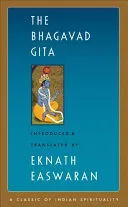
The Bhagavad Gita
 76
76

The Bhagavad Gita
Eknath Easwaran’s rendering of the Bhagavad Gita offers a lucid entry point into this foundational Hindu scripture. His explanatory framework, especially the detailed chapter introductions and glossary, significantly aids comprehension for those unfamiliar with Sanskrit terminology or the specific cultural milieu of ancient India. The translation itself prioritizes clarity and accessibility, a strength for newcomers. However, for seasoned scholars of Sanskrit or Hindu philosophy, the emphasis on simplification might occasionally feel like a gloss over deeper linguistic or philosophical nuances. Easwaran's exposition of Krishna's discourse to Arjuna on the eve of battle, particularly the discussion on *dharma* and selfless action, remains a powerful articulation of the text’s ethical core. This edition serves admirably as a guide for understanding the Gita's pervasive influence and its spiritual guidance.
📝 Description
76
Eknath Easwaran's 2007 edition of the Bhagavad Gita offers a clear entry into a foundational Hindu scripture.
The Bhagavad Gita, known as "The Song of the Lord," is a Sanskrit text central to Hinduism. It recounts a conversation between Prince Arjuna and Lord Krishna on a battlefield. The dialogue addresses core philosophical and spiritual matters, including duty, the soul's nature, and the way to freedom.
Easwaran's 2007 edition provides substantial background for understanding the text. It is suitable for anyone interested in Hindu philosophy, comparative religion, or Eastern spirituality. Readers seeking an accessible translation with helpful notes and historical context will find this edition useful.
Likely composed between the 5th and 2nd centuries BCE, the Gita emerged from a dynamic period in ancient India. It combines ideas from Vedic and Upanishadic traditions into a narrative format. The text has shaped devotional practices and philosophical thought within Hinduism for centuries.
As an Upanishad, the Bhagavad Gita fits within the philosophical core of the Vedic tradition. It synthesizes earlier streams of thought concerning the nature of reality and the self. The text's emphasis on realizing the divine within and achieving liberation from worldly cycles aligns with broader esoteric aims found in traditions seeking inner transformation and union with the absolute.
💡 Why Read This Book?
• Gain practical guidance on performing your duties with detachment, a core tenet of *karma yoga*, as elucidated by Krishna to Arjuna in the Bhagavad Gita. • Understand the concept of the eternal self (*atman*) and its distinction from the transient physical body, a fundamental philosophical exploration presented in the text. • Explore the different paths to spiritual realization—action (*karma*), knowledge (*jnana*), and devotion (*bhakti*)—as detailed within the scripture's dialogues.
⭐ Reader Reviews
Honest opinions from readers who have explored this book.
❓ Frequently Asked Questions
When was the Bhagavad Gita first published in Eknath Easwaran's translation?
Eknath Easwaran's translation and commentary on the Bhagavad Gita was first published on May 17, 2007, making it a relatively recent accessible edition of this ancient text.
What are the main philosophical concepts discussed in the Bhagavad Gita?
The Bhagavad Gita extensively discusses concepts such as dharma (duty), karma (action and consequence), atman (the soul), moksha (liberation), and the various paths of yoga (karma, jnana, bhakti).
Who are the main characters in the Bhagavad Gita's dialogue?
The central figures are Prince Arjuna, a warrior facing a moral dilemma, and Lord Krishna, who serves as his charioteer and spiritual guide, imparting profound teachings.
What historical period does the Bhagavad Gita originate from?
The Bhagavad Gita is believed to have been composed between the 5th and 2nd centuries BCE, originating from ancient India during a period of significant philosophical development.
How does Eknath Easwaran's edition help readers understand the Gita?
Easwaran's edition includes chapter introductions, historical and cultural context, explanations of key Hindu concepts, and a glossary to assist readers in grasping the text's message.
Is the Bhagavad Gita primarily a religious text or a philosophical one?
It is both. While deeply rooted in Hindu religious tradition and devotional practice, the Bhagavad Gita is also celebrated for its profound philosophical inquiries into ethics, metaphysics, and the nature of existence.
🔮 Key Themes & Symbolism
Dharma and Duty
The concept of *dharma*, or righteous duty, is central to the Bhagavad Gita. Prince Arjuna's crisis stems from his reluctance to fulfill his *kshatriya* (warrior) *dharma* by fighting his kin. Krishna's teachings emphasize performing one's prescribed duties without attachment to the outcomes, framing selfless action as a spiritual path. This exploration of ethical obligation within a cosmic order provides a framework for understanding moral responsibility and societal roles.
The Nature of the Self
A significant theme is the distinction between the eternal soul (*atman*) and the temporary physical body. Krishna explains that the *atman* is unborn, undying, and immutable, unaffected by birth, death, or the physical world's events. This understanding is presented as crucial for overcoming fear and attachment, encouraging a perspective shift towards the imperishable essence of being, a core part of many esoteric traditions.
Paths of Yoga
The Bhagavad Gita outlines multiple yogic paths to spiritual realization. Krishna details *karma yoga* (the path of selfless action), *jnana yoga* (the path of knowledge and wisdom), and *bhakti yoga* (the path of devotion). This multi-faceted approach suggests that different temperaments can find liberation through various practices, offering a comprehensive system for spiritual discipline and union with the divine.
The Divine and the Material World
Krishna reveals his cosmic form to Arjuna, demonstrating the immanence and transcendence of the divine. The text explores the interplay between the material world (*prakriti*) and the spiritual consciousness (*purusha*). It posits that the divine pervades all existence, yet also remains beyond it, offering a perspective on the sacredness of the mundane and the ultimate reality.
💬 Memorable Quotes
Direct passages from the work, attributed to the author.
“You have a right to perform your prescribed duty, but you are not entitled to the fruits of your actions.”
— This is a foundational principle of *karma yoga*. It instructs that one should act according to their role and responsibilities without being driven by desire for specific outcomes, thereby fostering detachment and inner peace.
“The soul is never born and never dies.”
— This statement highlights the eternal nature of the *atman*, the true self. It suggests that physical death is merely a transition for the body, while the soul's essence remains untouched by mortality, a concept central to overcoming existential fear.
“Whatever action a great man performs, common men follow.”
— This observation points to the influence of leaders and exemplars. It suggests that the actions of those in positions of authority or respect set a precedent, underscoring the importance of righteous conduct by role models.
“Man is made by his faith, as is the man, so is his faith.”
— This reflects the power of belief and conviction in shaping one's reality and character. It implies that one's inner state and deeply held principles directly influence their actions and experiences.
“The sum of duty is this: Do what you must do.”
— This is a concise distillation of the Gita's emphasis on fulfilling one's *dharma*. It prioritizes the execution of responsibility over personal preference or the anticipation of reward.
🌙 Esoteric Significance
Tradition
The Bhagavad Gita is a foundational text for many Hindu philosophical and spiritual traditions, which themselves have parallels and influences within broader esoteric thought. Its emphasis on the nature of consciousness, the illusion of the material world, and the path to liberation aligns with Gnostic and Neoplatonic ideas concerning the soul's journey and the pursuit of divine knowledge. The concept of different yogic paths can be seen as analogous to various Western methods of spiritual discipline and self-transformation.
Symbolism
Key symbols include the battlefield of Kurukshetra, representing the human consciousness where internal conflicts between duty and desire take place. Lord Krishna, as the divine charioteer, symbolizes the guiding wisdom or higher self that directs the individual soul (Arjuna) through life's challenges. The chariot itself, with its horses, senses, and driver, mind, serves as a metaphor for the human psychophysical apparatus that must be controlled and directed towards spiritual goals.
Modern Relevance
Contemporary esoteric practitioners, particularly those interested in comparative spirituality and Eastern philosophies, frequently draw upon the Bhagavad Gita. Its teachings on mindfulness, detachment from outcomes, and the integration of spiritual practice into daily life resonate with modern self-help and personal development movements. Thinkers and spiritual leaders who advocate for a holistic approach to well-being often reference its principles of balancing action, knowledge, and devotion.
👥 Who Should Read This Book
['• Students of comparative religion and Eastern philosophy seeking a primary source text that bridges devotional and philosophical Hinduism.', '• Individuals interested in practical ethics and the philosophy of action, looking to understand concepts like *dharma* and selfless service.', '• Seekers of spiritual guidance exploring paths to inner peace and liberation through yoga, devotion, or knowledge.']
📜 Historical Context
The Bhagavad Gita emerged from the spiritual and intellectual field of ancient India, likely between the 5th and 2nd centuries BCE. This era saw the flourishing of the Upanishads and the development of various philosophical schools, including nascent forms of Vedanta and Samkhya. The Gita synthesizes elements from these traditions, offering a more accessible, narrative-driven approach to complex metaphysical ideas than the earlier Vedic texts. It integrates the philosophy of renunciation with the active life, addressing the dilemma of a warrior prince, Arjuna, on the cusp of battle. Its influence was profound, shaping devotional traditions and philosophical discourse throughout Hinduism. It gained particular traction as a key text for the *bhakti* movement, emphasizing devotion to a personal God. Figures like Adi Shankara, a proponent of Advaita Vedanta, commented extensively on the Gita, integrating its teachings into his monistic philosophy, while later thinkers like Ramanujacharya offered qualified dualist interpretations.
📔 Journal Prompts
Arjuna's dilemma on the battlefield of Kurukshetra.
Krishna's instruction on performing duty without attachment to results (*karma yoga*).
The nature of the *atman* as distinct from the physical body.
The comparative merits of *jnana yoga* and *bhakti yoga*.
The symbolism of the divine cosmic form revealed by Krishna.
🗂️ Glossary
Dharma
In the Bhagavad Gita, dharma refers to one's essential nature, righteous duty, moral law, or cosmic order. It guides individuals on how to live in accordance with universal principles and fulfill their specific responsibilities.
Karma
Literally meaning 'action,' karma refers to the principle of cause and effect, where one's actions (physical, mental, verbal) have consequences that shape future experiences, influencing the cycle of birth and rebirth.
Atman
The eternal, unchanging self or soul within an individual. It is considered the true essence of a being, distinct from the temporary physical body and mind.
Moksha
Liberation or release from the cycle of birth, death, and rebirth (*samsara*). It is the ultimate spiritual goal in many Indian traditions, achieved through various paths of spiritual realization.
Yoga
A broad term encompassing various spiritual disciplines aimed at uniting the individual consciousness with the divine or ultimate reality. Key paths discussed are Karma, Jnana, and Bhakti Yoga.
Bhakti
Devotion, worship, or love directed towards a personal deity. Bhakti yoga emphasizes cultivating a loving relationship with God as a primary path to spiritual realization.
Jnana
Knowledge, wisdom, or spiritual insight. Jnana yoga focuses on understanding the true nature of reality and the self through discrimination and intellectual inquiry.