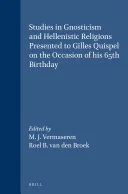
Studies in Gnosticism and Hellenistic Religions Presented to Gilles Quispel on the Occasion of his 65th Birthday
 78
78

Studies in Gnosticism and Hellenistic Religions Presented to Gilles Quispel on the Occasion of his 65th Birthday
The essays gathered in 'Studies in Gnosticism and Hellenistic Religions' offer a dense, academic examination of topics that remain central to understanding early esoteric thought. The strength of this volume lies in the specialized knowledge brought by each contributor, providing detailed analyses of texts like the Apocryphon of John and exploring the nuances of figures like Daēnā. However, its academic rigor can also be a barrier; the work is not an introduction for the casual reader, demanding prior familiarity with scholarly debates and textual criticism. A particularly illuminating section is the exploration of Adam's psychic body in the Apocryphon of John, which unpacks intricate cosmological ideas. This collection serves as a valuable, albeit challenging, resource for those deeply invested in the field.
📝 Description
78
Published in 2015, this volume gathers scholarly essays honoring Gilles Quispel's 65th birthday.
This collection brings together academic essays presented to Gilles Quispel upon his 65th birthday. The contributors, all scholars in their fields, examine early Christian and Gnostic texts alongside broader Hellenistic religious traditions. The essays reflect the intellectual environment of the mid-20th century, a time of significant growth in Gnosticism studies, partly due to discoveries like the Nag Hammadi library. Quispel was a key figure in this scholarly resurgence, and the papers here engage with debates and research trajectories he helped shape. The work assumes a solid understanding of the subject matter and familiarity with Greek or Coptic writings. It is aimed at advanced students, researchers, and academics focused on Gnosticism, early Christianity, Hellenistic religions, and comparative religious studies.
The collection addresses complex theological and philosophical concepts. These include discussions on the divine nature, the problem of evil, the function of myth in religious development, and the connections between different religious currents in the ancient Mediterranean. Special emphasis is placed on interpreting significant Gnostic texts and their links to earlier religious systems.
This volume sits within the academic study of Gnosticism, a diverse set of religious movements that flourished in the early centuries CE. Gnosticism often involved complex mythologies, a dualistic worldview, and the pursuit of hidden knowledge (gnosis) for salvation. The essays here connect these Gnostic ideas to their roots in Hellenistic philosophy and Judaism, as well as their interaction with nascent Christianity. The book's focus on Quispel highlights his contributions to understanding the historical and textual dimensions of these esoteric traditions.
💡 Why Read This Book?
• Gain a deeper understanding of the 'Religio-historical relevance of Lk 20:34-36' as explored in Ugo Bianchi's contribution, offering specific theological interpretations beyond common exegesis. • Uncover the 'Creation of Adam's psychic body in the Apocryphon of John' through R. Van Den Broek's analysis, revealing intricate Gnostic cosmological frameworks. • Trace 'Traces of an Alexandrian Orphic Theogony in the Pseudo-Clementines' as examined by J. Van Amersfoort, connecting disparate early religious traditions.
⭐ Reader Reviews
Honest opinions from readers who have explored this book.
❓ Frequently Asked Questions
Who was Gilles Quispel and why is this book dedicated to him?
Gilles Quispel (1916-2006) was a highly influential Dutch scholar of Gnosticism and Hellenistic religions. This book, first published in 2015, is a collection of essays by various academics presented to him on his 65th birthday in recognition of his significant contributions to the field.
What are the main subjects covered in the essays?
The book covers a range of subjects including Gnosticism, Hellenistic religions, early Christianity, Orphic traditions, and the interpretation of specific religious texts and figures from antiquity.
Is this book suitable for beginners in Gnosticism?
No, this is an academic collection of scholarly essays. It is best suited for advanced students and researchers who already possess a strong foundation in Gnosticism and related fields.
What is the significance of the Apocryphon of John mentioned in the book?
The Apocryphon of John is a key Gnostic text. The work explores concepts within it, such as the creation of Adam's psychic body, offering insights into Gnostic cosmology and anthropology.
When was this collection of essays originally compiled?
The essays were presented to Gilles Quispel on his 65th birthday, which would have been around 1981. The first publication date listed is August 24, 2015, indicating a later compilation and release of the collected works.
What does 'Daēnā, Lichtjungfrau, Zweite Gestalt' refer to?
This refers to a concept explored by Carsten Colpe, likely discussing the figure of Daēnā in Zoroastrianism and its potential parallels or interpretations as a 'Light Maiden' or 'Second Form' within Gnostic or Hellenistic thought.
🔮 Key Themes & Symbolism
Gnostic Cosmology and Anthropology
The collection studies the intricate cosmologies and anthropological views of various Gnostic sects. Essays examine how texts like the Apocryphon of John conceptualize the divine realm, the creation of the material world, and the nature of the human soul. It explores ideas such as the 'psychic body' of Adam, highlighting the Gnostic emphasis on a spiritual essence trapped within a material prison and the complex hierarchies of aeons and archons.
Hellenistic Religious Syncretism
Several contributions investigate the fusion of Greek philosophical ideas with Eastern religious traditions that characterized the Hellenistic period. The book explores how Gnostic thought interacted with or drew upon elements from Orphism, Plato, and other mystery cults. The connection between Alexandrian Orphic Theogony and early Christian texts illustrates this syncretic process, revealing a dynamic religious landscape.
Textual Analysis and Interpretation
A core focus is the rigorous textual analysis of ancient religious documents. Scholars present detailed exegesis of biblical passages (e.g., Lk 20:34-36), apocryphal writings, and philosophical treatises. The goal is to illuminate the historical and theological relevance of these texts, offering new perspectives on their original meaning and their influence on subsequent esoteric traditions.
The Figure of Daēnā
The concept of 'Daēnā, Lichtjungfrau, Zweite Gestalt' is examined, suggesting a comparative approach to figures that represent divine wisdom or a spiritual guide. This theme likely explores parallels between Zoroastrian traditions and Gnostic or Hellenistic concepts of spiritual emanations or intermediary beings, shedding light on cross-cultural religious influences.
💬 Memorable Quotes
Direct passages from the work, attributed to the author.
“The creation of Adam's psychic body in the Apocryphon of John.”
— This phrase points to a specific, complex doctrine within the Apocryphon of John concerning the nature and origin of the human being, emphasizing a spiritual or soul-component distinct from the purely material or physical form.
“The religio-historical relevance of Lk 20:34-36.”
— This indicates an analysis of a particular passage in the Gospel of Luke, exploring its historical context and religious significance, likely through the lens of early Christian or Gnostic interpretations that might diverge from mainstream readings.
“Traces of an Alexandrian Orphic Theogony in the Pseudo-Clementines.”
— This suggests an investigation into the influence of Orphic creation myths originating from Alexandria on the Pseudo-Clementine writings, highlighting the intermingling of various mythological and theological streams in the ancient world.
“Daēnā, Lichtjungfrau, Zweite Gestalt.”
— This tripartite designation likely refers to a comparative study of the Zoroastrian figure Daēnā, potentially interpreted as a 'Light Maiden' or 'Second Form,' exploring its symbolic meaning and cross-cultural connections to other spiritual or divine feminine archetypes.
“The angels of the nations and the origins of Gnostic dualism.”
— This points to an essay discussing how the concept of angelic beings associated with different ethnic groups (the 'nations') might have contributed to the development of the radical dualistic worldview characteristic of Gnosticism.
🌙 Esoteric Significance
Tradition
This collection is deeply rooted in the study of Gnosticism and Hellenistic religions, two crucial streams feeding into various esoteric traditions. It examines the complex mythologies, dualistic worldviews, and paths to salvation proposed by Gnostic groups, which form a significant component of Western Esotericism. The work also engages with Hermeticism and Neoplatonism, understanding Gnosticism not in isolation but as part of a broader esoteric landscape.
Symbolism
Key symbols explored include the 'psychic body' of Adam, representing the soul's entrapment and potential liberation within the material world. The concept of 'Daēnā' as a 'Light Maiden' or 'Second Form' evokes Gnostic and Zoroastrian ideas of divine emanations and spiritual guides. The 'angels of the nations' symbolize the cosmic powers and hierarchies that define the Gnostic understanding of a flawed creation and the origins of dualism.
Modern Relevance
Contemporary thinkers and practitioners in fields like comparative mythology, depth psychology, and new religious movements continue to draw upon the research presented here. The nuanced understanding of Gnostic cosmology and its relationship with Hellenistic philosophy informs modern interpretations of consciousness, the nature of reality, and the human condition, influencing groups interested in ancient wisdom traditions.
👥 Who Should Read This Book
• Advanced students and researchers of Gnosticism and early Christianity seeking detailed textual analysis and scholarly debate. • Scholars of Hellenistic religions interested in the syncretic nature of ancient Mediterranean belief systems and the origins of esoteric thought. • Comparative religion specialists looking to understand the complex interplay between Jewish, Christian, Greek, and Persian religious ideas in antiquity.
📜 Historical Context
This volume emerged from a vibrant period of Gnostic scholarship, significantly shaped by the discovery of the Nag Hammadi library in 1945. The essays, presented to Gilles Quispel, reflect the intellectual milieu of the latter half of the 20th century, a time when scholars were actively re-evaluating early Christian and Gnostic texts. Quispel himself was a central figure, known for his work on Manichaeism and Valentinian Gnosticism. The collection engages with ongoing debates concerning the origins and diversity of Gnostic thought, often contrasting it with mainstream Pauline Christianity and earlier Hellenistic philosophical traditions. Contemporaries like Hans Jonas, whose work on Gnostic religion was foundational, and Elaine Pagels, who brought Gnostic texts to a wider audience, were part of this critical reassessment.
📔 Journal Prompts
The creation of Adam's psychic body as presented in the Apocryphon of John.
Daēnā, Lichtjungfrau, Zweite Gestalt: comparative symbolic analysis.
The angels of the nations and their role in Gnostic dualism.
Religio-historical relevance of Lk 20:34-36 in early Christian discourse.
Orphic Theogony's influence on Pseudo-Clementines.
🗂️ Glossary
Gnosticism
A diverse set of religious movements and philosophical ideas that flourished in the first centuries CE, characterized by a belief in salvation through esoteric knowledge (gnosis) and often featuring a dualistic cosmology.
Hellenistic Religions
The religious field of the Mediterranean world from the death of Alexander the Great (323 BCE) to the rise of the Roman Empire, marked by syncretism and the blending of Greek, Egyptian, Persian, and other traditions.
Apocryphon of John
A significant Gnostic text, part of the Nag Hammadi library, that provides a creation myth and cosmological account from a Gnostic perspective.
Orphic Theogony
A body of myths and religious teachings attributed to the legendary poet Orpheus, focusing on creation, the nature of the gods, and the afterlife.
Pseudo-Clementines
A collection of early Christian writings attributed to Clement of Rome, but actually composed later, containing various theological and historical narratives.
Daēnā
A Zoroastrian concept often translated as 'conscience,' 'religion,' or 'vision,' representing an inner spiritual guide or feminine divine figure.
Dualism
In a religious context, the belief that reality is composed of two fundamental, often opposing, principles (e.g., good and evil, spirit and matter).














![L'évangile selon Thomas : [traduction et commentaire]](/img/thumb/lévangile-selon-thomas-traduction-et-commentaire-jacques-é-ménard-042100.webp)
