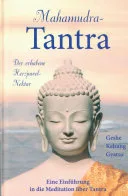
Mahamudra Tantra
 72
72

Mahamudra Tantra
Geshe Kelsang Gyatso’s Mahamudra Tantra attempts to demystify the profound union of great bliss and emptiness for the contemporary practitioner. Gyatso’s characteristic clarity shines through, especially in his explanations of how to prepare the mind and remove common hindrances. The book’s strength lies in its systematic breakdown of advanced meditative states, making them seem attainable rather than purely theoretical. However, the text can sometimes feel overly didactic, lacking the experiential nuance one might hope for in discussions of such subtle states. A particularly striking section details the progression through increasingly subtle states of mind, moving beyond grosser perceptions towards the realization of emptiness. While the instructions are precise, the reader might yearn for more illustrative examples or case studies to fully grasp the subjective experience described. Ultimately, Mahamudra Tantra serves as a valuable, if somewhat austere, guide for dedicated meditators seeking a structured path to profound realization.
📝 Description
72
Geshe Kelsang Gyatso's Mahamudra Tantra, published in 2020, explains advanced meditation techniques.
Mahamudra Tantra, written by Geshe Kelsang Gyatso, is a guide to achieving advanced mental states through meditation. The book details the union of great bliss and emptiness, described as the subtlest aspects of consciousness, to realize ultimate reality. It provides practical instructions for preparing the mind for Mahamudra meditation. Readers will find guidance on identifying and overcoming obstacles that hinder practice. The text progresses towards subtler states of awareness, functioning as a manual for exploring the mind's deepest levels.
This work is intended for serious practitioners of Buddhist meditation, especially those familiar with Tibetan traditions. It is for individuals who have established a basic meditation practice and wish to engage with advanced techniques. Those interested in the philosophical aspects of consciousness, the nature of emptiness, and the path to enlightenment within a Mahayana Buddhist framework will find it valuable. It is also suitable for students of Geshe Kelsang Gyatso's previous teachings.
Geshe Kelsang Gyatso's Mahamudra Tantra enters a long lineage of Mahamudra teachings within Tibetan Buddhism, a tradition with roots predating the 11th century. Gyatso, who began publishing in the late 1970s, aimed to make complex Buddhist philosophy accessible in the West. His approach often emphasizes clear, systematic instruction, synthesizing traditional doctrine with modern contemplative practice. This book follows that pattern, offering a structured path to understanding the nature of mind and reality through advanced meditation.
💡 Why Read This Book?
• You will learn specific techniques for preparing your mind for advanced Mahamudra meditation, a direct method taught within the NKT-IKBU tradition, which you may not find articulated with such precision elsewhere. • You will gain a clear understanding of how to identify and overcome specific mental obstacles, such as attachment and aversion, as outlined by Geshe Kelsang Gyatso, enabling a more efficient practice. • You will explore the concept of the "subtlest mind" and its connection to "great bliss," as presented in the book's unique framework, offering a distinct perspective on consciousness beyond ordinary experience.
⭐ Reader Reviews
Honest opinions from readers who have explored this book.
❓ Frequently Asked Questions
What is Mahamudra according to Geshe Kelsang Gyatso's Mahamudra Tantra?
Mahamudra, as explained in the 2020 book, signifies the union of great bliss and emptiness. It represents the subtlest mind realizing the ultimate reality, described as the "great seal" of all phenomena.
How does Mahamudra Tantra prepare the mind for meditation?
The book details methods to prepare the mind by cultivating specific mental states and removing hindrances. This includes understanding the nature of the mind and developing concentration.
What are common obstacles discussed in Mahamudra Tantra?
Mahamudra Tantra addresses common obstacles like attachment, aversion, conceptual proliferation, and ignorance. It provides practical advice on how to recognize and overcome these impediments to spiritual progress.
When was Mahamudra Tantra first published?
Mahamudra Tantra by Geshe Kelsang Gyatso was first published on September 17, 2020, making it a relatively recent addition to the literature on Buddhist meditation.
Is Mahamudra Tantra suitable for beginners?
While it touches on foundational principles, Mahamudra Tantra is primarily aimed at practitioners with some existing meditation experience. It delves into advanced concepts and practices within the Mahayana tradition.
What is the 'subtlest mind' in the context of this book?
The 'subtlest mind' refers to the most refined level of consciousness, capable of experiencing great bliss and realizing emptiness, which is central to the Mahamudra path described in the text.
🔮 Key Themes & Symbolism
Union of Bliss and Emptiness
This core theme in Mahamudra Tantra explores the non-dualistic realization where profound joy (bliss) is inseparable from the understanding of emptiness—the lack of inherent, independent existence of all phenomena. The book guides practitioners to experience this union not as separate states but as a single, unified perception of reality. It posits that this integration is the key to liberation, allowing one to perceive the true nature of existence beyond conceptual duality and suffering.
The Subtlest Mind
A crucial concept is the 'subtlest mind,' which Geshe Kelsang Gyatso identifies as the vehicle for realizing Mahamudra. This is not the grosser, everyday consciousness preoccupied with sensory input but a refined, luminous awareness. The text explains how to access and stabilize this subtlest mind, describing its capacity to directly perceive emptiness and experience profound bliss. Cultivating this subtlest mind is presented as the direct method for achieving enlightenment.
Overcoming Mental Hindrances
Mahamudra Tantra dedicates significant attention to identifying and eradicating obstacles that impede progress on the spiritual path. These hindrances are not merely external challenges but internal mental states such as attachment, aversion, ignorance, and conceptual distortions. The book provides practical instructions and contemplative techniques to dismantle these obscurations, clearing the way for the realization of Mahamudra and enabling the practitioner to experience the union of bliss and emptiness unimpeded.
Preparation for Mahamudra Meditation
Before engaging with the useful insights of Mahamudra, the book emphasizes the necessity of thorough mental preparation. This involves developing stable concentration (shamatha) and insightful awareness (vipashyana), along with cultivating positive states like compassion and wisdom. Gyatso outlines specific practices and preliminary stages designed to ready the practitioner's mind, making it receptive to the direct experience of ultimate reality and the subtlest mind's potential.
💬 Memorable Quotes
Direct passages from the work, attributed to the author.
“Mahamudra Tantra is the union of great bliss and emptiness.”
— This foundational statement expresses the book's central thesis: the highest realization involves experiencing profound joy concurrent with the understanding that all phenomena lack inherent existence.
“The subtlest mind experiences great bliss and realizes ultimate reality.”
— This highlights the specific type of consciousness, the 'subtlest mind,' which is described as the faculty capable of profound spiritual insight and blissful awareness, transcending ordinary consciousness.
“We must prepare our mind for Mahamudra meditation.”
— This emphasizes that advanced practices like Mahamudra are not entered into abruptly but require a structured approach, involving preliminary practices to stabilize and purify the mind.
“Obstacles must be removed for successful practice.”
— This points to the practical necessity of addressing internal mental hindrances—such as negative emotions and conceptual confusion—to progress effectively in meditation and realize Mahamudra.
“By realizing emptiness, we achieve liberation.”
— This underscores the ultimate goal of Mahamudra practice: the direct perception of emptiness, which is presented as the key to freeing oneself from the cycle of suffering and rebirth.
🌙 Esoteric Significance
Tradition
Mahamudra Tantra belongs to the Vajrayana or Tantric Buddhist tradition, a branch of Mahayana Buddhism. Within Vajrayana, Mahamudra is considered the pinnacle of meditative practice, aiming for rapid enlightenment. It is particularly emphasized in the Kagyu and Gelug schools of Tibetan Buddhism. Geshe Kelsang Gyatso's presentation is firmly within the Gelug lineage, offering a structured, step-by-step guide to realizing the "great seal" of reality, which departs from some other lineages' more direct, intuitive approaches.
Symbolism
While Mahamudra Tantra focuses heavily on direct experience of mind, key symbolic concepts include the 'union of great bliss and emptiness.' Bliss symbolizes the profound joy of realizing ultimate truth, while emptiness represents the absence of inherent existence. The 'subtlest mind' itself can be seen as a symbol for the pristine, luminous nature of consciousness, untouched by conceptual obscurations. These concepts guide the practitioner toward perceiving reality beyond dualistic constructs.
Modern Relevance
Geshe Kelsang Gyatso's work, including Mahamudra Tantra, continues to be influential among contemporary Buddhist practitioners, particularly those associated with the New Kadampa Tradition (NKT-IKBU). His clear, accessible style makes advanced tantric concepts available to a Western audience. Thinkers and practitioners seeking systematic meditation guides that synthesize traditional teachings with modern contemplative needs find his interpretations valuable for personal practice and understanding Buddhist philosophy.
👥 Who Should Read This Book
• Dedicated practitioners of Buddhist meditation seeking to deepen their understanding and experience of Mahamudra, particularly those familiar with Tibetan Buddhist terminology. • Students of Geshe Kelsang Gyatso and the New Kadampa Tradition (NKT-IKBU) looking for authoritative guidance on advanced tantric practices and the realization of emptiness. • Comparative religion scholars and advanced students interested in the specific interpretations and methodologies of Mahamudra within the Gelug school of Tibetan Buddhism.
📜 Historical Context
Geshe Kelsang Gyatso's Mahamudra Tantra, published in 2020, arrives decades after his initial efforts to disseminate Tibetan Buddhist teachings in the West, beginning in the late 1970s. His prolific output has consistently aimed to make complex Gelugpa traditions accessible, often presenting them in a systematic, modern format. Mahamudra, a central teaching within Tibetan Buddhism, has a lineage stretching back over a millennium, with key figures like Tilopa and Naropa developing its core tenets in the 10th and 11th centuries. Gyatso's approach, while rooted in this ancient lineage, notably differs from the more scholastic or monastic emphasis found in many other Tibetan Buddhist schools. His New Kadampa Tradition (NKT-IKBU) emphasizes the practical application of tantric path teachings for modern practitioners. While Gyatso has faced criticism and controversy from certain Tibetan Buddhist factions, his works have garnered significant readership and established a distinct interpretive framework for these profound teachings.
📔 Journal Prompts
The union of great bliss and emptiness as the ultimate realization.
Experiences of the subtlest mind during meditation.
Identifying and overcoming specific mental hindrances.
The role of preliminary practices in preparing for Mahamudra.
Reflecting on the nature of ultimate reality as presented.
🗂️ Glossary
Mahamudra
Literally 'great seal' or 'great symbol.' Refers to the ultimate nature of reality and the mind, characterized by emptiness and luminosity, and the path to realizing it.
Emptiness (Shunyata)
The absence of inherent, independent existence in all phenomena. Realizing emptiness is central to Buddhist liberation, freeing the mind from grasping at illusory solidity.
Great Bliss
A profound state of joy and well-being experienced when the mind directly perceives emptiness, free from the suffering caused by ignorance and attachment.
Subtlest Mind
The most refined and fundamental level of consciousness, considered the vehicle for realizing Mahamudra and experiencing the union of bliss and emptiness.
Obstacles
Mental hindrances such as attachment, aversion, ignorance, pride, and doubt that obstruct spiritual progress and the realization of Mahamudra.
Vajrayana
The 'Diamond Vehicle' or Tantric Buddhism, a branch of Mahayana Buddhism that utilizes specific methods, including meditation and mantra, to achieve enlightenment rapidly.
Shamatha
Calm abiding meditation; the practice of developing sustained concentration and mental stillness, a prerequisite for insight meditation.