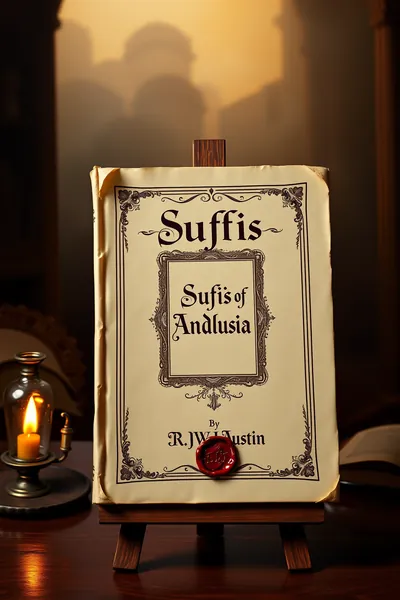
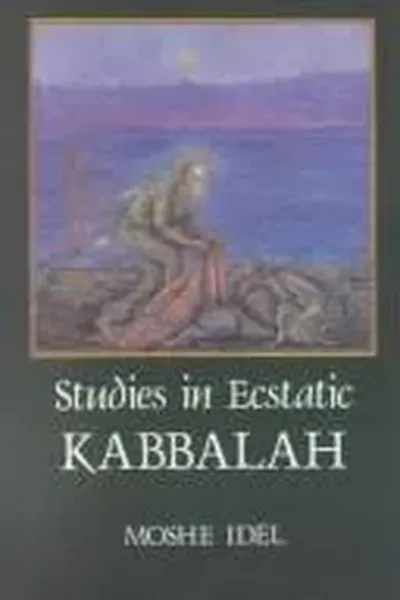
Studies in Ecstatic Kabbalah

 84
84

Studies in Ecstatic Kabbalah
Moshe Idel’s *Studies in Ecstatic Kabbalah* provides a rigorous, often dense, exploration of the experiential currents within Jewish mysticism. The strength of the work lies in Idel’s meticulous scholarship, tracing the evolution of ecstatic practices from medieval Kabbalistic circles through to more modern expressions. He carefully dissects textual evidence to support his thesis that ecstatic experience was a central, albeit varied, component of Kabbalistic aspiration. A limitation for some readers might be the academic tone and the assumption of prior knowledge in Kabbalistic literature, which can make the prose challenging. Idel's examination of Abraham Abulafia's methods of linguistic ecstasy, for instance, is a powerful illustration of the unique techniques employed. This is essential reading for specialists, demanding careful attention but rewarding with nuanced understanding.
📝 Description
84
Moshe Idel's 1988 book examines ecstatic practices in Kabbalah, moving beyond theoretical interpretations.
Studies in Ecstatic Kabbalah presents a focused academic study of a particular strain within Jewish mysticism. Moshe Idel, a noted scholar of Kabbalah, investigates the ecstatic dimensions of this tradition. He moves past purely theological or cosmological explanations to concentrate on the experiential and performative elements. The book details how Kabbalists pursued direct, unmediated communion with the divine and charts the historical growth and conceptual underpinnings of these ecstatic tendencies.
This work is aimed at advanced students and scholars of Kabbalah, comparative mysticism, and religious experience. It assumes a prior familiarity with Jewish mystical thought, rather than serving as a simple introduction. Researchers in religious history, especially those focused on altered states of consciousness, mystical union, and the phenomenology of religious experience, will find significant material. The book appeals to readers seeking rigorous analytical engagement with primary mystical traditions.
Published in 1988, this book emerged in a period of heightened academic focus on Kabbalah, building on the foundational work of Gershom Scholem. Idel's research aimed to refine and broaden existing scholarship by emphasizing the experiential and ecstatic aspects he believed were often overlooked. His study engaged with the intellectual currents of the time, including analyses of medieval Jewish philosophy and Sufi mysticism, often drawing parallels between ecstatic techniques found in different religious systems.
💡 Why Read This Book?
• Gain an understanding of *devekut* as an ecstatic practice, moving beyond its common interpretation as mere 'cleaving' to God, as detailed in Idel's analysis of medieval Kabbalistic texts. • Explore the specific contemplative techniques and linguistic methods employed by figures like Abraham Abulafia to achieve divine union, offering insights into performative mysticism. • Appreciate the historical positioning of ecstatic Kabbalah within the broader landscape of Jewish mysticism, understanding its development post-Gershom Scholem and its engagement with earlier mystical currents.
⭐ Reader Reviews
Honest opinions from readers who have explored this book.
❓ Frequently Asked Questions
What is the primary focus of Moshe Idel's 'Studies in Ecstatic Kabbalah'?
The book focuses on the experiential and performative aspects of Jewish mysticism, specifically the ecstatic practices and states of consciousness sought by Kabbalists, differentiating them from more quiescent forms of devotion.
Who are some of the key figures discussed in relation to ecstatic Kabbalah?
Key figures include Abraham Abulafia, known for his ecstatic prophetic Kabbalah, and other mystics whose writings demonstrate intense contemplative practices aimed at achieving divine union.
When was 'Studies in Ecstatic Kabbalah' first published?
Moshe Idel's 'Studies in Ecstatic Kabbalah' was first published in 1988, building upon and engaging with the scholarly landscape established by Gershom Scholem.
Does this book offer practical instructions for achieving ecstatic states?
No, the book is a scholarly analysis and historical study. While it describes practices, it does not offer practical guidance or instructions for readers to replicate these states.
What distinguishes Idel's approach to Kabbalah from earlier scholars?
Idel emphasizes the ecstatic, experiential, and active dimensions of Kabbalah, arguing for their centrality, whereas some earlier scholarship may have focused more on cosmological or theoretical aspects.
What is 'devekut' as explored in this text?
'Devekut' is explored not just as simple adherence but as an intense, often ecstatic, state of spiritual communion and cleaving to the Divine, achieved through specific contemplative and performative practices.
🔮 Key Themes & Symbolism
The Nature of Divine Ecstasy
This theme investigates the phenomenological and historical dimensions of divine ecstasy within Kabbalah. Idel examines how ecstatic experiences were understood not as mere emotional outbursts but as profound states of spiritual attainment, often involving visionary encounters and a sense of direct divine presence. The work differentiates these states from more common forms of religious devotion, highlighting the active, sometimes even performative, elements involved in their cultivation by mystics.
Contemplative and Performative Practices
The book explores the specific methods Kabbalists employed to achieve ecstatic states. This includes detailed analysis of meditative techniques, visualization exercises, and the use of divine names or permutations of letters, particularly evident in the work of figures like Abraham Abulafia. Idel illustrates how these practices were designed to alter consciousness and facilitate a mystical union or prophetic experience, moving beyond passive contemplation.
Abraham Abulafia's Prophetic Kabbalah
A significant portion of the study is dedicated to Abraham Abulafia, a key figure in ecstatic Kabbalah. Idel scrutinizes Abulafia's unique system, which involved linguistic mysticism, letter combinations, and ecstatic breathing techniques aimed at inducing prophetic visions and direct divine communication. This section showcases a distinct approach to Kabbalistic practice that emphasizes active engagement and the transformation of the mystic's self through intense spiritual effort.
Devekut as Intense Union
Idel re-examines the concept of *devekut* (cleaving to God), presenting it not solely as a passive spiritual attachment but as an active, dynamic, and often ecstatic process of union. The book explores how Kabbalists sought to intensify their connection to the divine, sometimes through practices that blurred the lines between the human and the divine, leading to profound spiritual transformations and altered states of consciousness.
💬 Memorable Quotes
Direct passages from the work, attributed to the author.
“The ecstatic dimension implies a certain intensity, a qualitative leap, and a transformation of the subject.”
— This interpretation highlights Idel's view that ecstasy in Kabbalah is not simply heightened emotion but a fundamental shift in the mystic's being and perception, marking a significant departure from ordinary consciousness.
“The practice of combining divine names was seen as a method to ascend spiritually.”
— This points to the active, almost alchemical, use of Kabbalistic knowledge. Idel suggests that the manipulation of divine names was a key technique for achieving spiritual elevation and direct divine contact.
“Abraham Abulafia's system emphasizes the active role of the mystic in drawing down divine influence.”
— This underscores Idel's focus on the performative aspect of Kabbalah, particularly in Abulafia's work, where the mystic actively engages in specific practices to elicit spiritual responses and divine revelation.
“Contemplation could lead to a state where the mystic experiences a dissolution of self.”
— This captures the profound transformative potential of Kabbalistic contemplation, suggesting that the ultimate goal could involve a shedding of individual identity to achieve complete absorption in the divine presence.
“The experience of divine union was often described in terms of a prophetic or visionary encounter.”
— This highlights how ecstatic Kabbalah framed its ultimate spiritual attainment not just as internal feeling but as an externalized, often prophetic, experience of direct communication with the divine realm.
🌙 Esoteric Significance
Tradition
This work is firmly rooted in the Kabbalistic tradition, specifically exploring a dimension that distinguishes it from more quiescent or philosophical forms of Jewish mysticism. Idel's research situates ecstatic Kabbalah as a vital, albeit sometimes heterodox, current within the broader spectrum of Jewish esoteric thought, highlighting its focus on direct, unmediated spiritual experience and transformative practice.
Symbolism
Key symbols explored include the permutations of divine names, which Kabbalists like Abraham Abulafia used as tools for spiritual ascent and divine communication. The concept of divine light, often associated with intense spiritual illumination and visionary states, is also central. Furthermore, the mystic's own body and breath are treated symbolically, as instruments to be disciplined and employed in the pursuit of ecstatic union with the Divine.
Modern Relevance
Contemporary scholars of mysticism and comparative religion continue to draw upon Idel's foundational research to understand the diverse expressions of ecstatic experience across traditions. His work informs discussions in fields such as consciousness studies, the psychology of religion, and the history of esoteric movements, providing a robust framework for analyzing practices aimed at achieving altered states and direct spiritual contact.
👥 Who Should Read This Book
• Scholars of Jewish mysticism and Kabbalah seeking a deep dive into the experiential and ecstatic dimensions, moving beyond foundational texts. • Students of comparative religion interested in the phenomenology of religious experience and ecstatic practices across different traditions. • Advanced practitioners of contemplative disciplines who wish to understand the historical and theoretical underpinnings of ecstatic states within a specific esoteric lineage.
📜 Historical Context
Moshe Idel's *Studies in Ecstatic Kabbalah*, first published in 1988, entered the academic discourse on Jewish mysticism at a time when Gershom Scholem's monumental work had already reshaped the field. While Scholem had extensively analyzed Kabbalah, Idel sought to foreground the ecstatic and experiential dimensions, arguing for their centrality. This research engaged with the intellectual currents of the late 20th century, which saw increasing interest in the phenomenology of religion and comparative mysticism, including cross-cultural studies of ecstatic states. Idel's work implicitly or explicitly engaged with scholars of Sufism, who also studied ecstatic religious experiences. His meticulous textual analysis offered a counterpoint to interpretations that might have overemphasized Kabbalah's speculative or cosmological aspects, positioning his work as a crucial refinement and expansion of the existing scholarship.
📔 Journal Prompts
The concept of *devekut* as ecstatic union.
Abraham Abulafia's methods of linguistic ecstasy.
The transformation of the mystic's self through intense contemplation.
The role of divine names in achieving spiritual ascent.
Distinguishing ecstatic Kabbalah from quiescent forms of Jewish mysticism.
🗂️ Glossary
Kabbalah
A system of Jewish mysticism that seeks to understand the nature of God and the universe through esoteric interpretations of the Torah and other religious texts.
Devekut
A Hebrew term meaning 'cleaving' or 'adherence,' referring to a state of intense spiritual communion and intimacy with God sought by Jewish mystics.
Ecstasy
A state of overwhelming emotion or spiritual rapture, characterized by heightened consciousness, visionary experiences, and a sense of divine presence.
Contemplation
A deep, meditative form of reflection or prayer focused on spiritual matters, often aimed at achieving union with the divine or useful insights.
Prophetic Kabbalah
A branch of Kabbalah, notably associated with Abraham Abulafia, that emphasizes ecstatic experiences leading to prophetic visions and direct divine communication.
Divine Names
In Kabbalistic tradition, specific names or permutations of God's names believed to hold mystical power and serve as keys to spiritual ascent and divine interaction.
Phenomenology of Religion
The study of religious experiences and phenomena as they appear to consciousness, focusing on the subjective experience of the believer without necessarily validating or refuting religious claims.
🔮 Readers Also Liked
Browse all →








More by Moshe Idel
All books →



More Free Mysticism & Contemplation Books
View all →