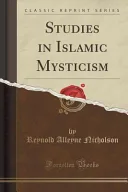
Studies in Islamic Mysticism (Classic Reprint)
 74
74

Studies in Islamic Mysticism (Classic Reprint)
Nicholson's "Studies in Islamic Mysticism" remains a foundational text for understanding Sufism, meticulously dissecting the core tenets of this branch of Islamic thought. The strength lies in Nicholson's deep engagement with primary sources, particularly his examination of figures like Ibnu 1-Farid. He offers a scholarly lens through which to view the complex language and concepts of Islamic mysticism, avoiding overly romanticized portrayals. A notable limitation, however, is the academic distance maintained; the work is analytical rather than devotional, which may leave some readers yearning for a more experiential connection. The analysis of Ibnu 1-Farid's "Khamriyya" poem, for instance, is intellectually rigorous but does not fully capture the ecstatic fervor often associated with such mystical compositions. Nevertheless, for serious students of Sufism, it provides an indispensable scholarly survey.
📝 Description
74
Reynold Alleyne Nicholson published Studies in Islamic Mysticism in 1914.
This collection of essays focuses specifically on Islamic mysticism, a departure for R. A. Nicholson from his earlier broader works. The studies center on key figures and concepts within Sufism, the mystical tradition of Islam. Nicholson's aim was to offer scholarly yet clear interpretations of important texts and individuals.
Scholars of religious studies, especially those focused on Islamic theology and Sufism, will find this a useful resource. The book also speaks to practitioners of mysticism interested in the historical and theoretical foundations of Islamic spiritual practices. Anyone curious about comparative mysticism and the development of esoteric thought may also find value here.
Published in 1914, Nicholson's work emerged during a period of significant Western academic attention to Eastern traditions. As a scholar of Persian literature and Islamic mysticism, Nicholson approached Sufi texts and ideas with scholarly rigor. His studies engaged with the discourse surrounding Orientalism at the time, striving for a deep understanding of the subject matter. This book stands alongside other important 20th-century analyses that sought to translate and interpret core Sufi writings.
💡 Why Read This Book?
• Gain a scholarly understanding of Sufi metaphysics, including the concept of *fana* (annihilation), as explored through Nicholson's analysis of key figures and texts. • Appreciate the historical development of Islamic mysticism by examining the specific contributions of scholars like R. A. Nicholson in the early 20th century. • Engage with the mystical poetry and thought of figures such as Ibnu 1-Farid, understanding their place within the broader Islamic spiritual tradition.
⭐ Reader Reviews
Honest opinions from readers who have explored this book.
❓ Frequently Asked Questions
When was R. A. Nicholson's 'Studies in Islamic Mysticism' originally published?
The original publication date for R. A. Nicholson's 'Studies in Islamic Mysticism' was 1914. This classic reprint makes his foundational scholarship available to a new generation of readers interested in Sufism.
What is the primary focus of 'Studies in Islamic Mysticism'?
The primary focus is Islamic mysticism, specifically exploring the theological and philosophical underpinnings of Sufism through the study of key figures, texts, and concepts.
Does this book focus on Sufi practices or theory?
The book balances both, delving into the theoretical frameworks and philosophical concepts of Islamic mysticism while also examining the lives and teachings of prominent Sufis, implying their practical application.
Who was Ibnu 1-Farid, mentioned in the book's preface?
Ibnu 1-Farid (1181–1235) was a prominent Arab Sufi poet and mystic, considered one of the greatest exponents of Sufi metaphysics and symbolic love poetry in Islamic literature.
Is this book suitable for beginners in Islamic studies?
While accessible to dedicated readers, the book assumes some familiarity with Islamic concepts and scholarly discourse. Beginners might find it beneficial to consult introductory texts on Islam and Sufism first.
What distinguishes this work from Nicholson's 'Studies in Islamic Poetry'?
While 'Studies in Islamic Poetry' might offer broader coverage, 'Studies in Islamic Mysticism' is dedicated solely to the esoteric and spiritual dimensions of Islam, with mysticism 'taking entire possession of the field'.
🔮 Key Themes & Symbolism
The Divine Beloved
Nicholson meticulously examines the Sufi conception of God as the ultimate Beloved, exploring how this concept fuels the mystic's longing and journey towards union. The essays analyze the language of divine love, often drawing parallels with human romantic expression, but always returning to the theological framework of Tawhid (Oneness of God). This theme is central to understanding the emotional and spiritual intensity that characterizes Islamic mysticism.
Stages of the Spiritual Path
The work details the progressive stages (maqamat) and states (ahwal) that the Sufi traveler undertakes on the path to divine knowledge. Nicholson outlines how mystics strive to purify the ego (nafs) and achieve states of contemplation, divine presence, and eventual annihilation (*fana*) in God. These stages represent a structured approach to spiritual development within Islamic tradition, moving from initial repentance to ultimate union.
Ibnu 1-Farid's Mystical Poetry
A significant portion of the book is dedicated to the poetry of Ibnu 1-Farid, revered as the 'Sultan of the Lovers' in Sufi circles. Nicholson analyzes his complex verses, which often employ wine and love metaphors to describe esoteric truths and the direct experience of divine reality. This section highlights the literary artistry employed by Sufis to convey profound mystical insights.
The Role of the Shaykh
The importance of a spiritual guide, or Shaykh, is implicitly and explicitly discussed. Nicholson illustrates how these masters are crucial for working through the spiritual path, interpreting divine signs, and leading disciples through the challenging stages of mystical discipline. The Shaykh acts as a mediator and exemplar of the Sufi way.
💬 Memorable Quotes
Direct passages from the work, attributed to the author.
“the following essays conclude a series of five, which fall into two groups and are therefore published in separate volumes.”
— This statement clarifies the author's intent to focus this particular volume exclusively on Islamic mysticism, distinguishing it from prior works that may have touched upon related themes less directly.
“While mysticism, save for a few casual references, found no place in the studies.on the Lubdbu l-Albdb of Awfi and the Luzumiyydt of Abu 'l-'Ala al-Ma'arri, in these now brought together it has taken entire possession of the field.”
— This highlights a deliberate shift in focus for Nicholson, signaling that this work is a deep dive into Sufism, unlike his previous analyses of other literary and philosophical texts where mysticism was a secondary concern.
“Ibnu 1-Farid, indeed, is an exquisite”
— This incomplete sentence from the preface sets the stage for a detailed exploration of Ibnu 1-Farid, indicating the author's high regard for this Sufi poet and mystic's work and its central importance to the volume.
💡 Key Ideas
Editorial paraphrase of the work's core concepts — not direct quotes.
the work explores the nature of divine love and the stages of spiritual ascent.
This paraphrased concept points to the core themes of Sufism: the intense love for the Divine that motivates the mystic, and the structured path (maqamat) undertaken to draw closer to God.
The annihilation of the ego, known as fana, is a central concept discussed.
This paraphrased concept refers to a key Sufi goal: transcending the individual self and its desires to achieve a state of oneness with the Divine presence.
🌙 Esoteric Significance
Tradition
This work is firmly rooted in the Islamic esoteric tradition of Sufism. It examines the philosophical and devotional practices that form the mystical heart of Islam. Nicholson's scholarship places Sufism within its Islamic context, distinguishing it from syncretic or purely philosophical interpretations, while highlighting its profound spiritual depth and connection to other mystical paths through universal themes of divine love and union.
Symbolism
Key symbols explored include the tavern (*khanaqah*) and wine (*khamr*), often used by Sufi poets like Ibnu 1-Farid not literally, but as metaphors for spiritual intoxication and the overwhelming experience of divine presence. The veil (*hijab*) represents the barriers between the human and the divine, which the mystic seeks to rend. The concept of *fana* (annihilation) symbolizes the dissolution of the ego into the Divine, a state of ultimate realization.
Modern Relevance
Contemporary scholars of comparative religion and Sufism continue to reference Nicholson's foundational research. Modern practitioners of mindfulness and contemplative prayer, even outside Islamic contexts, can find resonance in the descriptions of spiritual discipline and the quest for inner peace. Thinkers exploring the intersection of poetry, spirituality, and psychology often draw upon the analyses of Sufi masters presented in this work.
👥 Who Should Read This Book
• Students of comparative mysticism seeking to understand the specific trajectory of Islamic spirituality. • Researchers in Islamic studies interested in primary figures and theological concepts within Sufism. • Readers drawn to esoteric literature who wish to explore the philosophical and poetic expressions of divine longing in a non-Western context.
📜 Historical Context
R. A. Nicholson's "Studies in Islamic Mysticism," first published in 1914, emerged during a fertile period for Orientalist scholarship and the academic study of Eastern religions in the West. This era saw increasing translation and analysis of texts previously inaccessible to European scholars. Nicholson, a leading figure at Cambridge, was part of a generation that sought to bring rigorous philological methods to bear on Islamic literature and thought. His work engaged with the burgeoning field of Sufi studies, which was gaining traction alongside other esoteric traditions. While figures like Ignaz Goldziher were shaping Islamic studies through historical-critical methods, Nicholson focused more on the literary and mystical dimensions. The reception of such works was often academic, contributing to a growing Western understanding, albeit sometimes filtered through colonial perspectives, of Islam's rich inner life, contrasting with prevalent political and legal portrayals.
📔 Journal Prompts
The concept of *fana* (annihilation) as described by Nicholson.
Ibnu 1-Farid's use of wine symbolism in mystical poetry.
The perceived role of the Shaykh in guiding Sufi aspirants.
Reflections on the language of divine love in Islamic mysticism.
Comparing the spiritual path described herein with other esoteric traditions.
🗂️ Glossary
Sufism
The mystical dimension of Islam, focused on the pursuit of divine knowledge and love through asceticism, contemplation, and spiritual discipline.
Fana
An Arabic term in Sufism meaning annihilation or extinction, referring to the dissolution of the ego or individual self in the presence of God.
Shaykh
An elder, spiritual guide, or master in Sufi orders, responsible for teaching and guiding disciples on the spiritual path.
Maqamat
Plural of *maqam*, meaning stations or stages. These refer to the progressive steps or levels a Sufi traveler undertakes on the path to God.
Ahwal
Plural of *hal*, meaning states or conditions. These are transient, God-given spiritual states experienced by the mystic, such as ecstasy or divine presence.
Tawhid
The Islamic concept of the absolute oneness and uniqueness of God (Allah), a fundamental principle central to Sufi metaphysics.
Khamriyya
A type of Sufi poem or ode that uses the imagery and language of wine and intoxication to express mystical states and divine love.