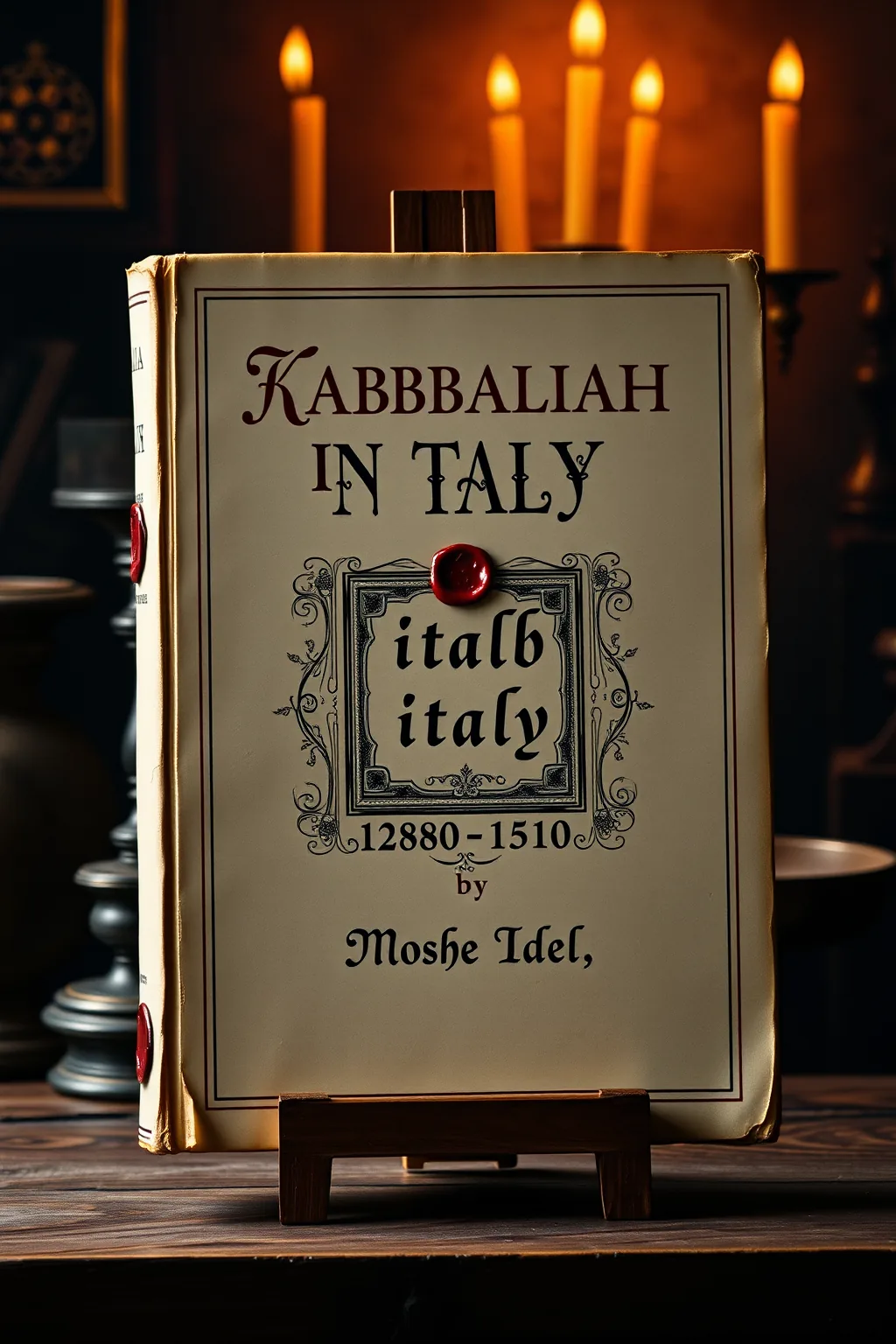
Kabbalah in Italy, 1280-1510
 61
61

Kabbalah in Italy, 1280-1510

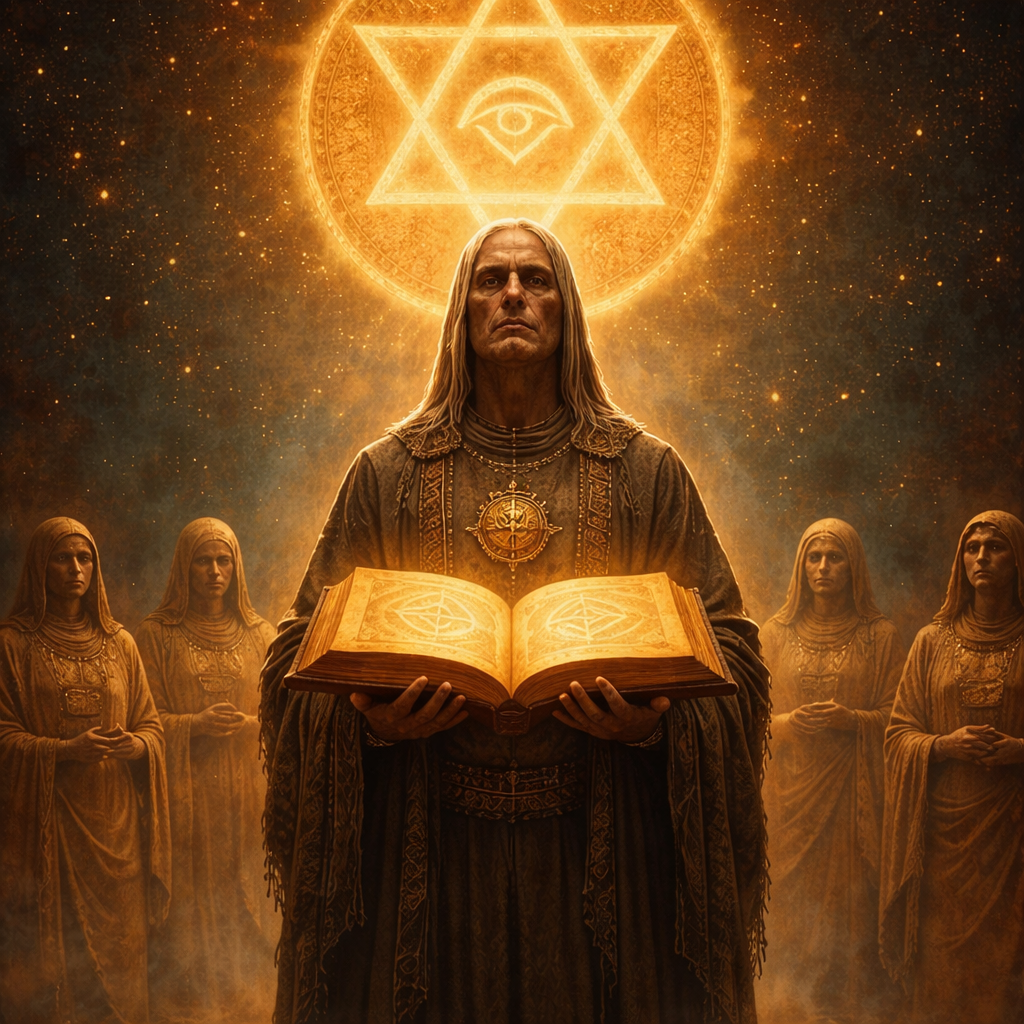

Moshe Idel's 'Kabbalah in Italy, 1280-1510' is an indispensable contribution to the field of Jewish mysticism. Idel, a titan of Kabbalistic scholarship, guides readers through the complex intellectual and spiritual milieu of late medieval Italy, showcasing the dynamic evolution of Kabbalistic ideas. He expertly navigates the dialogues between Jewish mystics and their Christian contemporaries, revealing fascinating cross-pollinations of esoteric thought. This work is essential for anyone seeking to understand the historical trajectory of Kabbalah and its profound philosophical implications. Its scholarly rigor is matched by its engaging narrative, making it a compelling read for academics and serious seekers alike, offering unparalleled insights into the hidden dimensions of a pivotal era.
📝 Description
61
Moshe Idel's 1990 book traces Kabbalah's development in Italy between 1280 and 1510.
Moshe Idel's 'Kabbalah in Italy, 1280-1510' examines the transmission and evolution of Jewish mysticism in Italy during a significant period of cultural exchange. The book details how Kabbalistic ideas interacted with the intellectual currents of Renaissance Italy, including Christian and secular philosophies. Idel focuses on the specific developments and figures within Italian Kabbalah, showing its unique trajectory.
The work investigates the symbolism and contemplative practices that were central to Italian Kabbalists. It discusses the search for gnosis and the mystical experiences that defined this era's spiritual inquiry. Idel's research provides a scholarly look at how these esoteric traditions were shaped by their Italian context, offering insight into a lesser-known facet of Jewish mysticism.
This study situates Italian Kabbalah within the broader spectrum of Jewish esoteric traditions. It highlights how Kabbalistic thought, originating in medieval Provence and Spain, adapted to the intellectual and social environment of Italy. The book shows how Italian Kabbalists engaged with existing mystical frameworks while also responding to new philosophical and theological ideas, particularly those emerging from Christian circles during the Renaissance. Idel's work demonstrates the localized adaptations and innovations within a major esoteric tradition.
💡 Why Read This Book?
Uncover the vibrant Italian Renaissance of Kabbalah, exploring its fusion with other spiritual currents. Delve into the transmission of esoteric knowledge and the philosophical innovations of medieval Jewish mystics. Ideal for scholars, practitioners, and anyone fascinated by the hidden history of Western mysticism and the enduring power of divine contemplation.
⭐ Reader Reviews
Honest opinions from readers who have explored this book.
❓ Frequently Asked Questions
What is the primary focus of this book?
The book primarily focuses on the development and dissemination of Kabbalistic thought in Italy between 1280 and 1510, examining its interaction with other intellectual and religious traditions of the period.
Who was Moshe Idel and why is he considered an authority?
Moshe Idel is a preeminent scholar of Kabbalah, renowned for his groundbreaking research and expansive interpretations of Jewish mystical traditions. His work is foundational in understanding Kabbalah's historical and philosophical dimensions.
What makes the Italian context significant for Kabbalah?
The Italian context was crucial due to the Renaissance's intellectual ferment, humanism, and the proximity of Jewish communities to burgeoning Christian mystical and Neoplatonic thought, fostering unique dialogues and developments.
Is this book suitable for beginners in Kabbalah?
While comprehensive, the book's scholarly depth is best appreciated by those with some foundational knowledge of Kabbalah or Jewish mysticism. Beginners might find it more rewarding after exploring introductory texts.
What kind of esoteric themes are explored?
The book delves into themes of divine emanation, mystical ascent, the nature of the divine name, angelology, the interpretation of scripture through mystical lenses, and the pursuit of direct experience of the divine.
🔮 Key Themes & Symbolism
The Italian Nexus of Kabbalah
This theme explores the unique environment of Italy from 1280 to 1510 as a fertile ground for Kabbalistic development. It highlights how the intellectual dynamism of the Renaissance, including Neoplatonism and humanism, interacted with and influenced Jewish mystical traditions. Idel meticulously traces the pathways through which Kabbalistic ideas were transmitted, adapted, and sometimes reinterpreted within Italian Jewish communities, often in dialogue, overt or subtle, with Christian esoteric currents. This period witnessed a distinct Italian flavor emerge in Kabbalistic discourse, marked by specific philosophical emphases and artistic expressions of mystical concepts.
Transmission and Transformation of Mystical Knowledge
A central focus is the intricate process by which esoteric Kabbalistic knowledge was passed down and reshaped across generations and geographical boundaries within Italy. Idel examines the role of key figures, manuscript traditions, and community dynamics in this transmission. The book reveals how Kabbalistic concepts, originating in earlier medieval centers, were not merely replicated but actively transformed, often in response to new intellectual challenges and spiritual aspirations. This transformation underscores the living, evolving nature of mystical traditions and their capacity for adaptation while retaining core principles.
The Quest for Divine Immanence and Transcendence
This theme studies the profound Kabbalistic preoccupation with understanding the relationship between the finite human realm and the infinite Divine. Idel illuminates how Italian Kabbalists grappled with concepts of divine emanation (Sefirot), the nature of the Godhead (Ein Sof), and the pathways for the soul to ascend towards or experience divine presence. The book explores the various contemplative practices, theological formulations, and symbolic interpretations employed by mystics of this era in their ardent pursuit of bridging the gap between the earthly and the celestial, seeking direct union or useful insights into the Divine.
💬 Memorable Quotes
Direct passages from the work, attributed to the author.
“The Kabbalah blossomed in Italy like a rare flower.”
— This evocative metaphor suggests the unique and beautiful flourishing of Kabbalistic thought within the Italian Renaissance, implying a period of intense growth and exquisite development.
“The soul's ascent mirrors the divine descent.”
— This highlights a core Kabbalistic concept of the interconnectedness of the human spiritual journey and the divine emanations, suggesting a reciprocal relationship in mystical experience.
“Symbolism is the language of the ineffable.”
— This emphasizes the crucial role of symbolic language in Kabbalah for articulating concepts that transcend ordinary human comprehension and direct description of the Divine.
“Italy became a crucible for Kabbalistic fire.”
— This suggests that the intellectual and spiritual environment of Italy acted as a catalyst, intensely shaping and forging Kabbalistic ideas into new and powerful forms.
💡 Key Ideas
Editorial paraphrase of the work's core concepts — not direct quotes.
Hidden meanings whisper from ancient texts.
This quote speaks to the esoteric nature of Kabbalah, where scripture and tradition are viewed as containing profound, veiled secrets waiting to be unveiled through mystical interpretation.
🌙 Esoteric Significance
Tradition
This work is deeply rooted in the Kabbalistic tradition, a complex and complex system of Jewish mysticism that seeks to understand the nature of God, creation, and the human soul. It explores the esoteric dimensions of this tradition, focusing on its development within a specific historical and geographical context. Idel illuminates how Kabbalistic principles, such as the Sefirot, divine names, and mystical contemplation, were interpreted and practiced, revealing the inner workings of a profound spiritual path aimed at achieving divine knowledge and union.
Symbolism
The book intricately analyzes the collection of symbolism employed within Italian Kabbalah. It studies the symbolic meanings of Hebrew letters, divine names, angelic hierarchies, and the structure of the Kabbalistic Tree of Life (Etz Chaim). These symbols are not merely decorative but serve as keys to unlocking deeper spiritual truths and understanding the divine order. Idel demonstrates how these symbolic systems were used for meditation, theological discourse, and the interpretation of sacred texts, offering a pathway to the ineffable.
Modern Relevance
The study of Kabbalah in Italy offers profound modern relevance by revealing the enduring human quest for spiritual meaning, divine connection, and esoteric knowledge. It demonstrates the historical fluidity of religious and mystical thought, highlighting how different traditions can influence and enrich one another. Understanding this historical development provides context for contemporary interest in Kabbalah and its philosophical underpinnings, offering insights into the timeless pursuit of self-transcendence and the exploration of consciousness that continues to resonate today.
👥 Who Should Read This Book
This key work is essential for scholars of Jewish mysticism, religious history, and medieval European intellectual traditions. It is also highly recommended for advanced students and practitioners of Kabbalah seeking a deep historical and philosophical understanding of its development. While its scholarly rigor makes it most accessible to those with prior knowledge, dedicated seekers of esoteric wisdom who are willing to engage with complex ideas will find immense value. Beginners in Kabbalah are encouraged to approach this text after familiarizing themselves with foundational Kabbalistic concepts.
📜 Historical Context
The period between 1280 and 1510 in Italy was a dynamic era of immense cultural, intellectual, and spiritual transformation. The burgeoning Renaissance witnessed a renewed interest in classical antiquity, the rise of humanism, and groundbreaking advancements in art, science, and philosophy. Within this vibrant milieu, Jewish communities, though often facing challenges, were active participants in intellectual life. Kabbalah, having emerged and developed significantly in earlier centuries, found fertile ground in Italy. The proximity to centers of Christian thought, including Neoplatonism and various mystical currents, fostered a unique environment for dialogue, influence, and the adaptation of Kabbalistic ideas. This context allowed for the development of distinct regional traditions and the transmission of esoteric knowledge, shaping the subsequent trajectory of Jewish mysticism.
📔 Journal Prompts
Reflect on the concept of 'Kabbalistic fire' as a metaphor for intellectual and spiritual transformation during the Italian Renaissance.
Consider how the transmission of esoteric knowledge differs in the period studied compared to today's digital age.
Explore the personal significance of divine immanence and transcendence in your own spiritual or philosophical journey.
Analyze how symbolism functions as a bridge between the known and the unknown in religious or mystical traditions.
What parallels can be drawn between the intellectual dialogues of medieval Italy and contemporary interdisciplinary spiritual inquiry?
🗂️ Glossary
Kabbalah
A system of Jewish mysticism that seeks to understand the nature of God, the universe, and the human soul through esoteric interpretation of religious texts and contemplation of divine emanations.
Sefirot
The ten divine emanations or attributes of God in Kabbalistic cosmology, often depicted as a Tree of Life, representing different aspects of the divine presence and creative force.
Ein Sof
The Kabbalistic concept of God as 'without end' or 'infinite,' representing the unknowable, absolute, and transcendent aspect of the Divine before manifestation.
Neoplatonism
A philosophical system derived from Plato, emphasizing the transcendent One, emanations, and the soul's ascent towards the divine through intellectual and spiritual purification.
Gnosis
Knowledge, particularly spiritual or mystical insight, often understood as a direct, intuitive apprehension of divine truths, central to many esoteric traditions.
This book appears in 1 collection
🔮 Readers Also Liked
Browse all →









More by Moshe Idel
All books →



From the “Kabbalah” Collection
View all →









More Free Kabbalah & Jewish Mysticism Books
View all →