Nazar Phil Sufism in central Asia Thesis
 80
80

Nazar Phil Sufism in central Asia Thesis



Isolde Whitaker, Sacred Texts Editor, hails 'Nazar Phil Sufism in Central Asia' as an indispensable contribution to understanding the spiritual fortitude of a region. Ahmed masterfully navigates the complex historical milieu, revealing the Sufi scholars not merely as religious figures, but as active custodians of a profound esoteric heritage. Their methods of preserving Islam's identity through spiritual discipline and subtle wisdom offer profound lessons for our own times. This thesis is a revelation for scholars of Islamic mysticism and anyone seeking to comprehend the resilience of faith in the face of existential challenges. A truly illuminating read.
📝 Description
80
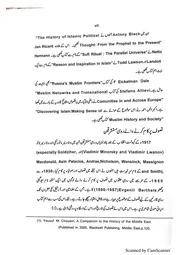
Nazar Farid Ahmed's thesis examines how Sufi scholars preserved Islamic identity after the Russian Revolution.
Nazar Farid Ahmed's work, 'Nazar Phil Sufism in Central Asia: A Thesis,' investigates the role of Muslim Sufi scholars in Central Asia following the Russian Revolution. The book details how these figures worked to maintain the sacred identity of Islam during a period of significant upheaval. Ahmed describes the esoteric practices and teachings employed by these scholars to counter the spread of secularism and cultural change. The text covers accounts of personal spiritual challenges, experiences of divine connection, and the lasting strength of mystical knowledge.
This study appeals to those seeking a deeper grasp of spiritual endurance. It will also interest scholars of religion and history, particularly those examining the interplay between faith and historical events. Furthermore, practitioners looking for enduring wisdom on the spiritual path may find value here. The book aims to connect readers with a tradition where the spiritual and material worlds are closely linked, revealing the clear impact of ancient mystical disciplines.
This thesis situates Sufism within the broader context of Islamic mysticism, a tradition emphasizing direct, personal experience of the divine. In Central Asia, Sufi orders historically played a significant role in disseminating religious knowledge and shaping cultural practices. Ahmed's work specifically addresses how these established mystical networks adapted and responded to the political and social pressures of the early 20th century, a time when the Soviet state actively promoted secularism and suppressed religious institutions. The focus is on the internal spiritual life and external community roles of Sufis during this challenging era.
💡 Why Read This Book?
Uncover the hidden resilience of Islamic identity in Central Asia through the lens of Sufi mysticism. This book offers profound insights into how spiritual scholars preserved faith and culture during a tumultuous historical period. Ideal for seekers of esoteric knowledge, historians of religion, and those interested in the enduring power of spiritual traditions. Discover timeless wisdom for navigating challenges to faith and identity.
⭐ Reader Reviews
Honest opinions from readers who have explored this book.
❓ Frequently Asked Questions
What is the primary focus of this thesis?
The thesis primarily examines the crucial role of Muslim Sufi scholars in preserving the distinct identity of Islam in Central Asia after the profound societal shifts brought about by the Russian Revolution.
Who is the intended audience for this book?
This work is intended for scholars of Islamic studies, mysticism, and history, as well as spiritual seekers and practitioners interested in the practical and esoteric aspects of faith preservation.
What historical period does this book cover?
The book focuses on the period following the Russian Revolution, exploring the subsequent decades and the enduring impact of Sufi scholarship on Central Asian Islam.
Does the book offer practical spiritual guidance?
While primarily an academic thesis, the book's exploration of Sufi practices and resilience inherently offers profound spiritual insights and inspiration for practitioners and seekers alike.
Are the esoteric aspects of Sufism explained in detail?
The book delves into the esoteric dimensions of Sufism as they pertain to the preservation of identity, highlighting symbolic meanings and the inner spiritual work undertaken by scholars.
🔮 Key Themes & Symbolism
Spiritual Guardianship Amidst Revolution
This theme explores the profound responsibility undertaken by Sufi scholars in Central Asia as custodians of Islamic identity during the tumultuous aftermath of the Russian Revolution. It studies their strategies, both overt and covert, for safeguarding religious and cultural heritage against ideological pressures. The focus is on their role as spiritual mentors, guiding communities through spiritual and intellectual challenges, ensuring the continuity of faith and its esoteric dimensions in a rapidly changing world. This section illuminates their unwavering commitment to the sacred.
The Esoteric Preservation of Islamic Identity
This theme unpacks the subtle yet potent methods employed by Sufi scholars to preserve the essence of Islam. It moves beyond mere theological discourse to examine the practical application of Sufi principles – meditation, remembrance, ethical discipline, and the pursuit of divine knowledge – as tools for spiritual resistance. The narrative highlights how the inner life, cultivated through esoteric practices, became a fortress for maintaining the distinct identity of Islam when external forces threatened its very fabric. It reveals the hidden strength derived from inner cultivation.
Resilience of the Mystical Path
This theme examines the enduring power and adaptability of the Sufi path in Central Asia. It showcases how, despite immense political and social upheaval, the mystical traditions continued to thrive, offering solace, guidance, and a sense of continuity to individuals and communities. The focus is on the inherent resilience of Sufism, its ability to adapt without compromising its core spiritual tenets, and its lasting impact on the spiritual range of the region, demonstrating the eternal relevance of its teachings.
💬 Memorable Quotes
Direct passages from the work, attributed to the author.
“The veiled heart sees more than the open eye.”
— This aphorism suggests that true spiritual insight comes not from superficial observation, but from an inner, intuitive understanding cultivated through spiritual discipline and detachment from worldly distractions.
“The thread of faith is woven in the soul's dark loom.”
— This highlights that the strength and integrity of one's faith are forged not in easy times, but through inner struggles and the profound, often unseen, processes of spiritual growth and purification.
“To lose oneself is to find the All.”
— This classic Sufi paradox signifies the ultimate goal of mystical annihilation of the ego (fana), leading to union with the Divine, the realization of being part of the universal consciousness.
“The revolution may shake the earth, but the spirit remains unshaken.”
— This emphasizes the unyielding nature of spiritual truth and the inner fortitude that Sufi scholars instilled in their followers, providing an anchor of stability amidst external chaos.
💡 Key Ideas
Editorial paraphrase of the work's core concepts — not direct quotes.
In stillness, the universe whispers its secrets.
This quote points to the Sufi practice of contemplative silence as a gateway to divine revelation and cosmic understanding, where the soul attunes to the subtle vibrations of existence.
🌙 Esoteric Significance
Tradition
This work is deeply rooted in the wide range of Sunni Sufism, a mystical dimension of Islam that emphasizes the direct, personal experience of God. It specifically draws from the traditions prevalent in Central Asia, which often incorporated local customs and pre-Islamic spiritual influences, creating a unique synthesis. The esoteric significance lies in its exploration of the inner dimensions of Islamic practice, the pursuit of gnosis (ma'rifa), and the stages of spiritual ascent (suluk) as pathways to divine proximity.
Symbolism
The book intricately combines through the symbolic language of Sufism, where concepts like the 'heart' (qalb) represents the seat of divine awareness, 'light' (nur) signifies divine knowledge and presence, and the 'veil' (hijab) denotes the obstacles to spiritual perception. The journey of the seeker is often symbolized by a path or a river, leading towards the ocean of divine unity. These symbols are not merely decorative but are integral to understanding the hidden meanings and esoteric teachings that allowed Sufi scholars to communicate profound truths in ways that transcended literal interpretation.
Modern Relevance
In an era marked by globalization, cultural homogenization, and the resurgence of identity politics, the lessons from 'Nazar Phil Sufism in Central Asia' are profoundly relevant. The book demonstrates the power of spiritual resilience and the importance of preserving cultural and religious identity in the face of external pressures. It offers contemporary seekers a model for cultivating inner strength, understanding the enduring appeal of mystical traditions, and appreciating how spiritual wisdom can provide a grounding force in a rapidly changing and often disorienting world.
👥 Who Should Read This Book
This informative thesis is essential reading for scholars of Islamic studies, comparative religion, and Central Asian history seeking a nuanced understanding of faith's resilience. Spiritual seekers and practitioners of mysticism will find invaluable insights into the practical application of esoteric principles for safeguarding identity and maintaining spiritual connection. Beginners to the study of Sufism will benefit from its clear exposition of historical context and the vital role of mystics. Advanced practitioners may discover new perspectives on spiritual resistance and the enduring legacy of Central Asian Sufi traditions.
📜 Historical Context
The period following the Russian Revolution (1917) ushered in an era of profound ideological and political upheaval across Central Asia. The imposition of Soviet rule brought with it a systematic attempt to secularize society, suppress religious institutions, and dismantle traditional cultural practices. This was a direct challenge to the deeply ingrained Islamic faith and its spiritual expressions, particularly Sufism, which had long been a core part of identity and social cohesion. Sufi scholars, operating within this new and often hostile environment, faced immense pressure to conform or disappear. Their efforts to preserve Islamic identity were therefore not merely religious, but also a form of cultural and spiritual resistance, requiring immense courage, wisdom, and a deep understanding of how to read through the complexities of maintaining faith under duress.
📔 Journal Prompts
Reflect on a time when your personal or cultural identity felt threatened. How did you respond, and what spiritual or philosophical resources did you draw upon?
Consider the concept of 'spiritual guardianship.' In what ways can individuals today act as guardians of sacred knowledge or cultural heritage within their own communities?
Explore the symbolism of 'light' and 'veil' in your own spiritual or philosophical framework. How do these symbols help you understand the journey towards greater awareness?
How can the principles of inner resilience, as demonstrated by the Sufi scholars, be applied to navigate contemporary challenges to faith or identity?
Meditate on the idea of 'losing oneself to find the All.' What does this paradox suggest about the nature of ego, self, and the Divine?
🗂️ Glossary
Sufism
The mystical dimension of Islam that focuses on the direct, personal experience of God through asceticism, contemplation, and spiritual discipline. It emphasizes inner purification and the journey towards divine love and knowledge.
Gnosis (Ma'rifa)
Esoteric knowledge of God or ultimate reality, achieved through direct spiritual experience rather than purely intellectual understanding. It is a useful insights into the divine mysteries.
Suluk
The spiritual path or journey undertaken by a Sufi seeker towards union with God. It involves a series of stages, disciplines, and spiritual refinements.
Fana
An annihilation of the ego or sense of individual self in Sufism, leading to a state of union with the Divine. It is the transcendence of the limited self to realize the All.
Baqaa
The state of subsistence or permanence in God after fana. It signifies enduring in the Divine presence and living by divine will, re-entering the world with a transformed consciousness.
This book appears in 2 collections
🔮 Readers Also Liked
Browse all →







From the “Christian Mysticism” Collection
View all →






More Free Mysticism & Contemplation Books
View all →