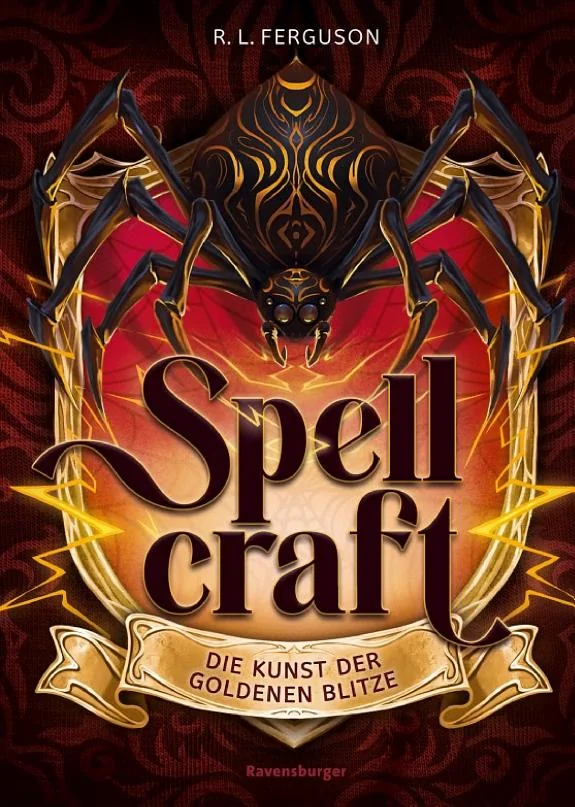
Spellcraft, Band 3 - Die Kunst der goldenen Blitze
 76
76

Spellcraft, Band 3 - Die Kunst der goldenen Blitze
Ferguson's "Die Kunst der goldenen Blitze" presents a London teeming with magic, though it occasionally feels more like a backdrop than a fully realized entity. The central conflict, revolving around Lucy's discovery of a potentially duplicitous savior in 'the Radiant,' offers a compelling twist on classic hero narratives. However, the pacing falters in the middle third as the search for a lost magical city becomes somewhat protracted. A particularly strong sequence involves Lucy deciphering fragmented texts within the British Library's restricted archives, hinting at a deeper, more ancient magical history. While the prose is serviceable, it lacks the evocative power one might expect from a work so steeped in occult lore. The book is a competent continuation, but its ambition sometimes outstrips its execution.
📝 Description
76
R.L. Ferguson's 2026 novel, Die Kunst der goldenen Blitze, continues the Spellcraft series in a magically charged London.
This third installment of the Spellcraft series immerses readers in a London where magic is a tangible, though often concealed, presence. The narrative follows young protagonists as they discover their own latent magical powers and confront difficult ethical decisions. Ferguson's story is set against a backdrop of contemporary urban fantasy, blending magical realism with occult undertones.
The central plot concerns 'Spellcrafters' and their fight against societal subjugation. A mysterious figure known as 'the Radiant' emerges, whose true motives are unclear, driving a search for a legendary lost city. The dynamic between secret magical communities and the ordinary world is a crucial element of the story. This volume is best suited for those already invested in the Spellcraft saga or readers drawn to modern fantasy that incorporates darker, esoteric elements.
Ferguson's work taps into a cultural fascination with esoteric traditions that has grown since the late 20th century. This resurgence is visible in online communities and popular culture's engagement with witchcraft and occultism. The series specifically addresses themes of hidden magical societies and their interaction with the mundane world, reflecting broader interests in modern occultism and its place within contemporary society.
💡 Why Read This Book?
• Learn about the struggle of "Spellcrafters" against societal suppression, a concept explored in Chapter 2, offering a unique perspective on magical resistance. • Understand the ambiguity of powerful figures like "the Radiant," examining the narrative's challenge to traditional heroic archetypes, as seen in Lucy's evolving perception. • Discover the allure of a "lost magical city," a plot device that drives the characters' quest and introduces elements of ancient lore and forgotten power.
⭐ Reader Reviews
Honest opinions from readers who have explored this book.
❓ Frequently Asked Questions
What is the primary conflict in Spellcraft, Band 3?
The primary conflict involves Lucy assisting a powerful mage named 'the Radiant' who claims to want to liberate 'Spellcrafters.' However, Lucy suspects the Radiant may not be the hero everyone believes, leading to a quest for answers.
Who is the main protagonist of Spellcraft, Band 3?
The main protagonist is Lucy, a young woman who finds herself drawn into the world of magic and tasked with helping the Radiant. Her journey involves uncovering the truth behind the Radiant's motives.
What is the significance of the 'lost magical city' in the book?
The lost magical city is a crucial element that Lucy and her friends must find to uncover answers about the Radiant and the true nature of the magical world. Its discovery is tied to the central mystery.
What is 'the Radiant' in the context of Spellcraft, Band 3?
'The Radiant' is presented as the world's most powerful magician who has returned to London to free the Spellcrafters. However, her true intentions are questioned throughout the narrative.
What is the publishing history of Spellcraft, Band 3?
Spellcraft, Band 3 - Die Kunst der goldenen Blitze is the third installment in the Spellcraft series by R.L. Ferguson, first published in 2026.
What kind of setting does the book feature?
The book is set in a magical version of London, where supernatural elements and hidden societies coexist with the modern urban environment.
🔮 Key Themes & Symbolism
The Ambiguity of Saviors
The narrative critically examines the archetype of the savior figure through 'the Radiant.' Initially perceived as a liberator of the 'Spellcrafters,' her true motives are gradually cast into doubt. This theme challenges readers to question authority and the narratives presented by powerful individuals, prompting an investigation into deeper truths rather than accepting surface-level heroism. The search for the lost magical city becomes a metaphor for seeking authentic knowledge beyond imposed stories.
Oppression and Liberation
A central conflict is the subjugation of 'Spellcrafters' and the struggle for their freedom. The book explores the mechanisms of magical oppression within a society, hinting at historical or systemic forces that keep magical practitioners in check. The Radiant's return is framed as a potential catalyst for liberation, but the uncertainty surrounding her agenda complicates this, suggesting that true freedom might require more than the intervention of a singular, powerful figure.
The Quest for Lost Knowledge
The pursuit of a 'lost magical city' drives the plot, symbolizing a deeper yearning for forgotten wisdom and power. This quest represents a departure from the immediate magical conflicts, indicating that understanding the past is crucial for reading through the present and future. It highlights the esoteric principle that ancient knowledge holds keys to contemporary challenges, and uncovering these secrets is paramount for the protagonists.
Urban Magic Manifestations
Ferguson places the unfolding magical drama within contemporary London, blending the mundane with the extraordinary. Magic isn't confined to remote locales but permeates the city, influencing its atmosphere and inhabitants. This approach grounds the fantastical elements in a recognizable setting, exploring how occult forces might operate unseen within a modern metropolis, interacting with established institutions and daily life.
💬 Memorable Quotes
Direct passages from the work, attributed to the author.
“Was the Radiant truly a liberator, or another kind of cage?”
— This question directly addresses the central thematic ambiguity surrounding 'the Radiant.' It forces readers, alongside Lucy, to critically assess the motives of powerful figures and the nature of perceived salvation.
“They sought a city lost to time, hoping its stones held the truth they desperately needed.”
— This statement expresses the core quest of the protagonists: to find a mythical lost city. The motivation is not mere exploration but a desperate need for knowledge and answers related to their predicament.
💡 Key Ideas
Editorial paraphrase of the work's core concepts — not direct quotes.
Lucy felt the weight of expectation settle upon her shoulders the moment she saw the Radiant.
This quote captures the immediate burden placed upon the protagonist, Lucy, upon encountering the powerful figure of 'the Radiant.' It signifies the start of her unwilling entanglement in a magical conflict far larger than herself.
The city held its breath, unaware of the currents of power shifting beneath its streets.
This line emphasizes the hidden nature of magic within the urban field of London. It suggests that the city's inhabitants are oblivious to the significant magical events and power struggles occurring around them.
Every Spellcrafter knew the sting of power held just out of reach.
This quote speaks to the collective experience of the 'Spellcrafters,' highlighting their general state of disempowerment and frustration. It sets the stage for the conflict and the desire for liberation.
🌙 Esoteric Significance
Tradition
While fictional, the series taps into contemporary currents of urban fantasy that often draw inspiration from Western esoteric traditions. The concept of 'Spellcrafters' and the quest for hidden knowledge align with Hermetic principles of seeking gnosis and understanding the underlying magical architecture of reality. The work doesn't strictly adhere to a single historical tradition but synthesizes popular notions of magic, power, and hidden societies relevant to modern occult interests.
Symbolism
The 'Radiant' serves as a potent symbol of ambiguous divine or magical power, representing both potential salvation and potential deception, a recurring motif in Gnostic thought and other dualistic systems. The 'lost magical city' symbolizes forgotten wisdom, the anima mundi, or a hidden spiritual realm accessible only through dedicated seeking, echoing Neoplatonic ideals of ascending to higher planes of understanding.
Modern Relevance
Contemporary practitioners of modern witchcraft and urban fantasy enthusiasts engage with narratives like Ferguson's for their imaginative exploration of magic in everyday life. The book's questioning of authority figures and its focus on hidden power structures resonate with modern concerns about societal control and the search for authentic spiritual or magical agency outside established institutions.
👥 Who Should Read This Book
• Readers of contemporary urban fantasy seeking intricate magical systems and relatable protagonists facing extraordinary challenges. • Enthusiasts of occult fiction interested in narratives that explore themes of hidden societies, magical oppression, and the ambiguity of power. • Fans of the Spellcraft series looking for the next installment in Lucy's ongoing magical journey and the unfolding mysteries of her world.
📜 Historical Context
R.L. Ferguson's "Spellcraft, Band 3 - Die Kunst der goldenen Blitze" (2026) arrives in an era marked by a resurgence of interest in esoteric and occult themes within popular culture, a trend building since the late 20th century. This fictional exploration of magic in London taps into a broader cultural fascination with hidden worlds and secret societies, mirroring the growth of online communities dedicated to witchcraft and modern paganism. While Ferguson's work is firmly within the urban fantasy genre, its narrative about 'Spellcrafters' and their struggle for liberation echoes real-world discussions around power structures and marginalized groups, albeit through a magical lens. The book's publication follows a period where authors like Neil Gaiman had already successfully integrated mythology and the supernatural into contemporary settings, paving the way for more intricate magical systems. Unlike purely academic works on Hermeticism or Kabbalah, Ferguson's novel uses these elements as a narrative engine, making them accessible to a wider audience.
📔 Journal Prompts
The Radiant's dual nature: a liberator or a cage?
Lucy's feeling of expectation upon meeting the Radiant.
The significance of seeking a lost magical city for truth.
Reflecting on the 'sting of power held just out of reach' for Spellcrafters.
London as a vessel for unseen magical currents.
🗂️ Glossary
Spellcrafters
Individuals who possess magical abilities and are central to the narrative's conflict, facing societal oppression and seeking liberation.
The Radiant
A supremely powerful magician who returns to London, presented as a potential savior for the Spellcrafters, though her true intentions are questioned.
Lost Magical City
A mythical, hidden urban location that the protagonists must find to uncover crucial information and answers related to the central plot.
Die Kunst der goldenen Blitze
The German subtitle of the book, translating to 'The Art of the Golden Lightning,' suggesting a specific magical technique or power explored within the narrative.
Oppression
The state of being subjected to unjust treatment or control, specifically referring to the subjugation of Spellcrafters within the story's world.
Liberation
The act of setting someone free from imprisonment, slavery, or oppression; a key goal for the Spellcrafters in the narrative.
Contemporary London
The modern-day setting of the novel, where magical elements and hidden societies interact with the familiar urban environment.
This book appears in 1 collection
🔮 Readers Also Liked
Browse all →









From the “Spellcraft” Collection
View all →


More Free Occult Philosophy Books
View all →