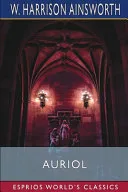
Auriol (Esprios Classics)
 75
75

Auriol (Esprios Classics)
Ainsworth’s *Auriol* deviates significantly from his historical novelistic comfort zone, plunging headfirst into the gothic and the phantasmagorical. The novel's strength lies in its uninhibited embrace of the supernatural, allowing spectral apparitions and the allure of the Elixir of Life to drive a narrative that feels less constrained by historical accuracy than his other works. The early serialization as *Revelations of London* hints at the sensational, almost lurid, quality that Ainsworth permits to flourish. However, the pacing can feel uneven, a common pitfall in serialized Victorian fiction. The central conceit of achieving immortality, while intriguing, sometimes gets lost in the more melodramatic spectral encounters. Despite these limitations, the novel offers a fascinating glimpse into Ainsworth’s less-trodden, darker literary paths, particularly his engagement with alchemical ambition.
Ainsworth's foray into pure fantasy in *Auriol* provides a curious, if occasionally uneven, gothic romance.
📝 Description
75
William Harrison Ainsworth serialized "Auriol, or, The Elixir of Life" in 1844 under the title "Revelations of London."
This gothic romance departs from Ainsworth's usual historical settings, instead immersing its story in a fantastical realm. The supernatural and the uncanny are central, free from strict historical accuracy. The novel follows the pursuit of the Elixir of Life, a quest for immortality that brings with it spectral visitations and the psychological weight of unnatural longevity. Ainsworth uses London as a backdrop where the ordinary and the spectral meet, blurring the lines between them.
The narrative examines the drive for forbidden knowledge and its often grave consequences. Ambition and the desire for eternal life are key motivators for the characters, leading them into dangerous territory. The story explores the philosophical implications of tampering with natural laws and the potential costs of achieving such goals. It offers a look at the darker side of romanticism through a supernatural lens.
Published in 1844, *Auriol* appeared during a period of widespread interest in spiritualism, mesmerism, and occult sciences. Ainsworth's turn to pure fantasy allowed him to directly engage with gothic tropes and themes of the supernatural. The era's fascination with serialized fiction made such stories accessible, though they also drew criticism for sensational content. The novel taps into a literary tradition that explored the limits of human ambition and the allure of forbidden, potentially dangerous, knowledge.
💡 Why Read This Book?
• Understand the alchemical pursuit of the Elixir of Life as depicted in 1844 literature, exploring its symbolic and narrative functions beyond simple immortality. • Examine William Harrison Ainsworth's thematic departure from historical fiction in *Auriol*, noting his exploration of supernatural elements in a purely fantastical setting. • Experience a Victorian gothic romance that explicitly employs spectral apparitions and the uncanny, offering a distinct flavor of the era's fascination with the otherworldly.
⭐ Reader Reviews
Honest opinions from readers who have explored this book.
❓ Frequently Asked Questions
When was William Harrison Ainsworth's novel *Auriol* first published?
William Harrison Ainsworth's novel *Auriol: or, The Elixir of Life* was first published in serial form in 1844, initially under the title *Revelations of London*.
What is the primary theme explored in Ainsworth's *Auriol*?
The primary theme in *Auriol* is the pursuit of the Elixir of Life, a mythical substance granting immortality, and the supernatural consequences that arise from such an ambition.
How does *Auriol* differ from Ainsworth's other works?
*Auriol* is unusual in Ainsworth's oeuvre because its action is set entirely within a fantasy framework, allowing the supernatural to take free rein, unlike his more historically grounded novels.
What was the original title under which *Auriol* was serialized?
The novel was originally serialized in 1844 under the title *Revelations of London* before being published as *Auriol*.
Does *Auriol* feature supernatural elements?
Yes, *Auriol* is characterized by its strong supernatural and gothic elements, which are central to the plot and Ainsworth's departure from strict historical narrative.
What literary genre does *Auriol* primarily belong to?
*Auriol* is best described as a gothic romance, featuring elements of fantasy and the supernatural that were popular in 19th-century literature.
🔮 Key Themes & Symbolism
The Elixir of Life
The central motif of *Auriol* is the alchemical quest for the Elixir of Life, a substance purported to grant immortality. This pursuit is depicted not merely as a scientific endeavor but as a deeply psychological and supernatural one, fraught with peril. Ainsworth explores the corrupting influence of such an ambition, the moral compromises made in its name, and the existential dread that might accompany unending existence. The Elixir represents a forbidden knowledge, a transgression against natural order.
Spectral Presence and the Uncanny
Ainsworth utilizes spectral apparitions and uncanny occurrences to propel the narrative of *Auriol*. These supernatural manifestations are not mere embellishments but integral to the story's gothic atmosphere and thematic exploration. They serve to blur the lines between life and death, reality and illusion, reflecting the characters' internal anxieties and the unsettling nature of their quests. The presence of ghosts and phantoms underscores the gothic romance tradition.
London as a Liminal Space
The novel positions London as a backdrop where the mundane and the supernatural can converge. The city itself becomes a character, a sprawling metropolis containing hidden corners where arcane rituals might unfold and spectral encounters are possible. This portrayal of London taps into the Victorian fascination with urban landscapes as sites of both progress and hidden, often sinister, mysteries, making it a fitting stage for a gothic fantasy.
Ambition and Its Consequences
Underlying the fantastical elements of *Auriol* is a study of human ambition, particularly the desire for power and longevity. The characters' relentless pursuit of the Elixir of Life highlights the destructive potential of unchecked desire. Ainsworth illustrates how such aspirations can lead to moral decay, isolation, and ultimately, unforeseen and dire consequences, serving as a cautionary aspect within the gothic framework.
💬 Memorable Quotes
Direct passages from the work, attributed to the author.
“The tale is accordingly a thoroughly gothic romance.”
— This meta-commentary, likely from a later introduction, accurately frames *Auriol*'s genre. It signals Ainsworth's deliberate move towards supernatural themes and a dark, romantic atmosphere, distinguishing it from his typical historical narratives.
“Auriol, written 1844, is slightly unusual in the Ainsworth repertoire as the action is entirely couched as a fantasy.”
— This observation points to the novel's unique position within Ainsworth's body of work. It highlights his willingness to experiment with pure fantasy, allowing supernatural elements to dominate the narrative without being tethered to historical events.
“It was first published in 1844 in serial form, under the title Revelations of London.”
— This factual statement anchors the novel in its original publication context. Serialization in 1844 suggests an accessible, perhaps sensational, format appealing to a wide Victorian readership, influencing the narrative's structure and tone.
“The supernatural element... can take comparatively free rein.”
— This phrase emphasizes the liberation of the supernatural within *Auriol*'s narrative structure. Ainsworth utilizes the fantasy setting to explore ghostly encounters and alchemical pursuits without the constraints of historical realism.
“Auriol: or, The Elixir of Life is a novel by British historical novelist William Harrison Ainsworth.”
— This identifies the author and the book's full title, noting Ainsworth's primary genre (historical novelist) while pointing to *Auriol*'s deviation into fantasy and the central theme of immortality.
🌙 Esoteric Significance
Tradition
While not explicitly aligned with a single esoteric lineage, *Auriol* engages with themes common in Hermetic and alchemical traditions, particularly the pursuit of immortality and the transformation of the self. It reflects a broader 19th-century interest in esoteric secrets, moving beyond purely religious frameworks to explore mystical and magical possibilities. The novel taps into the Gnostic-like idea of forbidden knowledge and the potential for liberation or damnation through its acquisition.
Symbolism
The primary symbol is the Elixir of Life itself, representing not just physical immortality but also ultimate power and forbidden knowledge. Spectral apparitions function as symbols of unresolved pasts, guilt, or the disruption of natural laws. The city of London, in its vastness and shadowed alleys, symbolizes the liminal space where the material world interfaces with the supernatural, a common motif in gothic literature and occult lore.
Modern Relevance
Contemporary interest in *Auriol* lies in its exploration of enduring human desires for longevity and power, themes still relevant in discussions of transhumanism and life extension technologies. Esoteric practitioners and literary scholars examining the evolution of gothic and supernatural fiction find value in Ainsworth's early embrace of fantasy. The novel’s depiction of alchemy and spectral encounters continues to inform modern interpretations of these concepts in occult studies and comparative mythology.
👥 Who Should Read This Book
• Students of 19th-century literature interested in gothic romance and the supernatural. • Readers exploring the historical representation of alchemical pursuits and the quest for immortality in fiction. • Scholars of William Harrison Ainsworth seeking to understand his less conventional, fantasy-driven works.
📜 Historical Context
William Harrison Ainsworth penned *Auriol: or, The Elixir of Life* in 1844, a period rife with popular fascination for the supernatural, spiritualism, and mesmerism. While Ainsworth was primarily celebrated as a historical novelist, author of works like *The Tower of London* (1840), *Auriol* represents a significant departure. Its serialization under the title *Revelations of London* aligned with the era's popular trend for serialized fiction, making potentially sensational content accessible to a broad audience. This venture into pure fantasy allowed Ainsworth to explore gothic tropes with less constraint than his historical narratives. Contemporaries like Charles Dickens were also publishing serialized novels, though often with different thematic focuses. The mid-19th century saw a burgeoning interest in occultism, sometimes clashing with established religious and scientific thought, providing fertile ground for Ainsworth's supernatural tale. The reception of such works often navigated a fine line between popular acclaim and moralistic critique.
📔 Journal Prompts
The spectral presence in *Auriol*: What unresolved aspects of the past does it represent?
Ainsworth's portrayal of the Elixir of Life: Beyond immortality, what does it symbolize?
Reflecting on London as a liminal space in *Auriol*, where does the mundane meet the uncanny in your experience?
The consequences of unchecked ambition in *Auriol*: How does this theme manifest in the characters' fates?
Comparing *Auriol*'s fantasy elements to Ainsworth's historical novels: What does this shift reveal about Victorian literary tastes?
🗂️ Glossary
Elixir of Life
A mythical potion, central to alchemical lore, believed to grant immortality and eternal youth. In *Auriol*, its pursuit drives the narrative and explores themes of ambition and transgression.
Gothic Romance
A literary genre characterized by elements of horror, death, and gloom, often featuring supernatural events, decaying settings, and intense emotions. *Auriol* exemplifies this genre with its spectral encounters and dark atmosphere.
Supernatural
That which is attributed to supernatural powers or agencies, beyond the laws of nature. Ainsworth extensively uses ghosts and uncanny events in *Auriol*.
Alchemy
An ancient pseudoscientific tradition combining chemistry, metallurgy, and philosophy, often focused on transforming base metals into gold or discovering the Elixir of Life.
Serialization
The practice of publishing a literary work in installments, typically in a periodical or newspaper. *Auriol* was first published in this manner in 1844.
Fantastical Framework
A narrative structure or setting that is imaginative and not bound by the rules of reality or history. Ainsworth employed this for *Auriol*.
Liminal Space
A transitional or in-between place or state. In *Auriol*, London functions as a liminal space where the ordinary and the supernatural can intersect.