Solitude
 71
71

Solitude
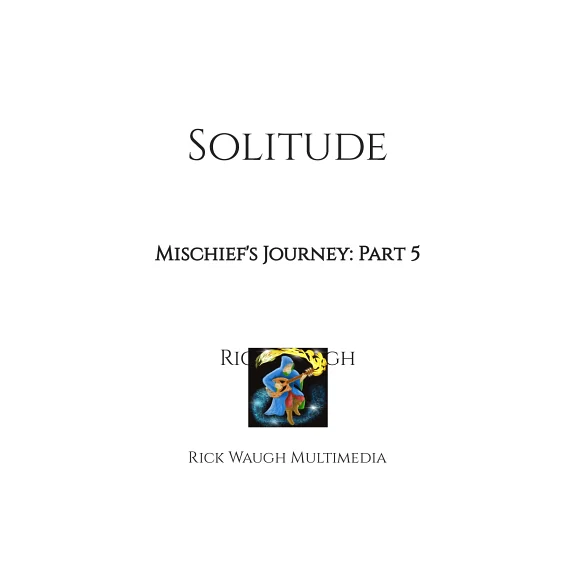
Rick Waugh's "Solitude" presents a compelling, albeit bleak, examination of an outcast Trickster. The premise, following Mischief after her utopian project crumbles and she's exiled by her own people, immediately establishes a tone of poignant disillusionment. Waugh effectively portrays the raw emotional fallout of betrayal, particularly in the early sections detailing the collapse of Merridale's fragile peace. However, the narrative's momentum occasionally falters as it leans heavily on the character's internal lamentations. A notable strength lies in the depiction of the stark contrast between Mischief's ideals and the rigid, fearful worldview represented by Constantine. The limitation, perhaps, is the dense focus on internal suffering, which at times overshadows the potential for more outward-facing narrative development. Despite this, the book offers a stark portrayal of idealism's cost.
Verdict: A somber but insightful character study on the price of radical empathy.
Read more ↓
📝 Description
71
Rick Waugh's 2025 novel "Solitude" begins after a Trickster figure's utopian project collapses.
In Rick Waugh's "Solitude," published January 25, 2025, the Trickster named Mischief faces exile after her dream of a human and monster sanctuary is shattered. This idealized community, built on respect and creativity, stood against the rigid order represented by Constantine. The narrative opens with this conflict, detailing how the human settlement of Merridale and its monstrous neighbors fell into discord, destroying Mischief's haven. The book examines the events that led to Mischief's ostracism, where her ambition to foster coexistence became her downfall due to established prejudices and power struggles.
Mischief's forced retreat into solitude becomes a period of introspection. Cast out and alone, she must confront the collapse of her vision and the consequences of her idealism. The story explores the fallout of the battles, the displacement of communities, and the splintering of unity. "Solitude" questions what it means to be an outcast, forcing its protagonist to grapple with loss and the remnants of her shattered dream.
This novel touches on trickster archetypes found in various mythologies, figures often embodying chaos, transformation, and the subversion of order. Mischief's role as a creator and her subsequent downfall suggest a narrative exploring the challenges of enacting radical change against entrenched systems, a theme resonant in esoteric thought where personal enlightenment often requires confronting societal or internal rigidities. The conflict between Merridale and the creatures from "the old" territories can be read as a metaphor for the clash between established societal norms and primal, untamed forces.
💡 Why Read This Book?
• Gain insight into the archetype of the Trickster when their world collapses, particularly focusing on Mischief's unique brand of idealism that clashed with Constantine's rigidity. • Understand the societal pressures that can lead to the ostracization of those who promote radical inclusivity, as seen in the conflict between Merridale and its monstrous inhabitants. • Explore the psychological impact of betrayal and exile through the lens of a once-powerful being reduced to solitude, examining the ruins of her 2025 project.
⭐ Reader Reviews
Honest opinions from readers who have explored this book.
❓ Frequently Asked Questions
What is the central conflict in Rick Waugh's Solitude?
The central conflict revolves around Mischief, a Trickster figure, who is exiled by her own people after her utopian project for humans and monsters collapses due to societal conflict, particularly involving Merridale.
Who is Constantine in the context of Solitude?
Constantine represents a rigid, authoritarian worldview that stands in direct opposition to Mischief's ideals of respect, creativity, and interspecies harmony within her envisioned sanctuary.
When was Solitude first published?
Solitude was first published on January 25, 2025.
What kind of world did Mischief try to build?
Mischief attempted to build a haven where humans and monsters could coexist peacefully, founded on principles of respect, creativity, and a rejection of rigid societal structures.
What event led to Mischief's exile?
Mischief's exile occurred following battles between the human town of Merridale and creatures from older territories, which led to the downfall of her idealistic project and the rejection by her own people.
What is the main theme explored in Solitude?
The book primarily explores themes of betrayal, exile, the collapse of idealism, and the psychological toll of solitude on a being accustomed to fostering community.
🔮 Key Themes & Symbolism
The Fall of Idealism
The narrative centers on the collapse of Mischief's grand vision for a peaceful coexistence between humans and monsters. Her sanctuary, intended to embody respect and creativity, succumbs to the inherent conflicts arising from rigid societal views, personified by Constantine. This theme interrogates the vulnerability of utopian ideals when confronted by entrenched prejudices and power struggles, especially after the battles around Merridale.
Betrayal and Exile
Mischief's primary predicament is her ostracism by her own people, a profound betrayal that fuels her subsequent solitude. The book studies the emotional and psychological ramifications of being cast out from one's community and the shattering of one's life's work. This exploration examines the deep wound of rejection and the challenge of finding purpose when stripped of one's social standing and foundational beliefs.
The Trickster Archetype in Isolation
Waugh re-examines the Trickster archetype not as a purveyor of chaos, but as a broken idealist forced into introspection. Mischief's forced solitude becomes a crucible, testing her identity and resilience. The narrative explores how a figure typically associated with disruption and cleverness navigates profound personal loss and the quietude of isolation, questioning the nature of her power and purpose when removed from her usual context.
Interspecies Conflict
The external pressures leading to Mischief's downfall are rooted in the conflict between the human town of Merridale and the creatures from the 'old' territories. This theme highlights the inherent difficulties in bridging divides between different groups, particularly when fear and established hierarchies (contrasting with Constantine's views) dominate interactions. The book uses this conflict to illustrate the fragility of peace and the deep-seated nature of prejudice.
💬 Memorable Quotes
Direct passages from the work, attributed to the author.
“Mischief thought she was building the perfect haven, a place where everyone, both humans and monsters, could live peacefully.”
— This foundational statement expresses Mischief's core motivation and the ambitious scope of her project. It highlights her belief in radical inclusivity and a world order based on mutual respect, setting the stage for the inevitable conflict with more rigid societal structures.
“A world based on respect, creativity, and a dislike of anything to do with Constantine and his rigid views on how society should work.”
— This phrase clearly defines the ideological battleground. It contrasts Mischief's progressive, open-minded vision with the authoritarian, restrictive philosophy embodied by Constantine, establishing the primary antagonistic force against her utopian experiment.
“But the purity of that concept came tumbling down in the battles between the human town of Merridale and the creatures from the old territories.”
— This highlights the catastrophic failure of Mischief's dream. It points to a specific point of failure, the violent clashes between human and non-human inhabitants, suggesting that the idealistic concept was unable to withstand the brutal realities of intergroup conflict.
“Where does a broken-hearted Trickster go when her own people have kicked her to the midden pile?”
— This rhetorical question immediately establishes the protagonist's plight and the central theme of isolation and betrayal. It underscores the depth of her despair and the severity of her social and emotional downfall.
“Poor Mischief.”
— This brief, empathetic statement frames the reader's initial perception of the protagonist. It signals a narrative focused on her suffering and the tragic circumstances of her exile, inviting compassion for her predicament.
🌙 Esoteric Significance
Tradition
While not explicitly tied to a singular esoteric lineage, "Solitude" speaks to Gnostic themes of a flawed demiurge (represented by the societal structures Mischief opposes) and the subsequent alienation of the divine spark (Mischief's idealism) within a corrupted world. The Trickster figure itself, a common motif across shamanic and Hermetic traditions, is here recontextualized as a fallen idealist, exploring the 'shadow' aspect of creation when its purity is compromised by conflict.
Symbolism
The 'midden pile' serves as a potent symbol of utter rejection and worthlessness, the lowest point of social and spiritual degradation. Merridale represents the mundane, human world, often resistant to the 'other.' Constantine embodies rigid, patriarchal, or dogmatic authority, a common antagonist in many esoteric narratives that challenge oppressive systems. Mischief's failed haven symbolizes the fragility of pure intention in a world rife with conflict.
Modern Relevance
Contemporary thinkers exploring themes of social justice, interspecies communication, and the psychological impacts of systemic failure find resonance in Waugh's work. "Solitude" speaks to modern anxieties about societal division and the personal cost of advocating for radical change. Its examination of betrayal and resilience offers a framework for understanding contemporary experiences of disillusionment within activist and community-building efforts.
👥 Who Should Read This Book
• Students of mythology and archetypes: Those interested in how classic figures like the Trickster are reinterpreted in contemporary narratives, particularly when facing profound personal crisis. • Readers exploring themes of societal collapse: Individuals drawn to speculative fiction that examines the fallout of failed utopian projects and the human (or non-human) cost of conflict. • Philosophically inclined readers: Those who appreciate narratives that question rigid social structures, explore the nature of idealism, and ponder the consequences of radical empathy in a conflicted world.
📜 Historical Context
Rick Waugh's "Solitude," published in 2025, emerges in an era grappling with increased social fragmentation and renewed debates surrounding utopian ideals versus pragmatic governance. The work implicitly engages with the philosophical currents of post-millennial speculative fiction, which often explores societal collapse and the individual's response to overwhelming systemic failure. While Waugh's specific influences remain underexplored, the narrative's critique of rigid social structures echoes sentiments found in early 21st-century critiques of authoritarianism and conformity. The figure of 'Constantine' serves as a symbolic counterpoint to more fluid, anarchist, or Gnostic-inspired philosophies that question established power. Reception of such works in this period often divides between those championing radical empathy and those advocating for stricter social order, a tension "Solitude" vividly portrays through its central conflict.
📔 Journal Prompts
Mischief's exile from her own people: Reflect on the concept of 'midden pile' as a metaphor for societal rejection.
The contrast between Mischief's vision and Constantine's rigidity: Analyze the core tenets of each worldview presented.
The battles between Merridale and the old territories: Consider the underlying causes of intergroup conflict depicted.
The broken heart of the Trickster: Explore the emotional range of betrayal and isolation.
The concept of a 'perfect haven': Evaluate the feasibility and inherent vulnerabilities of such an ideal.
🗂️ Glossary
Trickster
An archetypal figure found in folklore, mythology, and religion, often characterized by cunning, deception, and a disregard for conventional rules. In "Solitude," Mischief embodies this archetype but is depicted in a state of profound vulnerability.
Haven
A place of safety or refuge. Mischief's failed project aimed to create an interspecies haven, a sanctuary built on principles of peace and mutual respect, contrasting with the prevailing societal order.
Midden pile
A refuse heap or dump. Used metaphorically in the book to describe the state of utter rejection and discardment experienced by Mischief after her downfall.
Merridale
The human town mentioned as a site of conflict in the narrative. It represents the established human community whose interactions with supernatural beings led to the collapse of Mischief's project.
Constantine
A character or symbolic figure representing rigid, authoritarian views on societal organization, serving as an ideological antagonist to Mischief's more fluid and inclusive vision.
Solitude
The state of being alone. In the context of the book, it refers to Mischief's forced isolation following her exile and the breakdown of her community project.
The old territories
Refers to the regions inhabited by creatures or beings separate from the human town of Merridale, implying a long-standing separation and potential conflict between these groups.
This book appears in 1 collection
🔮 Readers Also Liked
Browse all →








From the “Chaos Magic” Collection
View all →







More Free Magic & Ritual Books
View all →