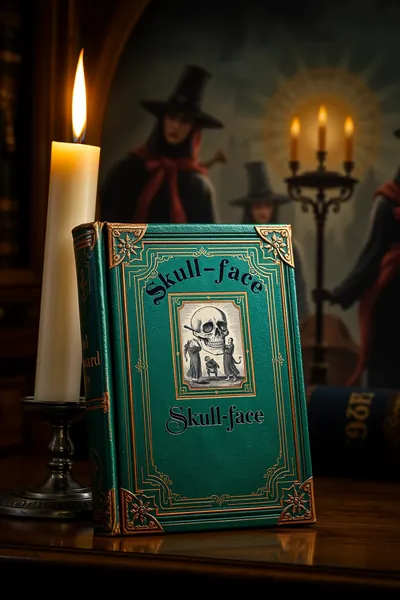
Broken

 71
71

Broken
Marianne Curley's "Broken" attempts a delicate balancing act, portraying the internal schisms of its characters with a certain earnestness. The narrative's strength lies in its consistent focus on the psychological fallout of significant life events, particularly evident in passages describing how memory fragments can distort immediate perception. However, the work sometimes struggles under the weight of its own thematic ambition, with certain plot developments feeling more convenient than earned. The exploration of Anya's fractured sense of self, for instance, is compelling, but the resolution feels somewhat abrupt. Ultimately, "Broken" offers a sincere, if uneven, exploration of internal damage and the difficult path toward repair.
📝 Description
71
Marianne Curley's 2014 novel 'Broken' examines how trauma fragments identity.
Published in 2014, Marianne Curley's 'Broken' centers on characters grappling with fractured identities and a search for wholeness. The narrative situates individuals in circumstances where their personal histories are unclear, and the past significantly affects the present. The book looks at the psychological effects on people who have experienced trauma or major upheaval, showing how these events shape their view of reality and their relationships.
This story will likely appeal to readers who prefer character-focused narratives with psychological depth. Those interested in how past events influence current situations, particularly themes of resilience and self-discovery, will find valuable content. It is suitable for readers who enjoy speculative fiction that reflects complex human emotions and the difficulties of overcoming adversity.
While not explicitly labeled esoteric, 'Broken' engages with themes of internal fragmentation and the arduous process of healing. This resonates with esoteric traditions that view the self as a complex, often fractured, entity requiring integration. The novel’s focus on confronting painful memories and hidden truths to achieve wholeness aligns with alchemical concepts of dissolution and reintegration, and psychological approaches to shadow work. It suggests that understanding and accepting past wounds is crucial for present well-being.
💡 Why Read This Book?
• Gain insight into the psychological impact of fragmented memory, as depicted through Anya's struggle to reconcile past trauma with her present reality, a narrative approach distinct from more linear explorations of grief. • Understand the symbolic representation of external environments mirroring internal states, as Curley uses settings to reflect characters' emotional turmoil, offering a specific literary technique not found in every coming-of-age story. • Experience a character-driven narrative focused on resilience, particularly how Anya's journey toward self-acceptance after significant upheaval provides a specific model for confronting personal "brokenness" that differs from narratives focused solely on external conflict.
⭐ Reader Reviews
Honest opinions from readers who have explored this book.
❓ Frequently Asked Questions
What is the primary focus of Marianne Curley's "Broken"?
The novel primarily focuses on the psychological fragmentation and internal struggles of its characters, particularly Anya, as they confront past traumas and work towards self-healing and reintegration.
When was "Broken" by Marianne Curley first published?
Marianne Curley's "Broken" was first published in 2014, placing it within the contemporary young adult literature landscape of that era.
Are there any specific symbolic elements in "Broken"?
Yes, the novel often uses external environments and fragmented settings as symbolic representations of the characters' internal psychological states, mirroring their inner turmoil and fragmentation.
What kind of reader would appreciate "Broken"?
Readers who enjoy character-driven stories with psychological depth, exploring themes of trauma, identity, and resilience, especially within speculative or contemporary settings, would likely appreciate this book.
Does "Broken" offer a hopeful message?
While it delves into difficult themes of damage and fragmentation, the narrative arc generally moves towards a process of healing and self-acceptance, suggesting a message of hope through confronting and integrating one's past.
How does "Broken" explore the concept of 'brokenness'?
The book explores 'brokenness' not just as external damage but as a profound internal fragmentation, often stemming from trauma or loss, affecting a character's sense of self and reality.
🔮 Key Themes & Symbolism
Internal Fragmentation
The core of "Broken" lies in its exploration of psychological fragmentation. Characters, particularly Anya, experience their sense of self as shattered, often due to past traumas or significant losses. This fragmentation isn't merely a metaphor; it manifests in their perception of reality, their relationships, and their ability to function. The narrative illustrates how these internal divisions can feel as tangible as physical wounds, impacting every aspect of their lives and driving the central conflict of the story.
Memory and Reality
Curley examines the intricate relationship between memory and present reality. In "Broken," memories are not always reliable or whole; they can be fractured, distorted, or even suppressed. This unreliability of memory directly influences a character's understanding of their present circumstances, often leading to confusion, distrust, and a struggle to discern truth from illusion. The novel suggests that confronting and integrating these fragmented memories is crucial for healing.
The Path to Wholeness
Beyond depicting the state of being "broken," the novel charts a course toward wholeness. This involves a challenging process of self-discovery, often requiring characters to face painful truths and confront the sources of their fragmentation. The journey is not linear; it involves setbacks and moments of doubt. However, the overarching theme is one of resilience and the possibility of piecing oneself back together, not necessarily to erase the past, but to integrate it into a more complete sense of self.
External Manifestation of Internal States
A significant aspect of "Broken" is how the external world often mirrors the characters' internal conditions. Settings can become desolate or chaotic, reflecting a character's psychological state. This literary device underscores the interconnectedness of the inner and outer lives, suggesting that our perception shapes our reality. The environments in the book are not just backdrops but active participants in the characters' emotional journeys, amplifying their sense of isolation or eventual healing.
💬 Memorable Quotes
Direct passages from the work, attributed to the author.
“Pieces of me were scattered, and I didn't know where to find them all.”
— This direct statement articulates the core theme of internal division. It highlights the feeling of being incomplete or lost, with essential parts of one's identity seemingly missing and inaccessible.
“Sometimes the past isn't behind you; it's just waiting to break through.”
— This highlights how unresolved trauma or difficult memories can remain potent forces, actively influencing the present rather than being safely relegated to history. It emphasizes the intrusive nature of such experiences.
“Rebuilding yourself is harder than any destruction.”
— This offers a perspective on the arduous nature of healing. It suggests that the process of recovery and self-reconstruction requires more effort and resilience than the event that caused the initial damage.
“The map of my mind had too many holes.”
— This metaphor illustrates the cognitive and emotional gaps caused by trauma or fragmented memory. It conveys a sense of disorientation and a fundamental lack of understanding about oneself.
💡 Key Ideas
Editorial paraphrase of the work's core concepts — not direct quotes.
The world felt like it was made of glass, and I was afraid to breathe too hard.
This line captures the pervasive sense of fragility and fear experienced by characters dealing with internal fragmentation. It suggests a state where any sudden movement or intense emotion could lead to a complete shattering.
🌙 Esoteric Significance
Tradition
While "Broken" is not explicitly tied to a specific historical esoteric tradition such as Hermeticism or Gnosticism, its thematic focus on fragmentation and reintegration of the self can be seen as echoing certain perennial philosophical concerns. The idea of the psyche being fractured and requiring a process of healing or re-collection is a motif found in various mystical and psychological traditions that explore the nature of consciousness and the path to spiritual wholeness. It touches upon the modern psychological interpretation of soul-loss or spiritual alienation.
Symbolism
The primary symbolism in "Broken" revolves around the concept of fractured objects or landscapes mirroring the characters' internal states. A recurring motif might be shattered glass, broken mirrors, or disjointed environments, visually representing psychological disintegration. These symbols serve as constant reminders of the characters' brokenness, but also hold the potential for transformation, as piecing them back together can signify the arduous process of healing and self-reintegration.
Modern Relevance
The themes of psychological fragmentation and the struggle for self-acceptance in "Broken" remain highly relevant today. In an era marked by increasing awareness of mental health challenges and the impact of trauma, the novel's exploration of internal "brokenness" speaks to contemporary experiences. Modern thinkers and practitioners in fields like trauma-informed care and certain branches of depth psychology often address similar concepts of psychic fragmentation and the necessity of integration for well-being.
👥 Who Should Read This Book
• Readers interested in psychological fiction that explores trauma and healing, particularly young adults grappling with themes of identity and self-discovery. • Students of narrative structure who wish to analyze how external settings can symbolically represent internal character states. • Individuals seeking stories that focus on resilience and the arduous, non-linear process of overcoming significant personal challenges and achieving self-integration.
📜 Historical Context
Published in 2014, Marianne Curley's "Broken" arrived during a period of significant evolution in young adult literature. The early 2010s saw a surge in novels tackling complex emotional and psychological themes, often through speculative or dystopian lenses. Authors like John Green, with "The Fault in Our Stars" (2012), were pushing boundaries in portraying serious illness and emotional depth for a younger audience. "Broken" fits within this trend, exploring themes of trauma, identity fragmentation, and resilience, which resonated with a readership increasingly open to nuanced character studies. While not directly engaging with philosophical movements like existentialism in an overt way, the novel reflects a cultural moment where internal psychological landscapes became central to narrative exploration, mirroring a broader societal interest in mental health awareness that began gaining momentum.
📔 Journal Prompts
Anya's fragmented memories and their impact on her present reality.
The symbolic weight of broken objects or environments within the narrative.
The process of piecing oneself back together after experiencing profound disruption.
The contrast between external perceptions and internal psychological states.
Moments where the narrative explicitly depicts a character confronting their own fragmentation.
🗂️ Glossary
Fragmentation
In the context of "Broken," fragmentation refers to the psychological state of being broken into pieces, often as a result of trauma, loss, or intense emotional distress, affecting a person's sense of self and coherence.
Self-Reintegration
The process of overcoming internal fragmentation and piecing together disparate aspects of one's personality, identity, and memories to achieve a more cohesive and whole sense of self.
Psychological Landscape
The internal mental and emotional world of a character, often depicted metaphorically or through their reactions to external events, reflecting their thoughts, feelings, and psychological state.
Trauma Echo
The lingering psychological and emotional effects of a traumatic event that continue to manifest in a person's present life, influencing their behavior, perceptions, and relationships.
Perceptual Distortion
A phenomenon where a character's perception of reality is altered or skewed, often due to internal psychological states like fear, trauma, or fragmentation, making it difficult to discern objective truth.
Resilience Arc
The narrative progression of a character demonstrating the capacity to recover and adapt from significant adversity, moving through challenges towards a state of greater strength or acceptance.
Integration
The psychological process of bringing together different aspects of the self—thoughts, feelings, memories, and experiences—into a unified whole, particularly after periods of significant fragmentation or dissociation.
🔮 Readers Also Liked
Browse all →








More by Marianne Curley
All books →

More Free Magic & Ritual Books
View all →