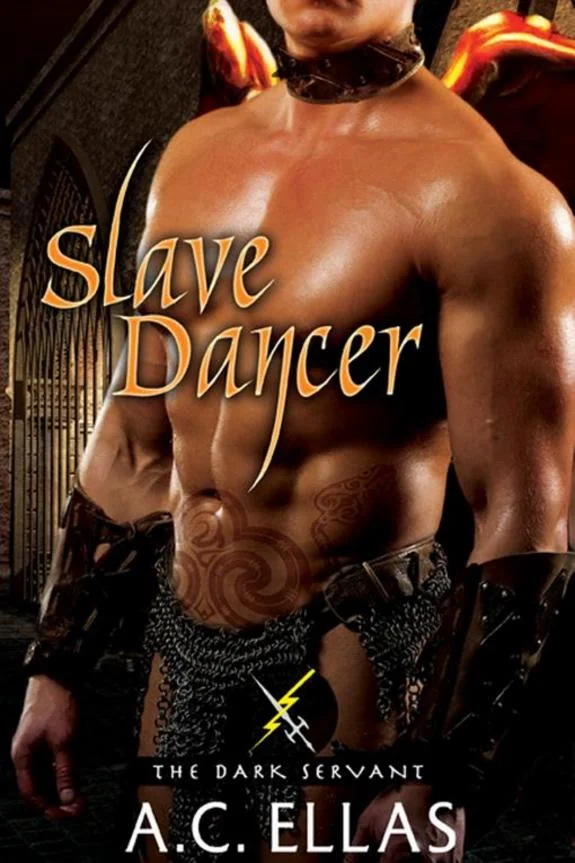
Slave Dancer
 82
82

Slave Dancer
A.C. Ellas's Slave Dancer opens not with a bang, but with the chilling quiet of entrapment. The initial premise of High Priest S'Rak and Captain Jisten held captive by Chancellor Virien is starkly drawn, immediately establishing a tone of grim determination. The strength of the novel lies in its unflinching portrayal of psychological endurance; the exploration of S'Rak and Jisten's shared ordeal, where their very survival hinges on their mutual support, is compelling. The depiction of the Lythadi invaders and their methods, particularly the 'soul-binding' technique, offers a unique, if horrifying, manifestation of subjugation. However, the narrative occasionally falters in pacing, with certain political machinations of King and Council feeling somewhat less immediate than the visceral plight of the captives. The resolution of their immediate imprisonment, while earned, leaves the broader conflict of Koilatha's defense feeling somewhat secondary. Slave Dancer succeeds as a study in resilience but leaves the grander war narrative somewhat underdeveloped.
📝 Description
82
A.C. Ellas published Slave Dancer in 2015, depicting a conflict between the Koilatha and the Lythadi.
Slave Dancer follows High Priest S'Rak and Captain Jisten, who are captured by Chancellor Virien. Their imprisonment becomes the focal point of a fight for survival against political turmoil and invasion. The narrative details their desperate struggle to escape Virien's control and the wider conflict engulfing their world.
The book examines how power structures function within a rigid society, focusing on the interplay between religious and military leaders when facing an authoritarian threat. It also explores the psychological effects of prolonged captivity and the use of "soul-binding" as a method of subjugation. The concept of "shared consciousness" is presented as both a source of strength and a potential weakness for those under duress.
This dark fantasy work will resonate with readers drawn to complex political schemes and high stakes. It offers character focused narratives that highlight resilience, the consequences of betrayal, and the tenacity of relationships tested by extreme pressure. The setting is mature, unafraid to confront difficult emotional and psychological circumstances.
Published in 2015, Slave Dancer draws from a tradition of speculative fiction that questions established power and explores the darker aspects of control. The novel's focus on "soul-binding" and "shared consciousness" touches on themes common in esoteric thought concerning the manipulation of will and the interconnectedness of minds. Its depiction of subjugation and resistance within a hierarchical society, particularly involving religious and military figures, echoes allegorical narratives found in various spiritual and philosophical traditions that analyze the dynamics of spiritual or psychological enslavement and liberation.
💡 Why Read This Book?
• Gain an understanding of "soul-binding" as a narrative device for exploring extreme psychological control, as depicted in the conflict between Koilatha and the Lythadi. • Experience the narrative tension derived from the specific imprisonment of High Priest S'Rak and Captain Jisten by Chancellor Virien, highlighting themes of shared suffering and co-dependence. • Explore the political landscape of Koilatha and the nature of its defense against the Lythadi invaders, as presented in the novel's 2015 publication context.
⭐ Reader Reviews
Honest opinions from readers who have explored this book.
❓ Frequently Asked Questions
What is the primary conflict in Slave Dancer?
The primary conflict involves the defense of Koilatha from the Lythadi invaders, while simultaneously focusing on the captivity of High Priest S'Rak and Captain Jisten by Chancellor Virien.
Who are the main antagonists in the story?
The main antagonists include the Lythadi invaders and Chancellor Virien, who holds S'Rak and Jisten captive.
What esoteric concepts are explored in Slave Dancer?
The novel explores concepts such as 'soul-binding' as a method of control and the psychological effects of prolonged captivity and shared trauma.
When was Slave Dancer first published?
Slave Dancer was first published on February 17, 2015.
What is the relationship between S'Rak and Jisten?
S'Rak, a High Priest, and Jisten, a Captain, are depicted as individuals who must rely on each other for survival while imprisoned by Chancellor Virien.
What is the significance of Chancellor Virien's actions?
Chancellor Virien's actions are significant as they directly imperil High Priest S'Rak and Captain Jisten, driving a central plotline of political intrigue and personal torment.
🔮 Key Themes & Symbolism
The Nature of Captivity
Slave Dancer examines captivity not merely as physical confinement but as a profound psychological and spiritual ordeal. The imprisonment of High Priest S'Rak and Captain Jisten by Chancellor Virien becomes a crucible, testing their resolve and forcing an examination of their inner strength. The narrative suggests that true freedom lies not just in escaping physical bonds but in retaining one's inner integrity against overwhelming pressure and potential dehumanization.
Power and Subjugation
The novel critically engages with the mechanisms of power, particularly through the Lythadi invaders and Chancellor Virien. The concept of 'soul-binding' serves as a potent symbol of absolute control, where an individual's will and essence can be compromised or erased. This exploration looks at the ethics of dominance and the devastating impact of systemic oppression on both the individual and collective spirit.
Interdependence and Resilience
A central tenet of Slave Dancer is the idea that survival against extreme adversity often depends on mutual reliance. The forced partnership between S'Rak and Jisten, two figures from different stations within Koilatha, highlights how shared struggle can forge unexpected bonds. Their ability to overcome the horrors of their imprisonment is intrinsically linked to their capacity to support and understand one another.
The Price of Defense
The ongoing conflict between Koilatha and the Lythadi underscores the immense sacrifices demanded in times of war. The narrative implicitly questions the cost of sovereignty and the moral compromises that may arise when defending a realm. The plight of the captives serves as a microcosm of the larger suffering inflicted upon the kingdom by external aggression and internal betrayal.
💬 Memorable Quotes
Direct passages from the work, attributed to the author.
“Neither will leave without the other, trapping both in an abyss deeper and crueler than anything they've withstood before.”
— This highlights the inescapable predicament of S'Rak and Jisten, emphasizing their shared fate and the extreme difficulty of their situation under Chancellor Virien's control.
“Will they be able to overcome the horror and pain of the present to look to the future?”
— This rhetorical question frames the core psychological challenge faced by the characters: the struggle to maintain hope and agency amidst profound suffering and trauma.
“Prince Jethain defends Koilatha from the Lythadi invaders.”
— This establishes the overarching geopolitical conflict and introduces Prince Jethain as a key figure in the kingdom's defense against an external threat.
“The delegation of dark servants make their position very clear to King and Council.”
— This indicates a diplomatic or political confrontation with a potentially sinister faction, highlighting the precarious state of Koilatha's leadership and its vulnerability.
💡 Key Ideas
Editorial paraphrase of the work's core concepts — not direct quotes.
Only together can they hope to break free of their prisons.
This passage underscores the theme of interdependence, suggesting that their combined strength, knowledge, or perhaps even shared psychic energy is the only path to liberation.
🌙 Esoteric Significance
Tradition
Slave Dancer does not align strictly with a single established esoteric tradition like Hermeticism or Kabbalah. Instead, it draws upon archetypal themes common in Gnostic thought, particularly regarding subjugation, hidden knowledge, and the struggle against oppressive forces that seek to control the spirit. The narrative's exploration of 'soul-binding' can be interpreted through a lens of spiritual enslavement, where an external power attempts to dominate the divine spark within individuals.
Symbolism
The primary symbol is 'soul-binding,' representing the ultimate act of spiritual and psychological enslavement, where an individual's essence is forcibly controlled or extinguished. The 'abyss' into which S'Rak and Jisten are plunged symbolizes a state of profound despair and spiritual desolation, a place where the ego dissolves under extreme duress. The concept of 'shared consciousness' or mutual reliance between the captives acts as a counter-symbol, representing the potential for spiritual solidarity and resistance.
Modern Relevance
Contemporary thinkers exploring the ethics of power, psychological manipulation, and the resilience of the human spirit in oppressive systems may find resonance in Slave Dancer. Its depiction of 'soul-binding' offers a speculative model for understanding modern forms of control, whether through information warfare, social conditioning, or other pervasive societal influences. The novel's focus on internal fortitude echoes current discussions in trauma-informed care and philosophies of personal agency.
👥 Who Should Read This Book
• Readers interested in dark fantasy exploring the psychological toll of war and captivity, particularly those who appreciate narratives focused on character endurance under duress. • Students of speculative fiction examining themes of power dynamics, subjugation, and spiritual resistance, who can analyze the concept of 'soul-binding' in a fictional context. • Fans of intricate world-building who enjoy complex political landscapes and the interplay between military conflict and personal relationships, as seen in the world of Koilatha.
📜 Historical Context
Published in 2015, A.C. Ellas's Slave Dancer emerged within a contemporary fantasy genre that had largely moved past simplistic good-versus-evil narratives, influenced heavily by authors like George R.R. Martin who popularized morally ambiguous characters and grim settings. While Slave Dancer does not engage directly with a specific historical movement, its themes of subjugation and psychological warfare can be seen as reflecting anxieties present in the early 21st century. The work exists in a landscape where speculative fiction frequently grapples with power structures and the consequences of conflict. Unlike earlier fantasy that might focus on clear heroism, this 2015 publication situates itself within a tradition that prioritizes the complex, often brutal, realities faced by individuals caught in larger political and military struggles. There is no widely documented reception event or censorship specific to this work, positioning it as a contemporary contribution rather than a text with a significant historical footprint or controversy.
📔 Journal Prompts
The abyss faced by S'Rak and Jisten: how does its description reflect internal states?
Chancellor Virien's methods of control: what are the ethical implications of 'soul-binding'?
Prince Jethain's defense: what sacrifices are justifiable in protecting Koilatha?
The bond between S'Rak and Jisten: how does interdependence function as a form of resistance?
The Lythadi invaders: what does their presence signify thematically?
🗂️ Glossary
Koilatha
The kingdom or realm that Prince Jethain and his allies are defending against external invasion.
Lythadi
The invading force or faction posing a military threat to Koilatha.
High Priest S'Rak
A significant religious figure within Koilatha, held captive by Chancellor Virien.
Captain Jisten
A military officer from Koilatha, imprisoned alongside High Priest S'Rak.
Chancellor Virien
The antagonist responsible for the imprisonment of S'Rak and Jisten, operating within or against the established power structure.
Soul-binding
A concept explored in the novel, representing a form of extreme control or subjugation that impacts an individual's essence or spirit.
Dark servants
A delegation or faction whose presence and position are made clear to King and Council, suggesting a sinister influence or alliance.
This book appears in 1 collection
🔮 Readers Also Liked
Browse all →







From the “Chaos Magic” Collection
View all →






More Free Magic & Ritual Books
View all →