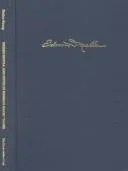
The Cabala Or the Secret Mysteries of Ceremonial Magic Illustrated

 81
81

The Cabala Or the Secret Mysteries of Ceremonial Magic Illustrated
Francis Barrett’s ‘The Cabala’ presents a dense, often unvarnished, look at ceremonial magic as understood in its time. The strength lies in its comprehensive cataloging of elements crucial to ritual practice – from the consecration of tools to the understanding of angelic hierarchies. Barrett’s detailed descriptions, particularly concerning the construction and purpose of magical implements, offer a tangible anchor for students seeking to grasp the mechanics of older magical systems. However, the work's antiquity is also its primary limitation; the language can be archaic, and the integration of concepts, while thorough for its era, may appear disjointed to a modern reader accustomed to more streamlined presentations of Kabbalistic theory. A particular passage detailing the correspondences for creating a protective amulet demonstrates Barrett’s meticulous approach, though it demands significant prior knowledge to fully unpack. Ultimately, Barrett provides an essential, if challenging, resource for historical magical study.
📝 Description
81
Francis Barrett's The Cabala, first published in 1911, details ceremonial magic and Kabbalistic principles.
This is a facsimile reprint of Francis Barrett's work on ceremonial magic and Kabbalistic principles. Originally published in a limited run, it makes available Barrett's examination of occult arts, hermetic philosophy, and the practical use of esoteric knowledge. The book serves as a look into the methods and beliefs common during the early 20th century's occult revival, giving students direct access to the original material.
The work is for serious students of Western esotericism. It is especially relevant for those interested in ceremonial magic, Kabbalah, and the history of occultism. Practitioners looking to understand the historical basis of their craft, researchers studying the development of magical theory, and collectors of rare occult literature will find it useful. A background in Jewish mysticism and Western magical traditions is helpful.
Barrett's writing appeared during a time of renewed interest in occultism. His texts, while drawing on earlier sources, compiled complex magical systems for a growing audience. This book reflects the intellectual atmosphere where occult philosophy was being systematically studied and recorded.
Francis Barrett's work emerged during a period of renewed interest in occultism and esoteric studies in the late 19th and early 20th centuries. This era saw figures like Eliphas Lévi and organizations such as the Hermetic Order of the Golden Dawn gain prominence. Barrett's writings, while referencing older sources like Agrippa, served to compile and present complex magical systems in a more accessible manner for a developing readership. The book captures the intellectual climate of the time, when occult philosophy was being systematically studied and codified within Western esoteric traditions.
💡 Why Read This Book?
• You will learn about the practical construction and consecration of magical tools, as detailed in Barrett's specific instructions for items like the wand and the pentacle, offering a tangible understanding of ritual apparatus. • You can gain insight into early 20th-century interpretations of Kabbalistic correspondences, as presented in chapters discussing the Hebrew alphabet and its associated angelic rulers, providing a historical perspective on mystical systems. • You will explore the historical context of ceremonial magic's revival, understanding Barrett's role in compiling and disseminating knowledge that influenced later occult organizations like the Hermetic Order of the Golden Dawn.
⭐ Reader Reviews
Honest opinions from readers who have explored this book.
❓ Frequently Asked Questions
What is the historical significance of Francis Barrett's The Cabala?
Francis Barrett's 'The Cabala' is significant for its role in the late 19th and early 20th-century revival of occultism. It compiled and presented complex Kabbalistic and ceremonial magic concepts, making them more accessible to a wider audience interested in esoteric studies.
What specific topics are covered in The Cabala Or the Secret Mysteries of Ceremonial Magic Illustrated?
The book covers ceremonial magic, Kabbalistic principles, the construction and consecration of magical instruments, angelic invocations, talismans, sigils, and the philosophical underpinnings of occult practices prevalent in Barrett's time.
Is this book a primary source for Kabbalistic study?
While it discusses Kabbalistic principles, Barrett's work is more accurately described as a commentary and practical guide to ceremonial magic influenced by Kabbalah, rather than a direct primary source of Jewish mysticism itself. It offers a Western esoteric interpretation.
What kind of imperfections might be present in this facsimile reprint?
As a facsimile of an older work, this edition may contain imperfections inherent to the original, such as marks, marginalia, notations, and minor flaws on pages, reflecting its age and historical nature.
Who was Francis Barrett and when did he write?
Francis Barrett was an English occultist whose major work, 'The Magus', was published in 1801. 'The Cabala' builds upon and elaborates themes found in 'The Magus', contributing to the broader occult revival that gained momentum in the 19th century.
What is the relationship between The Cabala and ceremonial magic?
The book illustrates how Kabbalistic concepts, particularly concerning divine names and angelic hierarchies, can be applied within the framework of ceremonial magic for ritualistic purposes, outlining practical procedures and symbolic meanings.
🔮 Key Themes & Symbolism
Ceremonial Magic Instruments
Barrett meticulously details the creation and consecration of essential tools for ceremonial magic. This includes the sword, wand, chalice, and pentacle, explaining their symbolic significance and the proper rituals for preparing them. He emphasizes that these instruments are not mere props but conduits for magical energy, requiring specific materials and blessings to function effectively in ritual work. The detailed illustrations accompanying these descriptions are crucial for understanding their construction and intended use in practice.
Kabbalistic Correspondences
The work looks at the intricate system of Kabbalistic correspondences, particularly focusing on the Hebrew alphabet, divine names, and angelic hierarchies. Barrett explains how these elements map onto various aspects of the cosmos, human experience, and magical operations. Understanding these correspondences is presented as fundamental for invoking intelligences, constructing talismans, and interpreting the symbolic language of the universe, forming a core component of the magical practice he outlines.
Invocation and Talismanic Magic
Central to Barrett's exposition is the practice of invoking spiritual intelligences and the creation of talismans for specific purposes. He provides instructions on how to perform these invocations, stressing the importance of purity, intention, and the correct use of divine names and sigils. The creation of talismans, often linked to astrological timings and planetary intelligences, is presented as a method for drawing down specific influences or protections, a key application of esoteric knowledge.
The Nature of the Qabalah
Barrett offers his interpretation of the Qabalah, presenting it not just as a theological system but as a cosmological map and a practical key to understanding divine power and creation. He explores its structure, including the Sephiroth, and its role as a bridge between the material and spiritual realms. His aim is to demonstrate its utility within the Western esoteric tradition for spiritual advancement and the acquisition of occult knowledge.
💬 Memorable Quotes
Direct passages from the work, attributed to the author.
“The art of Cabala is the perfection of natural philosophy.”
— This statement highlights Barrett's view of Kabbalah as an ultimate science, surpassing mere empirical observation. It suggests that understanding the hidden principles of the universe, as revealed through Kabbalistic study, leads to a complete comprehension of natural laws and forces.
“For the performance of magical operations, the instruments must be consecrated.”
— This emphasizes the ritualistic necessity of preparing magical tools. Barrett implies that consecration imbues objects with spiritual power and symbolic meaning, making them effective conduits for the magician's will and the forces they seek to channel.
“Talismans are prepared images, to which by means of the divine names, an intelligence is joined.”
— This concisely explains Barrett's approach to talismanic magic. It involves creating a physical symbol imbued with spiritual essence, achieved through the power of divine names, to attract or embody specific influences or entities.
“The study of the Hebrew alphabet is fundamental to the Cabala.”
— This highlights the foundational role of the Hebrew language in Barrett's Kabbalistic system. He views its letters not just as linguistic symbols but as carriers of profound cosmic and spiritual meaning, integral to unlocking the secrets of creation.
💡 Key Ideas
Editorial paraphrase of the work's core concepts — not direct quotes.
The names of God and angels are keys to the invisible world.
This paraphrase points to the power Barrett attributes to divine and angelic nomenclature. He suggests that correctly understanding and pronouncing these names is essential for communicating with or commanding spiritual entities and accessing non-physical realities.
🌙 Esoteric Significance
Tradition
This work firmly sits within the Western Esoteric Tradition, specifically drawing heavily on Hermeticism and Kabbalah. It represents a continuation and popularization of the magical traditions synthesized by Renaissance figures like Agrippa, adapted for a late Victorian and Edwardian audience. Barrett's approach is less philosophical than some Hermetic texts and more overtly practical, focusing on ritualistic application derived from Kabbalistic principles, particularly its numerological and alphabetical aspects.
Symbolism
Key symbols include the Pentacle, representing the microcosm and the element of Earth, often used for protection and invocation; the Wand, symbolizing will, air, and command; and the various Divine Names and Sigils of angels. These elements are not merely decorative but are seen as potent carriers of divine energy, essential for establishing communication with spiritual hierarchies and directing magical forces in ceremonial rites.
Modern Relevance
Contemporary practitioners of Western ceremonial magic, particularly those within lineages influenced by the Golden Dawn or similar systems, continue to reference Barrett's work for its detailed instructions on ritual tools and foundational Kabbalistic applications. Modern occult scholars also study it as a significant artifact of the occult revival, illustrating the transmission and adaptation of older magical knowledge into a more accessible format.
👥 Who Should Read This Book
• Students of Western Esotericism seeking a practical introduction to ceremonial magic and its Kabbalistic underpinnings, offering historical context and specific ritualistic techniques. • Researchers of occult history interested in the literature that fueled the late 19th and early 20th-century occult revival, providing insight into the compilation and dissemination of magical knowledge. • Aspiring ceremonial magicians looking to understand the historical development of ritual practices, the importance of symbolic tools, and the theoretical basis for invoking spiritual intelligences.
📜 Historical Context
Francis Barrett's 'The Cabala' emerged from a vibrant late 19th and early 20th-century occult revival in Britain and Europe. This period saw a surge of interest in esoteric traditions, partly as a reaction against materialism and industrialization, and was significantly influenced by figures like Eliphas Lévi and the works of Heinrich Cornelius Agrippa. Societies like the Hermetic Order of the Golden Dawn, founded in 1888, were actively exploring and codifying Western magical practices, often drawing on Kabbalistic frameworks. Barrett's book contributed to this milieu by presenting a comprehensive, if somewhat eclectic, compilation of ceremonial magic techniques and Kabbalistic interpretations. While Lévi offered theoretical frameworks, Barrett focused on practical applications and the construction of magical paraphernalia. The reception of such works, while enthusiastic among occultists, often faced skepticism or outright condemnation from mainstream religious and scientific establishments, leading to limited print runs and a somewhat clandestine circulation.
📔 Journal Prompts
The consecration of the magical wand: what symbolic meaning does this ritual hold for your personal practice?
Barrett's interpretation of the Hebrew letter Aleph: how does its association with divine names inform your understanding of esoteric language?
The role of talismans in ceremonial magic: reflect on the concept of joining an intelligence to a prepared image.
The Qabalah as 'the perfection of natural philosophy': explore this claim in relation to your own worldview.
Consider the necessity of specific instruments like the Pentacle in ritual work as described by Barrett.
🗂️ Glossary
Cabala
A system of Jewish mysticism and esoteric interpretation of scripture, adopted and adapted by Western occultists. Barrett focuses on its application in magic, including the study of divine names and angelic hierarchies.
Ceremonial Magic
A structured form of magic involving elaborate rituals, specific timings, invocations, and the use of symbolic tools and vestments, often aimed at spiritual attainment or the manipulation of forces.
Consecration
The ritual act of dedicating an object, place, or person to a sacred purpose or to a specific spiritual influence. In magic, it imbues tools with power and symbolic meaning.
Sigil
A symbol or emblem, often derived from Kabbalistic principles or angelic names, used in magical rituals for invocation, protection, or to represent specific energies or intelligences.
Talisman
An object, typically inscribed or engraved, believed to possess magical properties, often created under specific astrological conditions and charged with spiritual or planetary influences.
Invocation
The act of calling upon a divine, angelic, or spiritual entity for assistance, guidance, or manifestation within a ritual context. It is a key component of ceremonial magic.
Sephiroth
The ten emanations or attributes of God in Kabbalistic cosmology, often depicted as a Tree of Life. Barrett utilizes this structure in understanding divine order and its magical applications.
This book appears in 1 collection
🔮 Readers Also Liked
Browse all →









From the “Ceremonial Magic” Collection
View all →




More Free Magic & Ritual Books
View all →