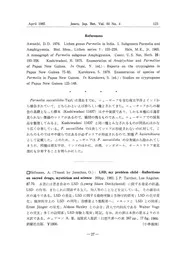
Beholders of divine secrets

 72
72

Beholders of divine secrets
Arbel’s investigation into the historical figures who claimed unique access to divine knowledge offers a refreshingly grounded perspective. She skillfully avoids the hagiography that often mars such studies, instead focusing on the intellectual frameworks and textual evidence supporting these claims. The section detailing the alchemical symbolism as a language of spiritual transformation, particularly its parallels with early Christian Gnostic ideas, is exceptionally well-argued. However, the dense prose, while precise, can at times become a barrier for readers less accustomed to academic discourse on esoteric philosophy. The book's strength lies in its analytical rigor, but its limitation is an occasional lack of accessibility for a broader audience. Ultimately, "Beholders of Divine Secrets" provides a valuable, albeit challenging, scholarly examination of the pursuit of hidden knowledge.
📝 Description
72
Vita Daphna Arbel's 2003 book examines individuals and movements claiming access to divine knowledge.
Published in 2003, Vita Daphna Arbel's "Beholders of Divine Secrets" is a scholarly examination of esoteric traditions. The book analyzes historical texts and philosophical ideas, focusing on those who believed they had attained hidden knowledge. Arbel structures her work to clarify complex concepts through close readings of primary sources. This approach provides an academic perspective on spiritual and philosophical pursuits of ultimate truth.
This work is for dedicated students of Western esotericism, comparative religion, and intellectual history. It is suited for readers who prefer rigorous academic study of spiritual phenomena over devotional or practical manuals. A background in philosophy and a willingness to engage with dense theoretical material are beneficial. Researchers and advanced practitioners will find it particularly useful for understanding the historical origins of mystical thought.
Arbel's book situates itself within the academic study of esoteric traditions, a field that saw renewed interest in the early 21st century. It follows scholars like Frances Yates and Antoine Faivre in examining historical mystical thought. The work engages with the scholarly discussion on the nature of mysticism and its connections to religious and philosophical structures, especially after the Enlightenment. It is part of a growing body of work that uses digitized texts and accessible manuscripts to perform detailed textual analysis of esoteric ideas.
💡 Why Read This Book?
• Gain a critical understanding of how historical figures defined and pursued 'divine secrets,' drawing on Arbel's analysis of Hermetic and Gnostic traditions. • Grasp the specific methodologies and intellectual frameworks used by esoteric seekers, moving beyond speculative notions to concrete historical practices detailed in the book. • Appreciate the nuanced scholarly debate surrounding mysticism and esoteric knowledge, as presented through Arbel's engagement with the academic discourse of the early 2000s.
⭐ Reader Reviews
Honest opinions from readers who have explored this book.
❓ Frequently Asked Questions
What is the primary focus of Vita Daphna Arbel's "Beholders of Divine Secrets"?
The book primarily focuses on historical individuals and movements that claimed access to divine or hidden knowledge, analyzing their philosophical underpinnings and textual expressions within Western esoteric traditions.
When was "Beholders of Divine Secrets" first published?
The work was first published in 2003, placing it within a period of significant academic resurgence in the study of esoteric traditions.
Which esoteric traditions are most prominently discussed in the book?
The book frequently engages with Hermeticism, Neoplatonism, and Gnosticism, examining how adherents of these traditions sought and articulated divine secrets.
Is "Beholders of Divine Secrets" a practical guide to esoteric practices?
No, it is an academic and scholarly examination of historical esoteric thought, not a practical manual for performing rituals or achieving mystical states.
What kind of reader would benefit most from this book?
Students of Western esotericism, comparative religion, intellectual history, and those interested in rigorous textual analysis of philosophical and spiritual traditions.
Does the book offer interpretations of specific symbols?
Yes, the work explores the interpretation of symbols within traditions like Hermeticism and Gnosticism as vehicles for conveying divine secrets.
🔮 Key Themes & Symbolism
The Seeker's Gaze
This theme revolves around the concept of the 'beholder' – the individual who actively seeks and claims to perceive hidden, divine truths. Arbel examines the historical and philosophical frameworks that enabled such perceptions, often rooted in traditions like Gnosticism or Hermeticism. It's not merely about receiving revelation, but about the active, often intellectual, pursuit and the subsequent articulation of that perceived secret knowledge, distinguishing the esoteric seeker from the conventional philosopher or theologian.
Symbolism as Revelation
The book examines how symbols function not just as representations but as direct conduits or expressions of divine secrets. Arbel analyzes how various traditions, particularly alchemy and Hermeticism, employed complex symbolic language to encode spiritual truths. These symbols were often seen as keys to unlocking cosmic mysteries, providing a means to communicate profound, ineffable knowledge that eluded ordinary language, thus forming a critical element of the 'secrets' themselves.
The Boundaries of Knowledge
Arbel investigates the historical demarcation between esoteric knowledge and mainstream philosophical or religious doctrines. The 'divine secrets' are often those truths deemed inaccessible through empirical observation or rational deduction alone. The work scrutinizes how these esoteric claims were positioned in relation to, or in opposition to, established intellectual currents, exploring the reception and sometimes suppression of such knowledge throughout history.
Textual Authority and Transmission
A significant aspect of the book concerns the role of texts in the preservation and transmission of divine secrets. Arbel explores how authors and traditions established authoritative texts, often attributed to ancient sages or divine sources, as vessels for their esoteric teachings. The careful study and interpretation of these foundational writings were themselves part of the process of becoming a 'beholder,' highlighting the interplay between textual scholarship and mystical insight.
💬 Memorable Quotes
Direct passages from the work, attributed to the author.
“The pursuit of divine secrets often involves a rigorous reinterpretation of existing philosophical and religious frameworks.”
— This highlights Arbel's argument that esoteric traditions rarely emerge in a vacuum. Instead, they frequently engage critically with, and draw upon, established systems, re-casting their core tenets through a lens of hidden knowledge.
“Symbols served as a specialized language, capable of conveying truths beyond the reach of common discourse.”
— This points to the functional role of symbolism in esoteric traditions, suggesting that complex imagery and allegories were essential tools for communicating profound spiritual or metaphysical concepts that standard language could not adequately express.
“Attaining the status of a 'beholder' necessitated not just inspiration, but a disciplined intellectual engagement with esoteric principles.”
— This emphasizes that access to hidden knowledge, according to the traditions discussed, was not solely a matter of passive reception or divine grace, but required active study, contemplation, and a structured approach to learning.
“The historical reception of esoteric claims often reveals a tension between intellectual curiosity and established dogma.”
— This suggests that throughout history, attempts to reveal or explore divine secrets have frequently met with resistance or skepticism from mainstream religious and philosophical authorities, creating a dynamic interplay.
“The very act of seeking divine secrets shapes the seeker's perception of reality.”
— This implies a transformative aspect to esoteric inquiry, where the process of searching for hidden knowledge fundamentally alters the individual's worldview and cognitive processes.
🌙 Esoteric Significance
Tradition
Arbel's work primarily engages with the Western Esoteric Tradition, with significant focus on Hermeticism, Neoplatonism, and Gnosticism. It positions the 'beholder' figure within these lineages, exploring how they understood divine revelation and the transmission of secret knowledge. The book contributes by offering a critical, academic lens on figures and texts often viewed through devotional or purely philosophical frameworks, highlighting the continuity and divergence within these esoteric streams.
Symbolism
Key symbols explored include the alchemical retort, often representing the vessel of transformation and the contained divine spark, and the Gnostic 'aeons,' understood as emanations of the divine that structure the cosmos and hold hidden truths. Arbel examines how these symbols function not merely as decorative elements but as integral components of the esoteric worldview, acting as conceptual maps for navigating spiritual realities and conveying ineffable knowledge.
Modern Relevance
Contemporary scholars of religion and philosophy continue to draw on Arbel's analytical methods for dissecting claims of esoteric knowledge. Thinkers exploring the history of consciousness, the philosophy of mysticism, and comparative religious studies find value in her rigorous textual analysis. The book informs modern discussions on the nature of knowledge itself, particularly concerning intuitive or revealed insights versus empirical or rational understanding, relevant to fields like transpersonal psychology and cognitive science of religion.
👥 Who Should Read This Book
• Academic researchers in comparative religion and intellectual history seeking rigorous analysis of esoteric claims. • Students of Western Esotericism interested in the historical figures and textual traditions that shaped concepts of hidden knowledge. • Philosophers and theologians examining the boundaries between mystical experience, revealed truth, and rational discourse.
📜 Historical Context
Published in 2003, Vita Daphna Arbel's "Beholders of Divine Secrets" entered a scholarly landscape increasingly receptive to the study of Western esotericism, a field significantly advanced by scholars like Antoine Faivre and Wouter Hanegraaff. The early 21st century provided unprecedented access to digitized manuscripts and comparative textual analysis, enabling works like Arbel's to scrutinize historical claims of divine knowledge with greater precision. This period saw a move beyond earlier esoteric interpretations, such as those found in the Romantic era's engagement with Hermeticism, towards more critical, interdisciplinary approaches. The book's focus on the intellectual and textual underpinnings of esoteric traditions positions it within a broader academic discourse that sought to understand mysticism not as mere subjective experience, but as a complex historical and philosophical phenomenon, often distinct from, yet interacting with, dominant religious and rationalist movements.
📔 Journal Prompts
The concept of 'divine secrets' as articulated by historical figures.
The role of specific symbols in conveying esoteric truths.
The intellectual frameworks employed by 'beholders' of hidden knowledge.
How historical reception shaped the discourse around esoteric claims.
The perceived distinction between esoteric and exoteric knowledge systems.
🗂️ Glossary
Hermeticism
A religious, philosophical, and esoteric tradition based on writings attributed to Hermes Trismegistus. It emphasizes the unity of all things and the potential for human spiritual ascent through gnosis (knowledge).
Gnosticism
A diverse set of religious ideas and systems, prominent in the 1st to 4th centuries CE, characterized by a belief in a divine spark within humans that must be liberated from the material world through esoteric knowledge (gnosis).
Neoplatonism
A philosophical system originating in the 3rd century CE with Plotinus, based on Plato's teachings but incorporating mystical and often dualistic elements, emphasizing emanation from a supreme, transcendent 'One'.
Esotericism
Teachings or practices that are understood by only a small number of people with special knowledge or training, often contrasted with exoteric (publicly accessible) doctrines.
Gnosis
A Greek term meaning 'knowledge,' specifically referring to spiritual or mystical knowledge, often understood as a liberating insight into the divine nature and the path to salvation.
Alchemical Symbolism
The complex system of allegorical images, metaphors, and processes used in alchemy, often representing spiritual transformation and the pursuit of perfection alongside material transmutation.
Divine Secrets
In the context of the book, this refers to hidden truths, cosmic principles, or ultimate realities perceived to be revealed by a divine source, accessible only to select individuals or through specific esoteric paths.
🔮 Readers Also Liked
Browse all →







More by Vita Daphna Arbel
All books →

More Free Mysticism & Contemplation Books
View all →