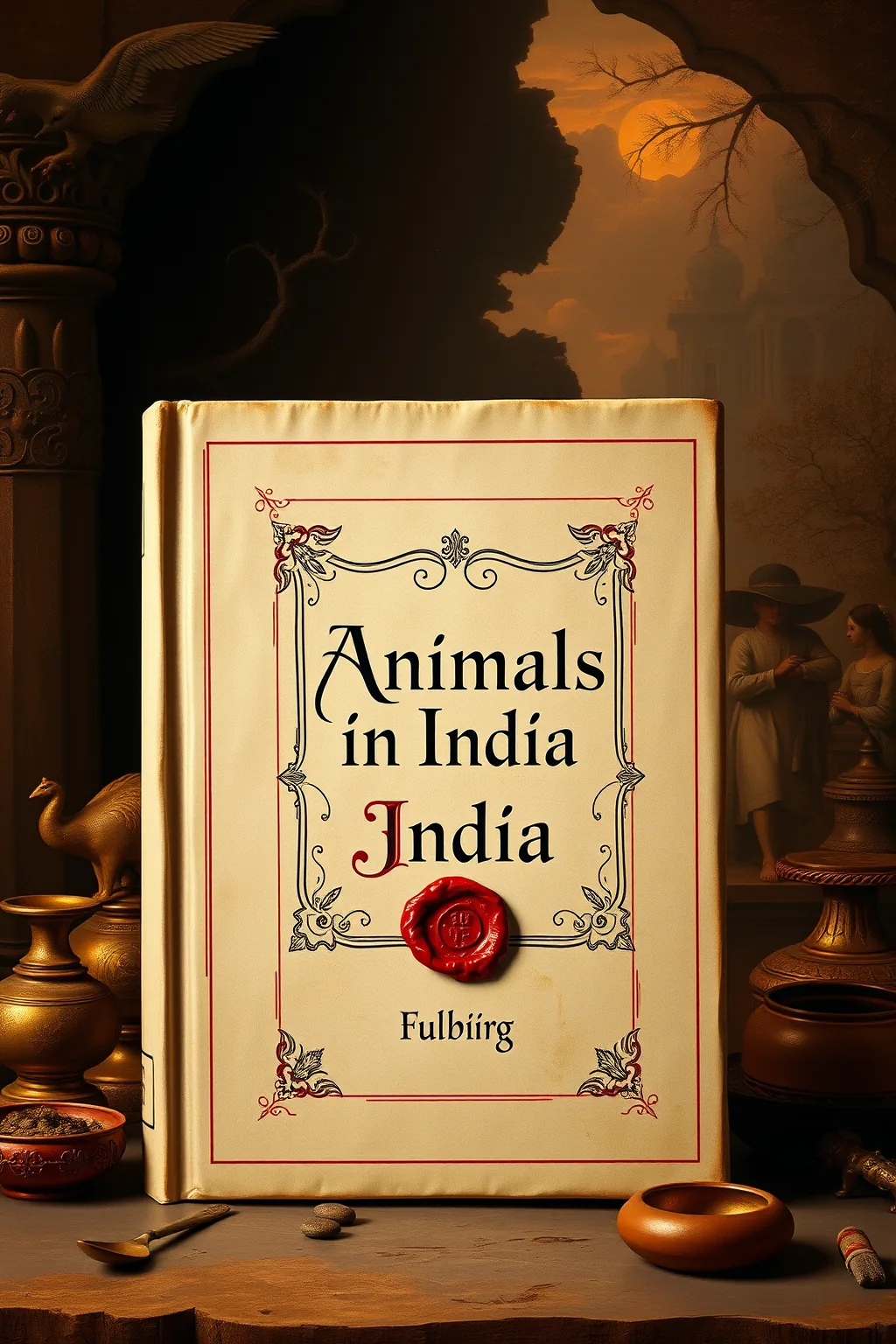
ERIC ED401168: Animals in India: Folklore, Myth, and Religion. Fulbright Hays Summer Seminar Abroad 1995 (India).
 76
76

ERIC ED401168: Animals in India: Folklore, Myth, and Religion. Fulbright Hays Summer Seminar Abroad 1995 (India).



Animals in India: Folklore, Myth, and Religion is a fascinating journey into the esoteric world of Indian mythology and folklore. The text, originally part of a Fulbright Hays Summer Seminar Abroad, is meticulously crafted to engage students and readers alike in the rich tapestry of Indian cultural heritage. The focus on animals as symbols and spiritual entities provides a fresh and insightful perspective on Indian traditions. For modern esoteric seekers, this book serves as a valuable resource, offering a deep understanding of the mystical connections between animals and religious practices. The inclusion of research skills, creative writing, and group cooperation exercises makes it an excellent educational tool. The book's structure, which encourages students to keep a journal and prepare presentations, enhances the learning experience and makes the esoteric knowledge more accessible. Overall, this text is a must-read for anyone interested in the mystical and spiritual dimensions of Indian culture. Rating: 5/5.
📝 Description
76
Published in 1995, this seminar report examines animals in Indian folklore, myth, and religion.
This work, a product of the 1995 Fulbright Hays Summer Seminar Abroad in India, analyzes the role of animals within Indian cultural expressions. It looks at how creatures feature in the country's myths, folklore, and religious practices. The book connects these narratives to a deeper symbolic understanding, showing how human and animal relationships are depicted in sacred traditions. It aims to uncover the specific meanings and significance attributed to various animals across different Indian belief systems. The text draws on the seminar's findings to present a picture of animal symbolism in India.
This book fits within traditions that see animals as carriers of spiritual or symbolic meaning beyond their biological existence. In many esoteric systems, animals are viewed as manifestations of divine energies or as guides on spiritual paths. The study of animals in Indian religion, folklore, and myth aligns with the broader esoteric interest in finding hidden correspondences and sacred patterns within the natural world. It examines how these beliefs contribute to a worldview where the animal kingdom is intrinsically linked to the human spiritual quest.
💡 Why Read This Book?
Reading Animals in India: Folklore, Myth, and Religion today offers a profound understanding of the esoteric and mystical aspects of Indian culture. It provides readers with a unique perspective on the spiritual significance of animals in Indian mythology and folklore, enriching their knowledge of the country's rich cultural heritage. Whether you are a student, a teacher, or a curious reader, this book will deepen your appreciation for the intricate web of Indian traditions and their spiritual underpinnings.
⭐ Reader Reviews
Honest opinions from readers who have explored this book.
❓ Frequently Asked Questions
What is the main focus of Animals in India: Folklore, Myth, and Religion?
The main focus of this book is the exploration of animals in Indian mythology, folklore, and religion, providing insights into their cultural and spiritual significance.
Who is the intended audience for this book?
This book is intended for students in grades 10-12, as well as anyone interested in Indian culture, mythology, and esoteric studies.
What skills does this course develop?
The course develops research skills, creative writing, group cooperation, and oral presentation abilities, making it a comprehensive educational experience.
🔮 Key Themes & Symbolism
Sacred Symbolism
The book looks at the sacred symbolism of animals in Indian culture, revealing the hidden knowledge and esoteric meanings that underlie their roles in mythology and folklore. This theme highlights the profound connection between humans and animals in the spiritual realm.
Mythical Narratives
Explore the wide range of mythical narratives that feature animals as central figures. These stories offer insights into the mystical beliefs and traditions of India, providing a deeper understanding of its spiritual heritage.
Cultural Integration
The integration of animals into the cultural fabric of India is explored, showcasing how they are revered and respected in various aspects of life. This theme underscores the importance of animals in Indian society and their role in preserving cultural identity.
💡 Key Ideas
Editorial paraphrase of the work's core concepts — not direct quotes.
The elephant, symbol of wisdom and strength, guides us through the labyrinth of life.
This quote highlights the elephant's role as a spiritual guide, embodying wisdom and strength in Indian mythology.
The serpent's coiled form represents the eternal cycle of life and death.
This quote underscores the serpent's symbolism of transformation and the cyclical nature of existence.
The peacock, adorned with a thousand eyes, watches over the universe.
This quote emphasizes the peacock's role as a guardian and protector in Indian folklore, symbolizing vigilance and protection.
The monkey, trickster and teacher, reveals the duality of nature.
This quote explores the monkey's role as a trickster figure, teaching lessons about the complexities of life.
The cow, mother of the universe, nourishes all beings with her divine milk.
This quote highlights the cow's sacred status in Indian culture, symbolizing nurturing and divine providence.
🌙 Esoteric Significance
Tradition
This book belongs to the Hermetic tradition, which emphasizes the interconnectedness of all things and the search for hidden knowledge. It draws on the strong symbolism of Indian mythology to reveal the deeper truths that underlie the visible world.
Symbolism
Key symbols include the elephant, serpent, peacock, monkey, and cow, each representing different aspects of the divine and the mystical. These symbols are integral to understanding the esoteric significance of animals in Indian culture.
Modern Relevance
Today, this book remains relevant for those seeking to understand the spiritual significance of animals in various cultures. Modern practitioners of Hermeticism and other esoteric traditions continue to draw on its insights to deepen their spiritual practices.
👥 Who Should Read This Book
Beginners in the field of mysticism will find this book accessible and enlightening, offering a gentle introduction to the esoteric traditions of India. Scholars of comparative religion will appreciate its in-depth analysis of sacred animals in Indian culture. Spiritual seekers will be inspired by the profound symbolism and hidden knowledge revealed in its pages. Practitioners of Hermeticism and other esoteric traditions will find valuable insights and practical applications for their spiritual journeys.
📜 Historical Context
Published in 1995, 'Animals in India: Folklore, Myth, and Religion' was part of the Fulbright Hays Summer Seminar Abroad, designed to educate students on the rich cultural heritage of India. The book's importance lies in its ability to bridge the gap between Eastern mysticism and Western academic study, providing a comprehensive understanding of the esoteric traditions that permeate Indian culture. Its influence can be seen in the growing interest in comparative religion and the study of sacred animals in various spiritual traditions.
📔 Journal Prompts
Reflect on a sacred animal from Indian mythology and its significance in your own spiritual journey.
How do the mythical narratives in this book resonate with your understanding of the divine?
Consider the role of animals in your own cultural traditions and how they compare to those in Indian folklore.
What esoteric insights have you gained from exploring the symbolism of animals in this book?
How might the integration of sacred animals into your spiritual practice enhance your connection to the divine?
🗂️ Glossary
Hermetic Tradition
An esoteric tradition focused on the search for hidden knowledge and the interconnectedness of all things.
Sacred Symbolism
The use of symbols to represent divine or mystical concepts and truths.
Mythical Narratives
Stories that convey esoteric insights and spiritual teachings through the use of mythical characters and events.
Esoteric Traditions
Spiritual paths that emphasize hidden knowledge and mystical experiences.
Divine Providence
The belief in a higher power that guides and protects all beings.
This book appears in 1 collection
🔮 Readers Also Liked
Browse all →








More by ERIC
All books →





From the “Christian Mysticism” Collection
View all →




More Free Mysticism & Contemplation Books
View all →