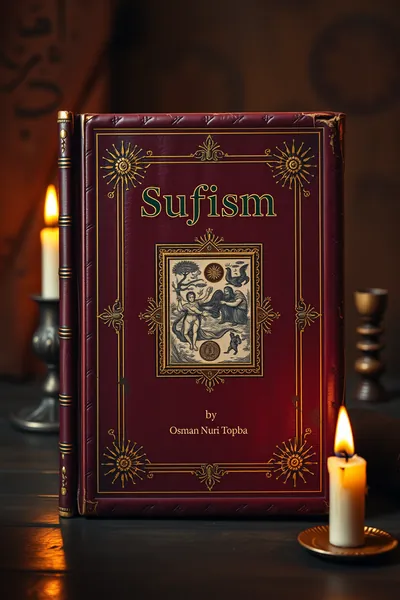
The Goal of Life

 72
72

The Goal of Life



Isolde Whitaker, Sacred Texts Editor: Hiram Butler's "The Goal of Life" is a cornerstone of esoteric literature, offering a compelling synthesis of Christian mysticism and occult philosophy. Butler masterfully charts a course through the labyrinthine landscape of spiritual evolution, presenting a coherent and inspiring vision of humanity's ascent. His unique symbolic system, while requiring contemplation, unlocks profound insights into consciousness. This text is an indispensable resource for serious students of esotericism, offering a deeply satisfying framework for understanding the ultimate purpose of existence. It is particularly resonant for those drawn to the transformative power of inner work and the pursuit of higher consciousness.
📝 Description
72
Hiram Butler published "The Goal of Life" in 1908, detailing stages of spiritual development.
First published in 1908, Hiram Butler's "The Goal of Life" outlines a structured path for spiritual growth. Butler presents a teleology, or a theory of purpose, for human consciousness, describing its ascent and refinement toward a higher ideal. The book uses symbolic language to map the inner workings of the soul and the larger cosmos.
Butler connects mystical Christianity with late 19th-century occult and New Thought ideas. He guides the reader through distinct phases of personal evolution. The work aims to help individuals understand the underlying principles of existence and to recognize their own potential for spiritual fulfillment. It offers a framework for perceiving the universe's divine structure.
Butler's work emerged from the occult revival and New Thought movements of the late 19th century. It synthesizes Christian mysticism with ideas prevalent in these circles, which sought hidden spiritual truths and personal transformation. The book reflects a period of intense interest in spiritual philosophy and the potential for human consciousness to evolve beyond material limitations. This tradition often explored inner development through symbolic interpretation and a belief in an underlying divine order.
✍️ Author
Hiram Butler
Christopher Knight is an author who has written several books dealing with pseudohistoric conspiracy theories such as 366-degree geometry and the origins of Freemasonry. Knight's book Who Built the Moon?, co-written with Alan Butler, was the inspiration fo…
💡 Why Read This Book?
Embark on a profound journey of self-discovery and cosmic understanding. "The Goal of Life" offers a unique map for spiritual evolution, illuminating the path from mundane existence to transcendent realization. Ideal for seekers yearning for deeper meaning, scholars of esoteric traditions, and practitioners seeking to integrate mystical principles into their lives. Uncover a timeless perspective on humanity's divine potential.
⭐ Reader Reviews
Honest opinions from readers who have explored this book.
❓ Frequently Asked Questions
What is the central thesis of "The Goal of Life"?
The book posits that humanity is on a divinely ordained evolutionary path, progressively refining consciousness towards a transcendent spiritual ideal, guided by esoteric principles and inner development.
Who was Hiram Butler and what were his influences?
Hiram E. Butler was an American occultist and author, deeply influenced by Christian mysticism, the New Thought movement, and contemporary esoteric philosophies, seeking to synthesize these into a holistic spiritual system.
Is "The Goal of Life" suitable for beginners in esotericism?
While comprehensive, the text's symbolic language may require dedicated study. However, for the earnest beginner willing to engage deeply, it offers a rich and rewarding introduction to advanced spiritual concepts.
What kind of "symbolic system" does Butler employ?
Butler develops his own unique symbolic framework, often drawing from Christian allegory and universal archetypes, to represent abstract spiritual concepts and the stages of inner transformation.
How does "The Goal of Life" relate to the New Thought movement?
It shares the New Thought emphasis on the power of consciousness and the potential for spiritual transformation through inner work, while also incorporating a more structured, teleological view of evolution.
🔮 Key Themes & Symbolism
The Evolutionary Ascent of Consciousness
This theme explores Butler's expansive vision of human progress, not merely as a social or biological phenomenon, but as a profound spiritual journey. He outlines a teleological framework where humanity, across countless lifetimes and through successive stages of awareness, is inexorably drawn towards a higher, more refined state of being. This ascent is characterized by an expansion of consciousness, a deepening understanding of universal laws, and the shedding of material limitations to embrace a more ethereal and divine existence.
Esoteric Christianity and Symbolic Revelation
Butler masterfully synthesizes the core tenets of Christian mysticism with the broader currents of late 19th-century esotericism. He reinterprets familiar Christian narratives and symbols through an occult lens, revealing hidden meanings and spiritual allegories. This approach suggests that the true essence of Christianity lies not in dogma, but in its profound esoteric teachings on the nature of the soul, divine immanence, and the path to Christ-consciousness, accessible through inner contemplation and dedicated spiritual practice.
The Inner Alchemy of Self-Transformation
At the heart of "The Goal of Life" lies the transformative power of inner work. Butler presents a practical, albeit symbolic, roadmap for the individual's spiritual development. This involves understanding and mastering the various planes of existence, both internal and external, through disciplined thought, focused intention, and the cultivation of higher virtues. The book suggests that true evolution is an alchemical process of refining the lower self into the higher, leading to a realization of one's divine potential and ultimate union with the Absolute.
💬 Memorable Quotes
Direct passages from the work, attributed to the author.
“The kingdom of heaven is within you.”
— A quintessential mystical assertion, this highlights the immanence of the divine and the potential for spiritual realization to be found not in external places, but within one's own consciousness.
“As above, so below; as within, so without.”
— This Hermetic principle underscores the interconnectedness of all planes of existence, suggesting that the macrocosm (universe) is reflected in the microcosm (individual) and vice versa.
“The goal of life is the unfolding of the divine plan.”
— This captures the book's teleological view, proposing a grand, overarching purpose to existence, driven by a cosmic intelligence and expressed through individual and collective spiritual evolution.
“True sight is the vision of the soul.”
— This emphasizes the superiority of spiritual perception over mere physical sight, suggesting that deeper truths and realities are perceived through inner awareness and intuition.
💡 Key Ideas
Editorial paraphrase of the work's core concepts — not direct quotes.
Life is a school, and the universe the great academy.
This quote frames existence as a continuous learning process, emphasizing the universe as a vast, structured environment designed for spiritual growth and the acquisition of wisdom.
🌙 Esoteric Significance
Tradition
Butler's work is a significant contribution to the syncretic esoteric tradition, particularly blending Western esotericism, Christian mysticism, and elements of the New Thought movement. It seeks to reveal the 'inner Christianity' and the universal spiritual laws that underpin various religious and philosophical systems, offering a unified path toward spiritual enlightenment and demonstrating the interconnectedness of all divine truths.
Symbolism
The book employs a wide range of personal and traditional symbolism to articulate its core concepts. Butler's unique symbolic system acts as a key to unlock deeper understandings of consciousness, spiritual evolution, and the divine architecture of the cosmos. These symbols often draw from Christian allegory, Hermetic principles, and archetypal imagery, serving as a bridge between the visible and invisible realms, guiding the reader's inner perception.
Modern Relevance
In an age still seeking meaning and purpose amidst rapid technological advancement and societal change, "The Goal of Life" offers a timeless perspective on human potential. Its emphasis on consciousness evolution, inner transformation, and the pursuit of a transcendent ideal resonates deeply with contemporary spiritual seekers, life coaches, and those interested in personal growth and the exploration of higher states of awareness.
👥 Who Should Read This Book
This profound text is an essential read for dedicated spiritual seekers yearning for a comprehensive understanding of the soul's journey. Scholars of esoteric philosophy, comparative religion, and occult history will find Butler's synthesis particularly clear. Practitioners of meditation and contemplative disciplines will discover valuable insights for deepening their practice. Beginners to esoteric thought may find it challenging but immensely rewarding if they approach it with an open mind and a willingness to engage with its symbolic language.
📜 Historical Context
Published in 1908, "The Goal of Life" emerged from a fertile period of spiritual and intellectual ferment in the Western world. The late 19th and early 20th centuries witnessed a resurgence of interest in mysticism, the occult, and Eastern philosophies, challenging the prevailing materialism of the era. Movements like Theosophy, Christian Science, and New Thought offered alternative frameworks for understanding reality and humanity's place within it. Hiram Butler's work sits squarely within this milieu, seeking to synthesize Christian esotericism with contemporary occult thought, providing a coherent, hopeful vision of spiritual evolution for a society grappling with rapid industrialization and shifting paradigms.
📔 Journal Prompts
Reflect on your personal definition of 'spiritual evolution'. How does Butler's concept align or diverge?
Identify one symbol used by Butler that appeals to you. Explore its potential deeper meanings in your own life.
Consider the 'stages of inner development' mentioned. Where do you feel you are on this path, and what is the next logical step for you?
How does the idea of a 'transcendent ideal' influence your daily actions and aspirations?
Explore the concept of 'inner sight' from the quote. How can you cultivate this faculty in your everyday experience?
🗂️ Glossary
Teleology
The philosophical concept that events or processes are directed towards a final purpose or end goal. In this context, it refers to the predetermined spiritual destiny of humanity.
Esotericism
A broad range of spiritual or religious traditions, often characterized by their hidden or inner teachings, accessible only to initiates or those with specialized knowledge.
New Thought
A spiritual movement that emphasizes the power of positive thinking and the ability of the mind to create one's own reality, often rooted in Christian principles.
Mystical Christianity
A branch of Christianity that emphasizes direct, personal experience of God and the divine, often through contemplation, prayer, and inner communion, rather than solely through dogma or ritual.
Consciousness
The state of being aware of and responsive to one's surroundings; the totality of thoughts, feelings, and sensations of an individual. In esoteric contexts, it often refers to higher or expanded states of awareness.
This book appears in 2 collections
🔮 Readers Also Liked
Browse all →







More by Hiram Butler
All books →
From the “Meditation” Collection
View all →




![The mystic oracle, or, The complete fortune-teller and dream book / [F.M. Lupton].](/img/thumb/the-mystic-oracle-or-the-complete-fortune-teller-and-dream-book-f-m-lupton.webp)




More Free Mysticism & Contemplation Books
View all →