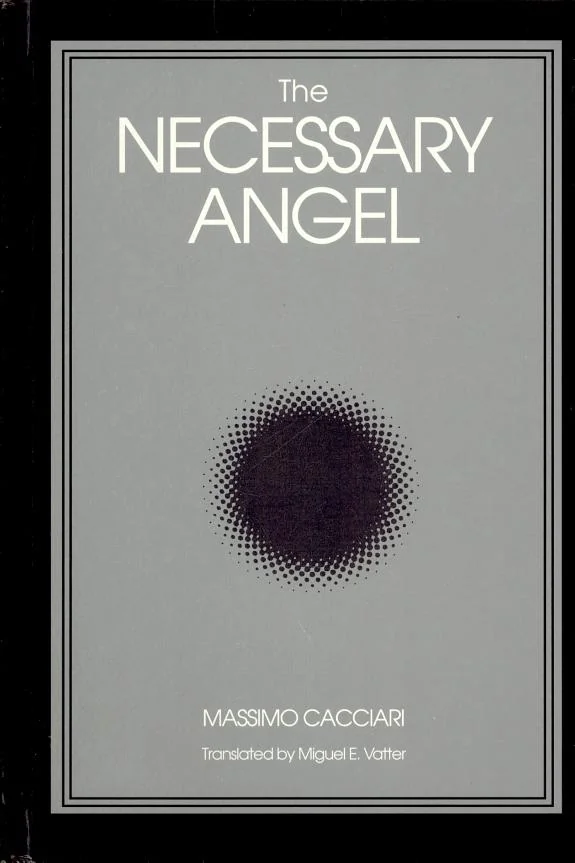
The Necessary Angel
 79
79

The Necessary Angel
Massimo Cacciari's "The Necessary Angel" offers a compelling, albeit dense, re-evaluation of the angel figure, not as a theological entity but as a philosophical lens. Cacciari, drawing on his extensive background in aesthetics and philosophy, meticulously dissects how writers and thinkers, from Judaic traditions to Kafka, have employed the angel to articulate complex ideas about language and being. The book's strength lies in its intellectual rigor, connecting disparate traditions with a singular analytical thread. A particular passage that stands out is the examination of the angel as a 'necessary angel'—a concept that frames it as essential for the very transmission of meaning, even if abstract or transcendent. However, the work’s academic density and specialized vocabulary can present a significant barrier to entry for readers not already steeped in continental philosophy. It demands sustained attention and a willingness to grapple with intricate argumentation. "The Necessary Angel" is a demanding but rewarding study for the advanced philosophical reader.
📝 Description
79
Massimo Cacciari's 1994 book analyzes the angel as a concept in language's phenomenology.
Massimo Cacciari's "The Necessary Angel" examines the angelic figure not just in theology but as a critical concept within the phenomenology of language. Cacciari, a known academic in aesthetics from the University of Venice, traces the historical development of angelic imagery and thought. The book positions the angel as a vital interface for comprehending how meaning is transmitted and understood. It considers the angel as a site of communication, symbolizing the boundaries and potential of human language. Furthermore, it functions as a representation of the 'other' that shapes our perception of self and the world.
Published in 1994, this work appeared during a time of renewed interest in continental philosophy and post-structuralist ideas. Cacciari's investigation of theological and literary traditions, while engaging with thinkers like Heidegger and Derrida, situates his analysis within late 20th-century philosophical discussions. His academic roots at the University of Venice fostered this kind of interdisciplinary study. The book offers substantial material for those interested in the connection between metaphysics and literature.
This book engages with the occult tradition by treating the angel less as a literal divine being and more as a philosophical construct. It connects angelic symbolism to the mechanics of meaning and perception, a common interest in esoteric thought that seeks to understand hidden structures of reality. Cacciari's approach aligns with esoteric philosophy's tendency to find symbolic depth in figures and concepts that bridge the material and immaterial, particularly in how language itself mediates our experience of the unseen.
💡 Why Read This Book?
• Understand the angel not just as a religious figure, but as a philosophical concept for language, as explored through Cacciari's analysis of its role in conveying meaning across traditions. • Gain insight into the historical trajectory of angelic thought from Judaic and Islamic roots through its literary reinterpretation by authors like Kafka. • Appreciate the angel as a metaphor for the phenomenology of language, a concept central to Cacciari's critique, offering a unique perspective on communication and perception.
⭐ Reader Reviews
Honest opinions from readers who have explored this book.
❓ Frequently Asked Questions
What is Massimo Cacciari's academic background relevant to "The Necessary Angel"?
Massimo Cacciari is a distinguished academic specializing in aesthetics, holding a professorship at the University of Venice, which informs his philosophical and critical approach to the subject matter.
Which traditions does "The Necessary Angel" survey regarding the angel?
The book surveys the history of angels within Judaic, Islamic, and Christian traditions, examining their evolution and symbolic significance across these major religious frameworks.
How does "The Necessary Angel" connect angels to literature?
It explores how writers such as Dante, Rilke, and Kafka have utilized the metaphor of the angel to articulate complex ideas concerning the phenomenology of language and human experience.
What is the original publication year of Massimo Cacciari's "The Necessary Angel"?
The original publication year for "The Necessary Angel" by Massimo Cacciari is 1994.
What is the core philosophical concept of the angel presented in the book?
The book presents the angel as a 'necessary angel,' a concept that frames it as a crucial, almost indispensable, mediator or interface for the transmission and understanding of meaning.
Does the book focus solely on theological interpretations of angels?
No, "The Necessary Angel" extends beyond theological interpretations, focusing significantly on the angel as a philosophical concept and a literary metaphor for language and consciousness.
🔮 Key Themes & Symbolism
Angels as Language Mediators
Cacciari posits the angel not merely as a divine messenger but as a fundamental concept for understanding how meaning itself is conveyed and perceived. The work examines the angel as a necessary interface, bridging the gap between the ineffable and expression, particularly in relation to the phenomenology of language. This perspective reconfigures the angel from a religious figure into a philosophical tool for analyzing communication's structure and limitations, drawing parallels between theological constructs and literary expressions of meaning.
Literary Reimagining of the Angel
The book critically analyzes how influential writers, including Dante Alighieri, Rainer Maria Rilke, and Franz Kafka, have employed the angelic figure in their literary works. Cacciari investigates how these authors used the angel metaphor to explore the complexities, ambiguities, and existential dimensions of human language and consciousness. This literary engagement reveals the angel as a potent symbol for representing the unspeakable, the transcendent, and the very act of articulation.
Cross-Cultural Angelic Traditions
Cacciari undertakes a comprehensive survey of the angel figure across major religious and cultural traditions. He traces the concept's evolution and many-sided significance within Judaic, Islamic, and Christian theological and philosophical discourse. This comparative approach highlights the enduring presence and adaptable nature of the angel as a symbol, demonstrating its consistent role in shaping human understanding of the divine, the self, and the cosmos.
Phenomenology of the Word
Central to Cacciari's thesis is the notion of the angel as intrinsically linked to the phenomenology of language. The work explores how the angel symbolizes the limits, possibilities, and essential nature of linguistic expression. It looks at how the experience of encountering the 'other,' often represented by the angelic, shapes our perception and understanding of reality through the medium of words and symbols.
💬 Memorable Quotes
Direct passages from the work, attributed to the author.
“The angel as the necessary condition for the manifestation of the word.”
— This concept frames the angel not as a separate entity, but as an intrinsic component required for language to take form and convey meaning, highlighting its role as a mediator of expression.
“Writers have used the angel to speak about the phenomenology of language.”
— This suggests that literary figures have employed angelic imagery to explore how we experience, understand, and use language, treating the angel as a symbol for the very nature of communication.
“The angel in Judaic, Islamic, and Christian traditions.”
— This points to the book's comparative theological scope, examining the angel's presence and evolving significance across these foundational monotheistic belief systems.
“The angel as a metaphor for the 'other' that structures our understanding.”
— This interpretation views the angel not just as a messenger, but as a conceptual representation of external or transcendent realities that define our own self-perception and worldview.
“The angel as a locus of communication.”
— This signifies the angel's role as a central point or interface where communication, particularly between the human and the divine or the known and the unknown, occurs or is understood.
🌙 Esoteric Significance
Tradition
While not strictly adhering to a single esoteric lineage like Kabbalah or Hermeticism, "The Necessary Angel" engages with themes common in Western esotericism, particularly the symbolic interpretation of religious figures and texts. It aligns with the Gnostic and Neoplatonic tendency to view intermediaries and symbolic forms as crucial for understanding ultimate reality and the nature of consciousness. Cacciari's work can be seen as a philosophical bridge, useful how esoteric concepts of angelic beings function as metaphors for higher knowledge and the structure of perception.
Symbolism
The primary symbol is the angel itself, interpreted not as a literal being but as a conceptual operator for language and meaning. The 'necessary angel' signifies the indispensable intermediary required for any form of communication or revelation to occur. Another motif is the concept of the 'boundary' or 'threshold,' which the angel often inhabits, representing the liminal space between the comprehensible and the incomprehensible, the human and the divine, or the finite and the infinite.
Modern Relevance
Contemporary scholars and practitioners interested in the philosophy of religion, comparative mythology, and the semiotics of spiritual symbols find Cacciari's work highly relevant. His re-conceptualization of the angel as a linguistic and phenomenological operator speaks to modern inquiries into consciousness, AI, and the nature of abstract thought. Thinkers exploring the intersection of philosophy, theology, and literature, particularly those influenced by Continental thought, often cite Cacciari's analysis for its sophisticated engagement with perennial symbols.
👥 Who Should Read This Book
• Advanced students of philosophy and theology seeking a rigorous examination of the angel figure beyond its traditional religious context. • Literary critics and scholars interested in how metaphysical concepts are explored through literary metaphors, especially concerning language and meaning. • Researchers in comparative religion and intellectual history analyzing the cross-cultural and historical development of symbolic figures in Judaic, Islamic, and Christian traditions.
📜 Historical Context
Published in 1994, Massimo Cacciari's "The Necessary Angel" emerged within a vibrant intellectual landscape in continental philosophy. Cacciari, already a prominent figure in aesthetics and then Mayor of Venice, engaged with post-structuralist currents while grounding his work in classical theological and literary traditions. The era saw ongoing debates concerning language, meaning, and subjectivity, influenced by thinkers like Jacques Derrida and Michel Foucault. Cacciari's approach, however, diverged from purely secular deconstruction by re-engaging with religious symbolism, particularly the angel, as a philosophical concept. This offered a counterpoint to dominant materialist or purely linguistic analyses. While not directly engaging with a specific competing school in a confrontational manner, his work implicitly challenged purely immanent philosophical frameworks by drawing significant meaning from transcendent figures and traditions.
📔 Journal Prompts
The angel as a necessary condition for the manifestation of the word: how does this concept illuminate your own understanding of communication?
Analyze Kafka's use of the angel: what does it reveal about the phenomenology of language in his work?
Reflect on the angel as a locus of communication across Judaic, Islamic, and Christian traditions.
Consider the angel as a metaphor for the 'other' that structures our understanding; how does this shape self-perception?
Explore the angel's role as a mediator of meaning in the context of Rilke's poetry.
🗂️ Glossary
Phenomenology of Language
The philosophical study of how language is experienced and understood, focusing on the structures of consciousness and perception as they relate to linguistic expression and meaning-making.
Necessary Angel
A conceptualization of the angel not as a literal being, but as an essential, indispensable element or condition required for the manifestation, transmission, or understanding of meaning and communication.
Locus of Communication
A central point, interface, or site where communication occurs or is understood to originate, particularly in the context of bridging different realms or understandings, such as the human and divine.
Aesthetics
The branch of philosophy concerned with the nature of beauty, art, and taste, often exploring the principles of artistic creation and appreciation.
Judaic Traditions
Encompasses the religious, cultural, and philosophical heritage and practices originating from Judaism, including its scriptures, legal systems, and theological interpretations.
Islamic Traditions
Refers to the religious, cultural, and philosophical practices and beliefs derived from Islam, including its foundational texts, jurisprudence, and theological schools.
Christian Traditions
Covers the diverse religious, cultural, and philosophical practices and beliefs stemming from Christianity, including its scriptural canon, theological doctrines, and historical developments.
This book appears in 1 collection
🔮 Readers Also Liked
Browse all →








From the “Angels” Collection
View all →






More Free Occult Philosophy Books
View all →