A to Z Homeopathy
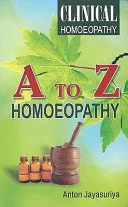
 82
82

A to Z Homeopathy
Anton Jayasuriya’s "A to Z Homeopathy" offers a refreshingly direct approach to a subject that can easily become mired in jargon. The author’s stated aim for clarity is largely achieved, particularly in the early sections that lay out the foundational principles of homeopathic potentization. The straightforward exposition stands out, a welcome contrast to more verbose treatises. However, the book’s conciseness, while a strength, also leads to a limitation: the exploration of certain complex case studies or the deeper philosophical underpinnings of the 'vital force' feels somewhat truncated. For instance, the discussion on miasms, a crucial concept for advanced practitioners, is presented with less depth than one might hope for. Despite this, the 2004 publication provides a solid, accessible entry point for students. It’s a competent primer, not a comprehensive encyclopedia.
📝 Description
82
Anton Jayasuriya's 2004 book A to Z Homeopathy explains "like cures like" with clear detail.
Published in 2004, Anton Jayasuriya's "A to Z Homeopathy" offers a methodical introduction to the principles and practice of homeopathic medicine. The author seeks to clarify a system frequently seen as complicated, laying out its core ideas plainly. This book guides readers who want to understand a healing approach built on the idea that similar substances can treat ailments. It covers how remedies are made through potentization, the use of symptom totality for diagnosis, and choosing the most fitting remedy, the simillimum.
Jayasuriya's work is aimed at students and practitioners of homeopathy, whether they are new to the field or looking to deepen their understanding. It also serves those interested in alternative healing methods who seek a clearer grasp of homeopathic techniques. Readers curious about the history and theory behind homeopathy will find useful information within its pages. The text addresses homeopathy's origins in the late 18th century with Samuel Hahnemann and discusses concepts developed over two centuries.
Homeopathy, originating with Samuel Hahnemann in the late 18th century, posits that "like cures like." "A to Z Homeopathy" places itself within this tradition, examining ideas that have developed over two centuries. The book engages with homeopathy's place alongside conventional medicine, acknowledging persistent questions about its scientific basis. Its publication in 2004 coincided with a period of growing interest in complementary and alternative medicine, a field often situated outside mainstream scientific discourse.
💡 Why Read This Book?
• Understand the process of potentization, the unique method of preparing homeopathic remedies through dilution and succussion, as detailed in "A to Z Homeopathy." This offers insight into a specific healing technology distinct from pharmaceutical manufacturing. • Grasp the homeopathic concept of 'simillimum,' the principle of selecting a remedy that most closely matches the totality of the patient's symptoms, as explained by Anton Jayasuriya. This provides a framework for understanding individualized treatment approaches. • Explore the historical development of homeopathy, tracing its origins from Samuel Hahnemann's work in the late 18th century, which provides context for its place within alternative medicine and its ongoing scientific discourse.
⭐ Reader Reviews
Honest opinions from readers who have explored this book.
❓ Frequently Asked Questions
When was "A to Z Homeopathy" first published?
"A to Z Homeopathy" by Anton Jayasuriya was first published on January 1, 2004. This places its initial release within a period of significant global discussion and interest in complementary and alternative medicine.
What is the core principle of homeopathy explained in the book?
The book explains homeopathy's central tenet: 'like cures like' (similia similibus curentur). This means a substance that causes symptoms in a healthy person can be used in a highly diluted form to treat similar symptoms in a sick person.
Who developed the system of homeopathy that Jayasuriya discusses?
The system of homeopathy was developed by German physician Samuel Hahnemann. Jayasuriya's work builds upon Hahnemann's foundational principles and methodologies, first published in the late 18th and early 19th centuries.
What does 'potentization' mean in the context of this book?
Potentization refers to the process of preparing homeopathic remedies, involving serial dilution of a substance with water or alcohol, followed by vigorous shaking (succussion). The book details how this process is believed to increase the remedy's medicinal properties.
Is "A to Z Homeopathy" suitable for beginners?
Yes, the book is designed to provide clarity and a precise approach to explaining the complexities of homeopathy, making it suitable for students and individuals new to the subject matter.
What is the 'symptom totality' in homeopathy?
The 'symptom totality' is a core concept discussed in the book, referring to the collection of all characteristic symptoms – mental, emotional, and physical – that a patient presents. Homeopathic prescribing aims to match the remedy to this totality.
🔮 Key Themes & Symbolism
The Principle of Similars
Central to homeopathic philosophy, the principle of 'like cures like' (similia similibus curentur) is thoroughly examined. This text elucidates how a substance capable of producing symptoms in a healthy individual is employed in potentized form to treat similar symptoms in a diseased state. It moves beyond mere definition to explore the practical implications of this core tenet, providing examples of how the totality of a patient's unique symptoms guides the selection of the appropriate 'simillimum.' This theme underscores homeopathy's departure from conventional pharmacology's approach to symptom suppression.
Potentization and Dilution
The intricate process of potentization, involving serial dilution and succussion, is a central to homeopathic remedy preparation. This book explains the methodology, explaining how common substances are transformed through these stages. It addresses the scientific and philosophical questions surrounding how such extreme dilutions are believed to retain and even enhance medicinal efficacy. Understanding potentization is crucial for appreciating the unique nature of homeopathic medicines and their preparation methods, differentiating them from herbal tinctures or chemical compounds.
Symptom Totality and Individualization
Homeopathy's emphasis on the individual patient, rather than just a disease label, is highlighted through the concept of 'symptom totality.' Jayasuriya explains how practitioners gather a comprehensive picture of a patient's physical, mental, and emotional state to identify characteristic symptoms. This holistic approach, detailed within the text, is what allows for the selection of a highly individualized remedy. The book demonstrates that effective homeopathic treatment relies on matching the remedy picture to the unique constellation of symptoms presented by each person.
Miasmatic Theory and Chronic Illness
While presented with clarity, the discussion of miasmatic theory offers a glimpse into a deeper layer of homeopathic understanding, particularly concerning chronic diseases. The book introduces the concept that underlying chronic conditions may stem from inherited or acquired constitutional weaknesses, or 'miasms.' Understanding these fundamental patterns, as explored in the text, is presented as key to effectively treating long-standing or recurring health issues. This theme connects the immediate symptom picture to a more profound, constitutional level of healing.
💬 Memorable Quotes
Direct passages from the work, attributed to the author.
“The principle of 'like cures like' is the foundation.”
— This concisely captures the central axiom of homeopathy, stating that a remedy's action mirrors the symptoms it can produce in a healthy person, forming the basis for therapeutic selection.
“Potentization involves dilution and succussion.”
— This highlights the specific mechanical process used to prepare homeopathic medicines, emphasizing the dual actions of diluting a substance and vigorously shaking the mixture.
“The totality of symptoms guides the prescriber.”
— This emphasizes the holistic and individualized nature of homeopathic case-taking, where the complete picture of a patient's unique condition is paramount for choosing the correct remedy.
“Homeopathy offers a precise and electric approach.”
— This interpretation reflects the original blurb's description, suggesting that the homeopathic method, as presented, is characterized by its exactitude and dynamic effectiveness in addressing illness.
“Understanding the nauces of homeopathy is key.”
— This refers to grasping the subtle complexities and specific challenges within the subject of homeopathy, implying that the book aims to clarify these intricate details for the reader.
🌙 Esoteric Significance
Tradition
Homeopathy, while often presented as a medical system, possesses esoteric underpinnings connected to vitalism and subtle energy concepts prevalent in 19th-century European thought. It aligns with traditions that posit an animating life force (the 'vital force' or 'vis vitalis') which, when disturbed, leads to illness. This perspective echoes Hermetic principles of correspondence and the energetic nature of reality. Jayasuriya’s work, by detailing potentization, touches upon the idea that matter can be imbued with informational or energetic qualities beyond its material substance, a concept explored in various alchemical and esoteric practices.
Symbolism
The core symbolism in homeopathy lies in the 'simillimum' – the remedy that mirrors the patient's state. This reflects a symbolic language where the remedy acts as a signature of the illness. The process of potentization itself can be seen as symbolic: the reduction of material substance represents a refinement towards pure energetic or informational essence. The concept of miasms, as underlying patterns of disease, also carries symbolic weight, suggesting archetypal forces or constitutional predispositions that manifest in chronic conditions, akin to symbolic representations of deeper human struggles.
Modern Relevance
Contemporary thinkers and practitioners in fields like consciousness studies, quantum healing, and subtle energy medicine often find resonance with homeopathic principles. While mainstream science remains divided, some contemporary practitioners of energy medicine, bioresonance, and certain forms of naturopathy draw upon the concept of potentization and the energetic signature of remedies. Jayasuriya's work serves as a foundational text for those interested in exploring these connections, particularly how informational medicine might interact with biological systems in ways not fully explained by classical physics.
👥 Who Should Read This Book
• Aspiring homeopathic students seeking a clear, foundational text to understand the core principles and methodologies of the practice, including potentization and the concept of symptom totality. • Practitioners of alternative medicine interested in comparing homeopathic approaches to other modalities, gaining insight into its unique diagnostic and therapeutic framework. • Individuals curious about the history and philosophy of healing systems who wish to explore a scientifically debated yet historically significant therapeutic tradition beyond conventional Western medicine.
📜 Historical Context
Published in 2004, "A to Z Homeopathy" emerges from a long lineage of alternative medicine, tracing its roots to Samuel Hahnemann's work in Germany around the turn of the 19th century. Hahnemann developed homeopathy in direct contrast to the often harsh and invasive practices of contemporary allopathic medicine, such as bloodletting. By the mid-19th century, homeopathy had gained significant traction in Europe and America, with prominent proponents and established clinics. However, it also faced considerable skepticism and opposition from the established medical community. Jayasuriya's text appears during a period of resurgence for complementary and alternative medicine (CAM), where homeopathy continues to be debated alongside conventional treatments. Its publication engages with the ongoing discourse initiated by Hahnemann, navigating persistent questions about its efficacy and scientific basis, particularly in contrast to the rise of evidence-based medicine.
📔 Journal Prompts
The homeopathic principle of 'like cures like': how might this mirror symbolic healing concepts?
Reflect on the process of potentization described; what does extreme dilution suggest about healing energy?
Consider the 'symptom totality' for yourself; what unique symptoms define your well-being?
How does the concept of miasms connect to inherited patterns or predispositions in your family history?
Analyze a common substance; how could it potentially 'cure' symptoms it might cause?
🗂️ Glossary
Simillimum
The homeopathic remedy selected because its symptom profile most closely matches the totality of the patient's characteristic symptoms. It is the 'most similar' remedy.
Potentization
The process of preparing homeopathic remedies involving serial dilution of a substance with water or alcohol, combined with vigorous shaking (succussion), believed to increase the remedy's medicinal power.
Succussion
The vigorous shaking or striking of a diluted homeopathic remedy during the potentization process. It is considered essential for activating the remedy's energetic properties.
Symptom Totality
The complete collection of a patient's characteristic symptoms, encompassing mental, emotional, and physical aspects, which forms the basis for homeopathic remedy selection.
Miasm
In homeopathy, a chronic, underlying constitutional disease tendency or predisposition that can manifest in various forms throughout a person's life. Key miasms include Psora, Syphilis, and Sycosis.
Vital Force (Vis Vitalis)
The inherent animating principle or life energy that sustains a living organism. Homeopathy posits that illness arises from a disturbance in the vital force.
Allopathy
A term used in homeopathy to describe conventional Western medicine, characterized by the use of remedies that produce effects different from or opposite to those produced by the disease.