Shang di de zhi wen =
 71
71

Shang di de zhi wen =
Graham Hancock's *Shang di de zhi wen* (The Wisdom of Shangdi) presents a bold, if familiar, thesis: that a sophisticated global civilization flourished in antiquity, far earlier than conventional timelines permit. Hancock's strength lies in his ability to synthesize disparate archaeological and mythological data into a compelling narrative. He meticulously details the astronomical alignments of sites like Gobekli Tepe and discusses the implications of advanced engineering in structures that defy easy explanation within standard historical frameworks. However, the work's primary limitation remains its reliance on correlation as causation, often sidestepping the rigorous scrutiny required for such extraordinary claims. The exploration of the Great Pyramid's potential astronomical functions, while intriguing, frequently ventures into speculative territory, demanding a significant suspension of disbelief from the reader. Despite its controversial nature, the book succeeds in prompting critical re-examination of accepted historical dogma.
📝 Description
71
Graham Hancock's 2008 book *Shang di de zhi wen* revisits ancient civilizations and their knowledge systems.
Published in 2008, *Shang di de zhi wen* (The Wisdom of Shangdi) presents a re-evaluation of ancient civilizations, questioning standard historical timelines. Hancock suggests that advanced societies with considerable astronomical and architectural skills existed much earlier than mainstream archaeology accepts. He points to enigmatic structures and forgotten cosmologies worldwide as evidence, proposing a shared, lost origin for this ancient wisdom. This work is for readers who question established historical narratives and are interested in alternative archaeology, ancient mysteries, comparative mythology, and the possibility of advanced prehistoric cultures. Individuals curious about the links between ancient sites, celestial observations, and early human consciousness will find material here, especially those open to evidence that differs from accepted academic views.
Hancock's writing appeared during a time of growing public interest in fringe historical theories. The early 21st century saw numerous books and documentaries on topics such as pyramid construction and the possibility of a global flood predating recorded history. His arguments frequently drew debate from established archaeologists and historians who defended current timelines and interpretations of evidence. Hancock's earlier book, *Fingerprints of the Gods* (1995), had already caused considerable discussion.
This book engages with traditions that look beyond conventional historical accounts for understanding human origins. It aligns with esoteric thought that posits hidden knowledge or forgotten epochs of advanced human development. Such perspectives often reinterpret archaeological findings through lenses informed by mythology, comparative religion, and cyclical views of time. Hancock's work here fits within a broader interest in uncovering suppressed histories or alternative narratives about humanity's past, suggesting a connection between ancient peoples and a sophisticated, lost world.
💡 Why Read This Book?
• Gain a new perspective on the origins of civilization by examining Hancock's evidence for a sophisticated global society predating the last Ice Age, challenging conventional timelines. • Understand the potential significance of astronomical alignments in ancient megalithic sites, such as those discussed in relation to Gobekli Tepe, and their implications for lost knowledge. • Explore the concept of a 'lost civilization' and its potential influence on global mythology and surviving cultural echoes, offering an alternative framework for interpreting ancient human history.
⭐ Reader Reviews
Honest opinions from readers who have explored this book.
❓ Frequently Asked Questions
What is the primary argument of Graham Hancock's *Shang di de zhi wen*?
The book argues for the existence of a highly advanced global civilization that predates the last Ice Age, possessing sophisticated astronomical and engineering knowledge, which influenced subsequent human cultures.
What kind of evidence does Hancock use to support his theories in *Shang di de zhi wen*?
Hancock draws on evidence from megalithic sites worldwide, astronomical alignments, ancient myths, geological data concerning sea-level rise, and interpretations of symbolic motifs.
When was *Shang di de zhi wen* originally published?
*Shang di de zhi wen* was first published in 2008.
Does *Shang di de zhi wen* suggest a specific location for this lost civilization?
While not pinpointing a single geographical origin, the book posits a global reach for this ancient civilization, suggesting it influenced cultures across continents rather than being confined to one area.
How does *Shang di de zhi wen* relate to other works by Graham Hancock?
This book builds upon themes explored in Hancock's earlier works, such as *Fingerprints of the Gods*, further developing his theories about a lost prehistoric advanced civilization and its global impact.
What is the significance of the title *Shang di de zhi wen*?
The title translates to 'The Wisdom of Shangdi,' referring to a supreme deity in ancient Chinese cosmology, suggesting a connection between this ancient wisdom and broader spiritual or cosmological concepts.
🔮 Key Themes & Symbolism
Lost Global Civilization
The central theme posits the existence of a highly advanced, interconnected global civilization that flourished before the end of the last Ice Age, around 12,000 years ago. Hancock suggests this society possessed sophisticated knowledge of astronomy, mathematics, and engineering, far exceeding that of known early cultures. Evidence cited includes the precise astronomical alignments of megalithic sites worldwide, the global recurrence of flood myths, and geological indicators of rapid environmental change, all pointing to a shared, forgotten human heritage.
Ancient Astronomical Knowledge
A significant focus is placed on the advanced understanding of celestial movements exhibited by ancient peoples. Hancock argues that structures like the Great Pyramid and sites such as Gobekli Tepe were not merely ceremonial or burial sites but complex astronomical observatories. Their construction and orientation, he contends, were deliberately tied to significant cosmic cycles, suggesting a deep, possibly scientific, relationship with the stars and planets that informed their worldview and societal organization.
Cataclysm and Survival
The book explores the theory that a catastrophic event, potentially a comet impact or rapid climate shift, led to the destruction of this advanced prehistoric civilization. Hancock suggests that remnants of this society and its knowledge survived, albeit fragmented, influencing the development of later cultures like those in Egypt, Mesopotamia, and the Americas. The widespread myths of a great flood serve as a key piece of evidence for this global cataclysm and the subsequent reshaping of human history.
Mythology as Historical Record
Hancock treats ancient myths and legends not as mere stories but as corrupted memories or 'echoes' of a genuine historical past. He examines recurring motifs across disparate cultures—such as creation stories, tales of wise beings from the sea or sky, and narratives of great floods—as evidence of a common, shared ancestral memory passed down from the lost civilization. This approach reinterprets mythology as a vital, albeit allegorical, source for understanding prehistoric human experience.
💬 Memorable Quotes
Direct passages from the work, attributed to the author.
“The evidence points to a lost civilization of the Ice Age.”
— This concise statement expresses Hancock's core hypothesis: that human history as commonly understood is incomplete, with a significant gap preceding known civilizations, filled by a more advanced, yet forgotten, global culture.
“Megalithic structures worldwide share a common, ancient blueprint.”
— This highlights Hancock's argument that the global prevalence of large-stone monuments with similar architectural and astronomical features suggests a unified origin or widespread influence from a single, advanced prehistoric source.
“Flood myths are not allegories, but memories of a real cataclysm.”
— This interpretation reframes global flood narratives, suggesting they are not symbolic tales but distorted recollections of actual, widespread destruction events that ended the last Ice Age and potentially wiped out earlier civilizations.
“We are the inheritors of a forgotten wisdom.”
— This phrase suggests that modern humanity has unknowingly built upon the foundations laid by an earlier, more advanced civilization, and that elements of this lost knowledge may still be present, albeit obscured.
“The stars hold the key to understanding our ancient past.”
— This emphasizes the book's focus on archaeoastronomy, proposing that the precise alignment of ancient structures with celestial bodies is not coincidental but a deliberate method employed by early peoples to record and transmit crucial knowledge.
🌙 Esoteric Significance
Tradition
While not strictly adhering to a single esoteric lineage, Hancock's work draws heavily from Gnostic and Hermetic sensibilities regarding lost primordial knowledge and humanity's fallen state. It echoes Theosophical ideas of ancient root races and cyclical epochs of civilization. The concept of a hidden, advanced past aligns with esoteric traditions that posit a golden age or a time when humanity possessed greater spiritual and intellectual faculties, now largely forgotten or suppressed.
Symbolism
The book frequently references the pyramid and the serpent. The pyramid, often depicted as a symbol of cosmic order and spiritual ascent, is reinterpreted by Hancock as a sophisticated astronomical device and a marker of a lost civilization's engineering prowess. The serpent, a ubiquitous symbol in world mythology, is explored as representing primordial wisdom, cyclical rebirth, and potentially knowledge transmitted by ancient 'wise ones' or even extraterrestrial intelligences.
Modern Relevance
Hancock's theories continue to influence modern alternative history communities, independent researchers, and certain fringe archaeological circles. His work is often cited by proponents of ancient astronaut theories and those exploring consciousness studies related to ancient sites. Contemporary thinkers in fields like quantum consciousness and non-local awareness sometimes draw parallels between Hancock's ideas of a unified ancient knowledge and modern scientific concepts of interconnectedness.
👥 Who Should Read This Book
• Students of alternative archaeology and ancient mysteries seeking to understand theories about prehistoric advanced civilizations and their global impact. • Readers interested in comparative mythology and cosmologies who wish to explore the idea that ancient myths contain fragmented historical records. • Individuals questioning conventional historical timelines and seeking a more expansive view of human history, particularly concerning the period before the last Ice Age.
📜 Historical Context
Published in 2008, *Shang di de zhi wen* arrived amid a growing public fascination with alternative history, a trend fueled by earlier popular works like Hancock’s own *Fingerprints of the Gods* (1995) and archaeological discoveries that challenged established timelines, such as Gobekli Tepe's dating. The intellectual climate was marked by a significant divide: while mainstream archaeology and history largely dismissed theories of advanced prehistoric civilizations as pseudoscience, proponents like Hancock found receptive audiences eager to question orthodox narratives. This period also saw the rise of comparative mythology and the study of ancient cosmologies, often engaging with fringe theories. Hancock’s work engaged critically with established figures like Zahi Hawass, director of Egypt's Supreme Council of Antiquities, who consistently refuted claims of unknown ancient builders or advanced knowledge predating dynastic Egypt.
📔 Journal Prompts
The concept of a 'lost global civilization' and its potential remnants.
Reflect on the astronomical alignments discussed in relation to ancient sites like Gobekli Tepe.
Analyze the recurring themes in global flood myths as presented in the book.
Consider the evidence for advanced engineering in megalithic structures.
Explore the idea of mythology as a repository of historical memory.
🗂️ Glossary
Megalithic
Relating to or constructed with large stones. The term often refers to prehistoric structures such as Stonehenge, dolmens, and menhirs, characterized by their immense size and sophisticated construction techniques.
Archaeoastronomy
The interdisciplinary study of how people in past societies have understood celestial phenomena and integrated these understandings into their cultures. It examines astronomical alignments and symbolism in ancient sites and artifacts.
Last Glacial Maximum
The approximate time that the Earth's ice sheets were at their greatest extent. This period, part of the last Ice Age, ended roughly 11,700 years ago, and Hancock often links the destruction of advanced civilizations to its conclusion.
Gobekli Tepe
A significant archaeological site in southeastern Turkey, featuring massive carved stone pillars arranged in circles. Dated to approximately 9600-8200 BCE, it predates pottery, metallurgy, and settled agriculture, challenging conventional timelines of civilization.
Cataclysm
A violent natural event, such as a flood, earthquake, or volcanic eruption, that causes great destruction and damage. In the context of the book, it refers to potential global events that may have ended the last Ice Age and destroyed earlier civilizations.
Mythogram
A term sometimes used in esoteric studies to describe symbolic patterns or universal archetypes found within myths across different cultures, suggesting a common source or collective unconscious.
Shangdi
An ancient Chinese term for a supreme deity or the supreme being, often translated as 'Heavenly Emperor' or 'High Sovereign.' It represents a concept of ultimate cosmic order and authority in traditional Chinese cosmology.
🔮 Readers Also Liked
Browse all →









More by Graham Hancock
All books →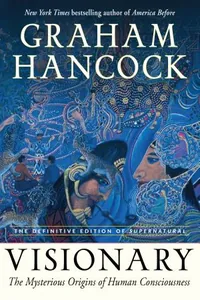





More Free Occult Philosophy Books
View all →