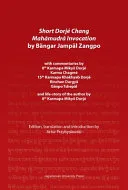
Short Dorjé Chang Mahāmudrā Invocation by Bängar Jampäl Zangpo
 83
83

Short Dorjé Chang Mahāmudrā Invocation by Bängar Jampäl Zangpo
Jampäl Zangpo's "Short Dorjé Chang Mahāmudrā Invocation" offers a distilled essence of profound meditative practice. Rather than presenting lengthy philosophical discourse, it provides a direct method for engaging with Mahāmudrā principles. The text's strength lies in its conciseness, allowing for focused contemplation without overwhelming the practitioner. Its value is amplified for those already conversant with the terminology and aims of Mahāmudrā. However, for complete novices, the lack of extensive introductory material might present a barrier. A particularly potent aspect is the direct invocation of Dorjé Chang, serving as a powerful symbolic anchor for the practice. While its brevity is an asset for practitioners, it means the work doesn't offer historical context or detailed explanations within its pages, requiring prior knowledge or supplementary study. This invocation is a potent tool for experienced practitioners seeking direct access to Mahāmudrā realization.
📝 Description
83
Published in 2022, Jampäl Zangpo's "Short Dorjé Chang Mahāmudrā Invocation" offers a direct meditation practice.
This volume contains the "Short Dorjé Chang Mahāmudrā Invocation," a practice text by the Tibetan Buddhist master Jampäl Zangpo. It is not an extensive philosophical discussion but a concise ritual or meditation aid meant for immediate use. The text aims to help practitioners achieve a specific state of awareness. It draws from the Mahāmudrā (Great Seal) tradition within Tibetan Buddhism, a path that focuses on understanding the true nature of the mind.
This text is suitable for those already acquainted with Mahāmudrā teachings or individuals wishing to deepen their meditation through established Tibetan Buddhist invocations. It will appeal to people interested in brief, effective methods for gaining insight into the mind's essence, rather than lengthy theoretical explanations. Those involved in Vajrayana Buddhism or seeking particular meditation tools will find this work useful. The invocation guides the practitioner through visualizations and mantra recitation intended to stabilize awareness.
The "Short Dorjé Chang Mahāmudrā Invocation" belongs to the Mahāmudrā lineage within Tibetan Buddhism. Mahāmudrā practices, originating with figures like Tilopa and Naropa, aim for direct insight into the mind's fundamental nature. This specific invocation, authored by Jampäl Zangpo, represents a contemporary presentation of these ancient teachings, connecting to the Kagyu school and other traditions that practice Mahāmudrā. It appears at a time when esoteric Buddhist texts are becoming more widely available internationally.
💡 Why Read This Book?
• You will learn a specific, concise method for Mahāmudrā meditation, directly engaging with the "Great Seal" concept as presented by Jampäl Zangpo, offering a potent practice distinct from broader Buddhist texts. • You will gain practical application of the Dorjé Chang symbol, understanding its role as an anchor for recognizing the unchanging, indestructible nature of mind, as intended in the text's structure. • You will experience a focused approach to cultivating mind's inherent clarity, utilizing a ritualistic invocation that bypasses extensive theoretical discussion, providing a direct experiential path first published in 2022.
⭐ Reader Reviews
Honest opinions from readers who have explored this book.
❓ Frequently Asked Questions
What is the primary purpose of the Short Dorjé Chang Mahāmudrā Invocation?
The primary purpose is to provide a concise, direct method for practitioners to engage with Mahāmudrā meditation, focusing on recognizing the nature of mind through invocation and visualization.
Who is Jampäl Zangpo?
Jampäl Zangpo is the author of the "Short Dorjé Chang Mahāmudrā Invocation," a Tibetan Buddhist master whose work was first published in 2022, presenting teachings within the Mahāmudrā lineage.
What does Mahāmudrā refer to in this context?
Mahāmudrā, meaning "Great Seal," refers to the ultimate nature of reality and mind in Tibetan Buddhism – its emptiness, luminosity, and unimpeded awareness.
Is this book suitable for beginners in Buddhism?
While the text is accessible, its direct approach to Mahāmudrā may be best suited for those with some foundational understanding of Buddhist meditation or specific interest in Vajrayana practices.
When was the Short Dorjé Chang Mahāmudrā Invocation first published?
The "Short Dorjé Chang Mahāmudrā Invocation" by Jampäl Zangpo was first published on August 2, 2022.
What is the significance of Dorjé Chang?
Dorjé Chang, often representing the primordial Buddha, symbolizes the unchanging, indestructible, and fundamental nature of enlightenment within Tibetan Buddhist iconography and practice.
🔮 Key Themes & Symbolism
Mahāmudrā Realization
This invocation is a direct pathway to Mahāmudrā, the 'Great Seal,' representing the ultimate nature of mind and reality. It guides practitioners toward recognizing this inherent, unconditioned state, characterized by emptiness and luminosity. The text emphasizes direct experience over intellectual understanding, offering a method to cut through conceptual proliferation and rest in the mind's natural awareness. The practice aims to stabilize attention and reveal the profound clarity that underlies all phenomena.
The Symbolism of Dorjé Chang
Dorjé Chang, the primordial Buddha, serves as a central symbol within this invocation. Representing the unchanging, indestructible, and fundamental essence of enlightenment, Dorjé Chang acts as a powerful focal point. Invoking this figure is understood to connect the practitioner with the unconditioned nature of their own mind. This symbolism is crucial for grounding the practice, providing a tangible representation of the ultimate truth being realized through the meditation.
Concise Ritual Practice
The 'Short Invocation' format highlights the value placed on brevity and potency within certain esoteric traditions. This text is designed not as a lengthy study but as a practical tool for immediate application in meditation. It offers a distilled method, likely involving visualization and mantra, to swiftly guide the practitioner toward the desired state of awareness. This emphasis on concise ritual reflects an approach focused on efficiency and direct impact.
Nature of Mind
Central to the Mahāmudrā tradition and this invocation is the exploration of the mind's true nature. The text guides practitioners to look beyond fleeting thoughts and emotions to perceive the underlying awareness. This awareness is described as inherently clear, open, and free from inherent existence. The invocation serves as a catalyst to directly apprehend this fundamental quality of consciousness, which is considered the basis for all experience and liberation.
💬 Memorable Quotes
Direct passages from the work, attributed to the author.
“The Great Seal: empty, luminous, unimpeded.”
— This captures the essential description of Mahāmudrā, highlighting its lack of inherent existence (empty), its clarity (luminous), and its unhindered capacity to manifest (unimpeded).
“Directly invoke the blessings of awareness.”
— This interpretation suggests the text's function as a ritual tool designed to call upon or evoke the state of profound, clear awareness inherent in Mahāmudrā practice.
“Stabilize attention on the mind's ground.”
— This phrase points to the meditative technique of focusing the mind not on thoughts, but on the underlying substrate of consciousness itself, a key element in Mahāmudrā training.
“Cut through conceptual proliferation.”
— This refers to the aim of Mahāmudrā practice: to cease the incessant stream of discursive thought and arrive at a more direct, non-conceptual understanding of reality.
💡 Key Ideas
Editorial paraphrase of the work's core concepts — not direct quotes.
Recognize the mind's nature as Dorjé Chang.
This paraphrased concept emphasizes the core Mahāmudrā teaching: that the fundamental, unchanging essence of our own consciousness mirrors the qualities of the primordial Buddha, Dorjé Chang.
🌙 Esoteric Significance
Tradition
This work belongs to the Vajrayana (Tibetan) Buddhist esoteric tradition, specifically focusing on the Mahāmudrā ('Great Seal') transmission. Mahāmudrā is a core contemplative practice within lineages like the Kagyu, aiming for direct realization of the nature of mind. It departs from purely philosophical or devotional approaches by emphasizing direct experiential insight into emptiness and luminosity, often through practices like deity yoga and advanced meditation techniques.
Symbolism
Key symbols include Dorjé Chang, representing the primordial, unchanging Buddha-nature, and the concept of the 'Great Seal' (Mahāmudrā) itself. Dorjé Chang serves as a potent visualization anchor, embodying enlightenment's indestructible essence. Mahāmudrā symbolizes the ultimate reality – empty of inherent existence, yet luminous and capable of manifesting all phenomena. The invocation likely employs these symbols to catalyze the practitioner's recognition of their own mind's fundamental purity and potential.
Modern Relevance
Contemporary practitioners of Tibetan Buddhism, particularly within the Kagyu and related Vajrayana lineages, continue to draw upon Mahāmudrā practices. Thinkers and meditation teachers who emphasize direct experience and non-dual awareness, even outside strict Buddhist contexts, may find resonance. The text's concise format aligns with modern desires for efficient, potent spiritual tools applicable in daily life, making it relevant for those seeking accessible yet profound meditative techniques.
👥 Who Should Read This Book
• Advanced practitioners of Tibetan Buddhism: Those already familiar with Mahāmudrā concepts will find a concise, direct invocation for deepening their practice and reinforcing their understanding of mind's nature. • Students of comparative mysticism: Individuals interested in esoteric contemplative techniques across traditions will gain insight into a specific, potent method from the Vajrayana Buddhist lineage. • Meditation instructors seeking focused aids: Those guiding others in meditation may find this text useful for understanding highly concentrated practices aimed at realizing the nature of mind.
📜 Historical Context
The "Short Dorjé Chang Mahāmudrā Invocation" emerges within the extensive lineage of Tibetan Buddhism, specifically the Mahāmudrā tradition, which dates back to figures like Tilopa in the 10th century. While Mahāmudrā teachings are found across various Tibetan schools, they are particularly prominent in the Kagyu lineage. This specific invocation, authored by Jampäl Zangpo and published in 2022, represents a modern iteration of these ancient practices. Its appearance occurs in an era marked by increased global interest in esoteric Buddhism, facilitated by translations and accessible texts. This contrasts with earlier periods, such as the 18th century when figures like the 8th Karmapa Mikyö Dorje were consolidating Mahāmudrā teachings, often within monastic institutions and less accessible to a global audience. The work engages with a long-standing tradition, offering a contemporary presentation for practitioners.
📔 Journal Prompts
The nature of mind as Dorjé Chang.
Your experience with the 'Great Seal' concept.
The impact of concise invocations on your practice.
Recognizing luminosity beyond conceptual thought.
The role of symbols like Dorjé Chang in meditation.
🗂️ Glossary
Mahāmudrā
Literally 'Great Seal,' a core contemplative practice in Tibetan Buddhism aiming for direct realization of the mind's ultimate nature – its emptiness, luminosity, and unimpeded awareness.
Dorjé Chang
Primordial Buddha, representing the unchanging, indestructible, and fundamental essence of enlightenment in Tibetan Buddhism. Often serves as a visualization anchor.
Invocation
A formal or solemn request for divine or spiritual intervention; in this context, a ritualized call or prayer to invoke specific qualities or states of being.
Vajrayana
A major branch of Buddhism originating in India and flourishing in Tibet, characterized by tantric practices, complex visualizations, and the pursuit of enlightenment in a single lifetime.
Nature of Mind
The fundamental, underlying awareness or consciousness, considered in esoteric traditions to be inherently pure, luminous, and empty of conceptual fabrication.
Emptiness (Śūnyatā)
A key Buddhist concept referring to the lack of inherent existence or self-nature in all phenomena, including the mind.
Luminosity
Referring to the clarity and knowing quality of consciousness, often described as inseparable from emptiness in Mahāmudrā teachings.