Egypt, Greece, and Rome
 77
77

Egypt, Greece, and Rome
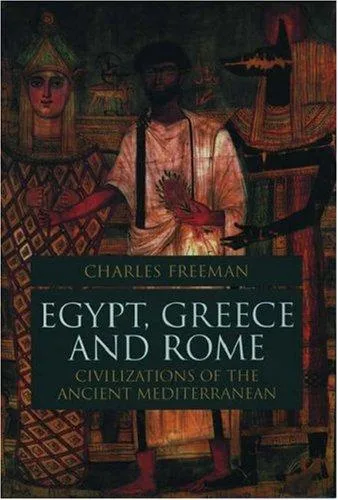
Charles Freeman's Egypt, Greece, and Rome presents a sprawling, ambitious comparison of these three ancient giants, focusing on their intellectual and spiritual architectures. The work's primary strength lies in its meticulous detail, charting the often-subtle influences and divergences between Egyptian, Greek, and Roman cosmologies and ethical frameworks. Freeman effectively demonstrates how philosophical concepts, particularly those emerging from Greek thought, were adapted and disseminated throughout the Mediterranean world. However, the sheer scope occasionally leads to a density that can feel overwhelming, with certain transitions between civilizations feeling abrupt rather than smoothly integrated. The exploration of Roman syncretism, for instance, offers a compelling look at how foreign deities were absorbed, but it sometimes lacks the deep dive into the *experiential* aspects of these cults that some readers might seek from an esoteric perspective. Despite this, the book remains a valuable scholarly resource for understanding the bedrock of Western philosophical and religious history.
📝 Description
77
Charles Freeman's 2004 book examines the religious and philosophical connections between Egypt, Greece, and Rome.
Charles Freeman's work analyzes the religious beliefs, philosophical schools, and societal structures of ancient Egypt, Greece, and Rome. He presents these civilizations not as separate entities but as interconnected streams of thought that significantly influenced Western civilization. The book scrutinizes the development of concepts like monotheism, polytheism, and early philosophical inquiry, tracing their evolution and exchange across these distinct, yet often interacting, cultures.
This book is intended for readers interested in the origins of Western thought and spirituality. It is particularly useful for those seeking to understand the intellectual and religious foundations that shaped later esoteric traditions. Students of history, classics, comparative religion, and philosophy will find material that goes beyond superficial summaries. Those curious about how ideas regarding divinity, the cosmos, and human ethics were formulated and debated in antiquity will find substantial content here.
Freeman's analysis situates ancient Egyptian, Greek, and Roman religious and philosophical thought within a continuum that informed later esoteric traditions. By detailing the shared concepts and intellectual dialogues between these foundational cultures, the book illuminates the origins of ideas about divine principles, cosmic order, and human spiritual development. It shows how early philosophical speculation and evolving religious practices laid groundwork for subsequent Western mystical and philosophical systems, particularly those that emerged during the Hellenistic and Roman periods.
💡 Why Read This Book?
• Gain a concrete understanding of the evolution of monotheistic and polytheistic concepts, tracing their roots from Egyptian divine kingship and Greek pantheons to Roman state cults, as detailed in the book's comparative analysis of religious structures. • Explore the intellectual lineage of Western philosophy by examining how Greek thinkers like Plato and Aristotle articulated concepts of the cosmos and ethics, and how these ideas were transmitted and transformed by Roman thinkers. • Understand the pre-Christian spiritual landscape by investigating the rise and influence of mystery cults, such as those dedicated to Isis and Mithras, which offered personal salvation and esoteric knowledge outside mainstream civic religion.
⭐ Reader Reviews
Honest opinions from readers who have explored this book.
❓ Frequently Asked Questions
What is the primary focus of Charles Freeman's "Egypt, Greece, and Rome"?
The book primarily focuses on the comparative study of the religious, philosophical, and societal structures of ancient Egypt, Greece, and Rome, examining their interconnectedness and influence on Western civilization.
When was "Egypt, Greece, and Rome" first published?
Charles Freeman's "Egypt, Greece, and Rome" was first published in 2004.
Does the book discuss the impact of Greek philosophy on Roman thought?
Yes, a significant aspect of the book involves tracing the transmission and adaptation of Greek philosophical ideas, such as Stoicism and Neoplatonism, within the Roman intellectual environment.
Are mystery cults a prominent theme in the book?
Indeed, the work explores the rise and influence of various mystery cults, like those of Isis and Mithras, highlighting their role in offering personal spiritual experiences and esoteric knowledge.
What historical periods does "Egypt, Greece, and Rome" cover?
The book spans from the height of ancient Egyptian civilization through the classical period of Greece and into the Roman Republic and Empire, emphasizing periods of cultural exchange and philosophical development.
Is this book suitable for beginners in ancient history?
While detailed, the book provides a comprehensive overview that can be beneficial for motivated beginners interested in the foundational elements of Western civilization's intellectual and spiritual heritage.
🔮 Key Themes & Symbolism
Divine Concepts
The work scrutinizes how concepts of the divine evolved across these cultures. It examines the Egyptian focus on a complex pantheon and afterlife rituals, the Greek development of anthropomorphic gods and philosophical inquiries into the Prime Mover, and the Roman integration of state deities with imperial cults. This exploration highlights shifts from polytheistic systems to more abstract, singular divine principles, laying groundwork for later monotheistic and philosophical traditions. The text traces the conceptualization of divinity from immanent forces within nature to transcendent, ordered cosmic principles, a key development for Western metaphysics.
Philosophical Currents
Freeman charts the significant influence of Greek philosophical schools, such as Platonism, Stoicism, and Aristotelianism, on the intellectual field of the ancient world. It details how these ideas were adopted, debated, and synthesized by Roman thinkers and how they permeated Roman governance and personal ethics. The book explores the philosophical underpinnings of concepts like justice, virtue, and the nature of reality, showing how these debates formed a crucial part of the Hellenistic and Roman intellectual heritage that would later inform esoteric movements.
Mystery Religions and Esoteric Paths
A substantial portion of the analysis is dedicated to the prevalence and significance of mystery religions and other esoteric traditions within these societies. The book examines cults centered around deities like Isis, Osiris, and Mithras, detailing their promise of personal salvation, initiation rites, and secret doctrines. It contrasts these personal, often ecstatic spiritual paths with the more civic or philosophical orientations, illustrating the diverse ways individuals sought meaning and connection to the divine in the ancient world.
Cultural Syncretism
The text emphasizes the dynamic process of cultural exchange and syncretism that occurred between Egypt, Greece, and Rome. It illustrates how religious beliefs, artistic styles, and philosophical ideas were blended and transformed as these civilizations interacted. This cross-pollination is presented not as mere adoption, but as a creative synthesis that forged new cultural expressions, particularly evident in the Hellenistic period and the Roman Empire's vast reach, which facilitated the widespread dissemination of diverse spiritual and intellectual traditions.
💬 Memorable Quotes
Direct passages from the work, attributed to the author.
“The Egyptian preoccupation with the afterlife and divine order.”
— This highlights a core element of ancient Egyptian spirituality: a profound focus on preparing for and understanding the journey beyond death, intertwined with a belief in cosmic justice and the rule of divine law, which contrasted with other ancient worldviews.
“Greek philosophical inquiry into the nature of the cosmos.”
— This points to the intellectual drive in ancient Greece to understand universal principles and the structure of reality through reason and logic, moving beyond purely mythological explanations and influencing subsequent Western thought.
“The Roman adoption and adaptation of foreign deities.”
— This refers to the Roman practice of incorporating gods and cults from conquered peoples into their own religious system, often identifying them with existing Roman deities, a process that demonstrates their pragmatic approach to religious and cultural integration.
“The promise of personal salvation offered by mystery cults.”
— This captures the appeal of initiatory religions, which provided adherents with a direct, often transformative, spiritual experience and the assurance of divine favor or an improved afterlife, a significant alternative to public religious observance.
“The Hellenistic synthesis of Eastern and Western thought.”
— This concept describes the intellectual melting pot that emerged after Alexander the Great's conquests, where Greek ideas mingled with those of Egypt, Persia, and India, creating new philosophical and religious currents that shaped the ancient world.
🌙 Esoteric Significance
Tradition
While not explicitly aligned with a single esoteric tradition, Freeman's work provides crucial historical context for Hermeticism, Gnosticism, and Neoplatonism. It details the ancient Egyptian religious concepts and Greek philosophical ideas that formed the bedrock upon which these later esoteric systems were built. By tracing the lineage of ideas about divine emanations, cosmic order, and spiritual initiation, the book serves as a foundational resource for understanding the intellectual origins of Western esotericism.
Symbolism
The work implicitly explores potent symbols. Egyptian hieroglyphs and funerary texts, representing concepts of cosmic balance (Ma'at) and the journey of the soul (e.g., the Book of the Dead), are examined for their worldview. Greek myths, such as the Orphic mysteries or the Eleusinian rites, contain symbolic narratives of death, rebirth, and divine union. The Roman adoption of foreign iconography, like the Egyptian Isis cult, demonstrates how symbols traveled and acquired new meanings across cultures.
Modern Relevance
Contemporary practitioners of Western esoteric traditions, particularly those interested in Hermeticism and comparative mythology, draw heavily on the historical grounding provided by Freeman's research. Thinkers and groups exploring the roots of consciousness, divine archetypes, and the historical development of spiritual practices find invaluable context in his analysis of ancient Egyptian cosmology and Greek philosophical inquiry. The book informs modern discussions on the perennial philosophy and the evolution of religious ideas.
👥 Who Should Read This Book
• Students of comparative religion and ancient history seeking to understand the intellectual and spiritual connections between Egypt, Greece, and Rome, and their foundational impact on Western civilization. • Aspiring practitioners of Western esoteric traditions (e.g., Hermeticism, Gnosticism) who need a scholarly overview of the ancient worldviews that informed these paths. • Philosophy enthusiasts interested in the origins of key Western concepts like monotheism, ethical frameworks, and cosmological models, tracing their development from antiquity.
📜 Historical Context
Charles Freeman's Egypt, Greece, and Rome emerged in 2004, a period when academic interest in the comparative study of ancient civilizations was robust, yet often siloed. The book engaged with established scholarship on classical antiquity and Egyptology, but sought to bridge these fields by examining their intellectual and spiritual intersections. It arrived at a time when popular interest in ancient religions and philosophies was also growing, influenced by earlier works on Gnosticism and Hermeticism. Freeman's approach offered a more grounded, historical perspective, often contrasting with more speculative esoteric interpretations. While not directly engaging in public debate or facing censorship, the book's scholarly tone and broad scope positioned it as a significant text for understanding the pre-Christian foundations of Western thought, offering a counterpoint to purely theological or philosophical narratives.
📔 Journal Prompts
The Egyptian concept of Ma'at and its influence on concepts of justice.
Greek philosophical dialogues concerning the nature of the soul.
The role of initiatory rites in the Roman mystery cults.
Tracing the transmission of philosophical ideas from Athens to Rome.
Comparing Egyptian funerary beliefs with later conceptions of the afterlife.
🗂️ Glossary
Ma'at
An ancient Egyptian concept representing truth, balance, order, law, morality, and justice. It was personified as a goddess and was central to Egyptian cosmology and ethical conduct.
Hellenistic Period
The historical era following the conquests of Alexander the Great, characterized by the spread of Greek culture and language across the Eastern Mediterranean and Southwest Asia, fostering significant cultural exchange.
Stoicism
A school of Hellenistic philosophy founded by Zeno of Citium, emphasizing virtue, reason, and living in accordance with nature. It profoundly influenced Roman thought and ethics.
Mystery Cults
Ancient religious groups, such as those dedicated to Dionysus, Demeter, Isis, or Mithras, characterized by secret initiation rites and promises of personal salvation or spiritual enlightenment for their adherents.
Neoplatonism
A philosophical system developed by Plotinus in the 3rd century CE, building on Plato's ideas. It posits a transcendent, unified divine source (The One) from which all reality emanates, influencing later mystical and esoteric thought.
Syncretism
The fusion or blending of different religious or philosophical beliefs, symbols, and practices, often occurring when cultures come into contact, leading to the formation of new, hybrid traditions.
Prime Mover
A concept in Aristotelian philosophy referring to an ultimate cause or source of all motion and change in the universe, often interpreted as a divine or first principle.
🔮 Readers Also Liked
Browse all →







More by Charles Freeman
All books →

More Free Occult Philosophy Books
View all →