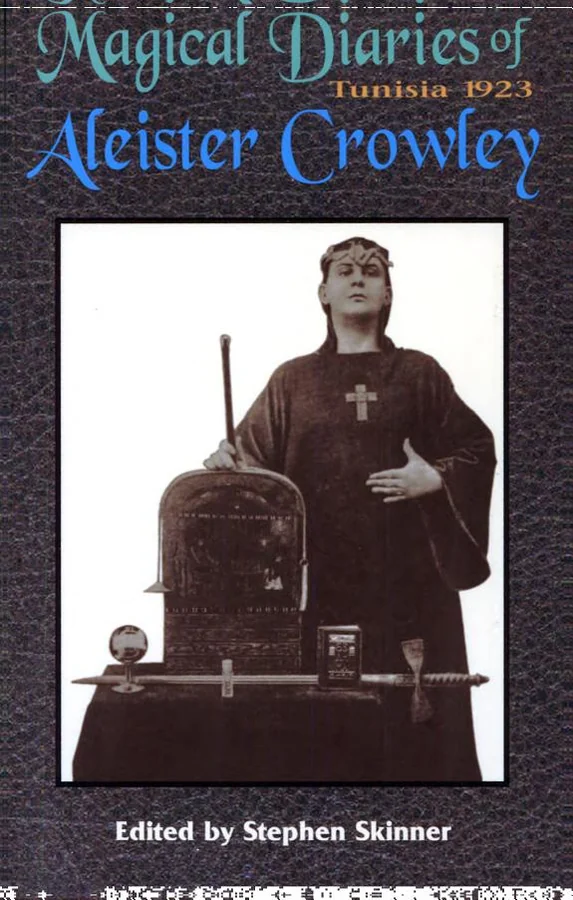
Magical Diaries of Aleister Crowley
 79
79

Magical Diaries of Aleister Crowley
The Magical Diaries of Aleister Crowley offer an unfiltered window into the magician's mind during a critical phase of his life. Following the tumultuous closure of the Abbey of Thelema in 1923, these writings from Cefalù reveal Crowley's persistent dedication to his magical work. The exploration of Cabalistic and sexual magic is particularly illuminating, demonstrating the practical application of his theories. However, the text can be dense, requiring a foundational understanding of Crowley's lexicon and esoteric frameworks. A notable passage detailing his interactions with local North African magic showcases his intellectual curiosity and willingness to synthesize diverse traditions. While challenging, the diaries provide an invaluable primary resource for understanding Crowley's later magical development, offering direct access to his evolving system.
📝 Description
79
Aleister Crowley's personal diaries from 1924 detail his magical experiments after the Abbey of Thelema's closure.
The Magical Diaries of Aleister Crowley offers an unfiltered view of the occultist's practices and thoughts following the 1923 shutdown of his Abbey of Thelema in Cefalù, Sicily. These writings document Crowley's intense magical work and intellectual evolution during this period. Readers gain direct insight into his experiments with Cabalistic magic, sexual magic, and his interactions with North African magical traditions. This volume reveals the practical application of his esoteric theories directly from his own hand.
This book is suited for serious students of Western Esotericism, practitioners of ceremonial magic, and historians of occultism. It provides primary source material for those wishing to engage with Crowley's work without relying on secondary interpretations. Individuals interested in the connection between personal experience, spiritual discipline, and magical theory will find considerable value. It also serves those curious about early 20th-century occultism and Crowley's life.
These diaries were written after the controversial Abbey of Thelema project was closed by Italian authorities. This time was important for Crowley as he continued to develop his magical system and personal philosophy. The work reflects the intellectual climate of early 20th-century occultism, a time when figures like Crowley, Golden Dawn members, and Theosophists were influential in modern esoteric movements. The diaries were published in 1996, making Crowley's private records accessible to a wider audience.
These diaries emerge from the post-World War I era, a fertile period for Western Esotericism. Following the collapse of his Abbey of Thelema, Crowley continued his magical research, building upon earlier influences like the Hermetic Order of the Golden Dawn and his own system of Thelema. His writings reflect a broader contemporary interest in incorporating diverse magical traditions, including those encountered in North Africa, into European occult frameworks. The period also saw significant developments in ceremonial magic and theosophical thought, with which Crowley and his contemporaries engaged.
💡 Why Read This Book?
• Gain direct insight into Aleister Crowley's personal magical practices and theoretical development following the 1923 closure of his Abbey of Thelema in Sicily. • Understand the practical application of Cabalistic and sexual magic as detailed in Crowley's private records, moving beyond abstract theory. • Explore Crowley's engagement with North African Arab magic, revealing a syncretic approach to esoteric traditions documented during his time in Cefalù.
⭐ Reader Reviews
Honest opinions from readers who have explored this book.
❓ Frequently Asked Questions
When were the Magical Diaries of Aleister Crowley first published?
The Magical Diaries of Aleister Crowley were first published in 1996, making these personal records accessible to a broader audience decades after their creation.
What period of Aleister Crowley's life do these diaries cover?
These diaries primarily cover the period following Aleister Crowley's expulsion from the Abbey of Thelema in Cefalù, Sicily, around 1923, detailing his subsequent magical work.
What types of magic are discussed in the Magical Diaries?
The diaries discuss various forms of magic, including advanced Cabalistic techniques, sexual magic (magick), and Crowley's encounters with the Arab magic of North Africa.
Are these diaries a good starting point for learning about Aleister Crowley?
While valuable for primary source insight, these diaries are best suited for those with some existing knowledge of Crowley's life and esoteric philosophy due to their technical nature.
What is the significance of Cefalù in relation to these diaries?
Cefalù, Sicily, is significant as the location of Crowley's Abbey of Thelema, from which he was expelled. The diaries document his magical work and reflections immediately following this expulsion.
Can I find information on Crowley's contact with North African magic in this book?
Yes, the Magical Diaries detail Crowley's experiences and explorations into the Arab magic of North Africa, offering insights into his syncretic approach to different magical traditions.
🔮 Key Themes & Symbolism
Cabalistic Magical Techniques
The diaries examine Crowley's practical application of Cabala, moving beyond theoretical Kabbalah to its use as a framework for ritual and spiritual advancement. This involves detailed explorations of divine names, angelic hierarchies, and planetary correspondences, aimed at manipulating the forces of the universe for specific magical outcomes. Crowley's approach integrates these ancient Jewish mystical concepts into his broader magical system, Thelema, emphasizing their role in achieving higher consciousness and effecting change in the material world.
Sexual Magic (Magick)
A significant portion of the diaries addresses sexual magic, a core component of Crowley's system. This is not merely about physical acts but about harnessing the potent creative and spiritual energies generated during sexual union. Crowley documents experiments and theories concerning the transformation of this energy for magical purposes, including spiritual attainment, divination, and the manifestation of intent. The text offers a direct, often candid, view into his personal practice and philosophical understanding of this potent esoteric art.
North African Arab Magic
Crowley's diaries record his encounters with and study of the indigenous magical practices prevalent in North Africa during his travels. This theme highlights his syncretic approach, seeking to integrate diverse esoteric traditions into his own magical framework. He documents observations, interactions with practitioners, and his attempts to understand and apply these methods, which often involved different spiritual entities, talismans, and ritualistic practices distinct from Western ceremonial magic. This reflects his global perspective on occultism.
Post-Cefalù Development
These writings represent a crucial phase of Crowley's intellectual and magical development following the forced closure of his Abbey of Thelema in Cefalù, Sicily, in 1923. The diaries serve as a record of his continued work and philosophical consolidation in the wake of this significant life event. They showcase his resilience and unwavering commitment to his magical path, demonstrating how he adapted and continued his research and practice away from the communal setting of the Abbey.
💬 Memorable Quotes
Direct passages from the work, attributed to the author.
“The work that Crowley began in Cefalù.”
— This phrase points to the continuation of his magical endeavors after the Abbey's closure. It signifies that his esoteric research and practical application of magic did not cease but rather evolved in new directions during this period.
“Techniques of cabalistic and sexual magic.”
— This highlights two central pillars of Crowley's magical system explored in the diaries. It indicates a focus on both the theoretical-symbolic manipulation of the Tree of Life and the energetic practices of sexual magick.
“His contact with the Arab magic of North Africa.”
— This suggests an engagement with indigenous, possibly shamanic or animistic, magical traditions encountered during his travels. It points to a syncretic aspect of his work, integrating diverse esoteric streams.
“Records consolidated the work that Crowley began in Cefalù.”
— This implies that the diaries served as a personal log and analytical tool, helping Crowley to systematize and understand the magical operations and insights gained during his time in Sicily.
“Explored more deeply the various techniques...”
— This indicates a rigorous and analytical approach to his magical practices, suggesting the diaries contain not just descriptions but also critical examination and refinement of his methods.
🌙 Esoteric Significance
Tradition
The work is deeply rooted in the Western Esoteric Tradition, particularly Hermeticism and Ceremonial Magic, as synthesized and expanded by Aleister Crowley into his own system, Thelema. It builds upon the foundations laid by earlier magical orders and thinkers but departs significantly through its emphasis on individual will (thelema) and the integration of sexual magic. Crowley sought to create a universal religion and magical system accessible to all, and these diaries represent the practical, personal unfolding of that ambition.
Symbolism
Key symbols explored include those derived from Cabalistic systems, such as the Tree of Life, representing the structure of the universe and consciousness. Sexual magic itself is a potent symbolic act, representing the union of divine principles (often symbolized as masculine and feminine) to create or manifest. The influence of North African magic introduces potentially animistic or elemental symbols and spirits, reflecting a broader engagement with the unseen forces of nature and the spirit world.
Modern Relevance
Contemporary practitioners of Thelema and various forms of Western Ceremonial Magic continue to draw upon Crowley's writings, including his diaries, for instruction and inspiration. Thinkers and authors in modern occultism frequently reference Crowley's concepts, particularly regarding sexual magic and the application of Cabalistic principles. His emphasis on individual sovereignty and the pursuit of one's True Will remains a resonant theme in many contemporary spiritual and magical circles.
👥 Who Should Read This Book
• Advanced practitioners of Ceremonial Magic seeking primary source material on specific techniques like Cabalistic and sexual magic. • Scholars of occult history and 20th-century esotericism interested in Aleister Crowley's personal development and magical research post-1923. • Students of comparative religion and mythology interested in Crowley's syncretic approach, particularly his engagement with North African magical traditions.
📜 Historical Context
The Magical Diaries of Aleister Crowley were penned in the years following the dramatic 1923 eviction from his Abbey of Thelema in Cefalù, Sicily, an event that garnered significant international attention and fueled public controversy surrounding Crowley. This period saw Crowley continue to develop his unique brand of magick, often referred to as Thelema, amidst a European occult landscape populated by figures like Dion Fortune and the continued influence of the Hermetic Order of the Golden Dawn. While Crowley's methods, particularly his embrace of sexual magic and his syncretic approach drawing from various global traditions, set him apart, the intellectual currents of the time were ripe for esoteric exploration. The diaries offer a primary source perspective on how Crowley processed these events and continued his rigorous magical research, distinct from the more academically-focused occult studies emerging elsewhere. The reception of Crowley's work was largely polarized, with fervent adherents and vehement detractors, making primary documents like these crucial for academic and practitioner understanding.
📔 Journal Prompts
The specific techniques of Cabalistic magic detailed following the Abbey's closure.
Crowley's personal practice of sexual magic and its documented energetic transformations.
Reflections on the Arab magic of North Africa encountered during this period.
The consolidation of magical work initiated in Cefalù.
Personal interpretations of the symbolic language employed in the diaries.
🗂️ Glossary
Cabalistic Magic
A form of magic derived from or influenced by Jewish Kabbalah, utilizing concepts such as the Tree of Life, divine names, and angelic correspondences for ritualistic and spiritual purposes.
Sexual Magic (Magick)
The practice of harnessing sexual energy and the physiological processes of sex for magical or spiritual ends, aimed at achieving altered states of consciousness or manifesting desired outcomes.
Abbey of Thelema
A community founded by Aleister Crowley in Cefalù, Sicily, intended as a center for the practice and propagation of his religion, Thelema. It was forcibly closed by Italian authorities in 1923.
Cefalù
A coastal town in Sicily, Italy, where Aleister Crowley established the Abbey of Thelema. The diaries document his work following his expulsion from this location.
Thelema
The religious and philosophical system founded by Aleister Crowley, based on the principle 'Do what thou wilt shall be the whole of the Law.' It emphasizes individual will and spiritual attainment.
Arab Magic
Refers to magical practices and traditions originating from or associated with Arab cultures, particularly those Crowley encountered in North Africa, often involving different spiritual entities and ritual forms.
True Will
A central concept in Thelema, representing an individual's unique purpose or destiny in life. Discovering and enacting one's True Will is considered the primary goal of the spiritual path.
This book appears in 1 collection
🔮 Readers Also Liked
Browse all →









From the “Thelema” Collection
View all →




More Free Occult Philosophy Books
View all →