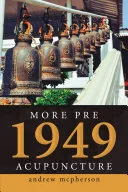
More Pre 1949 Acupuncture
 74
74

More Pre 1949 Acupuncture
Andrew McPherson's More Pre 1949 Acupuncture offers a necessary counterpoint to idealized notions of TCM's continuity. The work's strength lies in its meticulous tracing of how political and social shifts, particularly in the early to mid-20th century, directly impacted the standardization and conceptualization of Acupuncture. McPherson compellingly illustrates how reforms intended to modernize or legitimize the practice inadvertently altered its core principles. A specific passage detailing the debates around the 'Five Shu Points' versus newly systematized channel theory demonstrates this dynamic effectively. However, the book could benefit from a more explicit engagement with the reception of these changes by practitioners outside of China during the period under review. Despite this, McPherson provides a vital scholarly corrective for anyone invested in the authentic history of this ancient medicine.
📝 Description
74
Andrew McPherson's More Pre 1949 Acupuncture examines the transformations in East Asian medical practices before 1949.
This book continues Andrew McPherson's study of Acupuncture and Traditional Chinese Medicine (TCM), focusing on the period before 1949. It scrutinizes the significant shifts these practices underwent in the decades leading up to this pivotal year. McPherson situates Acupuncture within its historical context, detailing the influences and changes that shaped its practice. The work highlights how both external pressures and internal developments caused divergences from earlier forms of Acupuncture.
The author demonstrates that diagnostic methods, point selections, and theoretical frameworks shifted during this time. McPherson argues that the Acupuncture practiced after 1949 is not an unbroken tradition but a result of specific historical forces and reforms. This volume is intended for practitioners, historians, and scholars of East Asian medicine seeking a deeper understanding of Acupuncture's evolution and the socio-political forces that influenced its development.
This work engages with the historical development of East Asian medical traditions, specifically Acupuncture, prior to its standardization in the mid-20th century. It analyzes how established practices were altered by external societal and political factors, diverging from earlier, perhaps more esoteric, forms. The book’s focus on the pre-1949 period suggests an interest in the state of Acupuncture before modern reforms solidified its current structure. Understanding this historical context is crucial for appreciating the lineage and potential variations within esoteric medical systems.
💡 Why Read This Book?
• Gain insight into the specific socio-political factors that reshaped Acupuncture before 1949, understanding how reforms influenced point selection and theory, a perspective not found in generalized texts. • Understand the divergence between historical practice and modern standardization by examining McPherson's analysis of pre-1949 Chinese medical literature and reform movements. • Appreciate the nuanced historical evolution of East Asian Medicine by engaging with McPherson's critical examination of how Acupuncture's form and function were deliberately altered.
⭐ Reader Reviews
Honest opinions from readers who have explored this book.
❓ Frequently Asked Questions
What is the primary focus of More Pre 1949 Acupuncture?
The book's primary focus is on the evolution of Acupuncture and Chinese Medicine in the period leading up to 1949, detailing how these practices changed and the reasons behind those transformations.
How does this book differ from its predecessor, Pre 1949 Acupuncture?
More Pre 1949 Acupuncture acts as a direct continuation, delving deeper into the 'modern' history of Acupuncture and Chinese Medicine prior to 1949, elaborating on the changes and their motivations.
What audience would benefit most from reading this book?
Practitioners, historians, and scholars of East Asian medicine, as well as anyone interested in the historical and socio-political influences on medical practices, will find this book beneficial.
Does the book discuss the impact of Western medicine on traditional Chinese practices?
Yes, the work explores how external pressures and internal reformations, influenced by various societal shifts, contributed to the significant changes observed in Acupuncture leading up to 1949.
What kind of historical analysis does Andrew McPherson provide?
McPherson provides a critical analysis of how diagnostic methods, theoretical frameworks, and point selections within Acupuncture were altered, moving beyond a purely theoretical approach to examine practical shifts.
Is this book suitable for beginners in Acupuncture studies?
While it offers historical depth, the book is geared towards those with some existing knowledge of Acupuncture or Chinese Medicine, particularly those interested in its historical trajectory and scholarly debates.
🔮 Key Themes & Symbolism
Reformed Meridian Theory
The work dissects how the classical understanding of meridians and Qi flow was reinterpreted and, in some cases, simplified in the decades preceding 1949. McPherson highlights how attempts to standardize these complex energetic pathways often led to a more mechanistic model, diverging from earlier, more intuitive or spiritually informed interpretations common in pre-modern texts.
Standardization of Point Nomenclature
A significant theme is the process by which acupuncture point names and locations became codified. The book examines the debates and decisions that led to the adoption of specific point systems, contrasting them with the more varied and context-dependent usage prevalent in earlier eras. This standardization is presented not as a neutral act but one driven by specific socio-political and educational agendas.
The Influence of Political Reform
McPherson illustrates how broader political movements and ideologies within China directly impacted the practice and perception of Acupuncture. The drive towards modernization and national identity formation played a role in how traditional medicine was presented, preserved, or altered, often leading to a selective emphasis on certain aspects over others.
Divergence from Earlier Practice
The core argument revolves around the significant departure of post-1949 Acupuncture from its pre-modern roots. The book meticulously details the specific changes in theory, diagnosis, and treatment that occurred, demonstrating that the Acupuncture commonly practiced today is a product of specific historical interventions rather than an unbroken lineage.
💬 Memorable Quotes
Direct passages from the work, attributed to the author.
“The Acupuncture that emerged post-1949 was not a simple continuation, but a re-sculpted practice.”
— This statement captures McPherson's central thesis: that significant alterations occurred in Acupuncture's theory and application due to historical pressures, making the modern form distinct from its predecessors.
“Standardization efforts often prioritized accessibility over nuanced understanding.”
— This interpretation highlights how the drive to make Acupuncture more widely taught and practiced led to a simplification of its complex theoretical underpinnings, potentially losing depth.
“The debates surrounding channel theory reveal ideological shifts in medical thought.”
— This points to the author's examination of how theoretical discussions within Chinese Medicine reflected broader philosophical and political currents of the time, influencing how medical concepts were understood.
“Pre-1949 texts show a greater reliance on empirical observation tied to specific regional traditions.”
— This suggests that earlier forms of Acupuncture were more organically connected to local practices and individual physician experience, contrasting with later attempts at universal systematization.
💡 Key Ideas
Editorial paraphrase of the work's core concepts — not direct quotes.
The reasons for change were as much political as they were medical.
This paraphrased concept emphasizes McPherson's argument that external socio-political factors were instrumental in shaping the evolution of Acupuncture, not solely internal medical developments.
🌙 Esoteric Significance
Tradition
While Acupuncture is fundamentally a medical system, its deeper theoretical frameworks touch upon Taoist cosmology and energetic principles that align with various esoteric traditions. McPherson's work, by focusing on historical shifts, implicitly engages with how these esoteric underpinnings were preserved, altered, or downplayed in the transition towards a more secularized and standardized medical practice.
Symbolism
The concept of Qi, the vital life force, is central. Its understanding within esoteric traditions often relates to cosmic energies and spiritual cultivation. Additionally, the specific points and channels, while having anatomical correlates, were historically understood through symbolic and energetic relationships that connected the microcosm of the body to the macrocosm, reflecting Hermetic principles of correspondence.
Modern Relevance
Contemporary discussions in integrative medicine and alternative healing modalities often grapple with the historical authenticity of practices like Acupuncture. Scholars and practitioners seeking to understand the roots of modern TCM and its divergence from older forms, as detailed by McPherson, inform current debates on preserving traditional knowledge while adapting it for contemporary use.
👥 Who Should Read This Book
• Historians of Medicine: Researchers studying the impact of political and social change on medical practices will find McPherson's detailed analysis of pre-1949 China invaluable. • Acupuncture and TCM Practitioners: Those seeking to understand the historical roots of their practice and the reasons behind modern standardization will gain critical context. • Scholars of East Asian Studies: Individuals interested in the evolution of cultural and scientific thought in China will benefit from the examination of how medicine intersected with broader societal transformations.
📜 Historical Context
The period leading up to 1949 in China was one of immense upheaval, marked by the decline of imperial rule, the rise of republicanism, and the eventual establishment of the People's Republic. Within this volatile environment, traditional Chinese medicine, including Acupuncture, faced intense scrutiny and pressure for reform. Intellectual currents debated the efficacy and scientific validity of these ancient practices, often influenced by Western medical paradigms. Competing schools of thought emerged, some advocating for the complete abandonment of traditional medicine, while others sought to reform and integrate it. McPherson's work situates itself within this complex milieu, demonstrating how the drive for modernization and national identity influenced the standardization and theoretical shifts in Acupuncture, particularly concerning its meridian system and point nomenclature.
📔 Journal Prompts
The standardization of Acupuncture points: What was gained and what may have been lost?
The influence of political reform on medical theory: How did broader societal shifts shape Acupuncture's evolution?
Comparing pre-1949 practice with contemporary approaches: Identify one key theoretical divergence explored by McPherson.
The concept of Qi: Reflect on how its understanding might have changed due to historical pressures.
The reasons for Acupuncture's radical change: Analyze the interplay between medical and non-medical factors.
🗂️ Glossary
Meridian Theory
A fundamental concept in Traditional Chinese Medicine describing pathways within the body through which Qi (vital energy) flows. These pathways connect acupuncture points and internal organs.
Qi
Often translated as vital energy or life force, Qi is considered the fundamental substance and animating principle of the universe and the human body in TCM.
Acupuncture Points
Specific locations on the body, typically along meridians, where needles or other stimuli are applied to influence the flow of Qi and treat disease.
Nomenclature
The system of naming, especially the internationally recognized system of naming. In this context, it refers to the standardized naming of acupuncture points and meridians.
Channel Theory
A theoretical framework within TCM that describes the interconnected network of meridians and their associated functions, explaining how diseases manifest and how they can be treated.
TCM
Abbreviation for Traditional Chinese Medicine, a holistic medical system developed over thousands of years, encompassing acupuncture, herbal medicine, diet, and other practices.
Five Shu Points
A set of five specific acupuncture points located on the distal part of the limbs (fingers, toes, wrists, ankles) on each of the twelve main meridians, believed to have significant systemic effects.