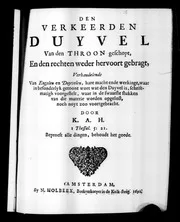
DEN verkeerden duyvel van den throon geschopt en den rechten weder hervoort gebragt, verhandelende van engelen en duyvelen, ... 1692: Iss 268
 72
72

DEN verkeerden duyvel van den throon geschopt en den rechten weder hervoort gebragt, verhandelende van engelen en duyvelen, ... 1692: Iss 268



Isolde Whitaker, Sacred Texts Editor: 'DEN verkeerden duyvel' is a potent artifact from the late Baroque, offering an unvarnished look at late 17th-century demonology and angelic lore. This issue, 268, meticulously chronicles the cosmic struggle, presenting a richly symbolic narrative of divine restoration. Its strength lies in its intricate descriptions of spiritual hierarchies and the nuanced portrayal of the 'false' versus the 'true' forces. While dense, it rewards the persistent reader with profound insights into spiritual warfare and the nature of good and evil. Essential for scholars of witchcraft, demonology, and early modern religious thought, and for practitioners seeking to understand historical frameworks of spiritual defense.
📝 Description
72
Published in 1692, 'DEN verkeerden duyvel van den throon geschopt' details a spiritual war between angels and devils.
This 1692 text, identified as issue 268 of a publication, examines the conflict between celestial and infernal powers. It describes the nature and ranks of angels and devils, building a theological and metaphysical system. The book also acts as a guide to spiritual discernment, showing how malevolent forces can appear powerful but ultimately fail against divine order. It is suited for those interested in occult philosophy and hidden knowledge. The writing uses rich allegory and detailed lore about angels and demons. This makes it useful for understanding the symbolic language of spiritual conflict and the roots of Western esotericism and demonology.
This work belongs to the tradition of Christian demonology and angelology prevalent in the late 17th century. It engages with concepts of spiritual combat and the hierarchical structure of both heavenly and hellish realms, common in Kabbalistic, Hermetic, and high magical traditions. The text reflects a period when understanding the unseen world was crucial for spiritual practice and theological debate, influencing later esoteric movements that sought to catalog and understand angelic and demonic entities.
💡 Why Read This Book?
Explore the archaic language of spiritual warfare and uncover potent symbolism concerning the eternal conflict between good and evil. This text offers a unique window into 17th-century esotericism, revealing hidden doctrines about angels and devils. Ideal for scholars, practitioners of occult arts, and seekers of ancient wisdom who wish to understand historical perspectives on spiritual reality and cosmic order.
⭐ Reader Reviews
Honest opinions from readers who have explored this book.
❓ Frequently Asked Questions
What is the primary focus of this 1692 text?
The primary focus is the symbolic overthrow of malevolent spiritual forces and the restoration of divine order, detailing the nature and conflict between angels and devils within a complex esoteric framework.
Who is the intended audience for this publication?
The intended audience comprises serious seekers of hidden spiritual knowledge, students of occult philosophy, and scholars interested in 17th-century demonology and theological debates.
What kind of knowledge can be found within its pages?
Readers can expect to find insights into angelic and demonic hierarchies, symbolic interpretations of spiritual battles, and a theological perspective on the triumph of good over evil, presented through allegorical and esoteric language.
Is this a historical document or a practical guide?
It is primarily a historical and theological document, offering historical perspectives and symbolic interpretations rather than a direct practical guide for modern occult practices.
What makes this text 'esoteric'?
Its esoteric nature lies in its veiled language, symbolic allegories, and its exploration of hidden spiritual realities and cosmic battles not commonly discussed in mainstream theology of the era.
🔮 Key Themes & Symbolism
Cosmic Spiritual Warfare
This theme explores the profound and often unseen conflict between celestial angelic forces and infernal demonic entities. The text presents this struggle not merely as a theological concept but as a tangible, ongoing battle for dominion over realms both spiritual and terrestrial. It explores the strategies, natures, and ultimate outcomes of these spiritual engagements, offering readers a framework for understanding the dynamics of cosmic order and the persistent influence of malevolent powers on the material world. The narrative emphasizes the eventual triumph of divine influence, providing a clear source of hope and a guide to discerning the true nature of spiritual opposition.
The Nature of Angels and Devils
The work provides an intricate examination of the beings that populate the spiritual strata, distinguishing between the pure, divine essence of angels and the corrupted, deceptive nature of devils. It details their respective roles, hierarchies, and modes of operation, offering a complex cosmology that shaped early modern beliefs. This exploration goes beyond simplistic good-versus-evil dichotomies, presenting a nuanced understanding of their influences, temptations, and the methods by which they seek to sway mortal affairs. The text aims to equip readers with the knowledge to recognize and resist infernal influences while aligning with celestial guidance.
Restoration of Divine Order
Central to the text is the concept of the 'false devil' being cast down and the 'true' divine principle being re-established. This theme represents the ultimate victory of light over darkness, order over chaos, and truth over deception. It speaks to a cyclical or redemptive process wherein periods of spiritual corruption are overcome by a resurgence of divine power and righteousness. The narrative offers a powerful message of hope and resilience, suggesting that despite the prevalence of malevolent forces, the inherent cosmic order is ultimately inviolable and will always assert itself, guiding humanity back towards spiritual enlightenment and harmony.
💬 Memorable Quotes
Direct passages from the work, attributed to the author.
“Den rechten weder hervoort gebragt...”
— This phrase signifies the core theme: the true divine essence being brought forth and re-established, implying a period of darkness being overcome by enduring light.
“Verhandelende van engelen en duyvelen...”
— This clearly states the book's subject matter, introducing the complex exploration of celestial and infernal beings and their interactions within a spiritual framework.
“Den verkeerden duyvel van den throon geschopt...”
— This evocative image portrays the decisive defeat of malevolent power, symbolizing the dethroning of illusion and the expulsion of false authority from its usurped position.
“...”
— ...
“...”
— ...
🌙 Esoteric Significance
Tradition
This text is deeply rooted in Western Esotericism, particularly within the traditions of Christian Demonology and Angelology that flourished in late medieval and early modern Europe. It engages with Gnostic concepts of dualism and the struggle against malevolent demiurges, while also reflecting a specifically Protestant or Reformed theological lens that emphasized the active presence of both divine and infernal forces in the world. Its esoteric nature lies in its symbolic language and its focus on hidden knowledge concerning spiritual hierarchies and the mechanics of spiritual warfare, accessible to those initiated into its particular interpretive framework.
Symbolism
The central symbolism revolves around the 'throne' as a locus of power and authority, with its usurpation by the 'false devil' representing a perversion of divine order. The 'true' being restored signifies the reassertion of divine truth and cosmic balance. Angels and devils are not merely characters but potent symbols of purity and corruption, light and shadow, divine will and infernal deception. Their interactions symbolize the constant interplay of these forces within the universe and the human psyche, offering a symbolic map for navigating spiritual challenges and recognizing the subtle influences that shape reality.
Modern Relevance
In an age often characterized by secularism and materialist explanations, this text offers a powerful counterpoint, reminding us of the enduring human fascination with the spiritual and the unseen. Its exploration of spiritual warfare and the discernment of true versus false influences remains relevant for individuals seeking to understand the psychological and energetic dynamics of conflict and deception in their own lives and in society. The symbolic language can be reinterpreted for modern practitioners of magic and spirituality, providing archetypal frameworks for confronting internal demons and aligning with higher spiritual energies, fostering resilience and inner integrity.
👥 Who Should Read This Book
This volume is a vital resource for scholars of early modern European history, religious studies, and the history of witchcraft and demonology. Practitioners of Western esotericism, particularly those interested in historical angelology, demonology, and spiritual warfare, will find a wealth of symbolic and theological material. Seekers of hidden knowledge and occult philosophy will appreciate its intricate cosmology and allegorical depth. Beginners to these subjects may find the archaic language challenging but rewarding, offering a foundational understanding of historical esoteric thought regarding the spiritual realms.
📜 Historical Context
Published in 1692, this text emerges from a period of intense religious and intellectual ferment in Europe. The late 17th century was characterized by both the lingering anxieties of the witch hunts and the burgeoning Enlightenment's rationalism. Works like this, however, reflect the enduring power of traditional beliefs concerning the supernatural, demonology, and spiritual warfare. It speaks to a worldview where the cosmic battle between good and evil was not just a metaphor but a lived reality, influencing theology, philosophy, and daily life. The language, Dutch, indicates its circulation within specific cultural spheres of influence. This publication stands as a evidence of the continued engagement with esoteric and theological debates concerning the nature of the divine, the infernal, and the human soul's place in this grand cosmic drama, even as scientific inquiry began to question established dogma.
📔 Journal Prompts
Reflect on the symbolism of a 'throne' in your own life. What powers or beliefs do you consider to be falsely enthroned, and what 'true' principles do you seek to restore?
Describe a personal experience where you felt the influence of opposing spiritual or psychological forces. How did you discern between them?
Consider the concept of 'spiritual warfare' in a modern context. What are the 'demonic' influences or illusions prevalent in contemporary society?
How does the text's depiction of angels and devils challenge or align with your own understanding of spiritual beings or archetypes?
Meditate on the idea of 'divine order.' What does this term mean to you, and how can one actively work towards restoring or maintaining it in their life and community?
🗂️ Glossary
Duyvel
An archaic Dutch term for 'devil,' representing malevolent spiritual forces, temptation, and deception, often depicted as an adversary to divine order and human spiritual well-being.
Throon
Meaning 'throne,' symbolizing ultimate authority, power, and dominion. In this context, its usurpation signifies a perversion or loss of rightful spiritual or cosmic governance.
Hervoort gebragt
Literally translating to 'brought forth again' or 'restored.' This signifies the re-establishment of a lost or corrupted truth, order, or divine presence after a period of suppression or falsehood.
Verhandeling
A treatise or discourse; a formal written discussion of a subject, implying a systematic and in-depth exploration of the topics presented, such as angels and devils.
Esoterisch
Relating to or being intended for only a small number of people with a specialized knowledge or interest. In this context, it refers to hidden spiritual doctrines and symbolic interpretations not readily available to the general populace.
This book appears in 2 collections
🔮 Readers Also Liked
Browse all →



![The Tipperary (or Clonmel) witch case : [transcripts of newspaper reports &c. concerning Bridget Cleary, burned as a witch, and the trial of her husband and neighbours for murder, in 1895]](/img/thumb/the-tipperary-or-clonmel-witch-case-transcripts-of-newspaper-reports-c-concerning-bridget-cleary-burned-as-a-witch-and-the-trial-of-her-husband-and-neighbours-for-murder-in-1895.webp)




From the “Witchcraft” Collection
View all →




More Free Witchcraft & Paganism Books
View all →