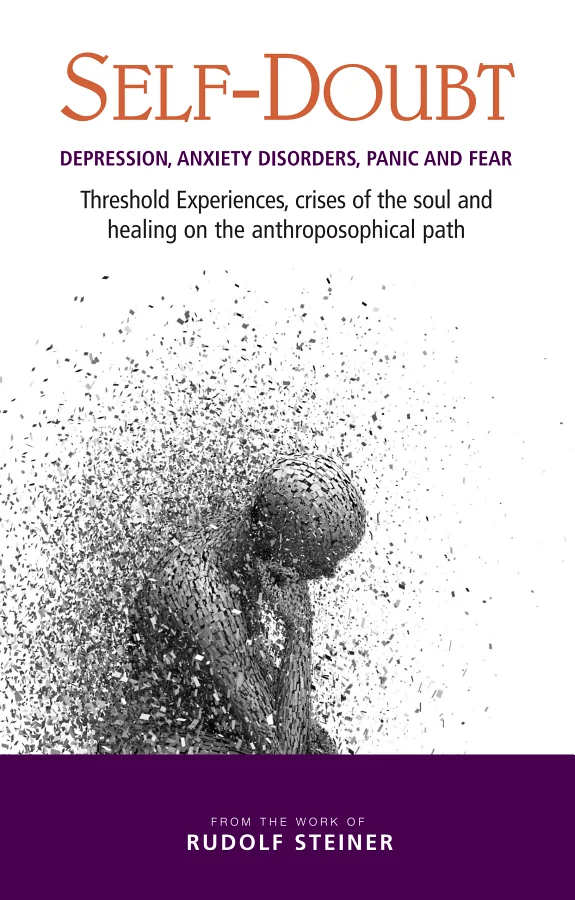
Self-Doubt
 80
80

Self-Doubt
Rudolf Steiner's "Self-Doubt" presents a challenging, yet potentially rewarding, perspective on the pervasive anxieties plaguing contemporary society. Rather than offering therapeutic platitudes, Steiner anchors his analysis in a spiritual-scientific framework, positing that psychological ailments stem from disruptions in the human being’s connection to the spiritual world. The strength of this work lies in its radical departure from materialist psychology, encouraging readers to consider the subtle forces at play. However, its opacity can be a significant hurdle; Steiner’s dense prose and reliance on his unique terminology, such as "astral influences," demand considerable reader effort and prior familiarity with anthroposophy. A particularly salient point is his assertion that self-doubt can arise from specific spiritual-astral interactions, a concept explored with a seriousness that sets it apart from typical psychological discourse. For those willing to engage with its demanding philosophy, "Self-Doubt" offers a unique lens on inner turmoil.
📝 Description
80
Rudolf Steiner published "Self-Doubt" in 1918, challenging modern views of psychological distress.
Rudolf Steiner's "Self-Doubt" contends that conventional approaches to mental and emotional suffering overlook crucial spiritual factors. He suggests that the individual psyche is not isolated but connected to a broader spiritual cosmos. According to Steiner, certain spiritual forces can instigate feelings of anxiety and self-negation. This work provides a metaphysical framework for understanding the root causes of these internal struggles.
This text is for those seeking explanations for psychological distress beyond symptomatic treatment. It will appeal to individuals interested in spiritual science and anthroposophy. Readers who feel current therapeutic models are inadequate for addressing mental well-being will find Steiner's perspective illuminating. It also serves those studying esoteric philosophy and the connection between the spiritual world and human consciousness.
Published in 1918, "Self-Doubt" emerged during a period of intense intellectual ferment concerning psychology and the spiritual. Steiner, founder of Anthroposophy, presented his spiritual scientific research as an alternative to the growing materialistic philosophies of the time. While contemporaries like Freud examined the unconscious mind, Steiner directed attention to the spiritual dimensions of human experience. His ideas were often met with skepticism from academic and medical circles, who found it difficult to reconcile his spiritual claims with empirical observation.
💡 Why Read This Book?
• Gain an alternative perspective on the origins of anxiety and self-doubt, moving beyond purely psychological explanations to consider spiritual-astral interactions, as outlined by Steiner’s spiritual science. • Understand the proposed role of spiritual beings and their influences on the human etheric and astral bodies, offering a metaphysical framework absent in conventional psychology. • Explore the anthroposophical concept of overcoming inner struggles through conscious spiritual development, as presented in Steiner's broader philosophical system.
⭐ Reader Reviews
Honest opinions from readers who have explored this book.
❓ Frequently Asked Questions
What is the core difference between Steiner's view of self-doubt and modern psychology?
Steiner's "Self-Doubt" posits that psychological distress, including self-doubt, originates from disruptions in the human being's spiritual constitution and interactions with spiritual beings, a view distinct from modern psychology's focus on neurochemistry and environmental factors.
When was Rudolf Steiner's work on "Self-Doubt" first published?
While the concepts originate from Rudolf Steiner's lectures, the specific compilation titled "Self-Doubt" was first published on October 15, 2018, gathering his insights on the subject.
What is the 'etheric body' in Steiner's context?
In Steiner's spiritual science, the etheric body (or 'life body') is considered a subtle, energetic layer that organizes life processes. Disruptions within it are believed to manifest as physical or psychological ailments, including forms of self-doubt.
Does "Self-Doubt" require prior knowledge of Anthroposophy?
While not strictly mandatory, prior familiarity with Rudolf Steiner's Anthroposophy and its core concepts, such as spiritual beings and the different human bodies, greatly enhances comprehension of "Self-Doubt."
Can this book help with panic attacks or anxiety disorders?
Steiner's work offers a metaphysical understanding of the root causes of conditions like panic attacks and anxiety disorders, suggesting spiritual-astral interactions. It provides a complementary perspective, not a direct clinical treatment.
What are 'astral influences' according to Rudolf Steiner?
In Steiner's framework, 'astral influences' refer to forces and impulses originating from the astral body or the spiritual world that can affect human emotions, consciousness, and well-being, potentially contributing to negative states like self-doubt.
🔮 Key Themes & Symbolism
Spiritual Beings and Psychology
The work posits that human psychology, particularly states of self-doubt and anxiety, cannot be fully understood without acknowledging the active presence and influence of spiritual beings. Steiner suggests these entities interact with the human energetic and emotional constitution, acting as a source for inner turmoil. This challenges conventional psychology by introducing a spiritual causality, proposing that certain psychological conditions are not solely products of personal experience or biology but are also influenced by non-material forces.
The Etheric and Astral Bodies
Central to Steiner's analysis is the concept of the etheric body (life forces) and the astral body (seat of emotions and consciousness). The book explores how disturbances within these subtle bodies, potentially induced by external spiritual influences, can manifest as profound self-doubt, fear, and mental distress. Understanding the health and integrity of these non-physical bodies is presented as crucial for psychological equilibrium and overcoming debilitating internal states.
Metaphysical Origins of Suffering
Steiner presents self-doubt not merely as a personal failing or psychological imbalance but as a symptom of a deeper metaphysical disconnect. The work suggests that contemporary societal conditions and individual spiritual development play a role in vulnerability to these negative influences. It encourages a shift in perspective, viewing psychological struggles through the lens of cosmic and spiritual laws, rather than solely through a materialistic or biological framework.
Spiritual Development as Remedy
While diagnosing the spiritual-metaphysical roots of self-doubt, the book also points towards a path of healing through conscious spiritual development. Steiner implies that by strengthening one's spiritual faculties and gaining a deeper understanding of the spiritual world, individuals can build resilience against negative influences and overcome debilitating self-doubt. This emphasizes an active, conscious engagement with the spiritual realm as a means to psychological well-being.
💬 Memorable Quotes
Direct passages from the work, attributed to the author.
“The human being is not merely a physical organism, but a complex entity interwoven with spiritual forces.”
— This statement expresses Steiner's core assertion that a complete understanding of human experience, including psychological states, necessitates acknowledging the spiritual dimension beyond the physical and purely psychological.
“Certain spiritual beings can act upon the human astral body, stirring up states of inner chaos and fear.”
— This highlights the proposed mechanism by which spiritual entities, according to Steiner, directly impact human emotions and consciousness, leading to conditions like self-doubt and anxiety.
“The etheric body, as the carrier of life forces, must be understood in its relation to psychological well-being.”
— This emphasizes the importance of the subtle energetic body in Steiner's view, linking its vitality and integrity directly to a person's capacity for mental and emotional stability.
“Overcoming self-doubt involves conscious engagement with the spiritual realities that shape our inner life.”
— This suggests that the solution to psychological distress lies not in suppression but in actively understanding and working with the spiritual forces at play in human existence.
💡 Key Ideas
Editorial paraphrase of the work's core concepts — not direct quotes.
True insight into psychological issues requires knowledge of the influences of spiritual beings.
This paraphrased concept underscores Steiner's central thesis: conventional approaches to mental health are incomplete without incorporating an understanding of the spiritual world and its inhabitants.
🌙 Esoteric Significance
Tradition
Steiner's work operates within the broad stream of Western Esotericism, drawing from Gnosticism, Hermeticism, and Kabbalah, yet forging a distinct path through Anthroposophy. Unlike traditional mystical paths focused primarily on direct experience, Steiner emphasized a rigorous, 'spiritual-scientific' method for investigating the supersensible world. "Self-Doubt" fits within this lineage by seeking to explain psychological phenomena through non-material causality, offering a framework for understanding the interplay between the human soul and cosmic forces.
Symbolism
While "Self-Doubt" itself may not be heavily symbolic in its language, the concepts it employs carry significant esoteric weight. The 'etheric body' symbolizes the animating life force, the principle of growth and renewal, which when disturbed, can lead to decay and inner stagnation. The 'astral body' represents the area of emotion, desire, and consciousness; its disturbances signify inner conflict and the vulnerability to negative psychological states, symbolizing the chaotic forces within and without.
Modern Relevance
Contemporary thinkers and practitioners in fields ranging from Waldorf education and biodynamic agriculture to anthroposophical psychotherapy continue to draw upon Steiner's insights. His approach to understanding the human being as a spiritual-material composite remains relevant for those seeking holistic perspectives on health and consciousness. Modern anthroposophists engage with works like "Self-Doubt" to address psychological challenges through a lens that integrates spiritual development with inner work.
👥 Who Should Read This Book
• Students of Rudolf Steiner and Anthroposophy seeking deeper comprehension of his psychological and spiritual cosmology. • Individuals interested in esoteric psychology and alternative frameworks for understanding anxiety, fear, and self-doubt beyond conventional therapeutic models. • Researchers of Western Esotericism exploring the development of spiritual-scientific thought in the early 20th century and its ongoing influence.
📜 Historical Context
Rudolf Steiner’s exploration of self-doubt emerged from the intellectual ferment of the early 20th century, a period marked by both scientific advancement and a deep societal yearning for spiritual understanding. Founded in 1912, Steiner's Anthroposophy offered a 'spiritual-scientific' path distinct from prevailing materialist philosophies and the nascent field of psychoanalysis pioneered by figures like Sigmund Freud. While Freud explored the personal unconscious, Steiner posited a cosmic and spiritual causality for human experience. His lectures, often delivered to audiences seeking meaning beyond industrialization, presented a complex cosmology involving spiritual hierarchies and the subtle bodies. Reception was varied; while attracting dedicated followers, Steiner's ideas were often met with skepticism from established academic and religious institutions, who found his claims about spiritual beings and clairvoyance difficult to reconcile with empirical methods.
📔 Journal Prompts
The concept of spiritual beings' influence on the astral body, as discussed in "Self-Doubt."
Rudolf Steiner's perspective on the etheric body's role in psychological stability.
Metaphysical origins of self-doubt versus personal experience.
The capacity for overcoming self-doubt through conscious spiritual engagement.
Distinguishing between materialist and spiritual-causal explanations for anxiety.
🗂️ Glossary
Spiritual Beings
In Anthroposophy, these are entities or forces belonging to non-material realms, believed by Steiner to influence the physical and psychological states of human beings.
Etheric Body
Also known as the 'life body,' it is considered a subtle, energetic layer in Steiner's model, responsible for life processes, growth, and maintaining the physical form.
Astral Body
The 'soul body' in Steiner's system, associated with consciousness, emotions, instincts, and desires. It is the vehicle for subjective experience.
Anthroposophy
A spiritual philosophy founded by Rudolf Steiner, seeking to understand the human being and the cosmos through spiritual-scientific research and clairvoyant perception.
Spiritual Science
Rudolf Steiner's term for his method of investigating the spiritual world through a trained, disciplined form of consciousness and clairvoyance.
Metaphysical
Pertaining to the fundamental nature of reality, existence, and the spiritual world, beyond the scope of empirical or physical investigation.
Self-Doubt
In Steiner's context, often viewed not just as psychological insecurity but as a manifestation of spiritual disharmony or the influence of specific spiritual forces.
This book appears in 1 collection
🔮 Readers Also Liked
Browse all →








From the “Anthroposophy” Collection
View all →








More Free Theosophy & Anthroposophy Books
View all →